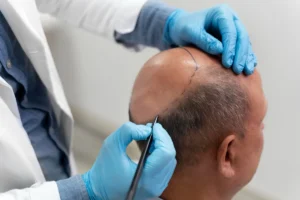
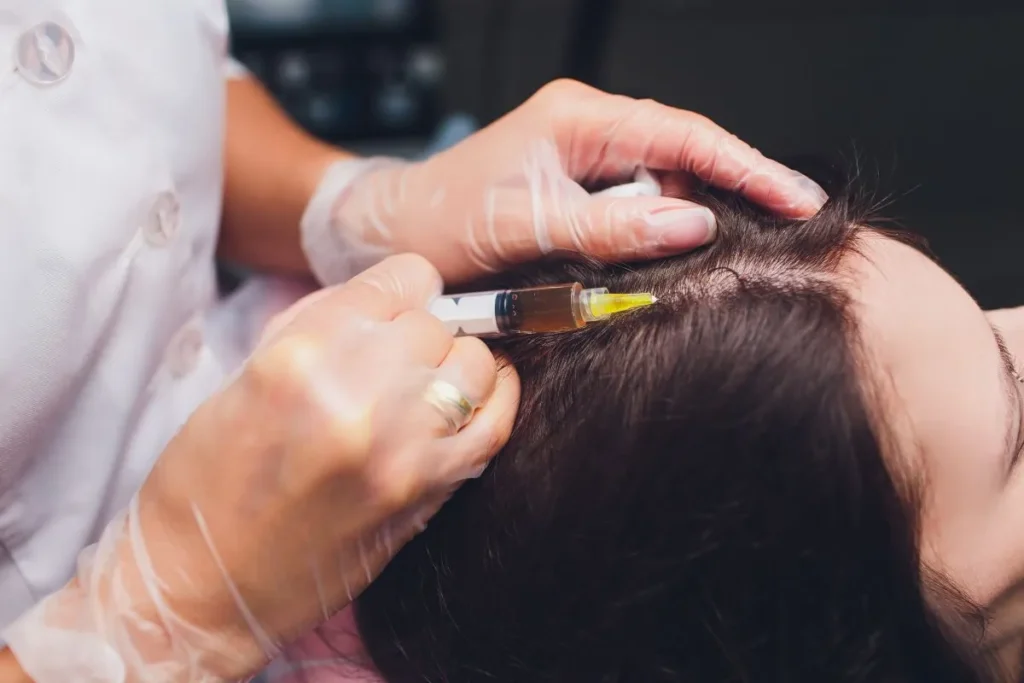
Platelet-rich plasma (PRP) therapy is a new way to help hair grow back. It uses special growth factors from your own blood to wake up hair follicles and make them grow again.
Does prp work for hair loss? Unlock the amazing truth and use powerful, incredible evidence to achieve incredible hair restoration now.
PRP therapy is a treatment that uses your own platelets to help your hair grow. It’s good for both men and women with thinning hair or androgenetic alopecia.
This advanced treatment is getting a lot of attention. It might help bring back hair that’s not growing and make your hair thicker and healthier.
Önemli Çıkarımlar
PRP therapy is a regenerative treatment that stimulates hair follicles using your body’s own platelets.
It is a popular option for men and women experiencing hair thinning or androgenetic alopecia.
PRP therapy promotes natural hair growth by utilizing concentrated growth factors.
This treatment has the ability to wake up dormant follicles.
It can make your hair thicker and healthier.
Understanding PRP Therapy for Hair Loss
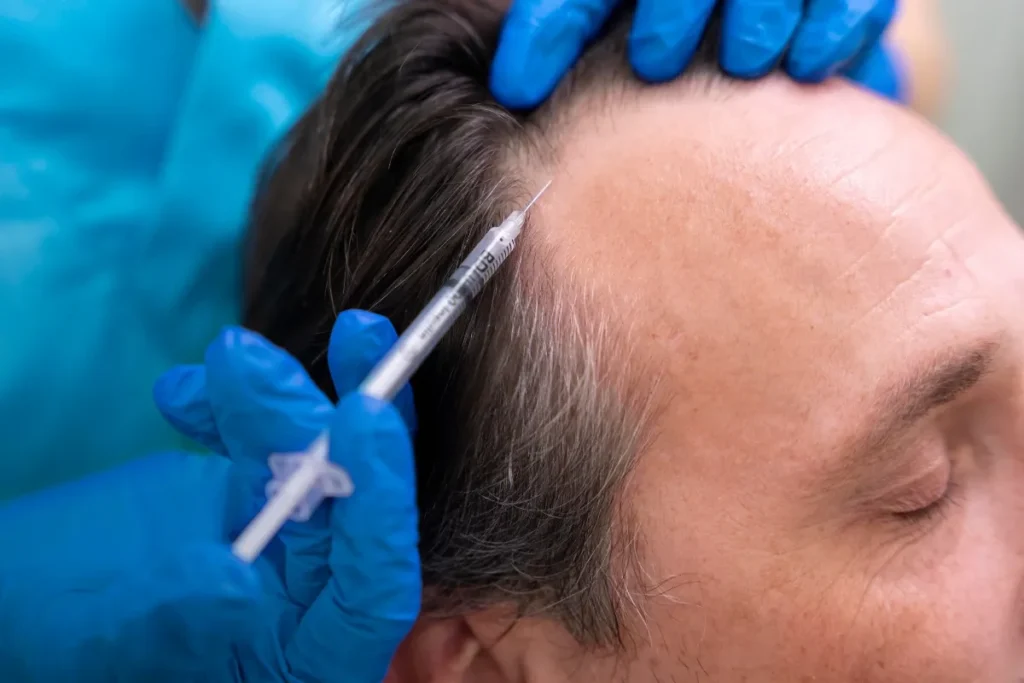
Research into hair loss treatments is always growing. PRP therapy is a standout for its new approach. It’s known for possibly making hair grow back and making hair thicker.
What is Platelet-Rich Plasma?
Platelet-rich plasma (PRP) comes from your own blood. A small blood sample is taken and then spun to get the PRP. This leaves a golden-colored fluid full of growth factors.
These growth factors are key in making hair follicles work better. They help hair grow back.
The Science Behind PRP’s Regenerative Properties
PRP’s power comes from its growth factors. These include PDGF, VEGF, and FGF. They work together to get hair follicles active again.
They also boost blood flow to the scalp. This helps hair follicles move from resting to growing.
Studies show PRP can make hair thicker and grow faster. It helps with androgenetic alopecia and other hair thinning. Knowing how PRP works helps people decide if it’s right for them.
The PRP Treatment Process
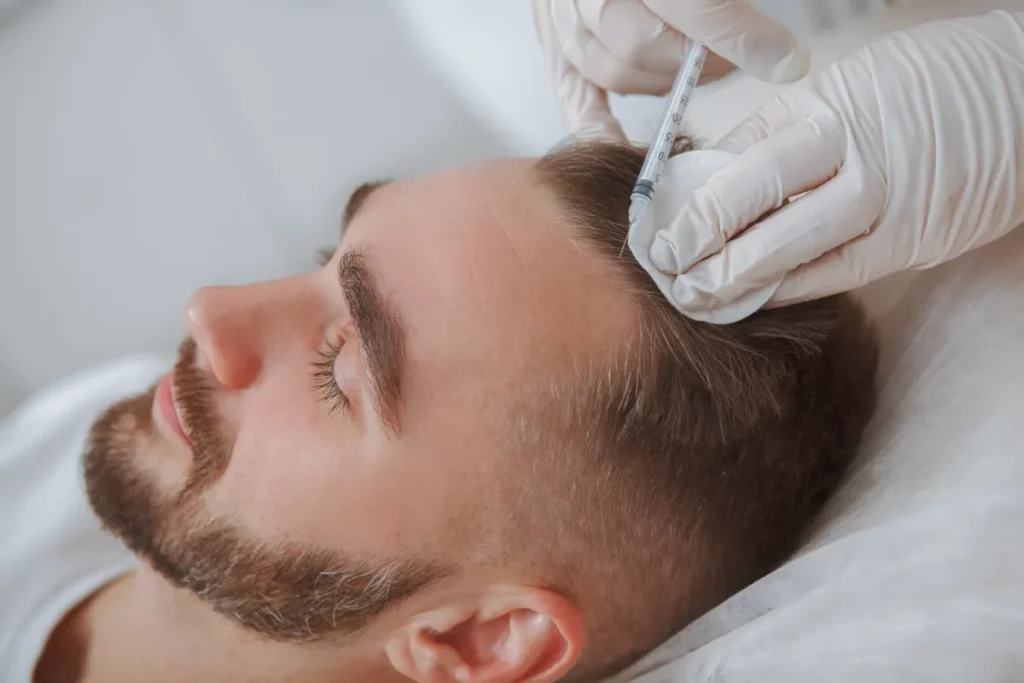
Thinking about PRP for hair regrowth? Knowing the treatment steps is key. PRP therapy for hair loss is a non-surgical method. It’s popular for its ability to boost hair growth.
Step-by-Step Procedure
The first step is a simple blood draw from your arm, like a routine blood test. The blood is then spun in a centrifuge. This separates the platelet-rich plasma (PRP) from other blood parts.
This process focuses the platelets. They have growth factors that help hair grow. After preparing the PRP, it’s injected into your scalp where hair loss occurs. The injections are done with a fine needle and are mostly painless. Some clinics might use a numbing cream to make it even less uncomfortable.
Treatment Frequency and Timeline
Most people need several PRP sessions for the best results. Treatments are usually 3 to 6 weeks apart. Follow-up sessions are needed every 6 to 12 months to keep the results.
Remember, noticeable hair growth improvements take months. The treatment’s success depends on your hair loss severity and health.
Cost Considerations
PRP hair treatment costs vary, from $300 to $1500 per session. Prices depend on the clinic, practitioner’s skill, and needed sessions. Despite the cost, many see it as a worthwhile investment.
Before getting PRP treatment, talk to a qualified healthcare professional. Discuss the possible outcomes, costs, and if PRP is right for you.
Does PRP Work for Hair Loss? Scientific Evidence
Recent studies have shown PRP can help with hair loss. This is good news for those dealing with it. The science backing PRP therapy for hair loss is growing and looks promising.
Clinical Studies and Success Rates
Many studies have shown PRP works well for hair loss. Success rates range from 60% to 85%. A study in the Journal of Cutaneous and Aesthetic Surgery found PRP improved hair density and thickness for those with androgenetic alopecia.
Success Rates of PRP Therapy:
Effectiveness for Different Types of Hair Loss
PRP therapy works for many hair loss types, like androgenetic alopecia and female pattern hair loss. A review in the Journal of Clinical and Aesthetic Dermatology says PRP stimulates hair growth and reduces shedding.
PRP Combined with Minoxidil and Finasteride
Using PRP with minoxidil and finasteride can lead to better results. A study showed PRP with minoxidil improved hair density and reduced loss. This combo is becoming popular for treating hair loss.
Adding PRP to traditional treatments is changing how we manage hair loss. It offers a more complete solution for those dealing with it.
Conclusion: Making an Informed Decision About PRP
Platelet-rich plasma therapy, or PRP, is seen as a hopeful solution for hair loss. It might help those with early hair thinning. Knowing the good and bad of PRP can help people choose the best treatment for them.
PRP might work for some, but it’s not for everyone. Studies suggest it can help hair grow back, even more so when used with other treatments. Talking to a professional is key to see if PRP is a good fit.
Thinking about PRP for hair loss? It’s important to know what to expect. This includes the need for several treatments and the cost. With the right information, people can decide if PRP is the right choice for them. This could be the first step in solving their hair loss problems.
SSS
Does PRP therapy really work for hair loss?
Yes, PRP can be effective for many patients with thinning hair or early-stage androgenetic alopecia, improving hair density, thickness, and growth in treated areas.
What is platelet-rich plasma (PRP) and how does it work?
PRP is a concentration of platelets from your own blood, rich in growth factors that stimulate hair follicles, improve blood flow, and promote new hair growth.
Is PRP effective for different types of hair loss?
PRP is most effective for androgenetic alopecia and some cases of telogen effluvium, but results for scarring alopecia or advanced baldness are limited.
How often do I need to undergo PRP treatment?
Most protocols recommend 3–6 initial sessions spaced 4–6 weeks apart, followed by maintenance treatments every 4–6 months.
How much does PRP treatment cost?
PRP sessions typically range from $500 to $2,000 per session, depending on the clinic and treatment area.
Can PRP be used in combination with other hair loss treatments?
Yes, combining PRP with minoxidil, finasteride, or laser therapy can enhance overall hair growth and improve results.
Is PRP a permanent solution for hair loss?
No, PRP is not permanent; continued treatments are usually needed to maintain results over time.
Are there any side effects associated with PRP treatment?
PRP is generally safe, with minor side effects like redness, swelling, mild pain, or temporary bruising at injection sites.
Referanslar
Ulusal Biyoteknoloji Bilgi Merkezi. Kanıta Dayalı Tıbbi Öngörü. Erişim adresi https://pmc.ncbi.nlm.nih.gov/articles/PMC4622412/