Is your baby dealing with facial rashes that don’t get better with usual treatments? Psoriasis on a baby’s delicate skin is rare but serious. It affects only a small number of infants but impacts whole families deeply.
Parents often find it hard to tell if their baby has psoriasis or another skin issue like eczema. This can lead to late diagnosis and not getting the right care. With the right help, families can find effective ways to treat childhood psoriasis.
Infant psoriasis is rare, happening in only 2 percent of kids under two. But when it does happen, it’s a big worry. Getting the right diagnosis and treatment is key to managing it and helping the baby feel better.
Önemli Çıkarımlar
Infant psoriasis is a rare condition that affects a small percentage of babies.
Distinguishing between psoriasis and other skin conditions is key for effective treatment.
Proper diagnosis and care can provide relief for babies with psoriasis.
Parents should get advice from pediatric dermatology experts for full care.
Knowing the symptoms and treatment options is essential for managing the condition.
Understanding Infant Psoriasis and Eczema Psoriasis on Face
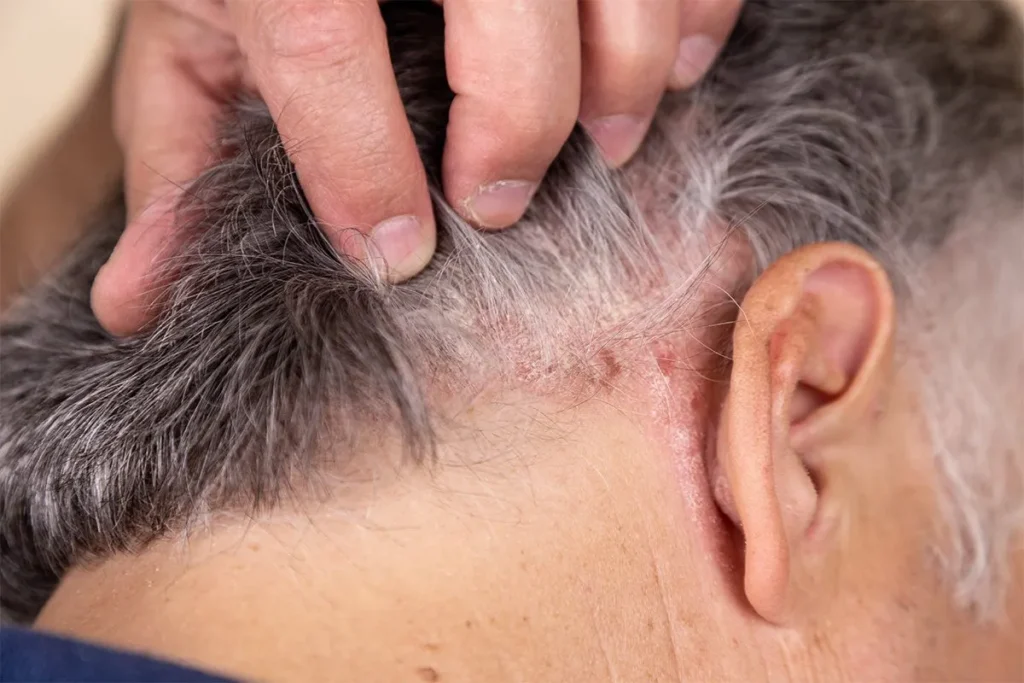
It’s important for parents and caregivers to understand infant psoriasis. This is because it can be hard to diagnose and manage, and it often affects a baby’s face.
What is Infant Psoriasis?
Infant psoriasis is a chronic condition where the immune system attacks healthy skin. This leads to red, scaly patches on the skin. Infant psoriasis can take different forms, like plaque or guttate psoriasis.
The symptoms can vary from mild to severe. It’s key to tell facial psoriasis from eczema because their treatments are different.
Prevalence and Risk Factors
Psoriasis in infants is rare, but its exact prevalence is not well-known. Genetics play a big role in its development. Babies with a family history of psoriasis are more likely to get it.
Other factors like environmental triggers and immune system issues can also contribute. Knowing these risk factors helps spot early signs.
Common Presentation in Babies
Psoriasis in babies looks different from adults. It often affects the face, scalp, and diaper area. Baby psoriasis vs eczema can be told apart by the type of lesions.
It’s important to know these differences for proper diagnosis and treatment. A pediatric dermatologist can help with this.
Identifying Psoriasis in Babies: Diagnosis and Differentiation
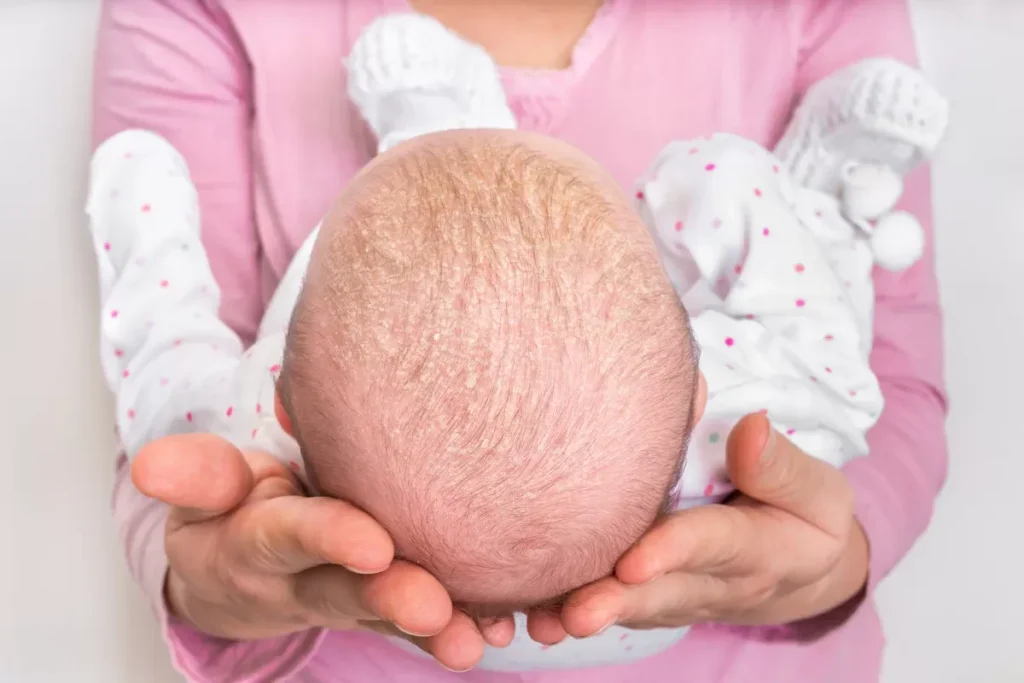
It’s important for parents to spot the early signs of psoriasis in infants to get the right care. Psoriasis looks different in babies than in adults, making it hard to diagnose.
Clinical Features of Baby Facial Psoriasis
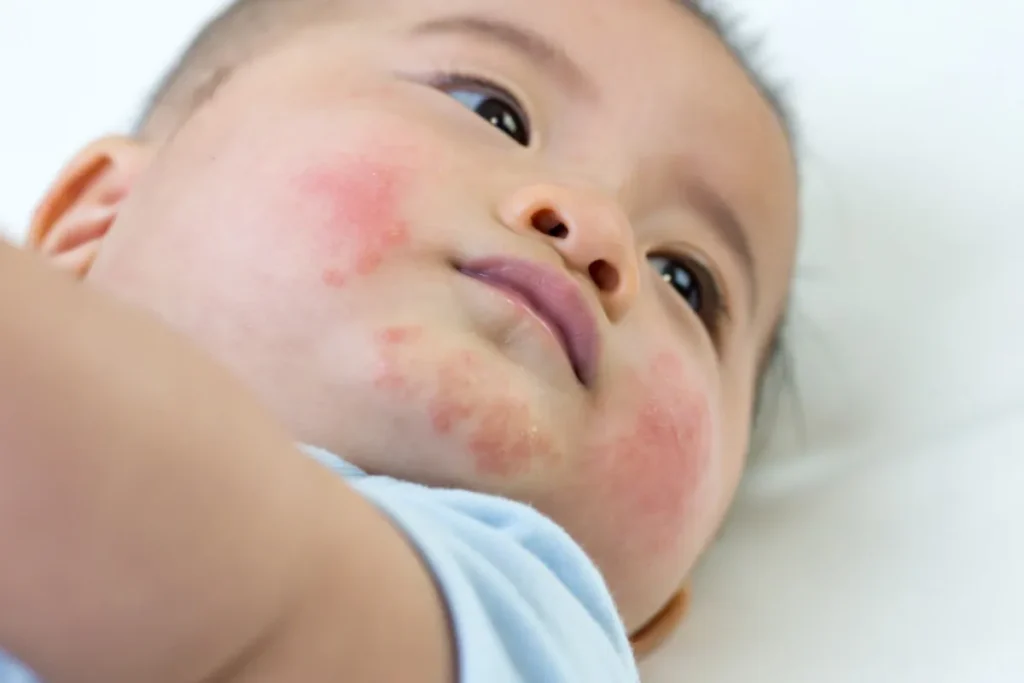
Baby facial psoriasis shows up as red, scaly patches on the face. These patches are often on the cheeks, forehead, or around the mouth. They can itch and bother the baby.
“Psoriasis in infants looks different from what adults get,” says a pediatric dermatologist. “Look for thick skin and silvery scales to spot it.”
Distinguishing Psoriasis from Eczema
Telling psoriasis apart from eczema in babies is hard. Both can make the skin red and itchy. But, there are clues. Psoriasis has thicker, more defined scales. Eczema looks like dry patches all over.
Psoriasis has a clear edge.
Eczema spreads out and lacks silvery scales.
When to Consult a Pediatric Dermatologist
If you think your baby has psoriasis or are not sure, see a pediatric dermatologist. They can check the skin and might take a skin sample for tests.
A doctor can usually tell if it’s psoriasis by looking at the skin, nails, or scalp. They might take a skin sample for a lab test.
Getting a diagnosis early and starting treatment can really help babies with psoriasis. Knowing the signs and getting professional help can manage the condition well.
Treatment Options for Baby Facial Psoriasis
The skin of babies is very delicate. It needs special care when dealing with facial psoriasis. It’s important to manage psoriasis symptoms well for the baby’s health. There are gentle skincare routines, safe medical treatments, and ways to handle flare-ups and daily care.
Gentle Skincare Routine
For baby facial psoriasis, a gentle skincare routine is key. Use mild, fragrance-free cleansers and moisturizers. Emollients help keep the skin moist and prevent flare-ups. Stay away from harsh products that can irritate the skin.
Bathing is also important. Keep baths short, around 5-10 minutes, in lukewarm water. After bathing, gently pat the skin dry and apply moisturizer while it’s damp to keep moisture in.
Medical Treatments Safe for Infants
For severe cases, medical treatments might be needed. Topical corticosteroids can reduce inflammation, but use them only as a pediatric dermatologist advises. Vitamin D analogues can also slow down skin cell growth.
Always follow the doctor’s advice on how to apply these treatments. This ensures safety and effectiveness.
Managing Flare-ups and Daily Care
To manage flare-ups, know and avoid triggers. Common ones include stress, cold weather, and some skincare products. Keeping a diary can help track flare-ups and what might cause them.
Daily care means sticking to a consistent skincare routine. Be careful with the products you use on the baby’s skin. Dress the baby in comfortable, breathable clothes to avoid irritation.
By using gentle skincare, safe medical treatments, and managing flare-ups, you can help manage baby facial psoriasis. This improves the baby’s comfort and well-being.
Conclusion: Supporting Your Child Through Psoriasis Management
Psoriasis can affect babies, and as a parent, it’s essential to understand how to manage the condition effectively. Infant psoriasis requires timely evaluation and guidance from a dermatologist to prevent complications and improve the child’s quality of life.
With the right treatment plan, parents can help their child manage psoriasis symptoms. Can babies have psoriasis? Yes, they can, and it’s vital to identify the condition early. Psoriasis on baby’s face can be challenging, but gentle skincare routines and medical treatments safe for infants can help alleviate symptoms.
Parents of children with infant psoriasis or psoriasis toddler should work closely with their pediatric dermatologist to develop a personalized treatment plan. By doing so, they can help their child manage flare-ups and daily care, ensuring they lead a healthy and active life despite having psoriasis baby.
SSS
Psoriasis vs. Eczema in Babies?
Psoriasis shows thick, scaly red patches (often diaper area); eczema causes red, weepy, intensely itchy rashes (cheeks, folds).
Babies Have Facial Psoriasis?
Yes, rare but possible as red scaly patches on face/scalp; often confused with cradle cap.
Infant Psoriasis Diagnosis?
Dermatologist exam; biopsy rarely; family history, lack of response to eczema creams distinguish it.
Baby Facial Psoriasis Treatments?
Low-potency topical steroids (short-term), emollients, calcineurin inhibitors; wet wraps hydrate.
Manage Baby Psoriasis Flare-Ups?
Frequent fragrance-free moisturizing, avoid triggers (cold/stress), gentle bathing, loose cotton clothes.
Topical Steroids Safe on Baby Face?
Yes, mild ones (hydrocortisone 1%) short-term under doctor; avoid strong steroids near eyes.
OTC Products for Baby Psoriasis?
Support Child Through Psoriasis?
Explain simply, positive reinforcement, short baths, distraction during application, connect with support groups.
Referanslar
The Lancet. Evidence-Based Medical Insight. Retrieved from https://www.thelancet.com/journals/lanchi/article/PIIS2352-4642(19)30019-0/fulltext**