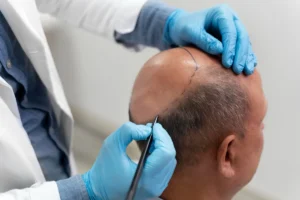
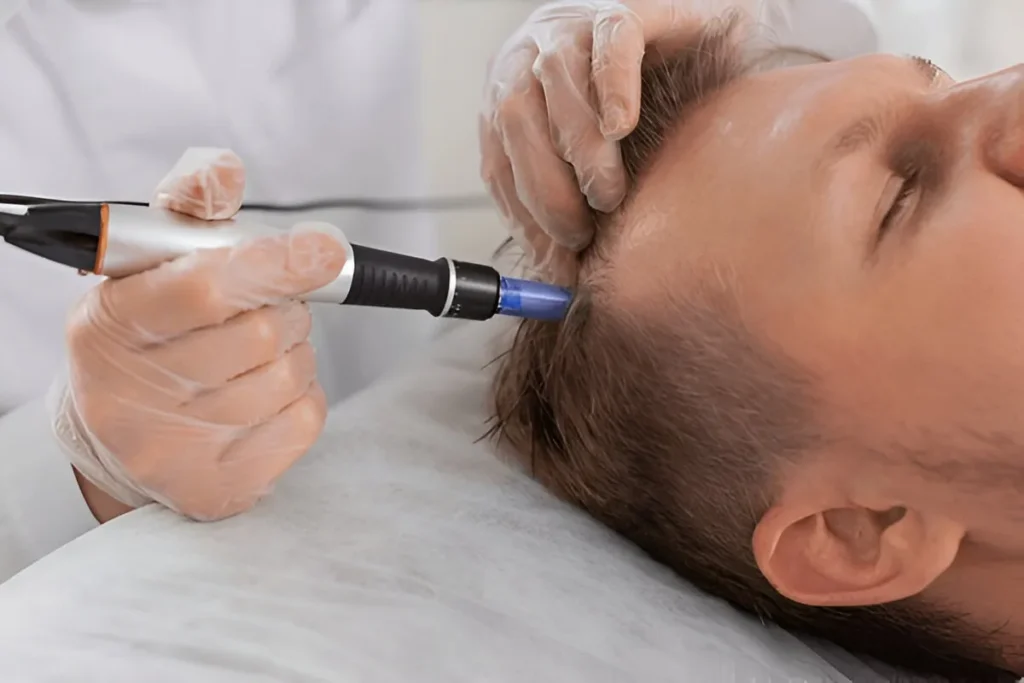
Learn how to grow back your hair with hair regrowth laser treatment. This method uses laser technology to wake up hair follicles. It’s a safe way to make your hair thicker without surgery.
This guide will show you how LLLT therapy for hair works. It explains its science, success stories, and how it can help with different hair loss reasons.
Önemli Çıkarımlar
Laser therapy is a non-invasive treatment that stimulates follicle growth.
Clinically proven to rejuvenate hair follicles and restore density.
LLLT therapy addresses various causes of hair loss.
Advanced technology supports hair regrowth.
A complete guide to understanding laser therapy benefits.
Understanding Hair Regrowth Laser Treatment
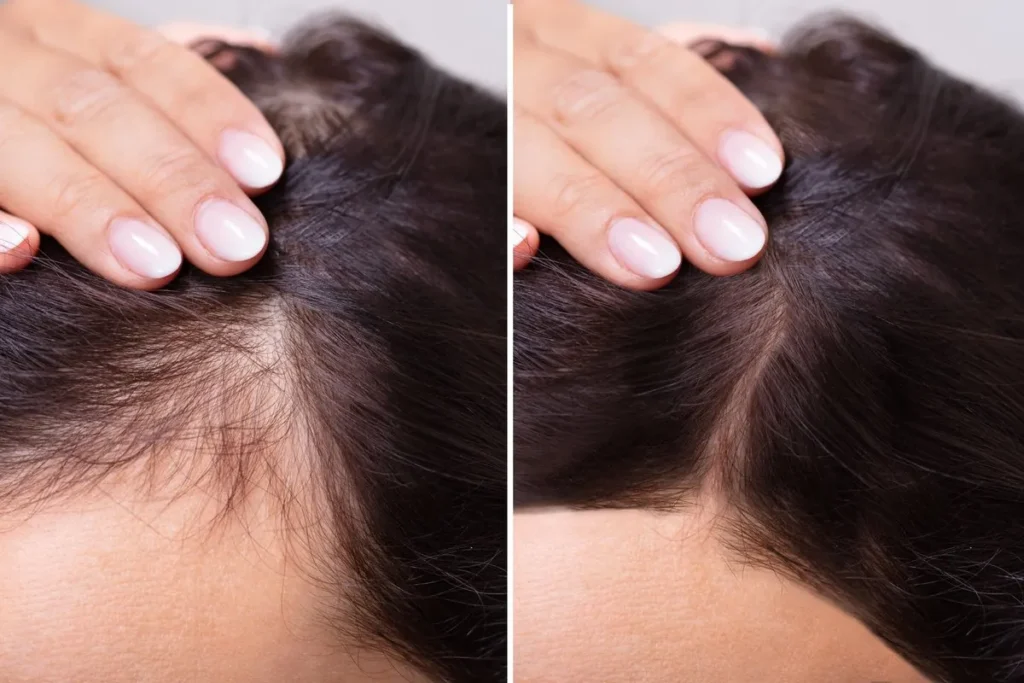
For those dealing with hair loss, laser phototherapy is a hopeful solution. It’s a non-invasive method that has become popular. It aims to help both men and women grow more hair.
What is Low-Level Laser Therapy (LLLT)?
Low-Level Laser Therapy (LLLT) uses red or near-infrared light. It boosts blood flow to hair follicles and improves cell function. This helps stimulate hair growth.
LLLT devices send out a specific light wavelength. This light is absorbed by hair follicle cells, starting photobiomodulation. This boosts cell activity, aiding in hair regrowth.
Studies show LLLT is effective in promoting hair growth for both men and women. Knowing how LLLT works helps people decide if it’s right for them.
The Science Behind Laser Hair Stimulation
The science behind laser hair stimulation is based on photobiomodulation. When light is absorbed by hair follicle cells, it enhances cell function. This process stimulates hair follicle stem cells, leading to more hair growth.
LLLT can lead to better hair growth. It’s important to talk to a healthcare professional. They can help find the best treatment for you.
How Laser Treatment Stimulates Hair Growth
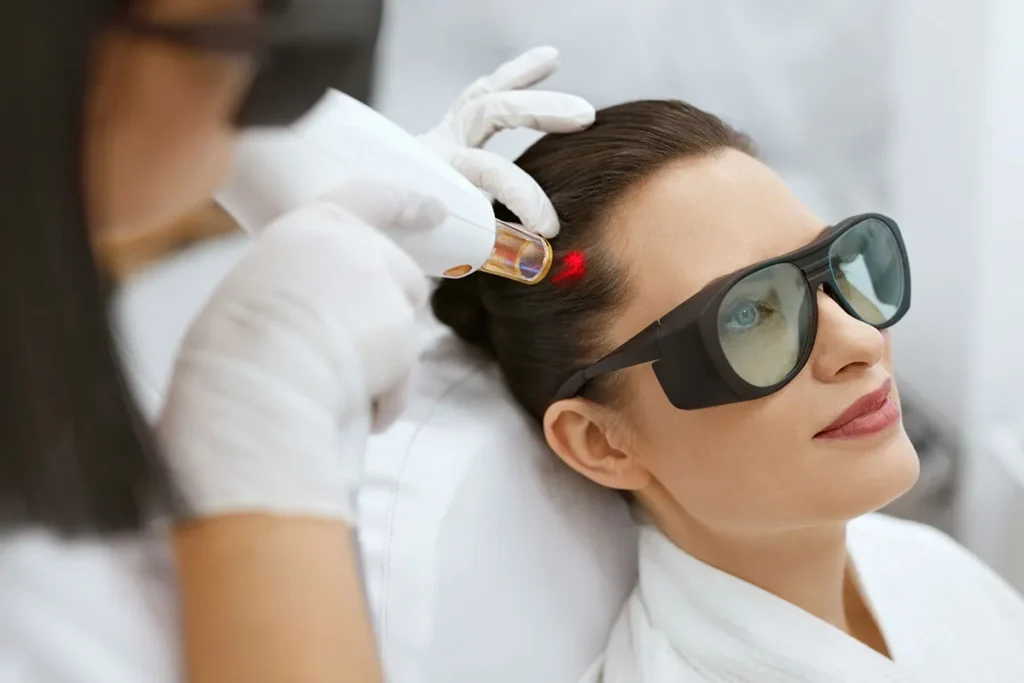
Laser therapy for hair loss uses photobiomodulation to wake up hair follicles. This makes hair thicker and healthier over time. It involves using low-level laser or light-emitting diodes to boost hair’s natural growth cycle.
Photobiomodulation of Hair Follicle Cells
Photobiomodulation is a light-based therapy that doesn’t hurt. It boosts the activity of hair follicle cells. This increase in energy helps grow new hair.
A leading researcher said,
Enhanced ATP Production and Cellular Function
Laser therapy works by boosting ATP production in hair follicle cells. ATP gives cells energy. More ATP means hair grows naturally, leading to healthier hair.
Laser therapy also increases blood flow to the scalp. This ensures hair follicles get the nutrients they need for growth.
Converting Telogen Hairs to Anagen Growth Phase
Laser therapy is great because it wakes up dormant (telogen) hairs. This is key for hair regrowth. It makes hair follicles active again.
By waking up these dormant follicles, laser therapy increases hair density and health.
In summary, laser treatment boosts hair growth in several ways. It uses photobiomodulation, increases ATP, and wakes up dormant hairs. Clinical evidence shows it’s a promising solution for hair loss.
Implementing Effective Laser Therapy for Hair Loss
To get the most out of laser therapy for hair loss, pick the right device and stick to a proven plan. Success depends on the device’s quality and how often you use it.
Professional vs. At-Home LLLT Devices
There are many Low-Level Laser Therapy (LLLT) devices for hair loss, from clinic-grade to at-home options like laser caps and combs. Professional devices are stronger and might work faster. But at-home devices are easier to use and save money.
Laser caps are wearable devices that emit laser light to stimulate hair growth.
Laser combs are handheld devices that are combed through the hair to deliver laser therapy.
When picking between professional and at-home LLLT devices, think about cost, ease, and what you prefer.
FDA-Cleared Treatment Options
Make sure to choose FDA-cleared LLLT devices. These have passed strict safety and effectiveness tests. Studies show they really work, making hair thicker and fuller.
Optimal Treatment Protocols and Frequency
The success of laser therapy also depends on the treatment plan and how often you do it. Optimal treatment protocols usually mean regular sessions, a few times a week, for months. The exact schedule can change based on the device and how you respond.
Initial treatment phase: Frequent sessions (e.g., 3 times a week) for the first few months.
Maintenance phase: Less frequent sessions (e.g., once a week) to keep up the results.
Following the recommended treatment plan is key to getting and keeping the best results.
Sonuç
Laser hair growth therapy is a safe and effective way to fight hair loss. It’s non-invasive and pain-free. This makes it a great choice for both men and women.
This treatment works by helping hair follicles grow. It boosts ATP production and gets hairs growing again. There are many FDA-cleared devices to choose from, for both professional and home use.
Understanding how laser hair therapy works is key. It’s a proven method to fight hair loss and improve scalp health. It’s a promising solution for those looking to grow their hair back.
SSS
What is Low-Level Laser Therapy (LLLT) and how does it work for hair regrowth?
Low-Level Laser Therapy (LLLT) is a non-invasive treatment that uses red light wavelengths to stimulate hair follicles. It helps improve cellular activity and blood flow, encouraging follicles to remain in the growth phase longer.
How does laser treatment stimulate hair growth?
The light energy penetrates the scalp and boosts mitochondrial activity in hair follicle cells, which may increase energy production and promote thicker hair growth.
What are the benefits of using LLLT devices for hair regrowth?
LLLT devices are painless, non-surgical, and can be used at home, with studies showing they may improve hair density and thickness in pattern hair loss.
Are LLLT devices FDA-cleared for hair regrowth?
Yes, several LLLT devices are FDA-cleared for treating male and female pattern hair loss, meaning they are considered safe and potentially effective.
How often should I use LLLT devices for optimal hair regrowth?
Most devices are used 2–4 times per week for about 15–30 minutes per session, depending on the manufacturer’s instructions.
Can laser therapy be used in conjunction with other hair loss treatments?
Yes, LLLT is often combined with treatments like minoxidil, finasteride, or PRP therapy to enhance overall results.
Is laser therapy suitable for all types of hair loss?
It works best for androgenetic alopecia and may be less effective for scarring alopecia or advanced baldness where follicles are no longer active.
How long does it take to see results from laser therapy for hair regrowth?
Visible improvement typically takes 3–6 months of consistent use, with fuller results often seen after 6–12 months.
Are there any side effects associated with LLLT for hair regrowth?
LLLT is generally safe with minimal side effects, though some users may experience mild scalp irritation or temporary shedding early in treatment.
Referanslar
Ulusal Biyoteknoloji Bilgi Merkezi. Kanıta Dayalı Tıbbi Öngörü. Erişim adresi https://pubmed.ncbi.nlm.nih.gov/32884626/