
Hair loss worries many men, even more so if they have a family history of balding. Learning about the genetic causes of hair loss can boost your confidence. Recent studies found over 250 genes that affect male pattern baldness.
How do i know if i will go bald? Discover the big truth about genetics, age, and lifestyle factors that determine your future hair growth.`
Old myths said baldness came from your mother’s side. But now, we know it’s from both sides of your family. Thanks to new genetic models and medical tests, you can learn more about your hair loss risk.
Understanding your balding risk is the first step to managing your hair loss.
By using cutting-edge technology and expert analysis, you can discover your hair loss risk. You can also find ways to restore your hair.
Önemli Çıkarımlar
Genetics play a significant role in male pattern baldness, with over 250 identified genetic factors.
Hair loss risk is inherited from both parents, not just the mother.
Advanced genetic prediction models can help determine individual hair loss risk.
Understanding your balding risk is key to managing hair loss.
Personalized medical evaluation can provide insights into hair loss risk and restoration options.
Understanding the Science Behind Hair Loss

Hair loss is a big problem worldwide, affecting millions. It’s linked to genetics and hormones. Knowing the science behind it helps us understand why it happens.
The 80% Rule: How Heredity Determines Baldness
Studies show genetics play a big role in hair loss, with 80% of the risk coming from genes. If your family has a history of balding, you’re more likely to lose your hair. Both sides of your family can pass on these genes.
Key findings on heredity and baldness include:
Genetic predisposition is the primary factor in male and female pattern baldness.
The risk of balding increases with the number of affected family members.
Heredity influences not just the likelihood of balding but also the age of onset and the extent of hair loss.
The Role of Androgens and DHT in Hair Follicle Miniaturization
Androgens, like dihydrotestosterone (DHT), are key in hair loss. DHT makes hair follicles shrink, leading to thinner, shorter hairs and eventually baldness.
The process involves:
DHT binding to androgen receptors in hair follicles.
Gradual miniaturization of the follicles, leading to finer hairs.
Eventual cessation of hair growth as the follicles become dormant.
Knowing how androgens and DHT affect hair loss is key to finding treatments. By stopping DHT’s effect on hair follicles, we can slow or stop balding. This could help people grow back their hair.
How Do I Know If I Will Go Bald? Key Predictors and Signs
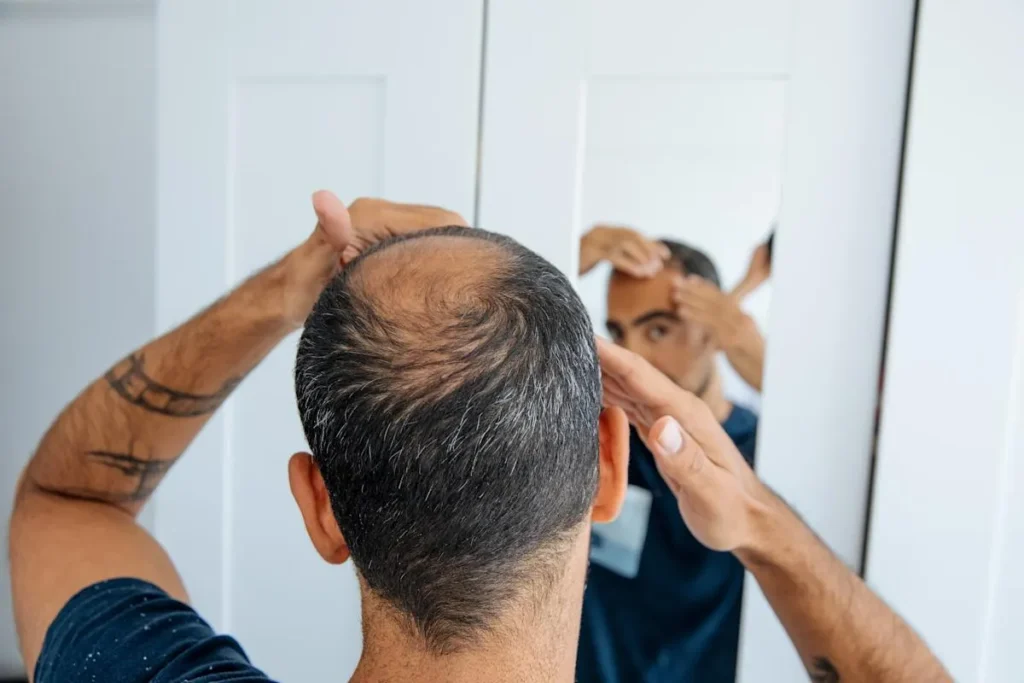
Figuring out if you’ll go bald involves looking at several important factors. Your family history is a big part of it. Your hair journey is shaped by genetics and hormones. So, it’s key to consider all these when checking your risk of balding.
Family History Analysis: Looking at Both Sides
Looking into your family history is key to understanding your hair loss risk. Studies show that both parents pass on genes that can lead to balding. It’s not just your dad’s hairline that matters. Your mom’s side also plays a big role.
Key factors to consider include:
The extent of hair loss in your parents and grandparents
The age at which hair loss began in your family members
The pattern of hair loss, whether it’s diffuse or follows a specific pattern
The X Chromosome Connection: Why Your Maternal Grandfather Matters
The X chromosome, from your mom, is linked to hair loss. Your maternal grandfather’s hair can give clues about your future. This is because the X chromosome affects hair growth and maintenance.
Medical Expert, Hair Restoration Expert
Early Warning Signs: Recognizing the First Stages of Hair Loss
Spotting early signs of balding can help you act fast to keep your hair. Some early signs are:
A receding hairline, mainly at the temples
Thinning hair on the crown of the head
Excessive hair shedding, after washing or combing
By knowing these signs, you can better understand your risk of balding. You can then look into ways to keep your hair healthy and full. Regain your confidence by taking charge of your hair’s future today.
Modern Prediction Methods and Additional Risk Factors
The future of hair loss prediction is here, thanks to cutting-edge genetic testing and algorithms. This new method helps people understand their risk of balding better than ever.
Genetic Testing and Prediction Algorithms
Genetic testing for baldness has changed the game in predicting hair loss. These tests look at specific genetic markers to see who’s at higher risk of balding. Prediction algorithms then use this info, along with other genetic and environmental factors, to get even more accurate results.
These advanced tools give a personalized risk assessment. If you’re at high risk of early balding, you can start taking steps to prevent it. This might include trying treatments or making lifestyle changes.
Age of Onset: What Your Timeline Reveals About Severity
The age of onset is key in figuring out how severe hair loss will be. The earlier it starts, the more severe it’s likely to be. Knowing your family’s hair loss history can give you clues about your own timeline.
Starting to lose hair in your teens or early twenties often means more aggressive balding.
Starting later, in your late twenties or beyond, might mean a slower progression.
Environmental and Lifestyle Factors That Accelerate Hair Loss
While genetics are important, environmental and lifestyle factors also play a big role in hair loss. Stress, diet, and exposure to certain chemicals can make balding worse.
Key environmental and lifestyle factors include:
High stress levels can trigger or make hair loss worse.
A diet without essential nutrients, like iron and biotin, can harm hair health.
Exposure to pollutants and certain chemicals can damage hair follicles.
Understanding these factors and how they work with genetics can help you make choices to slow down or prevent hair loss.
Conclusion: Taking Control of Your Hair’s Future
Understanding hair loss starts with knowing its genetic roots. Identifying key signs and predictors helps you take charge of your hair’s future. Recognizing heredity, androgens, and environmental factors guides your hair restoration choices.
Boost your confidence with advanced hair restoration methods like DHI and Sapphire FUE. These techniques provide full coverage and natural-looking results. With a tailored care plan and clear advice, you can get the hair you’ve always wanted. Start exploring your options today for a fuller head of hair.
By managing hair loss, you can enjoy lasting results. Genetically resistant follicles ensure continuous growth for life. Work with a reliable and award-winning hair restoration center to get the hair you deserve.
SSS
How do I know if I will go bald?
You may be at higher risk if you notice early hair thinning, receding hairline, or family history of baldness, but it’s not certain until hair loss progresses.
Will I be bald if my dad is bald?
Not necessarily. Genetics from both parents influence hair loss, so paternal baldness increases risk but doesn’t guarantee it.
What are the early warning signs of balding?
Early signs include thinning at the crown, receding hairline, wider parting, and increased hair shedding.
Can genetic testing predict if I’ll go bald?
Genetic testing can indicate predisposition to androgenetic alopecia, but it cannot predict exact timing or severity.
How does age affect my likelihood of going bald?
Hair loss risk increases with age, especially after your 20s and 30s, as hair follicles become more sensitive to hormones.
Are there lifestyle factors that contribute to hair loss?
Yes, factors like stress, poor nutrition, smoking, and certain medications can accelerate hair thinning.
Can I prevent or slow down hair loss?
Early intervention with minoxidil, finasteride, healthy diet, and good scalp care can slow hair loss and maintain hair density.
What modern techniques are available for hair restoration?
Modern options include FUE and FUT hair transplants, PRP therapy, low-level laser therapy, and scalp micropigmentation.
How can I regain my confidence if I’m experiencing hair loss?
You can explore treatments, try hair styling options, wigs or toppers, and seek support from professionals or support groups to boost confidence.
Referanslar
Ulusal Biyoteknoloji Bilgi Merkezi. Kanıta Dayalı Tıbbi Öngörü. Erişim adresi https://pmc.ncbi.nlm.nih.gov/articles/PMC5308812/