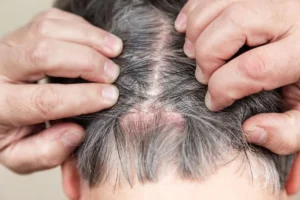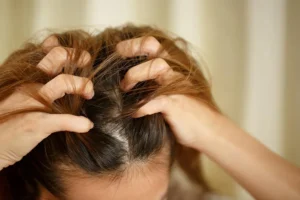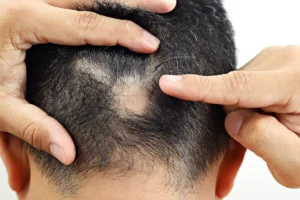
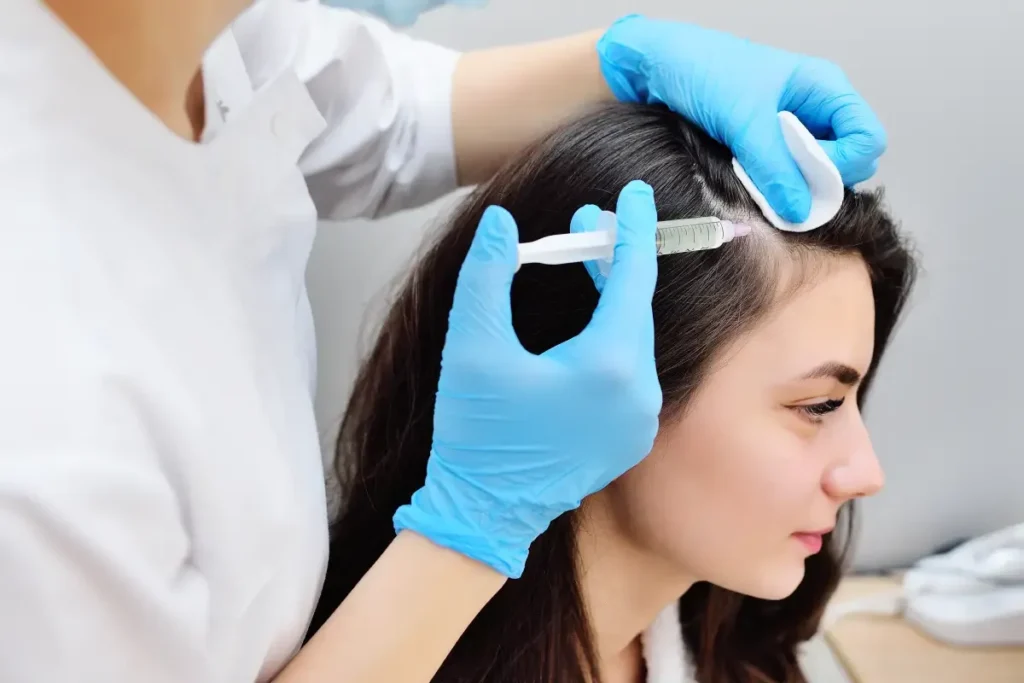
Losing your hair can really hurt your confidence and how you feel about yourself. But, new treatments like Platelet Rich Plasma (PRP) therapy give you hope again. PRP uses your body’s own growth factors to wake up hair follicles and make your hair thicker.
Achieve a big win with platelet rich plasma hair regrowth. Use powerful, amazing techniques for incredible thickness and amazing hair.
At top medical centers, PRP therapy is given by experts. They mix the latest science with care that’s just for you. This treatment can make your hair density go up by 30-40% if you have androgenetic alopecia. It’s a good choice for those fighting hair loss.
Önemli Çıkarımlar
PRP therapy stimulates hair regrowth by leveraging the body’s natural healing processes.
It has been shown to increase hair density by up to 30-40% in patients with androgenetic alopecia.
PRP is prepared by concentrating platelets from the patient’s own blood.
Specialists administer PRP therapy with personalized care.
PRP therapy is a promising treatment for combating hair loss.
Understanding Platelet Rich Plasma for Hair Regrowth
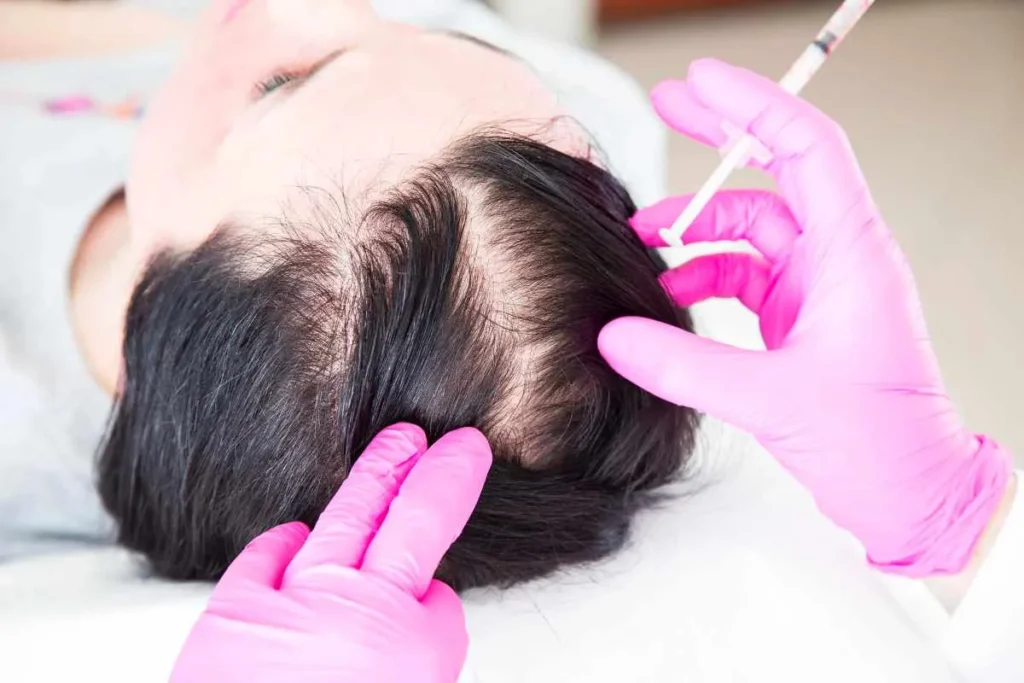
Platelet-rich plasma (PRP) is a new treatment that uses your body’s healing powers to grow hair. It’s getting a lot of attention for helping hair follicles grow stronger. This makes it a promising option for hair restoration.
What is Platelet Rich Plasma?
PRP comes from your own blood, which is processed to focus on platelets and growth factors. PRP is full of growth factors like PDGF, VEGF, and FGF. These help fix and grow tissues.
“PRP in hair restoration works because its growth factors wake up hair follicles,” say experts. This creates a healthy scalp and helps hair grow back.
Growth Factors in PRP That Stimulate Hair Follicles
The growth factors in PRP are what make it work for hair follicles. PDGF, VEGF, and FGF help hair follicles grow and stay in the growth phase longer. This makes your scalp better for growing thicker, healthier hair.
The growth factors in PRP show how it works. VEGF helps blood flow to hair follicles. PDGF and FGF help cells grow and change, which is key for hair growth.
The PRP Hair Treatment Protocol
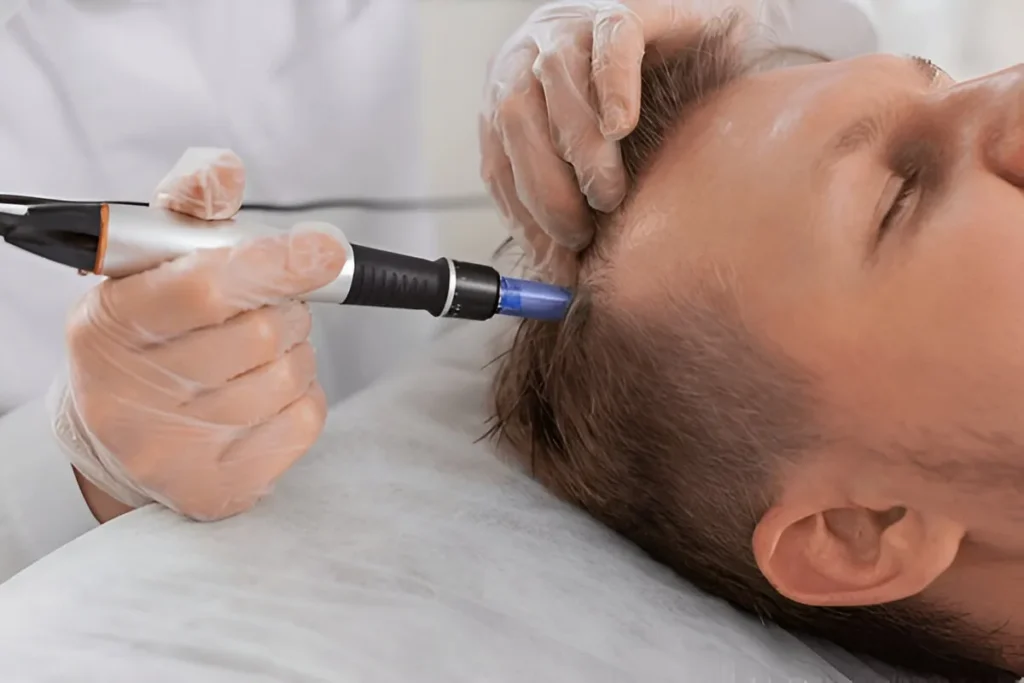
The PRP treatment for hair growth has several steps. These include preparation, processing, and injection techniques. Each step is important for the best results.
Preparation and Blood Collection
The first step is getting ready and collecting blood. A healthcare professional will take a small blood sample from your arm. This is like a regular blood test. The blood goes into a special tube for processing.
Processing the Blood Sample
The blood sample is then spun in a centrifuge. This separates the platelet-rich plasma (PRP) from other parts of the blood. It makes the plasma rich in platelets and growth factors. This process takes about 10-15 minutes.
Injection Technique and Treatment Sessions
After preparing the PRP, it’s injected into your scalp. A fine needle is used for this. The injections are spread out in a grid pattern to cover the area evenly. Most people need 3-4 sessions, spaced 4-6 weeks apart.
Here’s a typical PRP treatment schedule:
Knowing the PRP hair treatment steps helps you understand what to expect. It can also help you get the best results from your treatment.
Effectiveness of Platelet Rich Plasma Hair Regrowth
More studies are showing that PRP can help with hair growth. It has been found to increase hair density and help hair grow back in both men and women with androgenetic alopecia.
Clinical Evidence and Success Rates
Many clinical trials have looked into PRP therapy for hair loss. The evidence shows PRP can make hair thicker and more dense. Success rates range from 60% to 80%, showing better hair growth and less shedding.
Timeline for Visible Results
Results can vary, but most see improvements in three to six months. The treatment involves several injections, with follow-up sessions to keep the benefits.
Key benefits of PRP therapy include:
Increased hair density
Improved hair thickness
Reduced shedding
Knowing the clinical evidence and expected timeline helps in making informed decisions. This way, individuals can choose PRP therapy for their hair growth needs.
Sonuç
Platelet-rich plasma (PRP) therapy is a new hope for hair loss. It’s a natural and easy way to help hair grow back. This method uses PRP to wake up hair follicles and encourage new hair growth.
PRP injections are becoming more popular for growing hair. They work by adding growth factors that boost blood flow and collagen. This makes hair thicker and healthier. Many people have seen their hair grow back thanks to PRP therapy.
More research is showing PRP therapy’s benefits for hair loss. It’s clear that PRP can help grow hair and keep it healthy. Knowing how PRP works can help people choose the best treatment for their hair loss.
PRP treatments for hair are becoming more common. Many clinics now offer PRP therapy for hair loss. As more people look for ways to restore their hair, PRP therapy is likely to stay popular.
SSS
What is Platelet Rich Plasma (PRP) therapy for hair loss?
PRP therapy is a non-surgical treatment where a patient’s own blood is processed to concentrate platelets, which are then injected into the scalp to stimulate hair growth.
How does PRP therapy work for hair regrowth?
PRP delivers growth factors that activate dormant hair follicles, improve blood flow, and promote cell regeneration, encouraging thicker and healthier hair growth.
What are the benefits of using PRP for hair loss treatment?
PRP is minimally invasive, uses your own blood, can improve hair density and thickness, and may enhance results when combined with other treatments.
How is PRP prepared for hair loss treatment?
Blood is drawn from the patient, then centrifuged to separate platelet-rich plasma from red blood cells, which is then injected into targeted areas of the scalp.
How many PRP treatment sessions are required for hair regrowth?
Typically, 3–6 sessions spaced 4–6 weeks apart are recommended initially, with maintenance treatments every 4–6 months.
Are PRP injections painful?
Most patients feel mild discomfort or pinching, which can be minimized with a topical numbing agent.
What are the success rates of PRP therapy for hair regrowth?
Studies suggest moderate to significant improvement in hair density and thickness in many patients, especially those with early-stage androgenetic alopecia.
How long does it take to see results from PRP therapy for hair loss?
Initial improvement is usually seen within 2–3 months, with more noticeable results after 6 months of consistent treatment.
Is PRP therapy a long-term solution for hair loss?
PRP is not permanent; ongoing maintenance treatments are typically required to sustain results.
Can PRP therapy be combined with other hair loss treatments?
Yes, combining PRP with minoxidil, finasteride, or laser therapy can improve overall outcomes.
Are there any side effects associated with PRP therapy for hair loss?
PRP is generally safe, with minor side effects such as redness, swelling, mild pain, or temporary bruising at injection sites.
Referanslar
Ulusal Biyoteknoloji Bilgi Merkezi. Kanıta Dayalı Tıbbi Öngörü. Erişim adresi https://pmc.ncbi.nlm.nih.gov/articles/PMC8922312/