The signs of male balding often appear subtly, making it essential to understand what to look for before noticeable hair loss occurs. Early detection allows for timely intervention, whether through lifestyle changes or medical treatments, and can preserve confidence and self‑esteem. In fact, studies show that up to 40 % of men notice the first signs of hair thinning before the age of 30, yet many delay seeking help.
This article breaks down the most common visual and physiological indicators of male pattern baldness, explains why they happen, and offers guidance on when professional evaluation is advisable. By the end, you’ll be able to differentiate normal shedding from early balding cues and understand the next steps toward effective hair restoration.
Whether you’re just noticing a slightly higher hair count on your pillow or you’ve observed a widening part, recognizing these early signs can empower you to make informed decisions about your hair health.
Understanding Male Pattern Baldness: Causes and the Norwood Scale
Male pattern baldness, medically known as androgenetic alopecia, is driven primarily by genetic predisposition and the hormone dihydrotestosterone (DHT). Over time, DHT miniaturizes hair follicles, shortening the growth phase and producing finer strands. The progression is often charted using the Norwood scale, which categorizes balding from stage 1 (minimal recession) to stage 7 (extensive hair loss).
- Stage 1‑2: Slight recession at the temples.
- Stage 3‑4: Noticeable thinning at the crown and a deeper temple recession.
- Stage 5‑7: Advanced hair loss, large balding areas, and reduced overall density.
Understanding where you fall on the Norwood scale helps clinicians recommend the most appropriate treatment plan, whether it’s medication, low‑level laser therapy, or a hair transplant.
Early Visual Indicators: Receding Hairline and Crown Thinning
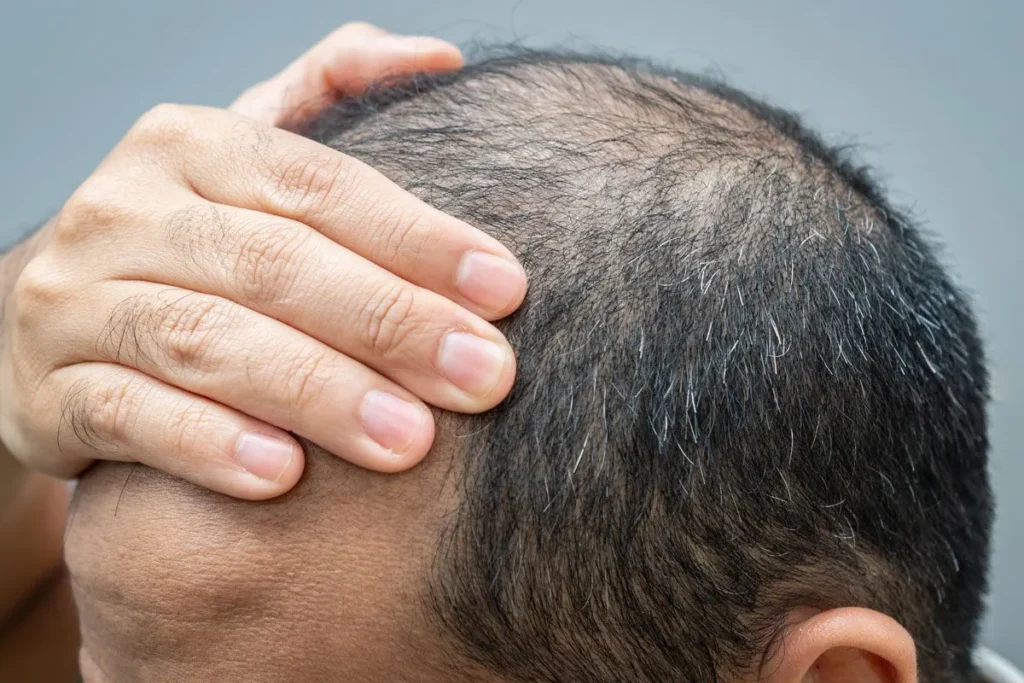
One of the most recognizable signs of male balding is a receding hairline, especially at the temples. This recession often forms an “M” shape as the hairline retreats. Simultaneously, many men notice thinning at the crown, which can appear as a widening part or a small bald spot.
| Indicator | Typical Appearance | Underlying Cause |
|---|---|---|
| Receding hairline | Hairline moves back from the forehead, forming an M‑shape | DHT‑induced follicle miniaturization |
| Crown thinning | Widening part or small bald spot at the top of the head | Follicle sensitivity to hormones |
| Overall density loss | Hair feels less full, especially when combed | Progressive follicle shrinkage |
These visual cues often appear before significant hair loss, making them critical early warning signs. If you notice a receding hairline combined with subtle crown thinning, it’s a good time to schedule a consultation.
Changes in Hair Texture and Shedding Patterns
Beyond visible thinning, many men experience changes in hair texture. Fine, silky strands replace the thicker, coarser hair that once defined their scalp. Additionally, an increase in daily shedding—more than 100 hairs a day—can be an early indicator of balding.
Key texture‑related signs include:
- Increased softness and reduced diameter of individual hairs.
- More hair on the pillow or in the shower drain.
- Hair that seems to break easily when brushed.
These symptoms often coincide with the early phases of androgenetic alopecia and can be confused with normal seasonal shedding. Keeping a simple hair‑loss diary—counting hairs lost during washing—helps differentiate normal telogen shedding from pathological loss.
Scalp Health Clues: Itching, Dandruff, and Sensitivity
While not all scalp issues indicate balding, certain patterns can be associated with the early stages of hair loss. Itchy scalp, persistent dandruff, and a feeling of tightness may accompany follicular miniaturization. In some cases, inflammation caused by DHT can lead to a slightly irritated scalp.
When evaluating scalp health, consider the following checklist:
- Itching: Persistent, especially after washing.
- Dandruff: Flaky skin that does not improve with regular shampoo.
- Sensitivity: A tingling or burning sensation on the crown or temples.
If you notice these symptoms alongside visual thinning, it’s advisable to consult a specialist. Addressing scalp inflammation early can improve the efficacy of later hair‑restoration procedures.
When to Seek Professional Evaluation and Treatment Options
Identifying the signs of male balding is only the first step; timely professional evaluation can dramatically affect outcomes. Dermatologists and hair‑restoration clinics assess the extent of hair loss using the Norwood scale, trichoscopy, and sometimes blood tests to rule out underlying conditions.
Common treatment pathways include:
| Option | How It Works | Typical Candidates |
|---|---|---|
| Finasteride | Oral medication that blocks DHT production | Men with early to moderate balding |
| Minoxidil | Topical solution that stimulates follicle activity | Individuals with thinning crowns or receding hairlines |
| FUE/DHI Hair Transplant | Extraction of healthy follicles and implantation into balding zones | Men with stable hair loss patterns seeking permanent results |
Schedule a consultation as soon as you notice any combination of the earlier described signs. Early intervention can preserve existing follicles and increase the success rate of both medical and surgical treatments.
Why Choose Gold City Hair
At Gold City Hair, we combine advanced FUE and DHI techniques with personalized care to deliver natural‑looking results. Since 2017, our clinic in Turkey has helped thousands of men overcome the early signs of balding, providing transparent communication and a supportive journey from diagnosis to post‑procedure follow‑up.
Our team of experienced surgeons uses the latest technology to assess your unique pattern of hair loss, ensuring that every treatment plan is tailored to your needs and goals.
Ready to take control of your hair health? Contact Gold City Hair today for a confidential evaluation and discover the most effective solutions for your early balding signs.
Book your free online consultation now and start your path toward a fuller, more confident you.
FAQ
What are the early visual signs of male balding?
Early visual signs include a receding hairline that forms an “M” shape, thinning at the crown, and overall reduced hair density.
How does the Norwood scale help determine hair loss stage?
The Norwood scale classifies male pattern baldness from stage 1 (minimal recession) to stage 7 (extensive loss), guiding treatment decisions.
What changes in hair texture indicate early balding?
Hair becomes finer, softer, and more prone to breakage, and daily shedding may exceed 100 hairs.
When should I consider seeing a dermatologist for hair loss?
If you notice a receding hairline, crown thinning, increased shedding, or scalp irritation that persists for more than a few weeks, schedule a visit.
What treatment options are available for early male pattern baldness?
Options include oral finasteride, topical minoxidil, low‑level laser therapy, and, for stable loss, FUE or DHI hair transplants.
How can I differentiate normal shedding from early balding?
Normal shedding is usually under 100 hairs per day and evenly distributed, while early balding shows localized thinning, finer hairs, and higher daily loss.