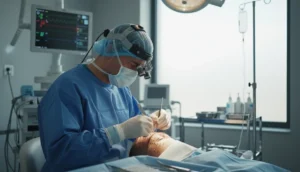
When it comes to hair loss, understanding the types of hair surgery is essential for making an informed decision about restoration. Modern clinics offer a range of procedures that address everything from mild thinning to extensive baldness, each with its own technique, recovery timeline, and suitability. In this article we will break down the most common surgical options, explain how they work, and highlight key factors that help you choose the right path.
According to recent industry reports, over 30 % of men and 20 % of women experience noticeable hair loss by the age of 35, making hair restoration one of the fastest‑growing cosmetic fields worldwide. With advancements such as FUE hair transplant and DHI, patients now enjoy minimally invasive solutions that deliver natural‑looking results. Whether you are considering a full scalp makeover or a subtle eyebrow transplant, knowing the differences between each method will save time, money, and potential disappointment.
Below, we explore the main categories of hair surgery, compare their benefits and limitations, and provide practical guidance for anyone contemplating a permanent solution to hair loss.
FUE (Follicular Unit Extraction) – The Most Popular Method
Follicular Unit Extraction (FUE) has become the gold standard for hair transplant procedures due to its minimally invasive nature and high graft survival rates. In an FUE session, individual follicular units are harvested directly from the donor area—usually the back of the scalp—using a tiny circular punch that ranges from 0.7 mm to 1.0 mm in diameter. These grafts are then meticulously placed into pre‑made incisions in the recipient zone, creating a natural hairline and density.
Key advantages of FUE include:
- No linear scar, making it ideal for patients who prefer short hairstyles.
- Quick recovery—most individuals return to normal activities within 5–7 days.
- High precision, allowing surgeons to target specific thinning patterns.
Potential drawbacks are the longer operative time for large sessions and a slightly higher cost compared with older techniques. However, the overall patient satisfaction remains exceptionally high, especially when combined with advanced tools such as motorized extraction devices and stereoscopic microscopes.
| Aspect | FUE | Traditional Strip (FUT) |
|---|---|---|
| Scarring | Dot‑like, virtually invisible | Linear scar |
| Recovery Time | 5–7 days | 10–14 days |
| Session Length | 6–12 hours (depends on graft count) | 4–8 hours |
| Ideal Candidates | Patients needing flexibility, short hair | Those with extensive baldness |

DHI (Direct Hair Implantation) – Precision Implantation Technique
The Direct Hair Implantation (DHI) method builds upon the principles of FUE but adds a proprietary implantation device called the “Choi pen.” This pen allows the surgeon to load each harvested follicle directly into the pen and implant it without creating pre‑made incisions. The result is a streamlined workflow that reduces handling time and improves graft placement accuracy.
Patients often choose DHI for its ability to achieve higher density in a smaller area, making it especially suitable for refining the frontal hairline or correcting previous transplant deficiencies. Because the pen creates micro‑channels only a fraction of a millimeter wide, the surrounding tissue experiences minimal trauma, which can translate into faster healing and less post‑operative discomfort.
Typical characteristics of DHI include:
- Higher graft survival due to reduced out‑of‑body time.
- Customizable angle and depth for each individual follicle.
- Ideal for dense packing in limited donor zones.
While DHI may command a premium price, many patients view the added precision and reduced downtime as worthwhile investments in their long‑term appearance.
| Feature | DHI | Standard FUE |
|---|---|---|
| Implantation Tool | Choi pen (direct loading) | Manual or robotic implanter |
| Incision Creation | Simultaneous with graft placement | Pre‑made incisions |
| Graft Handling Time | Under 30 seconds per graft | Up to 1–2 minutes per graft |
| Ideal Use | Hairline refinement, high‑density zones | General scalp coverage |
Hairline, Eyebrow and Beard Transplant – Specialized Cosmetic Solutions
Beyond full‑scale scalp restoration, many patients seek targeted procedures that enhance specific facial features. Hairline transplants focus on reconstructing a natural‑looking front edge, often using a lower graft density to mimic the fine hairs that typically appear at the forehead. This approach is crucial for individuals who have receded hairlines due to genetics or previous over‑harvesting.
Eyebrow and beard transplants have surged in popularity as men and women pursue a more defined look without relying on cosmetics. The technique mirrors FUE: donor follicles are harvested, trimmed to appropriate lengths, and implanted at precise angles to replicate the natural direction of facial hair. Because eyebrow hairs are finer, surgeons often select grafts from the nape of the neck, which share similar characteristics.
Key considerations for these specialized surgeries include:
- Angle of implantation – critical for a realistic appearance.
- Donor site selection – ensuring hair matches texture and growth cycle.
- Post‑procedure care – gentle cleansing and avoiding direct sunlight for two weeks.
Success rates for eyebrow and beard transplants exceed 90 % when performed by experienced clinicians, and most patients report a boost in confidence after just a few months of growth.
| Procedure | Typical Graft Count | Recovery Time | Ideal Candidates |
|---|---|---|---|
| Hairline Transplant | 500–1500 | 7–10 days | Receding forehead, thin frontal zone |
| Eyebrow Transplant | 50–300 | 5–7 days | Sparse or missing eyebrows |
| Beard Transplant | 1000–3000 | 7–12 days | Patchy beard, mustache gaps |
Scalp Reduction and Hair Grafting – Alternatives for Advanced Cases
When donor hair is limited or the bald area is extensive, surgeons may recommend scalp reduction surgery or advanced hair grafting techniques. Scalp reduction involves surgically removing a portion of the bald scalp and stretching the surrounding hair‑bearing skin to cover the gap. Although less common today due to the efficacy of FUE and DHI, it remains a viable option for patients with massive alopecia who lack sufficient donor follicles.
Hair grafting, often referred to as “hair plug” surgery in older literature, has evolved dramatically. Modern grafting uses micro‑grafts that contain 1–4 hairs each, allowing for meticulous placement that mimics natural hair distribution. This method is frequently combined with FUE to maximize coverage: the surgeon first performs a standard extraction, then uses grafts to fill in tricky zones such as the crown or sideburns.
Important points to weigh when considering these alternatives:
- Donor availability – Scalp reduction may be necessary when donor density is low.
- Scarring – Reduction leaves a linear scar that can be concealed by hair if placed strategically.
- Cost – Both procedures tend to be more expensive than standard FUE due to surgical complexity.
Patients who undergo scalp reduction typically experience a longer healing period (2–3 weeks) and may require additional sessions to fine‑tune the final appearance. Nonetheless, for those with severe hair loss, the results can be life‑changing.
Choosing the Right Procedure – Factors to Consider
Deciding which type of hair surgery best fits your needs involves a blend of medical assessment, personal goals, and realistic expectations. Below are the primary factors that should guide your consultation:
- Extent of hair loss – Mild thinning may be addressed with a limited FUE session, while extensive balding might require a combination of FUE, DHI, and possibly scalp reduction.
- Donor area quality – The density and health of donor follicles dictate how many grafts can be safely harvested.
- Desired aesthetic – If you prefer a natural, soft hairline, DHI or a meticulous FUE approach is advisable.
- Budget – While all procedures involve an investment, DHI and scalp reduction generally carry higher price tags.
- Recovery timeline – Patients with tight schedules often opt for FUE due to its quicker downtime.
During an initial consultation, a qualified surgeon will evaluate your scalp, discuss your expectations, and recommend a customized plan. It is crucial to ask about graft survival rates, potential complications, and post‑operative care protocols. Transparent communication ensures you enter the process with confidence and a clear roadmap toward lasting results.
| Consideration | Best Suited Procedure | Typical Cost Range (USD) |
|---|---|---|
| Minor thinning | Standard FUE | 2,000 – 4,000 |
| Hairline refinement | DHI | 3,500 – 5,500 |
| Eyebrow or beard gaps | FUE‑based facial transplant | 1,200 – 2,500 |
| Extensive baldness with limited donor | Scalp reduction + grafting | 6,000 – 10,000 |
Why Choose Gold City Hair
Gold City Hair has been delivering personalized hair restoration solutions in Turkey since 2017. Our team combines extensive expertise in FUE, DHI, and facial hair transplants with a commitment to transparent communication and patient‑centered care. By using state‑of‑the‑art technology and adhering to strict safety standards, we help clients regain confidence and achieve natural, lasting results.
Ready to start your transformation? Contact Gold City Hair today to schedule a free, no‑obligation consultation and discover which type of hair surgery is right for you.
FAQ
What is FUE hair transplant and how does it differ from FUT?
FUE extracts individual follicles using a tiny punch, leaving no linear scar, while FUT removes a strip of scalp, resulting in a linear scar.
How does the DHI technique improve graft survival compared to standard FUE?
DHI uses a Choi pen that loads and implants grafts instantly, reducing out‑of‑body time and trauma, which boosts survival rates.
Can hairline, eyebrow, or beard transplants be performed with the same technique as scalp transplants?
Yes, they generally use the FUE method, adapting graft size and angle to match the finer hair of eyebrows and beard areas.
When is scalp reduction surgery recommended over FUE or DHI?
Scalp reduction is considered when donor hair is insufficient for large bald areas, offering a way to stretch existing hair‑bearing skin.
What factors should I consider when choosing the right hair surgery for me?
Consider the extent of loss, donor area quality, desired aesthetic, budget, and recovery time.