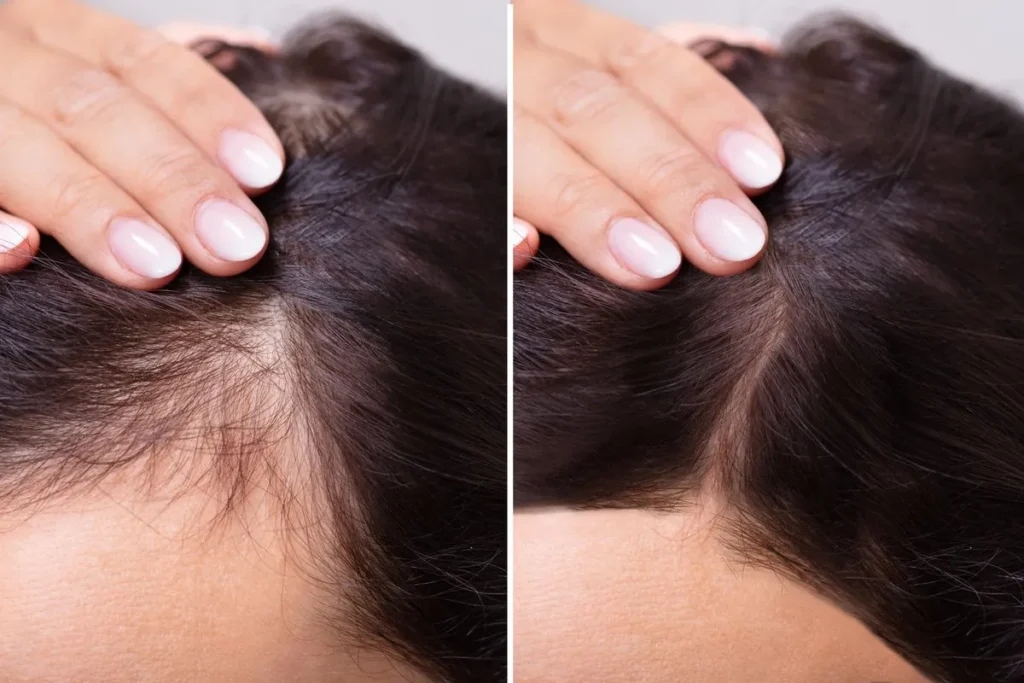
If you’re looking into hair loss treatments, and you’re a cancer survivor, you might wonder if minoxidil is safe. A lot of research and checks by health groups have shown that minoxidil is okay when used right. It doesn’t raise the chance of cancer.
Can minoxidil cause cancer? Get the crucial facts and amazing, powerful insights into safety to stop scary myths about hair loss treatments.
Studies, like a big review by NYU Langone, found that minoxidil is safe for hair growth in breast cancer patients. This news is good for those looking into hair loss treatments.
Önemli Çıkarımlar
Extensive research supports the safety of minoxidil when used as directed.
Regulatory oversight has confirmed that minoxidil does not increase cancer risk.
Low-dose minoxidil has been shown to be safe for breast cancer patients.
Minoxidil can be a viable option for hair regrowth in cancer survivors.
Consult a healthcare professional before starting minoxidil treatment.
Understanding Minoxidil and Its Medical Applications
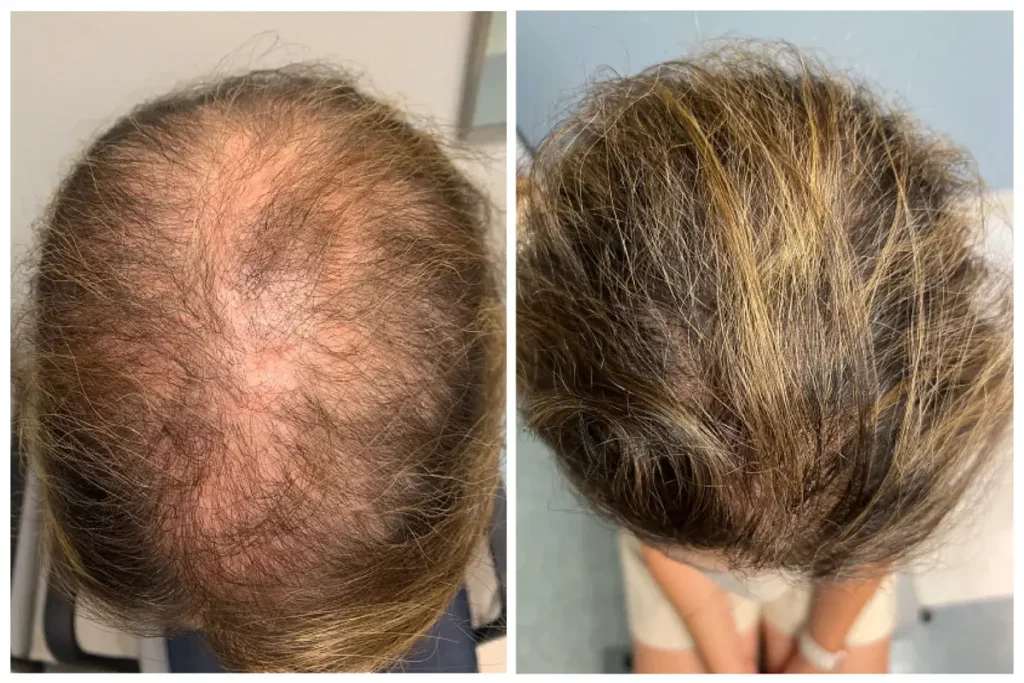
Minoxidil is a topical solution that has been approved by the FDA for treating hair loss. It works by widening blood vessels in the scalp. This action boosts blood flow, which helps deliver more oxygen and nutrients to hair follicles.
What Is Minoxidil and How It Works
Minoxidil stimulates hair growth and slows down hair loss. When applied to the scalp, it gets absorbed. There, it starts working its magic.
FDA Approval and Regulatory Oversight
The FDA says minoxidil is safe for use on the skin. Research has found no link to increased cancer risk. This ensures minoxidil meets high standards of quality and safety.
Can Minoxidil Cause Cancer? Examining the Scientific Evidence
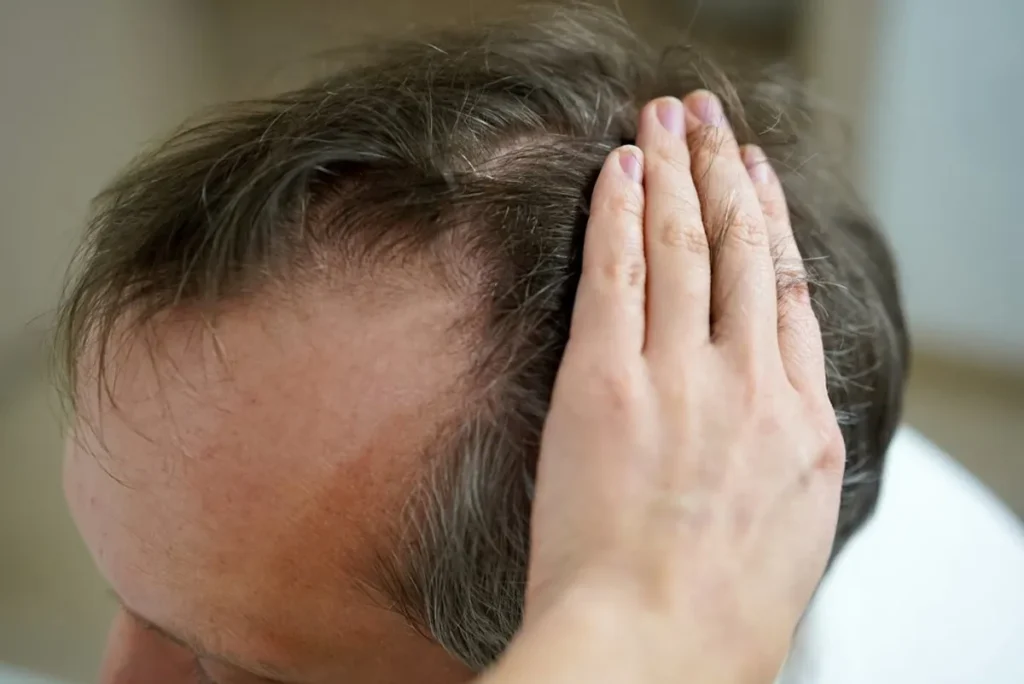
Many studies have looked into if minoxidil, found in Rogaine, might cause cancer. The evidence from these studies and regulatory checks helps us understand its safety.
Long-Term Safety Monitoring Data
Checking minoxidil’s safety over time is key. The FDA says it’s safe, based on no higher cancer rates in users. Post-marketing surveillance also backs this up, showing it doesn’t cause cancer when used right.
Studies on Minoxidil Use in Breast Cancer Survivors
Some studies have looked at minoxidil in breast cancer survivors. They found it doesn’t raise cancer risk in this group. For example, a study showed no link to cancer coming back in survivors.
The 2022 Low-Dose Oral Minoxidil Investigation
In 2022, a study on low-dose oral minoxidil for hair growth found it worked well. It didn’t raise safety concerns, including no cancer risk. This study adds to minoxidil’s safety record.
Addressing Brain Cancer Concerns
There were worries about minoxidil and brain cancer. But, thorough research has found no link. This clears up concerns for those using it.
To sum up, the science shows minoxidil doesn’t cause cancer when used correctly. Data from long-term checks, studies on breast cancer survivors, and low-dose oral minoxidil research all support its safety.
Research Findings on Minoxidil’s Cellular Effects
It’s important to know how minoxidil affects cells. This knowledge helps us understand its benefits and possible side effects. Scientists have been studying minoxidil’s effects on various cell types.
Early Animal Studies at High Doses
Early studies on animals used high doses of minoxidil. These doses were much higher than what humans use. Some studies found toxic effects at these high doses.
Real-World Human Usage and Dosage Context
In humans, minoxidil is used at much lower doses. People apply 2% or 5% solutions to their scalp. This way, less of it is absorbed into the body. Studies show that side effects from topical minoxidil are rare.
Potential Anti-Proliferative Properties in Cancer Cell Lines
Research also shows minoxidil might slow down cancer cell growth. Lab studies found it could stop certain cancer cells from growing. The research includes:
Inhibition of cancer cell proliferation
Potential anti-invasive properties
Modulation of cellular pathways involved in cancer progression
These findings are exciting. But, more research is needed to understand minoxidil’s anti-cancer effects fully.
Conclusion: Minoxidil Safety Profile and Recommendations
Minoxidil is a safe and effective way to treat hair loss. There’s no strong evidence linking it to cancer. Doctors look at age, race, and medical history before suggesting it.
To keep minoxidil safe, follow the dosage and talk to a doctor. Rogaine should be applied twice a day. It may take months to see results.
Minoxidil is safe when used correctly. The answer to “is minoxidil safe” is yes, based on science. Always get advice from a healthcare professional.
SSS
Minoxidil and Cancer Risk
There is no clinical evidence or scientific research suggesting that minoxidil causes cancer in humans. The medication has been FDA-approved for decades and has undergone extensive safety testing, with no established link between its topical or oral use and the development of malignant tumors.
Minoxidil After Chemotherapy
Minoxidil is generally considered safe and is often recommended by dermatologists to help accelerate hair regrowth after chemotherapy once the treatment is complete. However, you should always consult your oncologist before starting it to ensure your scalp has fully recovered from any chemo-induced sensitivity or irritation.
Topical Minoxidil Safety
Topical minoxidil is not a carcinogen and does not cause cancer, as its primary function is to dilate blood vessels and extend the hair growth cycle. Because it is applied externally, very little of the medication reaches the bloodstream, further minimizing the risk of systemic health issues like internal cellular mutations.
Long-Term Side Effects of Rogaine
The long-term side effects of Rogaine are generally mild and limited to the application site, such as persistent scalp dryness, itching, or minor irritation. Some users may experience a slight increase in facial hair growth if the product frequently touches the forehead or cheeks, but serious systemic issues are extremely rare with prolonged use.
Safety and Risks of Minoxidil
Minoxidil is considered a low-risk treatment for most people, though it can cause heart palpitations or lightheadedness in individuals who are particularly sensitive to its blood-pressure-lowering properties. It is important to follow the recommended dosage and avoid applying it to broken or inflamed skin to prevent excessive absorption into the body.
PRP Therapy and Cancer
PRP therapy uses a concentrated version of your own blood platelets to stimulate hair follicles and does not contain any carcinogenic additives or chemicals. While it involves growth factors, there is currently no evidence to suggest that injecting your own plasma into the scalp causes or promotes the growth of cancerous cells.
Rogaine Side Effects for Women
Women using Rogaine may experience unique side effects such as unwanted hair growth on the face or a temporary “dread shed” during the first few weeks of application. Additionally, some women may find that the formula causes contact dermatitis, leading to redness or flaking that can usually be managed by switching to the foam version.
Minoxidil and Permanent Baldness
Rogaine does not cause permanent baldness; however, it can cause a temporary increase in shedding as it resets the hair growth cycle to make way for thicker strands. If you stop using the treatment, your hair will simply return to its previous state of thinning, rather than becoming more bald than it would have been naturally.
Referanslar
National Center for Biotechnology Information. Evidence-Based Medical Insight. Retrieved from https://pubmed.ncbi.nlm.nih.gov/38774694/