Many people wonder is alopecia an autoimmune disease and how that answer influences treatment choices. Hair loss can be distressing, and understanding the underlying cause is the first step toward effective restoration. In this article we’ll explain what alopecia is, examine the immune‑system link, outline diagnostic methods, and review current treatment options—including advanced hair‑transplant techniques offered by Gold City Hair.
Hair loss affects up to 40 % of the global population at some point in life, and autoimmune forms such as alopecia areata account for a significant share of those cases. Recognizing whether your condition is autoimmune helps you and your clinician decide between medical therapies, lifestyle adjustments, or surgical restoration.
We’ll walk through the most common types of alopecia, the science behind autoimmunity, how specialists confirm an autoimmune diagnosis, and what realistic solutions exist for regaining a fuller head of hair.
What Is Alopecia and Its Different Types?
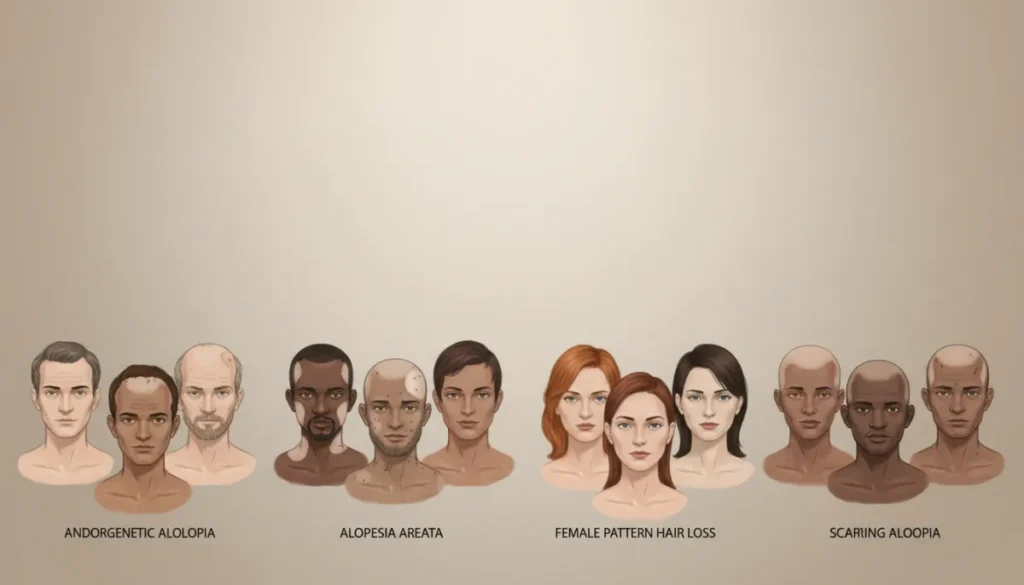
Alopecia simply means “hair loss” in medical terminology, but the condition encompasses a wide spectrum of patterns and causes. The most frequently discussed forms include:
- Alopecia areata – sudden, patchy hair loss that often starts on the scalp and can affect any hair‑bearing area.
- Alopecia totalis – complete loss of scalp hair.
- Alopecia universalis – loss of all body hair, including eyebrows and eyelashes.
- Androgenetic alopecia (pattern baldness) – progressive thinning driven by genetics and hormones.
- Scarring alopecia (cicatricial alopecia) – permanent loss due to inflammation that destroys hair follicles.
- Traction alopecia – caused by chronic pulling or tension on the hair.
Among these, alopecia areata, totalis, and universalis are most closely linked to an immune system malfunction, which raises the question is alopecia an autoimmune disease. In contrast, androgenetic alopecia is primarily hormonal and not considered autoimmune.
Understanding the specific type you experience is crucial because treatment strategies differ dramatically. For example, medical immunomodulators work well for autoimmune forms, while hair‑restoration surgery such as Follicular Unit Extraction (FUE) is often the preferred solution for pattern baldness.
The Autoimmune Connection: How the Immune System Can Trigger Hair Loss
Autoimmune diseases arise when the body’s immune system mistakenly attacks its own tissues. In the case of alopecia areata and its more extensive variants, immune cells target the hair follicle’s “immune‑privileged” zone, leading to sudden shedding.
Key mechanisms include:
- Activation of CD8+ T‑cells that recognize follicular antigens as foreign.
- Release of inflammatory cytokines such as interferon‑γ and interleukin‑15.
- Disruption of the hair cycle, pushing follicles into the telogen (resting) phase.
Research shows that genetic susceptibility, environmental triggers, and stress can all influence whether is alopecia an autoimmune disease applies to a particular case. While alopecia areata is clearly autoimmune, other forms like scarring alopecia may involve autoimmune components but are also linked to infections or trauma.
Understanding this immune basis helps clinicians select therapies that modulate the immune response—topical or injectable corticosteroids, JAK inhibitors, and emerging biologics are all options aimed at reducing follicular attack.
Diagnosing Autoimmune Alopecia: Tests and Clinical Signs
Accurate diagnosis begins with a thorough clinical examination and may involve several investigations to confirm an autoimmune etiology. Dermatologists look for hallmark signs such as sudden patchy hair loss, exclamation‑point hairs, and nail changes (pitting or ridging).
Common diagnostic tools include:
| Test | Purpose | Typical Findings |
|---|---|---|
| Physical Examination | Identify pattern and extent of hair loss | Patchy bald spots, smooth scalp, nail pitting |
| Trichoscopy | Dermatoscopic imaging of scalp | Yellow dots, black dots, broken hairs |
| Blood Tests | Screen for autoimmune markers | Elevated antinuclear antibodies (ANA), thyroid antibodies |
| Scalp Biopsy | Histological confirmation | Peribulbar lymphocytic infiltrate (“swarm of bees”) |
When these assessments point toward an autoimmune process, the answer to is alopecia an autoimmune disease becomes clear, guiding the physician toward immunomodulatory treatment rather than solely surgical options.
Treatment Options for Autoimmune‑Related Hair Loss
Once an autoimmune diagnosis is confirmed, treatment aims to halt the immune attack and stimulate regrowth. Options fall into three broad categories:
- Topical therapies – corticosteroid creams, minoxidil, and topical immunotherapy (diphencyprone).
- Systemic medications – oral corticosteroids, methotrexate, and newer Janus kinase (JAK) inhibitors such as tofacitinib and ruxolitinib.
- Surgical restoration – for stable disease, hair‑transplant techniques like Follicular Unit Extraction (FUE) and Direct Hair Implantation (DHI) can provide permanent coverage.
Gold City Hair specializes in the surgical side of the equation, offering state‑of‑the‑art FUE and DHI procedures performed by experienced Turkish surgeons. While surgery does not treat the underlying autoimmune activity, it can deliver lasting cosmetic results once the disease is quiescent.
Patients often combine medical therapy to control inflammation with a later transplant once hair follicles have stabilized. This integrated approach maximizes the chance of dense, natural‑looking results.
Living With Autoimmune Alopecia: Lifestyle and Support
Beyond medical and surgical interventions, coping with an autoimmune hair‑loss condition involves emotional resilience and practical daily habits. Stress management, balanced nutrition, and scalp care can all influence disease activity.
Helpful lifestyle tips include:
- Maintain a diet rich in omega‑3 fatty acids, zinc, and vitamins A, D, and E.
- Practice stress‑reduction techniques such as mindfulness, yoga, or regular exercise.
- Avoid harsh hair treatments, tight hairstyles, and excessive heat styling.
- Join support groups or online communities to share experiences and stay informed.
While the question is alopecia an autoimmune disease may initially feel overwhelming, many individuals achieve stable remission and regain confidence through a combination of therapy, supportive care, and, when appropriate, hair‑restoration surgery.
Why Choose Gold City Hair for Your Hair Restoration
Gold City Hair has been delivering personalized hair‑transplant solutions in Turkey since 2017. Our clinic combines the latest FUE and DHI technologies with a transparent, patient‑focused approach. Each treatment plan is tailored to your unique condition—whether you are managing an autoimmune form of alopecia or seeking restoration after pattern baldness. Trust our experienced surgeons to provide safe, natural‑looking results that help you regain confidence.
Ready to take the next step toward a fuller head of hair? Contact Gold City Hair today for a personalized consultation and discover how our expert team can help you achieve lasting results.
SSS
Is alopecia an autoimmune disease?
Yes, certain forms like alopecia areata, totalis, and universalis are autoimmune, while others such as androgenetic alopecia are not.
What are the different types of alopecia?
Alopecia includes areata, totalis, universalis, androgenetic (pattern), scarring, and traction types.
How is autoimmune alopecia diagnosed?
Through clinical examination, trichoscopy, blood tests for autoantibodies, and sometimes scalp biopsy.
What treatment options exist for autoimmune‑related hair loss?
Topical steroids, systemic immunosuppressants, JAK inhibitors, and surgical hair‑transplant once disease is stable.
Can hair transplant be performed on autoimmune alopecia?
Yes, but only after the autoimmune activity is quiescent and the scalp is stable.
What lifestyle changes help manage autoimmune alopecia?
Balanced diet, stress reduction, gentle hair care, and community support improve outcomes.