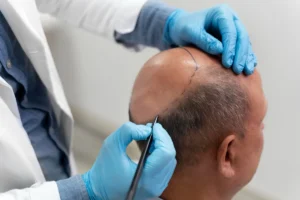
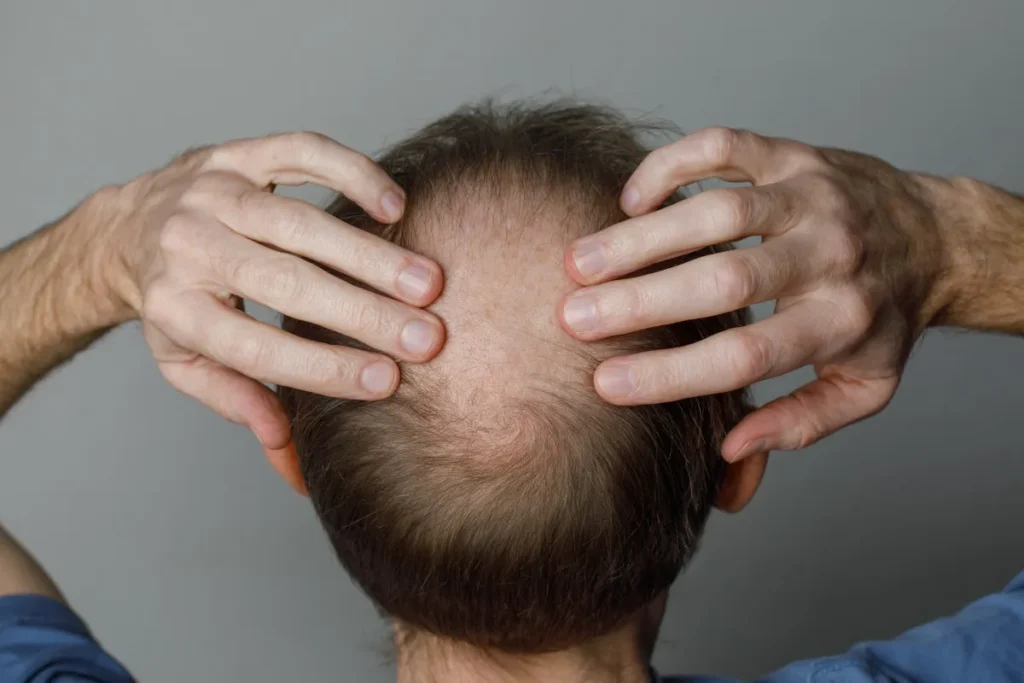
Many people find it hard to tell if they have a cowlick or early signs of balding. This can cause worry about their hair health. It’s important to know the difference to decide if you need to do something or if it’s just your natural hair pattern.
Cowlicks are natural hair growth patterns that look like a swirl. They are often there from birth because of genetics. Balding, or androgenetic alopecia, is a condition where you lose hair over time. It’s caused by genetics and hormones. To learn more, check out our guide at Charles Medical Group.
Önemli Çıkarımlar
Cowlicks are natural hair growth patterns that are usually present from birth.
Balding is a progressive condition influenced by genetics and hormones.
Distinguishing between cowlicks and balding is important for knowing what to do next.
Seeing a hair restoration specialist can help find solutions.
Acting early can stop more hair loss.
Understanding Cowlicks and Balding
It’s important to know the difference between a cowlick and balding. Both can affect how your hair looks, but they have different causes and effects.
A cowlick is a natural hair pattern that can be styled. Balding, or male pattern baldness, is a condition where hair falls out more and more.
What Is a Cowlick?
A cowlick is a part of your hair that grows differently than the rest. It’s usually there from birth and doesn’t change much. It’s shaped by your hair follicle and genetics.
Characteristics of Cowlicks:
Present from birth
Remain relatively stable over time
Influenced by genetic factors
Can be managed with proper styling
What Is Male Pattern Baldness?
Male pattern baldness, or androgenetic alopecia, is a common hair loss condition. It gets worse over time and is caused by hormones and genetics.
Characteristics of Male Pattern Baldness:
Knowing the difference between cowlicks and balding helps you choose the right treatment for hair loss. Cowlicks are harmless and can be styled. But balding needs treatments to fight hormonal and genetic causes.
Bald Spot vs Hair Part: Key Differences to Look For
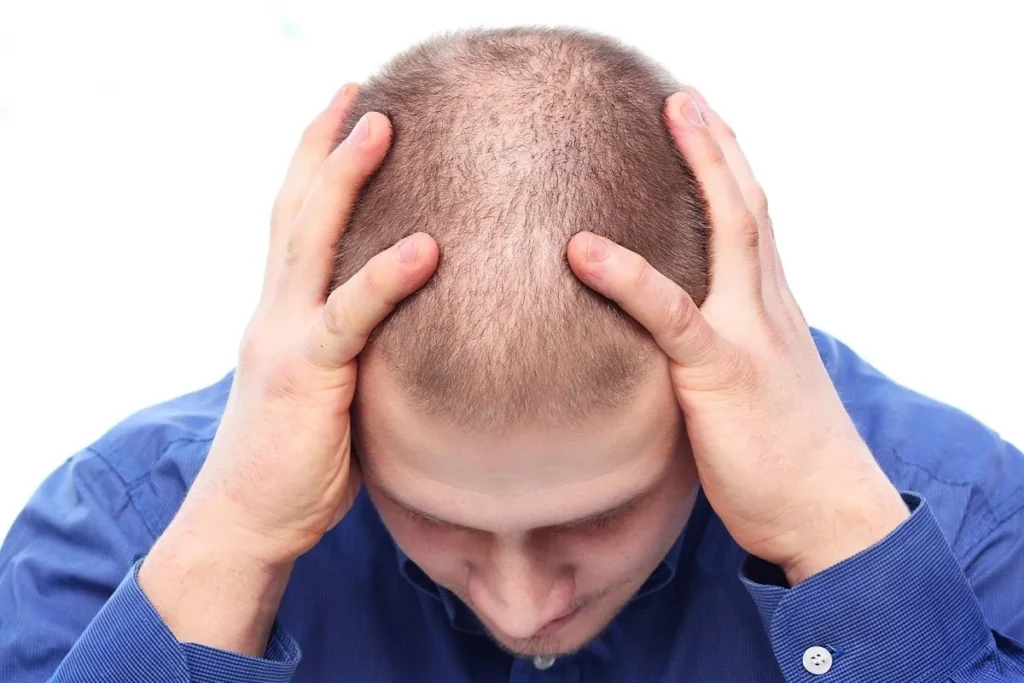
It can be hard to tell if you have a bald spot or a cowlick. Look for visual clues, how it changes over time, and try self-diagnosis.
Visual Appearance and Pattern Recognition
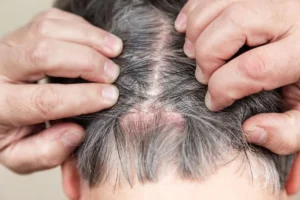
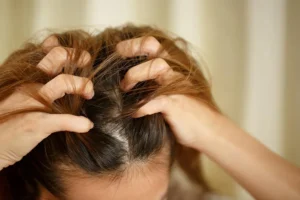
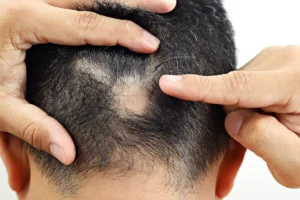
A cowlick has hair growing in a swirling pattern, often at the crown or hairline. A bald spot is a clear area of thinning or no hair. To figure out if it’s a cowlick or a bald spot, check these:
A cowlick has hair growing in different directions, making a whorl or spiral.
A bald spot looks uniform, with little to no hair growth.
[Resmi buraya ekleyin]
Progression and Changes Over Time
A cowlick stays the same, while balding gets worse if not treated. Watch how your hair changes:
If the area gets thinner or bigger, it might be balding.
If the hair pattern stays the same, it’s probably a cowlick.
For more info on hair patterns and thinning, check Happy Head’s blog on normal hair part vs.
Self-Diagnosis Methods
While a pro diagnosis is best, you can try some things at home. Look at your hairline and scalp in a mirror for thinning or loss. Try different hairstyles to see if the area changes.
Understanding your hair is the first step to feeling better about it. Knowing the difference between a bald spot and a cowlick helps you address your hair concerns.
Conclusion: When to Seek Professional Help
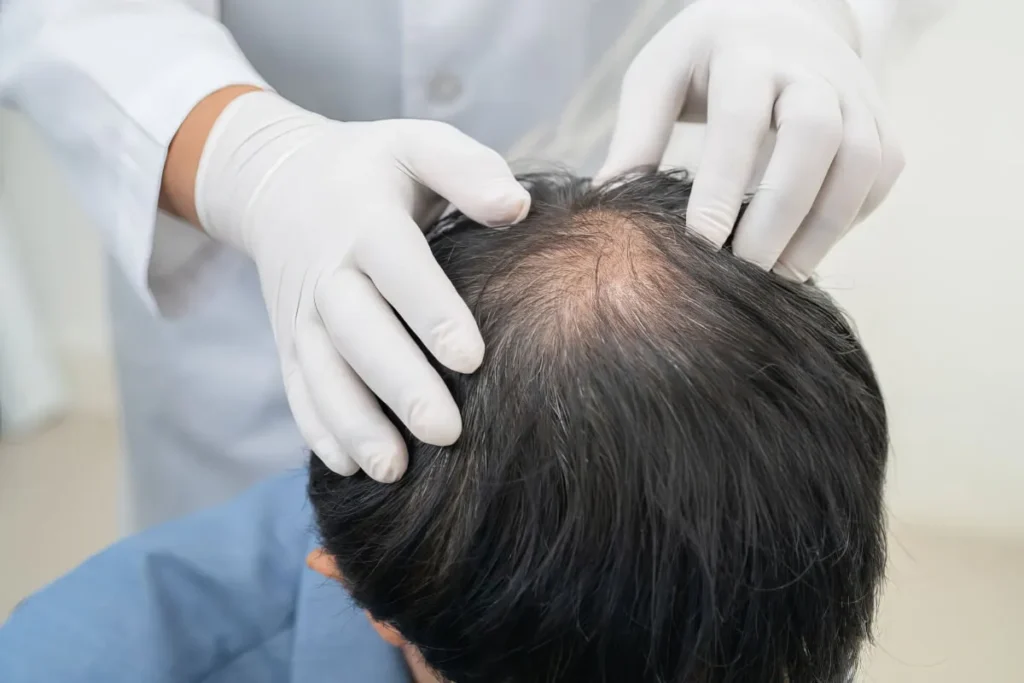
Figuring out if you have a cowlick or balding can be tricky. A cowlick is a part of hair that grows differently, making it stick up or lie flat. Balding, or male pattern baldness, is when hair falls out more and more over time.
If you’re not sure about your hair situation, watch how it changes. If you see big differences, it’s a good idea to talk to a hair expert. They can tell you if you have a cowlick or if you’re losing hair.
Don’t let hair loss get you down. Get help from someone who knows about hair. They can give you advice and solutions that fit your needs. Knowing why you’re losing hair is the first step to fixing it.
SSS
What is a cowlick and how does it differ from balding?
A cowlick is a natural hair growth pattern where a section of hair grows in a different direction than the rest, often creating a swirl or a spiral. It is a permanent feature of your scalp determined by your genetics and is usually present from birth. In contrast, balding, or androgenetic alopecia, is a progressive condition where hair follicles miniaturize over time, leading to thinner strands and eventually total hair loss in specific areas. While a cowlick is simply a directional quirk of healthy hair, balding involves an actual reduction in the number and quality of hairs present on the scalp.
Can a cowlick be mistaken for a bald spot?
It is very common for a cowlick to be mistaken for a bald spot, especially when located at the crown of the head. Because the hair in a cowlick grows in radiating directions, it often exposes a small circular area of the scalp at the center of the swirl. This exposure can look like a thinning patch under bright lights or in photographs, even if the surrounding hair is perfectly thick and healthy. The primary difference is that in a cowlick, the scalp is visible because of how the hair is angled, whereas in a bald spot, the scalp is visible because the hair is missing or significantly thinner.
How can I determine if I’m balding or just have a cowlick?
To determine the difference, you should examine the texture of the hair within the area and look for signs of progression. A cowlick will have hairs that are the same thickness and color as the rest of your head, and the “spot” will remain the same size throughout your life. Balding, however, usually presents with miniaturization, where the hairs at the edges of the patch become finer, shorter, and lighter than the surrounding hair. If you notice that the visible area of the scalp is expanding over several months or that the hair in that area feels “wispy,” it is more likely a sign of hair loss rather than a simple cowlick.
Can balding be treated, and what are the available options?
Balding can be treated with a variety of medical and procedural options depending on the stage of hair loss. The most common FDA-approved treatments include topical minoxidil, which stimulates blood flow to the follicles, and oral finasteride, which blocks the hormone DHT responsible for follicle shrinkage. Other modern options include Low-Level Laser Therapy (LLLT), Platelet-Rich Plasma (PRP) injections to rejuvenate dormant follicles, and hair transplant surgery for permanent restoration in areas where the hair has completely stopped growing. Early intervention is key, as these treatments are much more effective at preserving existing hair than regrowing hair in completely bald areas.
Are cowlicks a sign of underlying hair loss or balding?
Cowlicks are not a sign of underlying hair loss or a predictor of future balding. They are structural features of the scalp that have no relationship with the hormonal or genetic factors that cause male or female pattern baldness. Many people with extremely thick hair have prominent cowlicks, and many people who go bald never had a cowlick to begin with. Having a cowlick simply means your hair follicles are arranged in a specific geometric pattern, which is entirely independent of the follicle’s long-term health or its sensitivity to hair loss hormones.
Can a cowlick be treated or managed to reduce its appearance?
Because a cowlick is a natural growth direction, it cannot be “cured” or permanently changed, but it can be managed through styling techniques. Using heavy pomades or waxes can help weight the hair down in the desired direction, and blow-drying the hair while it is wet can “train” it to lay flat for a period of time. Many people also find that keeping their hair either very short or significantly longer helps minimize the “pop-up” effect of a cowlick, as the extra weight or lack of length prevents the hair from springing into its natural spiral.
Is it normal to have multiple cowlicks, and can they be a sign of balding?
It is perfectly normal to have multiple cowlicks, and some people have two or more swirls on different parts of their head. This is often referred to as a “double crown” when located at the back of the head. Multiple cowlicks are not a sign of balding; however, they can make hair loss look more dramatic if thinning begins to occur near those growth centers. Because several swirls can expose more of the scalp surface, a person with multiple cowlicks might perceive they are balding earlier than someone with a uniform growth pattern, even if their actual rate of hair loss is the same.
Can I undergo hair restoration if I have a cowlick?
Yes, you can undergo hair restoration even if you have a cowlick. Skilled hair transplant surgeons take your natural cowlicks into account when designing a hair restoration plan to ensure the results look natural. During a transplant, the surgeon carefully angles the implanted follicles to match your original growth direction, including any swirls or spirals. In fact, if a surgeon ignores your natural cowlick and implants hair in a uniform direction, the result will look artificial and “pluggy,” so the presence of a cowlick is actually an important roadmap for a successful and realistic transplant.
Referanslar
Ulusal Biyoteknoloji Bilgi Merkezi. Kanıta Dayalı Tıbbi Öngörü. Erişim adresi https://pubmed.ncbi.nlm.nih.gov/27878378/