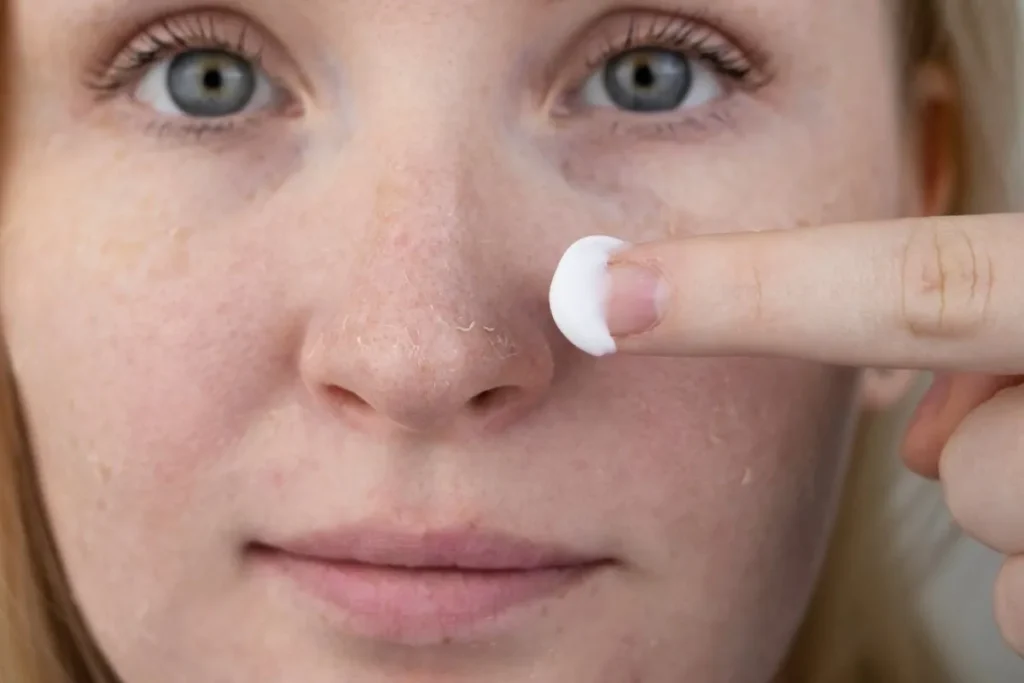
Do you have a dry, flaky forehead that makes you feel self-conscious? You’re not alone. Many people struggle with dry skin on their foreheads, no matter their skin type or age.
Fix dry skin on forehead with amazing solutions. Learn the scary causes of flaking and use powerful, incredible tips for hydrated skin.
The T-zone, which includes your forehead and nose, often shows signs of dryness first. The American Academy of Dermatology says dry skin can come from many things. This includes less sebum, changes in the environment, and bad skincare habits.
Knowing why your forehead is dry is key to fixing it. In this article, we’ll look at common causes and solutions. We aim to help you get a healthier, brighter face.
Önemli Çıkarımlar
Forehead dryness is a common condition affecting various skin types and ages.
The T-zone area is prone to showing initial symptoms of facial dryness.
Reduced sebum production, environmental changes, and inappropriate skincare routines can cause dry skin.
Understanding the underlying cause is critical to finding the right solution.
Effective solutions can help achieve a healthier, more radiant complexion.
Understanding Dry Skin on Forehead: Common Causes
It’s important to know why your forehead gets dry. Dry skin can come from many things like weather, aging, harsh products, and health issues.
Environmental Factors and Weather Changes
Weather changes can really affect your forehead skin. Cold winters and low humidity dry out your skin. Using a humidifier helps keep the air moist and can help your skin stay hydrated.
Aging and Decreased Natural Oil Production
As we get older, our skin makes less oil. This makes our skin dry and flaky, often on the forehead.
Harsh Skincare Products and Over-Washing
Harsh products and washing too much can also dry out your forehead. Harsh cleansers take away your skin’s natural oils. Washing too much messes with your skin’s balance, causing dryness and irritation.
Medical Conditions: Seborrheic Dermatitis and Eczema
Some health issues like seborrheic dermatitis and eczema can make your forehead skin dry. These conditions cause inflammation, redness, and flakiness, making your skin even drier.
Knowing what causes dry skin on your forehead helps you prevent and treat it. This way, you can keep your skin healthy and looking good.
Effective Solutions for Dry, Flaky Forehead Skin
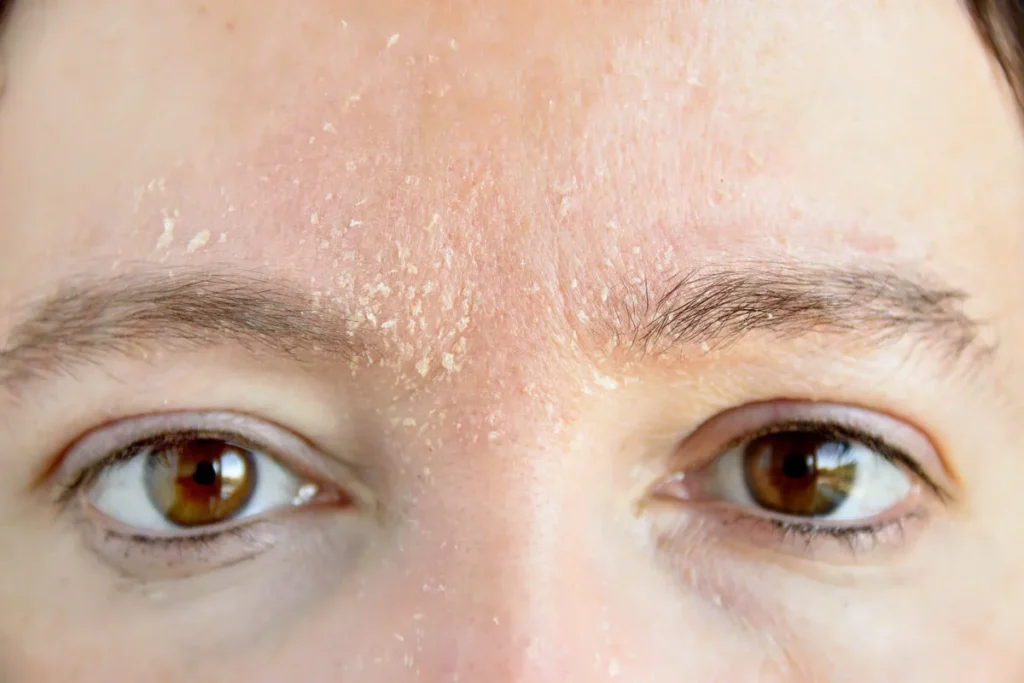
Managing dry, flaky forehead skin needs a full plan. This includes skincare, staying hydrated, and eating right. A gentle skincare routine, the right moisturizers, and a balanced diet are key.
Gentle Cleansing and Exfoliation Techniques
Start with gentle cleansing to tackle dry, flaky forehead skin. Choose a mild cleanser that keeps your skin’s natural oils. Avoid harsh cleansers that can dry out your skin more.
Exfoliating is also vital, but do it carefully. Limit exfoliation to once or twice a week to avoid irritation. Use a gentle exfoliant with alpha-hydroxy acids (AHAs) or beta-hydroxy acids (BHAs) to remove dead skin cells.
Moisturizing Ingredients That Repair the Skin Barrier
Moisturizing is key to managing dry, flaky skin. Look for moisturizers with hyaluronic acid, ceramides, and niacinamide. These ingredients help repair and lock in moisture.
Apply moisturizer right after cleansing, when your skin is damp. Reapply moisturizer throughout the day, after washing your face or when it’s exposed to harsh weather.
Hidrasyon ve Diyetle İlgili Hususlar
Drinking enough water is essential for healthy skin. It keeps your skin hydrated from the inside. Eating a balanced diet with omega-3 fatty acids, vitamins A, C, and E, and zinc also supports your skin.
Eating foods rich in antioxidants and healthy fats can reduce inflammation and keep your skin hydrated. Limit processed foods and sugars to avoid inflammation and dry skin.
When to Seek Professional Treatment
If your dry, flaky forehead skin doesn’t improve with gentle skincare and diet changes, see a dermatologist. They can diagnose conditions like seborrheic dermatitis or eczema and suggest treatments.
Sonuç
Dry, flaky skin on the forehead can be a big problem. But knowing what causes it is the first step to fixing it. By understanding the role of the environment, aging, harsh skincare, and medical issues, we can start to solve the problem.
Using gentle cleansers and exfoliants, and applying moisturizers that fix the skin barrier is important. Also, drinking enough water helps keep the skin hydrated. If the problem doesn’t go away, seeing a doctor for help can be a good idea.
By following these tips, we can get rid of dry, flaky skin on our foreheads. Knowing why our forehead gets dry and flaky is the first step to solving this common problem.
SSS
What causes flaky skin on the face?
Flaky skin can be caused by dryness, eczema, psoriasis, sun damage, or reactions to skincare products.
Why is my forehead so dry and flaky?
It may result from dehydration, harsh cleansers, cold weather, or skin conditions like eczema.
How can I treat dry, scaly skin on my forehead?
Use gentle cleansers, moisturizers with ceramides or hyaluronic acid, and avoid hot water or harsh exfoliants.
Why is my face so dry and flaky?
Dry, flaky skin can be due to environmental factors, aging, low humidity, or skin conditions.
What are some effective moisturizing ingredients for dry skin?
Look for hyaluronic acid, glycerin, ceramides, shea butter, and natural oils like jojoba or coconut.
When should I seek professional treatment for dry, flaky skin on my forehead?
See a dermatologist if dryness is persistent, painful, itchy, or accompanied by redness or cracks.
Can sudden dry skin on the face be a sign of an underlying medical condition?
Yes, it can indicate eczema, psoriasis, thyroid issues, or nutritional deficiencies.
How can I prevent dry, flaky skin on my forehead?
Moisturize regularly, avoid harsh soaps, protect skin from sun, and maintain proper hydration.
Referanslar
National Center for Biotechnology Information. Evidence-Based Medical Insight. Retrieved from https://www.ncbi.nlm.nih.gov/books/NBK565884/