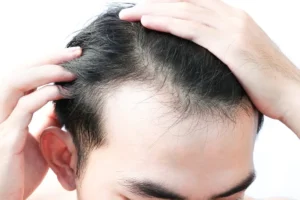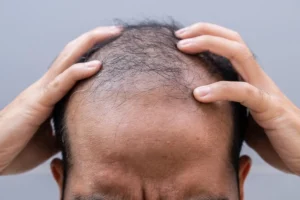
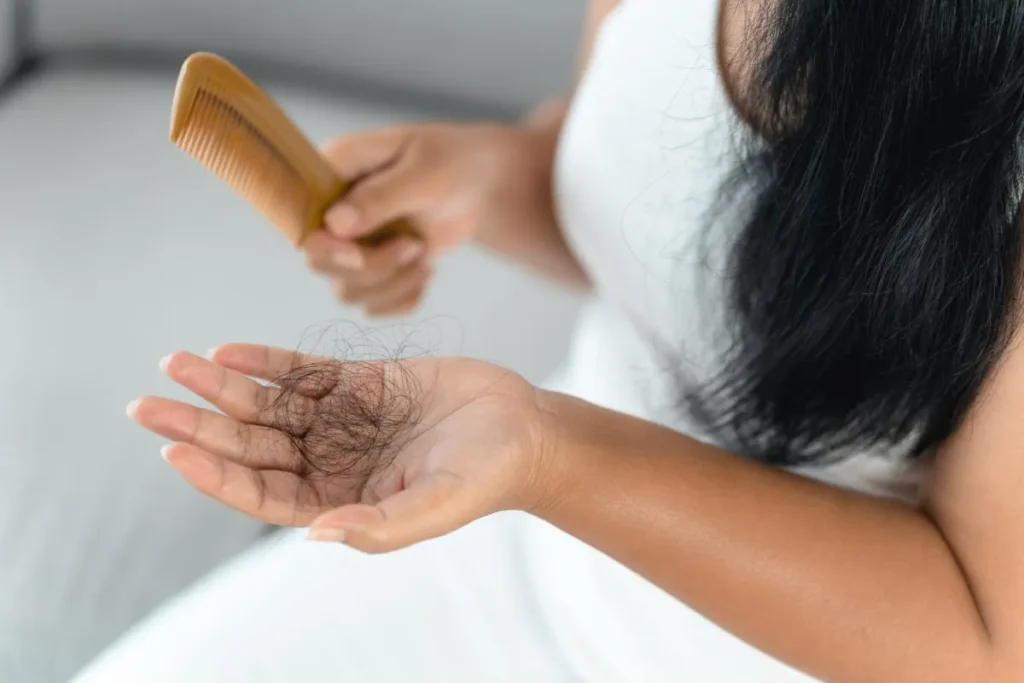
Chronic stress can deeply affect our bodies, and one clear sign is hair loss. High cortisol levels, caused by stress, can mess up hair growth. This leads to more hair falling out and conditions like telogen effluvium.
Cortisol’s role in hair loss is complex. It harms hair follicle stem cells and cuts down on important skin elements. At Gold City Hair, we know solving stress-related hair problems needs a full plan. We look into how stress, hormones, and follicle health are connected.
Getting back confidence with healthier hair is within reach. By learning about cortisol and hair loss, you can start working towards your hair health dreams.
Key Takeaways
Cortisol disrupts the normal hair growth cycle, leading to increased shedding.
Chronic stress impairs hair follicle stem cells, contributing to hair loss.
Understanding cortisol’s role is key to tackling stress-related hair health issues.
A complete plan is needed to regain confidence through healthier hair.
Looking into the scientific evidence can help you reach your hair health goals.
The Relationship Between Stress and Hair Health
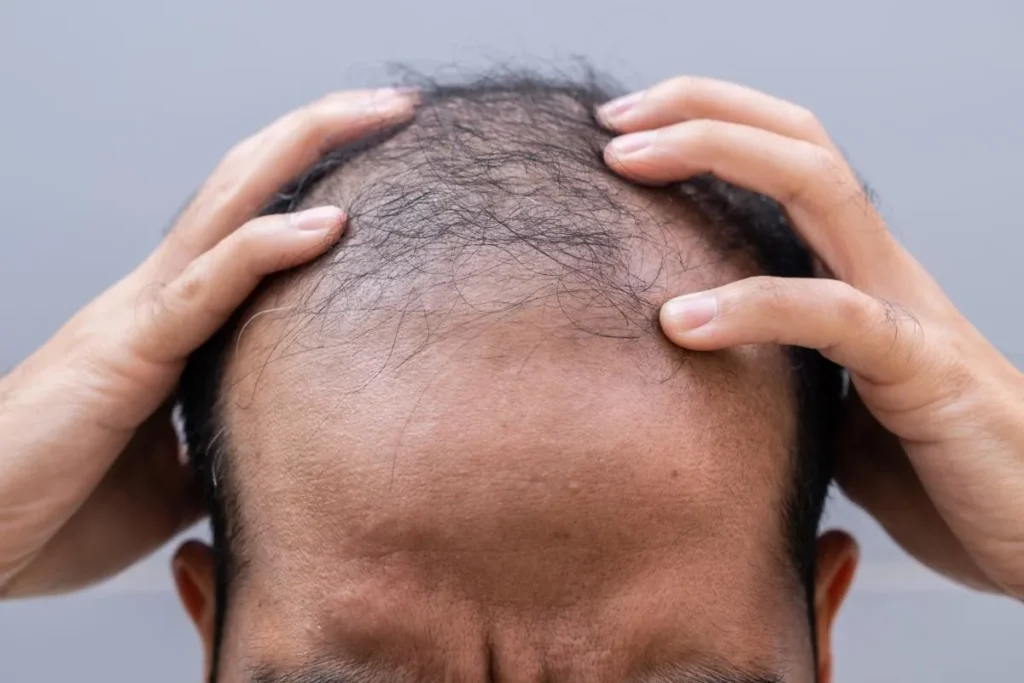
Stress affects hair health in many ways, including hormonal changes. Cortisol, known as the “stress hormone,” is key in how we react to stress. Knowing how cortisol impacts hair health is vital for fighting stress-related hair loss.
What is Cortisol and How is it Produced?
Cortisol is a hormone made by the adrenal glands. It’s controlled by the HPA axis, a system that handles stress. When we feel stressed, the HPA axis kicks in, releasing cortisol into our blood. Cortisol helps us get ready to face stress by changing our body’s functions.
The normal role of cortisol includes:
Regulating metabolism: Cortisol helps break down fat, protein, and carbs.
Aiding in memory formulation: Cortisol plays a part in memory and thinking.
Supporting immune function: Cortisol can affect how our immune system works.
Normal Cortisol Function vs. Chronic Elevation
While cortisol is good for responding to stress, too much can harm our body, including our hair. Normally, cortisol levels go up in the morning and down at night. But, under stress, this pattern can get messed up, keeping cortisol levels high.
Too much cortisol can:
Disrupt normal hair cycling: This can cause more hairs to fall out than usual.
Affect hair follicle stem cells: It can mess with hair growth, leading to thinning or loss.
It’s important to know the difference between normal cortisol levels and too much. By managing stress, we can reduce cortisol’s negative effects on our hair.
Controlling stress and cortisol can help keep our hair healthy. This means using stress management, making lifestyle changes, and possibly getting help to lower cortisol and improve hair health.
Does High Cortisol Cause Hair Loss? The Scientific Evidence
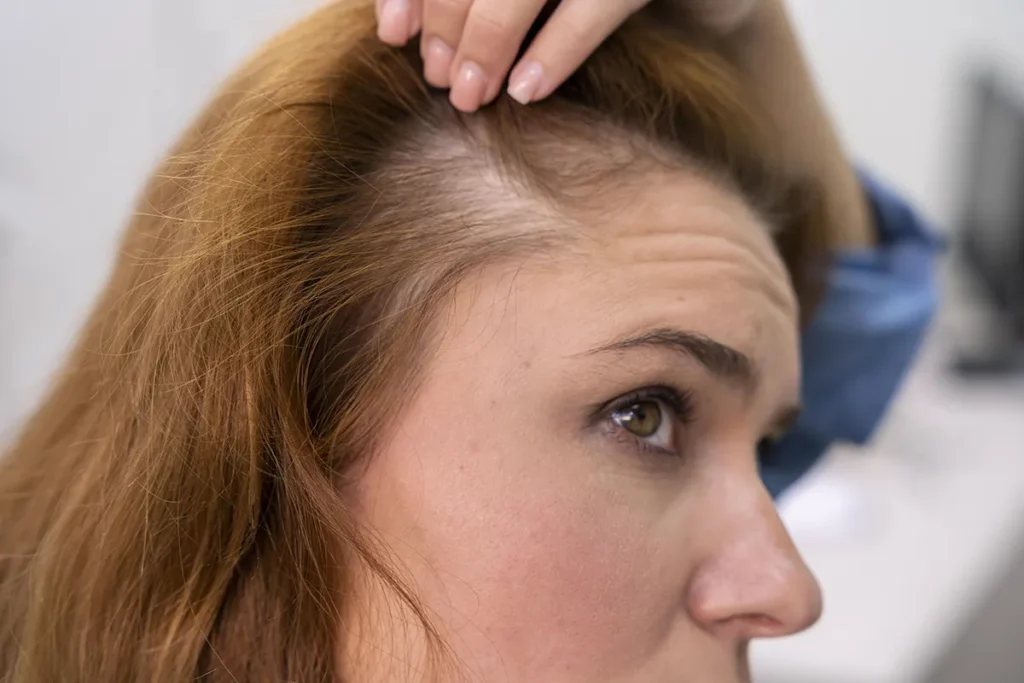
Research has explored the connection between high cortisol and hair loss. It has uncovered how cortisol affects hair health. This knowledge is key for finding new treatments.
Research on Cortisol’s Impact on Hair Follicle Stem Cells
Studies reveal that high cortisol harms hair follicle stem cells. Elevated cortisol keeps these cells in a resting phase. This disrupts the hair growth cycle, causing hair loss.
Cortisol’s effect on these stem cells is a major focus of research. It’s important to understand how cortisol impacts them. This knowledge helps in creating treatments to counteract cortisol’s negative effects on hair.
Effects on Hyaluronan and Proteoglycans
High cortisol also reduces hyaluronan and proteoglycan synthesis in the skin. These substances are vital for healthy skin and scalp. A 40 percent reduction in their production harms hair follicles, leading to more hair loss.
Hyaluronan and proteoglycans are essential. They keep the skin healthy and support hair growth. Elevated cortisol levels decrease these substances, worsening hair loss.
High cortisol levels harm hair health, as research shows. It’s vital to understand these effects. This knowledge helps in finding ways to manage cortisol-related hair loss.
Mechanisms of Stress-Induced Hair Thinning
It’s important to know how stress makes hair thin. Stress can harm hair health, causing it to thin and fall out. This happens because stress changes how hair grows.
Disruption of the Hair Growth Cycle
The hair growth cycle has three phases: anagen, catagen, and telogen. Stress can make more hair follicles go into the telogen phase. This leads to more hair falling out. Cortisol, the main stress hormone, is key in this process.
A study in the Journal of Clinical and Aesthetic Dermatology shows stress increases hair shedding. This is because stress disrupts the hair growth cycle.
Oxidative Stress and Inflammatory Responses
Stress also causes oxidative stress and inflammation. These stress responses damage hair follicles. This damage can stop hair follicle stem cells from working right, causing hair to thin and fall out.
Telogen to Anagen Phase Transition Issues
The switch from telogen to anagen is key for hair to grow back. Stress can block this switch. To fight stress-induced hair thinning, managing cortisol and promoting a healthy growth cycle is vital.
Controlling stress and cortisol is key for healthy hair. Knowing how stress affects hair helps find the right treatments and lifestyle changes.
Conclusion: Managing Cortisol for Healthier Hair
Keeping cortisol levels in check is key for healthier hair and fighting stress-related hair loss. Knowing how cortisol affects hair health helps people take action. They can lower their cortisol and help their hair grow back.
Dealing with cortisol hair loss means making lifestyle changes and finding ways to reduce stress. Sometimes, treating cortisol hair loss can make hair loss go away. This is because stress and fatigue from the adrenal glands can cause hair to fall out.
Controlling cortisol levels can boost a person’s confidence and help them reach their hair health goals. For those with severe hair loss, options like hair transplants can help. They aim to give a natural and full hairline back.
FAQ
Does high cortisol cause hair loss?
Yes, high cortisol levels are a major trigger for hair loss. Known as the “stress hormone,” elevated cortisol signals the body to prioritize essential survival functions over non-essential ones like hair growth. This can force a large number of follicles into a resting state, leading to a condition called telogen effluvium, where significant shedding occurs several months after the initial cortisol spike.
How does cortisol affect hair follicle stem cells?
Clinical research has shown that cortisol acts directly on the hair follicle by suppressing a specific protein called GAS6. This protein is essential for “waking up” hair follicle stem cells. When cortisol levels are high, the lack of GAS6 keeps these stem cells dormant, preventing the follicle from entering the active growth (anagen) phase.
Can low cortisol cause hair loss?
Yes, but typically through a different mechanism. Very low cortisol is often associated with adrenal insufficiency or Addison’s disease. Because cortisol helps regulate the body’s immune response and metabolism, insufficient levels can lead to systemic imbalances that result in thinning hair or the loss of body hair.
What is the relationship between stress and hair health?
Stress and hair health are deeply intertwined through the endocrine system. Stress triggers the “fight or flight” response, raising cortisol and adrenaline. This hormonal shift can cause scalp inflammation, restrict blood flow to the follicles, and deplete essential nutrients like zinc and magnesium, which are required to maintain a healthy head of hair.
How does cortisol impact the hair growth cycle?
Cortisol essentially acts as a “stop sign” for the hair cycle. It prematurely pushes hair from the anagen (growth) phase into the telogen (resting) phase. Under chronic stress, the hairs remain in the resting phase for too long, and because they are not replaced by new growth at a normal rate, the hair begins to look thin and sparse.
Can managing cortisol levels help with hair loss?
Absolutely. Reducing systemic cortisol through lifestyle changes—such as improved sleep, regular exercise, and stress-reduction techniques—removes the inhibitory signal from the hair follicles. Once cortisol levels stabilize, the suppression of the GAS6 protein ends, allowing stem cells to resume their normal function and restart the growth cycle.
Are there any treatments available for stress-induced hair loss?
Standard treatments in 2026 include topical minoxidil to stimulate blood flow, nutraceuticals containing adaptogens like ashwagandha to balance cortisol, and Platelet-Rich Plasma (PRP) therapy to deliver growth factors directly to dormant follicles. Addressing the psychological root of the stress is also considered a critical part of the treatment plan.
How does cortisol affect hyaluronan and proteoglycans in the skin?
High cortisol levels accelerate the breakdown of hyaluronan and proteoglycans in the skin and scalp. These molecules are vital for maintaining the structural integrity and hydration of the hair follicle environment. Their depletion leads to a loss of skin elasticity and moisture, making the scalp less supportive of healthy, robust hair growth.
Is hair loss caused by high cortisol reversible?
In the vast majority of cases, yes. Because cortisol-induced hair loss (telogen effluvium) does not involve permanent scarring or destruction of the follicle, the hair will usually grow back once the stressor is removed and hormone levels return to normal. It generally takes 6 to 12 months to see a full return to original density.
Can adrenal gland fatigue cause hair loss?
While “adrenal fatigue” is a debated term in clinical medicine, the state of chronic burnout and HPA-axis dysfunction it describes is a well-documented cause of thinning. When the adrenal system is chronically overworked, the resulting hormonal fluctuations and nutritional depletion create a “perfect storm” for diffuse hair shedding and reduced hair quality.
References
Nature. Evidence-Based Medical Insight. Retrieved from
https://www.nature.com/articles/s41586-021-03417-0