
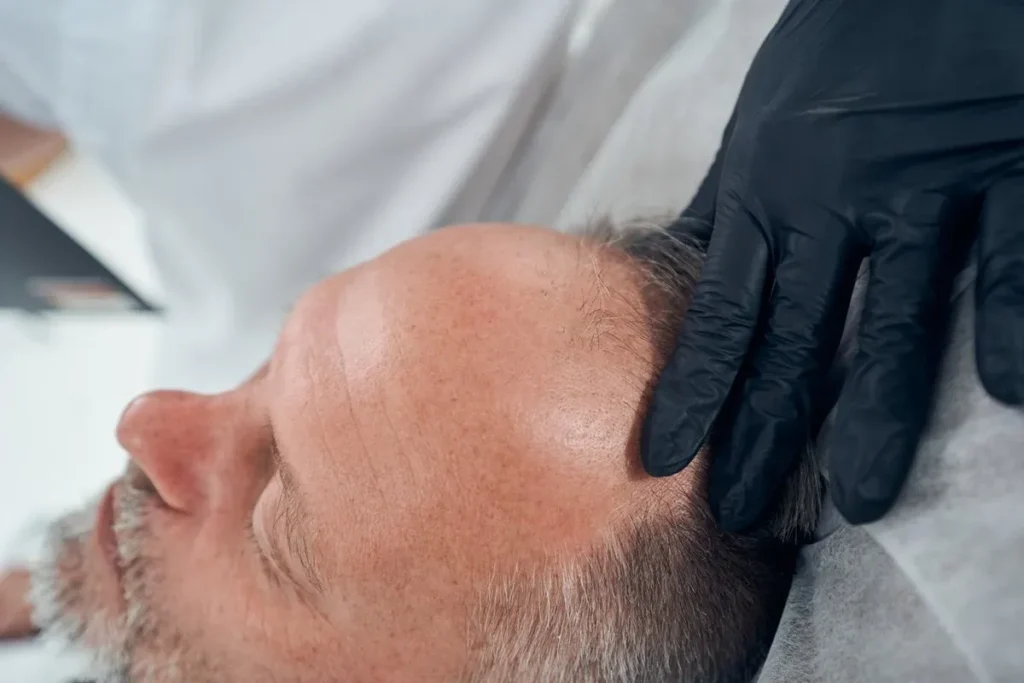
Figuring out if your scalp appearance shows normal hair density or early balding can be tricky. It’s easy to worry about hair loss when you see your scalp skin.
Understand normal scalp vs balding scalp differences. Learn the big truth about follicle health and how to spot early signs of permanent loss.
A normal scalp has even hair density and healthy skin. But a balding scalp looks different. Knowing these differences helps fight hair loss better.
At our hair restoration center, we aim to diagnose each case right. Our cutting-edge technology and expertise help you regain your confidence. You can reach your hair restoration goals with us.
Key Takeaways
Understand the difference between hair thinning and balding.
Know what a normal scalp looks like.
Spot the signs of a balding scalp.
Getting a correct diagnosis is vital for treating hair loss.
Our advanced tech and skills can restore your hair.
Characteristics of a Healthy Scalp
Knowing what a normal scalp looks like is key to spotting hair loss. A healthy scalp is essential for hair to grow well. Its condition affects how thick and dense your hair can be.
Physical Properties of Normal Scalp Skin
The human scalp skin has layers that help hair grow. As we age, these layers change, affecting hair follicles. A normal scalp is just right, not too tight or too loose.
A healthy scalp has good blood flow, the right thickness, and balanced sebum. These help create the best environment for hair to grow.
Healthy Hair Density and Distribution Patterns
Thick hair on scalp means a healthy scalp. Hair density and pattern vary, but a normal scalp has even hair. Thinning can happen due to lifestyle or environment, but it’s not always baldness.
In a healthy scalp, hair follicles work well, and hair grows normally. Balding causes permanent hair loss, mainly at temples or crown. Knowing these differences helps tackle hair loss better.
Regaining confidence starts with knowing your scalp’s health. Our transparent process and tailored solutions mean you’re in good hands. Our experts offer personalized care for your hair needs, ensuring great results and a comfortable experience.
Normal Scalp vs Balding Scalp: Structural Differences
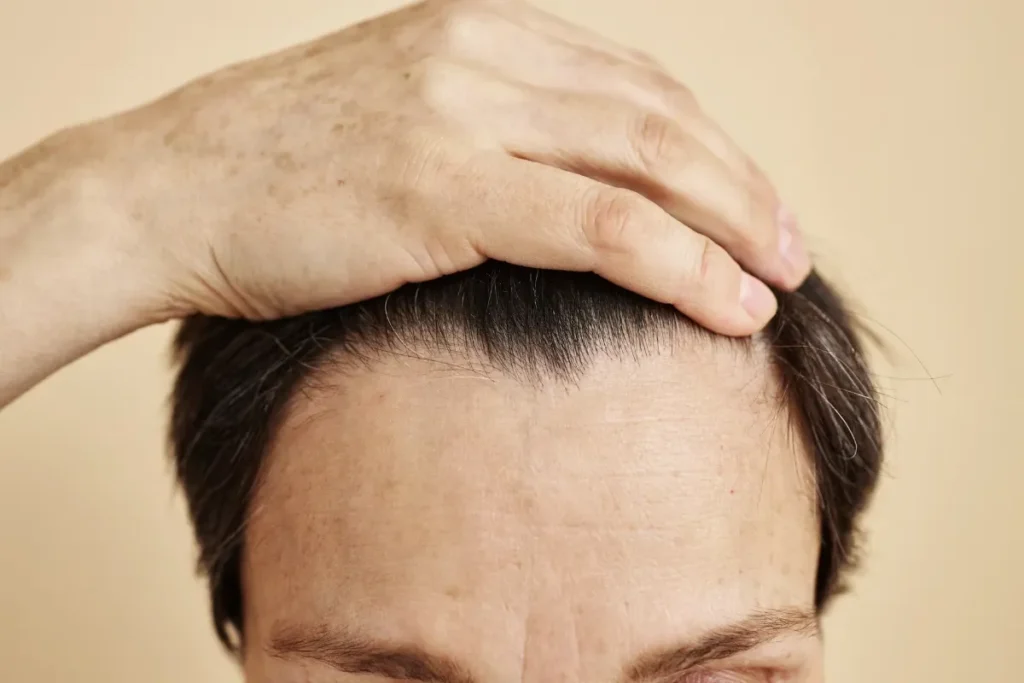
A balding scalp is different from a normal one in several ways. This includes the skin layers and hair follicles. Knowing these differences is key for successful hair restoration.
Changes in Scalp Skin Layers During Hair Loss
In the early stages of male pattern alopecia, the scalp’s thickness stays the same. But, as baldness gets worse, all skin layers except the galea get thinner. This change affects how hair grows and the scalp’s structure.
Key changes include:
Thinning of the epidermis and dermis layers
Reduction in hair follicle size and density
Potential inflammation and fibrosis in the scalp
Hair Follicle Transformation in Balding Conditions
Hair loss can be caused by genetics, medical issues, or hormonal imbalances. It makes hair follicles smaller, leading to thinner and less dense hair. Our team uses DHI and Sapphire FUE to bring back natural hair density and get dense, natural results.
Getting your confidence back through hair restoration is a big win. With pain-free methods and sedation options, treatments are more comfortable. Our transparent process and step-by-step guidance make the journey smooth. You’ll get lifelong growth with genetically resistant follicles.
Identifying a Balding Scalp: Signs and Patterns
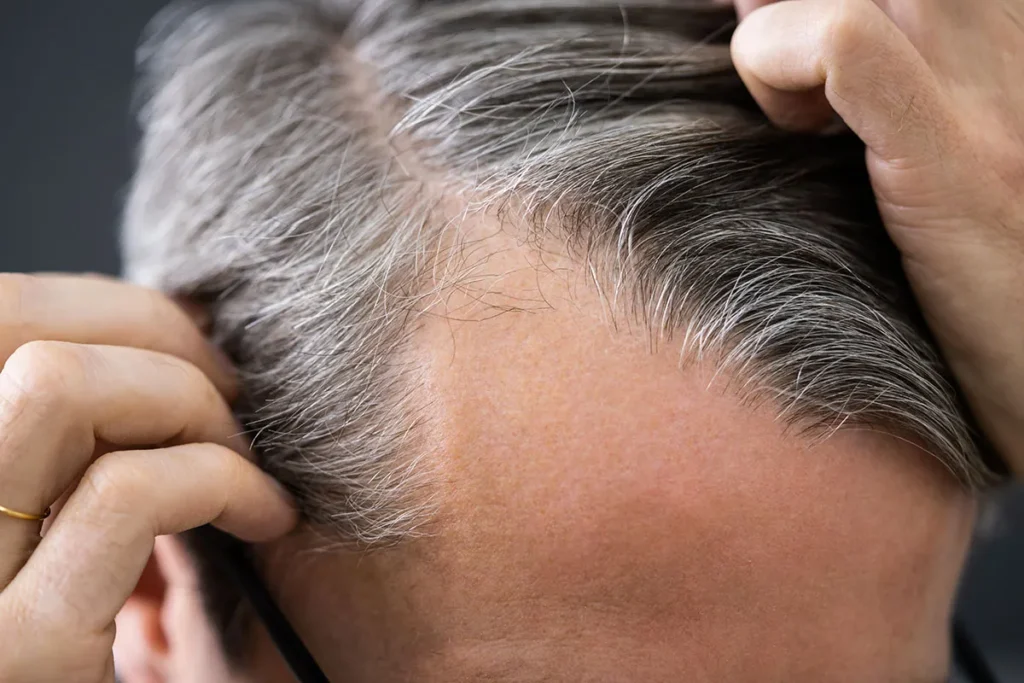
It’s important to know the signs of hair loss to tell if you’re experiencing a normal scalp or balding. Androgenetic alopecia makes hair follicles shrink. This leads to thinner hair, mainly in the front, sides, and top of the head in men.
Early Warning Signs
Look out for a receding hairline or thinning crown as early signs of hair loss. These changes might be small, but spotting them early is key. Men often lose hair in a specific pattern, while women see hair thinning all over.
Gender-Specific Patterns
It’s important to know how men and women lose hair differently. Men usually see hair loss in a clear pattern, starting with a receding hairline or thinning crown. Women, by contrast, experience hair thinning all over, not in specific patches.
Visual Cues and Misconceptions
Distinguishing normal hair shedding from balding is critical. A balding scalp has less hair, mainly in certain spots. Many think hair loss is due to scalp fat or is permanent. But, with today’s treatments and expert advice, there are ways to stop or reverse it.
At our clinic, we provide personalized care and cutting-edge technology for your hair needs. Our team offers a free analysis and step-by-step guidance to meet your hair goals. With proven success and real patient transformations, you can trust us to help you regain your confidence and achieve your dream hair.
Conclusion: When to Seek Professional Evaluation
Knowing the difference between a normal scalp and a balding one is key to fighting hair loss. Studies show that just looking at the scalp doesn’t always mean you’re balding. Hair thickness and how it contrasts with the scalp’s color matter a lot too.
If you’re losing hair, getting a professional check-up is a must. Our team offers a free analysis and detailed advice to help you get your hair back. We use the latest tech to give you dense, natural-looking hair.
Let us help you feel confident again with our custom care plans. Our experts will help you find the right treatment, making sure it’s painless. You can count on us for lasting results and healthy hair follicles to make your hair dreams come true.
FAQ
What is the average thickness of the scalp skin?
The average scalp skin thickness ranges from 4 to 8 millimeters, including the epidermis, dermis, and subcutaneous tissue. Thickness can vary by individual and scalp area.
How does the thickness of the scalp skin change with aging?
With aging, the scalp skin often thins, loses elasticity, and has reduced blood flow, which can contribute to weaker hair follicles and increased hair shedding.
What are the key differences between a normal scalp and a balding scalp?
A normal scalp has dense hair follicles, even coverage, and a healthy texture, while a balding scalp shows thinning hair, visible scalp, miniaturized follicles, and sometimes changes in scalp skin quality.
What are the early warning signs of hair loss?
Early signs include gradual thinning, wider hair part, receding hairline, increased shedding, and finer hair strands. Noticing these signs early can help with timely treatment.
How do you diagnose hair loss and determine the best course of treatment?
Diagnosis involves scalp examination, hair pull tests, patient history, and sometimes blood tests or scalp biopsy. This helps identify the type of hair loss and guides the most effective treatment plan.
What are the benefits of using advanced techniques like DHI and Sapphire FUE for hair restoration?
These techniques offer precise graft placement, minimal scarring, faster healing, and natural-looking results. They allow surgeons to control hair angle, direction, and density for a more aesthetic outcome.
Is hair restoration a painful process?
Most modern hair restoration procedures are performed under local anesthesia, so pain during surgery is minimal. Some discomfort or soreness may occur during recovery.
How long do the results of hair restoration last?
Results can be long-lasting, especially for transplanted hair that is resistant to genetic hair loss. Ongoing maintenance with medications may be needed for untreated areas.
What is the normal hair density on a healthy scalp?
A healthy scalp typically has around 80–120 follicles per square centimeter, though density can vary by genetics and hair type.
How much scalp is normal to see in a healthy individual?
A small amount of scalp may be visible through hair, especially with fine or lighter hair, but excessive visibility, widening parts, or thinning areas may indicate hair loss.
References
National Center for Biotechnology Information. Evidence-Based Medical Insight. Retrieved from https://pubmed.ncbi.nlm.nih.gov/24566563/





