The stages of hair loss female journey can feel confusing, especially when symptoms appear gradually and differ from classic male pattern patterns. Understanding each phase helps you identify early warning signs, choose the right hair loss treatment, and take proactive steps before thinning becomes noticeable. In fact, studies show that up to 40% of women notice increased shedding by age 30, yet many remain unaware of the underlying progression.
In this article we will explore the four primary stages women typically experience, explain the biological factors behind each, and outline practical solutions—from lifestyle adjustments to advanced hair restoration techniques offered by Gold City Hair. Whether you’re dealing with subtle thinning or more pronounced baldness, recognizing the stage you’re in empowers you to act confidently and seek the most suitable care.
We’ll also discuss common myths, differentiate between female pattern baldness and other forms of alopecia, and provide a clear roadmap for navigating treatment options. Let’s begin by mapping out the stages that define the female hair‑loss experience.
Stage 1: Early Shedding and Telogen Effluvium
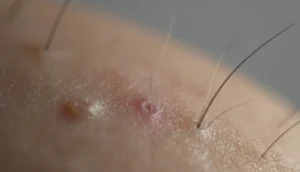
During the first stage, many women notice an increase in daily hair loss, often triggered by stress, hormonal shifts, or nutritional deficiencies. This phase is commonly referred to as telogen effluvium, where a larger proportion of hairs enter the resting (telogen) phase and fall out within weeks.
Key characteristics of Stage 1 include:
- Hair shedding of 50–100 strands per day (normal range is 30–50).
- Diffuse thinning across the scalp rather than a distinct pattern.
- Often accompanied by recent life events such as pregnancy, illness, or major weight loss.
Diagnostic steps typically involve a detailed medical history, blood tests to rule out iron deficiency or thyroid issues, and a scalp examination. Early intervention can reverse telogen effluvium in most cases.
Effective strategies for Stage 1:
| Approach | Benefit |
|---|---|
| Balanced diet rich in protein, iron, and zinc | Supports hair follicle health |
| Stress‑management techniques (yoga, meditation) | Reduces cortisol‑induced shedding |
| Topical minoxidil (2% for women) | Stimulates follicular activity |

Stage 2: Progressive Thinning and Female Pattern Baldness
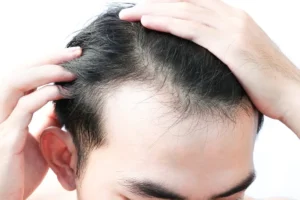
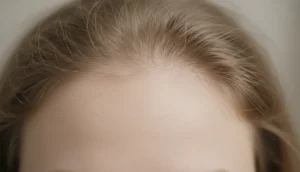
If the underlying causes aren’t addressed, the condition may advance to progressive thinning, often identified as female pattern baldness (FPB). Unlike male pattern baldness, FPB typically manifests as a widening part line and diffuse thinning over the crown while the frontal hairline remains relatively intact.
During Stage 2, the hair follicle miniaturizes, producing finer, shorter hairs. Hormonal factors, especially elevated dihydrotestosterone (DHT), play a central role, making androgenetic alopecia a common diagnosis.
Important signs to watch for:
- Noticeable widening of the part line.
- Reduced hair volume on the top of the head.
- Increased visibility of scalp texture.
Medical options for this stage focus on slowing follicle miniaturization and promoting regrowth:
- Topical minoxidil 5% (the highest concentration approved for women).
- Oral anti‑androgens such as spironolactone, prescribed after hormonal evaluation.
- Low‑level laser therapy (LLLT) devices for home use.
For women seeking a more permanent solution, Follicular Unit Extraction (FUE) and Direct Hair Implantation (DHI) offered by Gold City Hair provide high‑density, natural‑looking results with minimal downtime.
Stage 3: Alopecia Areata and Patchy Hair Loss
Some women experience an autoimmune reaction known as alopecia areata, which can emerge during the third stage of hair loss. This condition is characterized by sudden, round patches of hair loss that may coalesce into larger bald areas.
Key differences from FPB include:
- Sharp, well‑defined borders of bald patches.
- Potential involvement of eyebrows, eyelashes, or facial hair.
- Often accompanied by nail pitting or other autoimmune signs.
Diagnosis involves a scalp biopsy and blood tests to assess autoimmune markers. While there is no cure, several therapeutic avenues can promote regrowth:
| Treatment | Typical Outcome |
|---|---|
| Topical or intralesional corticosteroids | Reduces inflammation, may trigger regrowth in 30–60% of cases |
| Topical immunotherapy (e.g., diphencyprone) | Stimulates an allergic reaction that can jump‑start hair growth |
| JAK inhibitors (oral) | Emerging option with promising results in clinical trials |
For stable alopecia areata where patches have not progressed for a year, hair transplantation can be considered. Gold City Hair’s DHI technique allows precise placement of grafts into scar‑free zones, delivering a natural appearance even in previously affected areas.
Stage 4: Advanced Baldness and Scarring Alopecia
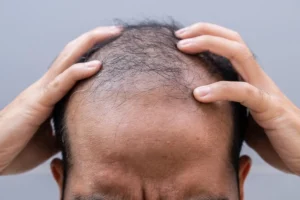
The final stage represents the most severe form of hair loss, where extensive follicular damage leads to permanent baldness. This may result from long‑standing androgenetic alopecia, repeated inflammation, or scarring conditions such as lichen planopilaris.
Characteristics of Stage 4 include:
- Large, smooth areas of scalp devoid of visible follicles.
- Possible redness or scarring (cicatricial alopecia).
- Reduced chance of regrowth without surgical intervention.
At this point, medical therapies have limited efficacy, making surgical restoration the primary option. Gold City Hair’s advanced FUE and DHI procedures can harvest healthy donor follicles from the occipital region and implant them with precision, achieving densities up to 45 grafts/cm².
Pre‑operative considerations include:
- Comprehensive scalp assessment to map viable donor zones.
- Discussion of realistic expectations and potential need for multiple sessions.
- Post‑operative care plan to ensure graft survival and optimal healing.
Patients who undergo transplantation at Gold City Hair benefit from a multidisciplinary team, state‑of‑the‑art facilities, and a track record of natural‑looking results for women with advanced baldness.
Why Choose Gold City Hair for Female Hair Restoration
Gold City Hair has been delivering personalized hair restoration solutions since 2017, combining cutting‑edge FUE and DHI technologies with a compassionate, transparent approach. Our team of experienced surgeons tailors each treatment plan to the individual’s stage of hair loss, ensuring optimal graft survival and natural‑looking outcomes. Located in Turkey, we provide world‑class facilities at a fraction of the cost found in many Western markets, without compromising safety or quality. Trust Gold City Hair to guide you through every step—from diagnosis to post‑procedure care—so you can regain confidence and enjoy lasting results.
Ready to take the next step toward fuller, healthier hair? Contact Gold City Hair today to schedule a confidential consultation and discover the most effective treatment for your specific stage of hair loss.
Our experts will create a customized plan that fits your lifestyle and goals—because every woman deserves a solution that works.
FAQ
What are the early signs of female hair loss?
Early signs include increased daily shedding, diffuse thinning, and a widening part line.
How does telogen effluvium differ from other types of hair loss?
Telogen effluvium is a temporary shedding condition caused by many hairs entering the resting phase simultaneously.
What treatment options are effective for female pattern baldness?
Topical minoxidil, oral anti‑androgens, low‑level laser therapy, and surgical options like FUE or DHI.
Can alopecia areata be treated with hair transplantation?
Yes, stable alopecia areata patches can be addressed with hair transplantation, especially using DHI for precise graft placement.
What is the difference between FUE and DHI hair restoration techniques?
FUE extracts individual follicles, while DHI implants them directly using a patented implanter pen for higher precision.
When is surgical hair restoration recommended for women?
Surgery is advised in advanced stages where medical treatments have limited efficacy and permanent baldness is present.