When you first ask how long does a hair transplant take, the answer depends on several phases that together shape the overall timeline. Understanding each step—from the initial consultation to the final, fully grown results—helps set realistic expectations and reduces anxiety about the process. In Turkey, where many patients travel for advanced hair restoration, the average surgical session lasts between four and eight hours, but the journey does not end there.
Hair loss can affect confidence, relationships, and professional life, making timely and effective treatment a priority for many. According to recent surveys, over 60% of individuals considering a hair transplant cite uncertainty about the recovery period as a major concern. This article breaks down the entire timeline, highlights the factors that can speed up or slow down progress, and offers practical tips to optimize each stage.
We will explore pre‑procedure planning, the day‑of‑surgery experience, the healing window, and the long‑term growth phase. By the end, you’ll have a clear picture of what to expect, how to prepare, and when you can anticipate seeing natural‑looking, permanent hair.
Understanding the Hair Transplant Timeline
The overall timeline of a hair transplant can be divided into four distinct phases: consultation and planning, the surgical procedure itself, the immediate post‑operative recovery, and the long‑term growth period. Each phase has its own duration, milestones, and considerations.
- Consultation & Planning: 1–2 weeks for medical evaluation, photography, and graft design.
- Surgical Day: 4–8 hours depending on the technique (FUE, DHI, or hairline transplant) and the number of grafts.
- Initial Healing: 7–14 days for scab formation and removal of dressing.
- Growth Phase: 3–12 months for transplanted hairs to enter the growth cycle and achieve final density.
| Phase | Typical Duration | Key Milestones |
|---|---|---|
| Consultation & Planning | 1–2 weeks | Medical clearance, donor area assessment, graft count |
| Surgical Day | 4–8 hours | Extraction, graft preparation, implantation |
| Initial Healing | 7–14 days | Scab fall‑off, swelling reduction, gentle washing |
| Growth Phase | 3–12 months | Shedding of transplanted hairs, emergence of new growth, maturation |
Knowing these intervals helps patients plan work leave, travel, and personal events. While the surgical day is the most visible part, the majority of visible change occurs months later, during the growth phase.
Pre‑Procedure Preparation and Planning
Before the surgeon can answer how long does a hair transplant take in detail, a thorough pre‑procedure assessment is required. This stage ensures safety, determines the most suitable technique, and establishes realistic expectations.
Medical Evaluation
Patients undergo a health questionnaire, blood tests, and sometimes a scalp biopsy to rule out conditions that could affect graft survival. The evaluation typically takes 30–60 minutes and may be scheduled up to two weeks before the surgery.
Designing the Graft Map
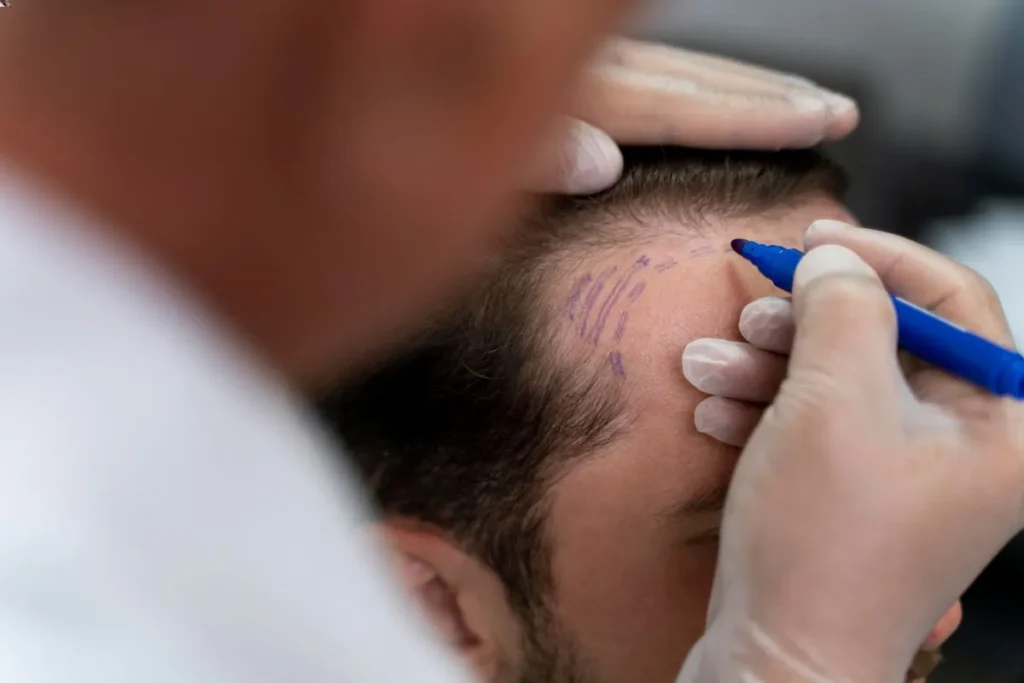
Using high‑resolution photographs and digital software, the surgeon maps the donor area (usually the back of the head) and plans the recipient zones. This step influences the number of grafts and the total surgical time. For a typical male pattern baldness case, 2,500–4,000 grafts are common, translating to roughly 6–8 hours on the operating table.
Patient Instructions
Patients receive written guidelines covering medication adjustments (e.g., stopping blood thinners), hair washing routines, and fasting requirements. Following these instructions can reduce the risk of complications and keep the overall timeline on schedule.
- Stop aspirin and anti‑inflammatory drugs 7 days prior.
- Maintain a protein‑rich diet to support graft healing.
- Avoid alcohol and smoking for at least two weeks before and after surgery.
Proper preparation not only shortens the surgical day but also accelerates the early healing phase, making the overall answer to the primary question more favorable.
The Surgical Day: What Happens and How Long It Takes
On the day you finally learn how long does a hair transplant take in practice, the schedule is tightly organized to maximize efficiency while maintaining precision. The duration varies primarily by technique and graft count.
FUE (Follicular Unit Extraction)
FUE involves harvesting individual follicular units using a micro‑punch device. For a session of 3,000 grafts, the extraction phase may last 2–3 hours, followed by 2–4 hours of implantation. The total time typically ranges from 5 to 7 hours.
DHI (Direct Hair Implantation)
DHI uses a proprietary implanter pen that combines extraction and placement, reducing handling time. However, because each graft is loaded manually, the procedure can be slightly longer for large sessions—often 6–8 hours for 2,500 grafts.
Hairline Transplant and Beard/Eyebrow Restoration
These specialized procedures require meticulous angle and direction work. A hairline transplant of 1,200 grafts may be completed in 3–4 hours, while a beard transplant of 800 grafts usually takes 2–3 hours.
- Typical operating room setup: 2–3 technicians, a microscope, and a high‑resolution monitor.
- Patient comfort: Local anesthesia ensures the patient remains awake but pain‑free.
- Breaks: Short pauses are taken every 60–90 minutes to prevent fatigue.
Overall, the surgical day accounts for the largest single block of time in the hair transplant journey. Efficient teamwork and experienced surgeons keep the process within the expected range, answering the core question for most patients.
Recovery Phase: Healing and Early Results
After the operation, the question “how long does a hair transplant take to heal” becomes the focus. Recovery is divided into immediate post‑operative care and the first month of healing.
First 48 Hours
Patients may experience mild swelling, redness, and a tingling sensation. The surgeon typically prescribes antibiotics and anti‑inflammatory medication. Most patients can return home the same day and resume light activities after 24 hours.
Week One: Scab Formation and Removal
Small scabs form around each graft site. Gentle washing with a prescribed shampoo begins on day three, and scabs usually fall off naturally between days 7 and 10. During this period, patients must avoid direct sunlight and strenuous exercise.
Weeks Two to Four: Shedding Phase
It is normal for transplanted hairs to shed—a process called “shock loss.” This does not indicate failure; the follicles are entering a resting phase before new growth begins. Patients should continue using the recommended topical treatments to support follicle health.
- Do: Keep the scalp clean, use a soft pillow, and maintain a balanced diet.
- Don’t: Scratch the graft sites, wear tight hats, or expose the scalp to extreme heat.
By the end of the first month, most visible signs of the procedure have resolved, and patients can typically resume normal work and social activities. This marks the transition from the healing stage to the longer growth timeline.
Long‑Term Growth: When to Expect Full Results
The final answer to how long does a hair transplant take to look completely natural lies in the long‑term growth phase, which can extend up to a year.
Month 3–4: Early New Hair
Fine, pigmented hairs begin to emerge. At this stage, the density is still modest, but the texture resembles natural hair. Patients often notice improvement in the frontal area first.
Month 6–9: Thickening Phase
New hairs become thicker and more numerous. The overall coverage improves, and many patients report a noticeable change in confidence. Adjustments to styling become possible.
Month 12+: Full Maturation
By the one‑year mark, the transplanted follicles have completed several growth cycles, achieving their final length and density. Most surgeons consider this the point of “complete result.”
| Time After Surgery | What to Expect | Recommended Care |
|---|---|---|
| 0–2 weeks | Scabs, swelling, mild discomfort | Gentle washing, avoid sun |
| 3–4 weeks | Shedding of transplanted hairs | Continue topical treatments |
| 3–4 months | Fine new hair visible | Balanced diet, avoid harsh chemicals |
| 6–9 months | Hair thickening, increased density | Regular follow‑up appointments |
| 12+ months | Full, natural‑looking result | Maintain scalp health, occasional trims |
Patience is essential; while some may see noticeable improvement after six months, the final, permanent outcome is usually visible only after a full year of growth cycles.
Factors That Influence the Duration of a Hair Transplant
While the general timeline provides a useful framework, several variables can speed up or extend each phase, affecting the overall answer to how long does a hair transplant take.
Number of Grafts
Large sessions (over 4,000 grafts) naturally require more extraction and implantation time, sometimes extending the surgical day to 9–10 hours. Smaller procedures can be completed in under five hours.
Technique Chosen
FUE is typically faster for moderate graft counts, whereas DHI may take longer due to the manual loading of each graft. Hairline transplants demand meticulous angle control, adding extra minutes per graft.
Patient Health
Individuals with chronic conditions such as diabetes or autoimmune disorders may experience slower healing and longer shedding phases. Proper medical clearance and tailored post‑operative care are crucial.
Post‑Operative Care Compliance
Adhering to the surgeon’s after‑care instructions—especially regarding washing, medication, and activity restrictions—can reduce complications and keep the timeline on track.
- Smoking cessation reduces delayed healing by up to 30%.
- High protein intake supports graft survival.
- Regular follow‑up visits catch issues early.
Understanding these factors empowers patients to make informed decisions and work collaboratively with their surgical team, ensuring the timeline aligns with personal expectations.
Why Choose Gold City Hair
Gold City Hair has been delivering reliable hair transplant solutions in Turkey since 2017. Our clinic specializes in FUE, DHI, and eyebrow/beard transplants, offering a personalized approach that prioritizes transparent communication and patient comfort. With a team of certified surgeons and a dedicated after‑care staff, we ensure every stage—from consultation to the final growth—follows the highest standards of safety and efficacy. Choose us for a proven track record, state‑of‑the‑art facilities, and a commitment to restoring your confidence.
Ready to start your hair restoration journey? Contact Gold City Hair today to schedule a free virtual consultation and discover a timeline tailored to your needs.
Take the first step toward a fuller, natural‑looking hairline—your confidence is just a call away.
FAQ
How long does a hair transplant take from consultation to surgery?
The consultation and planning phase typically lasts 1–2 weeks before the actual surgical day.
What is the typical duration of the surgical day for a hair transplant?
Depending on technique and graft count, the surgery lasts between 4 and 8 hours.
How long is the initial healing period after a hair transplant?
Scab formation and removal generally take 7–14 days.
When can I expect to see new hair growth after a transplant?
Fine new hairs typically appear around 3–4 months post‑surgery.
How long does it take for the full results to be visible?
Complete, natural‑looking results are usually achieved by 12 months.
What factors can affect the overall timeline of a hair transplant?
Technique, graft count, patient health, and post‑operative care all influence timing.