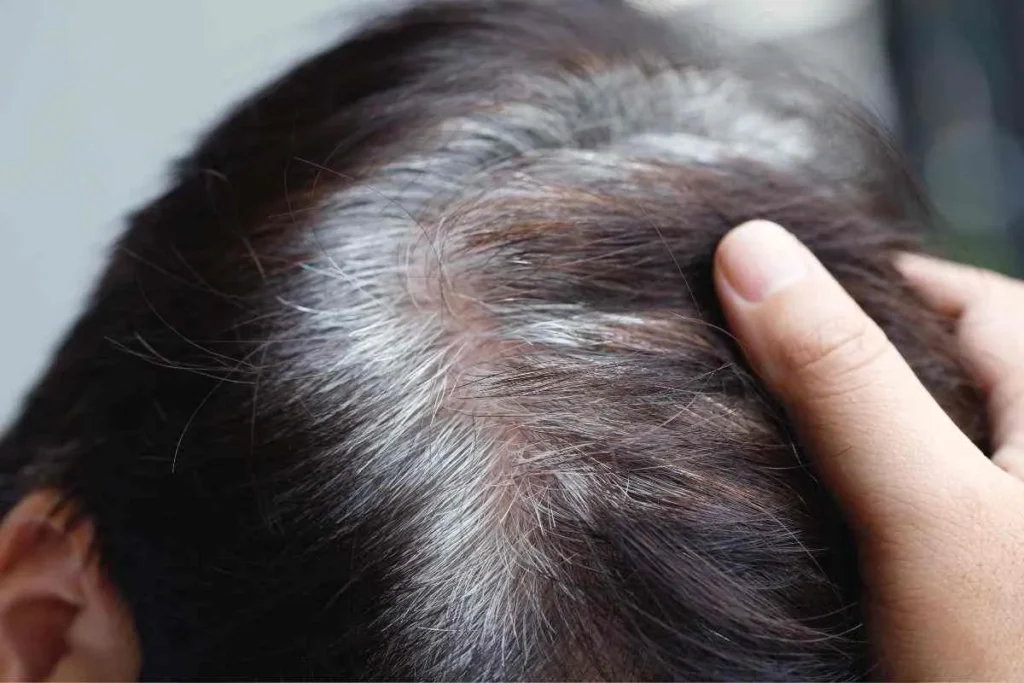
Are you seeing your hairline move back or noticing more hair falling out? You might be one of the many men dealing with early signs of male pattern baldness. Knowing the signs of hair loss is key to managing it well.
About 25% of men see hair loss before they’re 21. Hair loss can happen at any age, but it’s often noticed in the 30s and 40s. Look out for thinning temples, a receding hairline, or thinning on top.
Key Takeaways
Spotting the early signs of balding helps you get help and treatment sooner.
Male pattern baldness affects millions of men.
Hair loss can start at any age, with signs often showing in the 30s and 40s.
Watch for a receding hairline and thinning at the temples or crown.
Knowing these signs is vital for managing and treating hair loss effectively.
Understanding Hair Loss Patterns
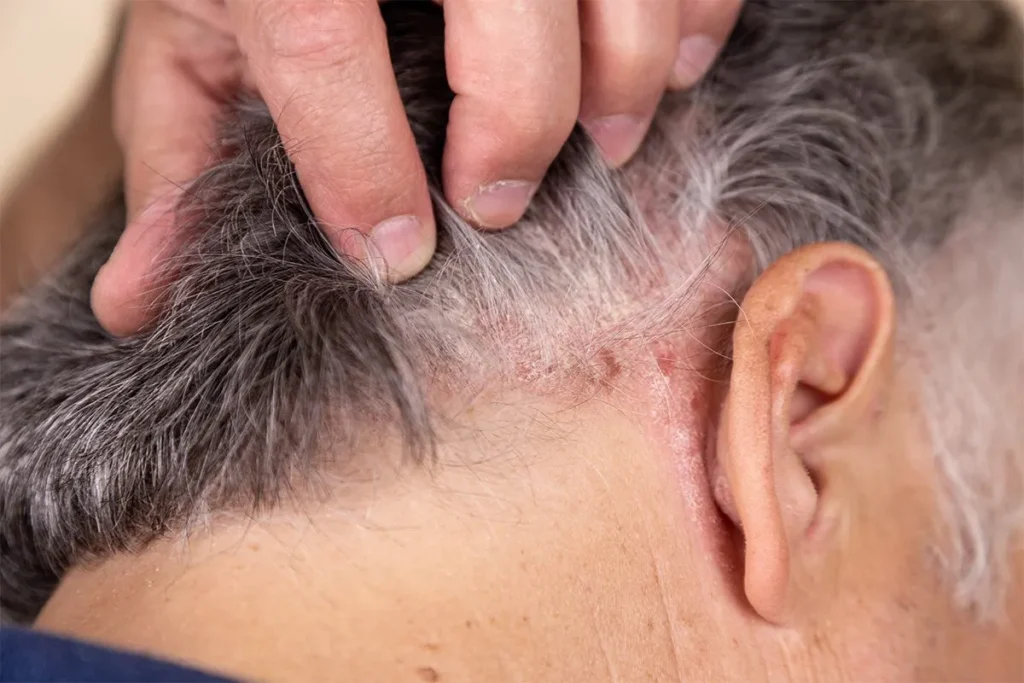
It’s important to know how hair loss patterns work to spot balding early. Hair loss, or alopecia, comes in many forms. But male pattern baldness, or androgenetic alopecia, is one of the most common.
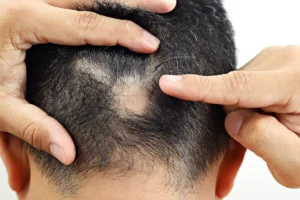
Male pattern baldness shows up in a certain way. It starts with a receding hairline or thinning at the crown. This happens because androgen hormones affect hair follicles, making hair grow less over time.
Normal Hair Loss vs. Male Pattern Baldness
It’s key to tell normal hair loss from male pattern baldness. Normal hair loss means losing up to 100 hairs a day, which is part of the hair cycle. But male pattern baldness leads to more hair loss, following a specific pattern.
The Norwood Scale of Balding Progression
The Norwood Scale helps measure balding in men. It breaks down male pattern baldness into seven stages. These stages show hair loss from minimal to very extensive.
Knowing the Norwood Scale and recognizing male pattern baldness signs helps. It lets people understand their condition better. Early detection is vital for managing balding well.
Early Signs of Balding to Monitor
Knowing the first signs of hair loss is key to dealing with it. Male pattern baldness is common and caused by genetics and hormones. Dihydrotestosterone (DHT), a form of testosterone, plays a big role.
There are early signs of balding to watch out for. Spotting these signs early can help you act fast to stop hair loss.
Receding Hairline and M-Shaped Pattern
A receding hairline, often looking like an M-shaped pattern, is a clear sign. It starts at the temples and moves back.
Thinning at the Crown
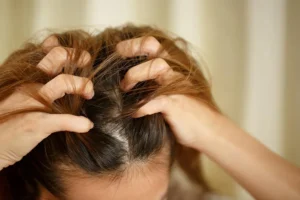
Thinning at the crown is another early warning. You’ll notice less hair at the top of your scalp.
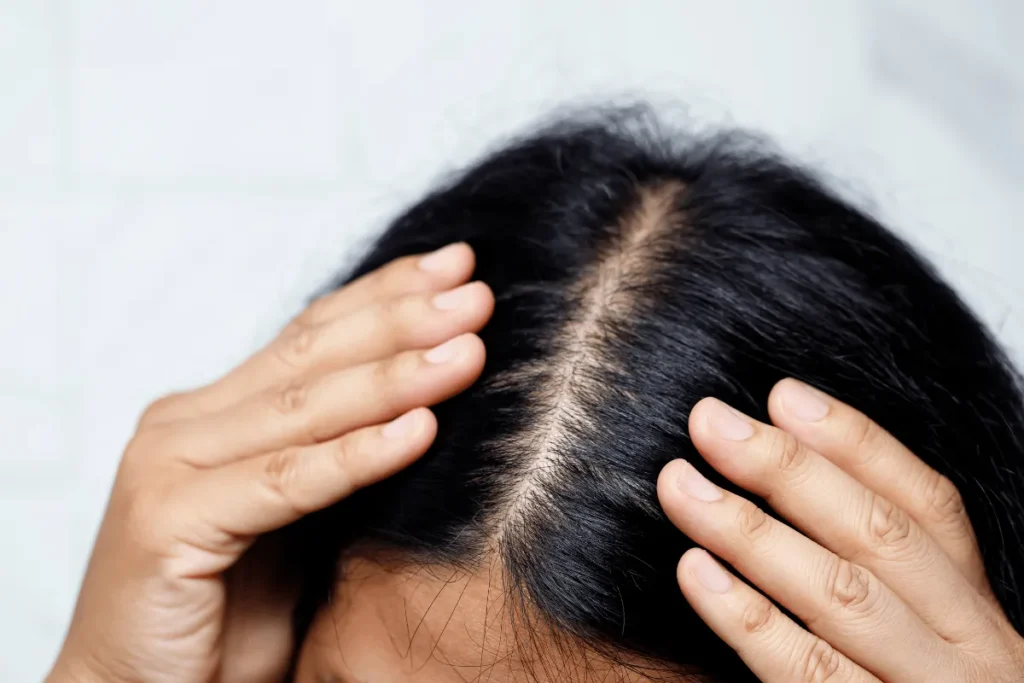
Widening Part Line
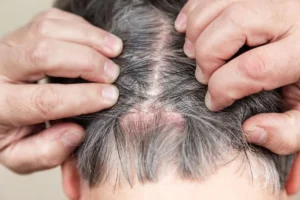
A wider part line is also a sign. As hair falls out, the part line gets bigger, showing more scalp.
Increased Hair Shedding
Shedding more hair when you comb, wash, or touch it is a sign. This is often the most obvious symptom.
Hair loss can be caused by hormones, stress, and not eating right. Knowing these causes and the early signs can help you find the right treatment.
The main signs to watch for are:
A receding hairline
Thinning at the crown
A widening part line
Increased hair shedding
Spotting these signs early lets you find ways to stop hair loss.
Conclusion: Next Steps and Treatment Options
Spotting early signs of balding lets people get the right advice and treatment. This can slow down or even stop hair loss.
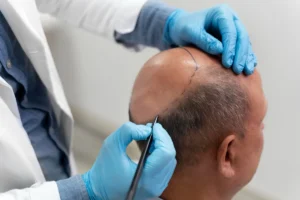
There are many ways to treat balding. Options include medicines like minoxidil and finasteride, laser therapy, and hair transplants. These methods can stop more hair loss and even help hair grow back. It’s wise to talk to a healthcare expert to find the best treatment for you.
Being proactive and talking to a healthcare professional can help manage hair loss. They can give you personalized advice and support.
FAQ
How can I tell if I’m balding?
Signs include a receding hairline, thinning at the crown, widening part, or increased scalp visibility over time. Gradual pattern changes are more typical of balding than sudden shedding.
What is the difference between normal hair loss and male pattern baldness?
Normal hair loss involves shedding 50–100 hairs daily without visible thinning, while male pattern baldness causes progressive miniaturization and patterned thinning.
What is the Norwood Scale, and how is it used to measure balding progression?
The Norwood Scale is a classification system that stages male pattern baldness from minimal recession (Stage 1) to advanced hair loss (Stage 7). It helps track progression and guide treatment decisions.
What are the early signs of balding that I should monitor?
Watch for temple recession, crown thinning, finer hair texture, slower regrowth, and more visible scalp under bright light.
What treatment options are available for managing hair loss?
Options include topical minoxidil, oral finasteride, PRP therapy, low-level laser therapy, and hair transplantation depending on severity.
Can I slow down or reverse the balding process?
You can often slow progression with early treatment, and some regrowth is possible if follicles are still active. Complete reversal is less common in advanced stages.
How do I know if I’m experiencing hair loss due to male pattern baldness?
Gradual thinning in a predictable pattern (temples and crown) and a family history of similar hair loss are strong indicators.
What are the underlying causes of male pattern baldness?
It is primarily caused by genetic sensitivity to DHT, which shrinks hair follicles and shortens the growth phase over time.
References
National Center for Biotechnology Information. Evidence-Based Medical Insight. Retrieved from https://pubmed.ncbi.nlm.nih.gov/24566563/