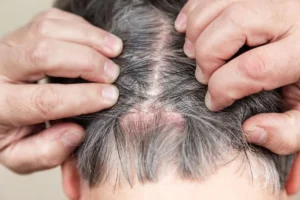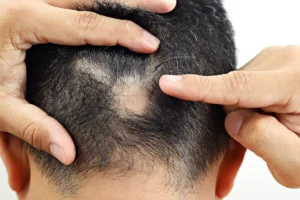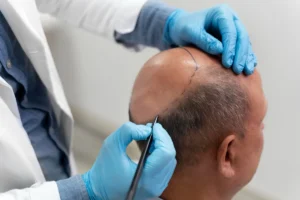
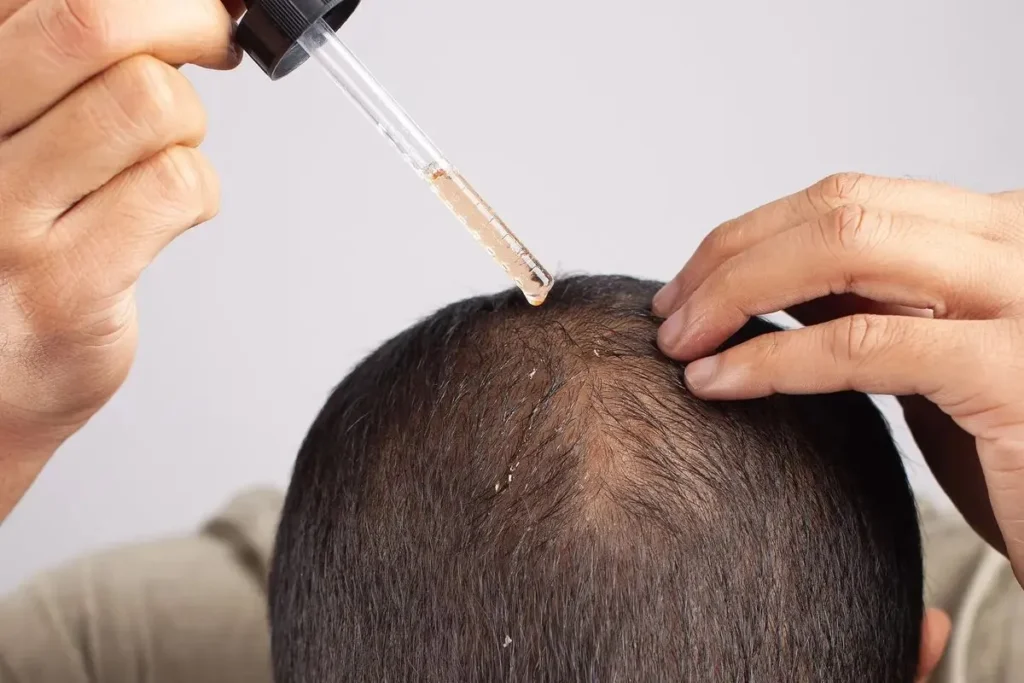
Many men start a journey to regain confidence through hair restoration. Male pattern baldness affects millions globally. Breakthrough treatments like finasteride offer real hope. It blocks about 70 percent of dihydrotestosterone (DHT) production, the hormone causing hair loss.
Decades of research show finasteride improves hair density and stops thinning. It’s the top treatment for male hair loss. Knowing the before and after results timeline helps in making informed decisions. By combining medical knowledge with a patient-focused approach, you can get the best results.
Key Takeaways
Finasteride is a proven treatment for male pattern hair loss.
It works by blocking DHT production, a hormone responsible for hair loss.
Decades of data support its effectiveness in improving hair density.
Understanding the before and after results timeline is key for optimal results.
A patient-centered approach combined with evidence-based knowledge yields the best outcomes.
Understanding Finasteride for Hair Loss Treatment
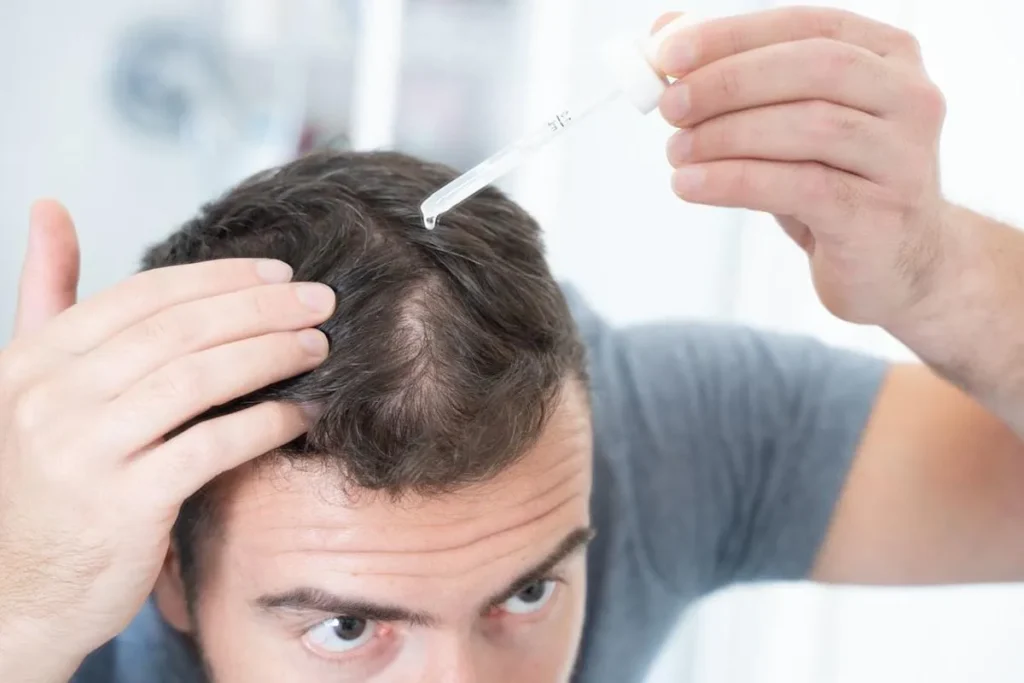
Finasteride is a promising solution for those dealing with hair loss. It’s a medication that has been well-studied and proven to work for male pattern baldness.
What is Finasteride (Propecia)
Finasteride, also known as Propecia, is a prescription drug for hair loss. It targets the main cause of male pattern baldness: the conversion of testosterone to dihydrotestosterone (DHT).
Key Facts About Finasteride:
Finasteride blocks the 5-alpha reductase enzyme.
It lowers DHT levels by about 60-70% in the bloodstream and scalp.
Clinical studies show it helps with hair regrowth and stops further hair loss.
How DHT Blocking Mechanism Works
Finasteride works by blocking the 5-alpha reductase enzyme. This enzyme turns testosterone into DHT. By lowering DHT levels, Finasteride slows down hair loss and promotes hair growth.
Clinical Studies and Success Rates
Many clinical studies have shown Finasteride’s effectiveness in treating hair loss. About 83% of men keep their hair count, and 65% see some regrowth after two years of treatment.
These numbers highlight Finasteride’s ability to combat hair loss. It offers a hopeful solution for those affected.
How to Use Finasteride Properly
To get the most out of finasteride, knowing how to use it is key. This medication is well-studied and proven to help with hair loss. It works best when used correctly.
Standard Dosage and Administration Guidelines
The usual dose of finasteride is 1mg a day. Take it by mouth, with or without food, at the same time every day. About 80 to 90 percent of users see their hair loss stop within 12 months of regular use.
Consistency and Treatment Adherence
Being consistent with finasteride is very important. Skipping doses or using it irregularly can make it less effective. It’s best to make taking finasteride a daily habit, at the same time each day. This keeps the drug in your system, helping block DHT, a hormone that causes hair loss.
Monitoring Progress and Managing Expectations
Keeping track of how you’re doing is a big part of using finasteride. Some people might see changes in a few months, but the biggest changes usually happen between 6 to 12 months. By 12 months, many see a lot of hair growth and thicker hair.
It’s important to not expect quick results. Finasteride is a long-term solution that needs patience and dedication. Using it with other treatments, like minoxidil, can make results even better. Minoxidil, applied to the scalp, helps hair grow longer and thicker, working well with finasteride.
Finasteride Before and After: Timeline of Results
Knowing when Finasteride works is key to getting the best results. It’s known for treating male pattern baldness. It starts with shedding and ends with new hair growth.
Initial Phase (First 3 Months)
In the first three months, some people might see more hair falling out. This is normal as the drug works by getting rid of weak hairs. It’s important to keep using it and be patient, as this phase is just temporary.
Shedding: An initial increase in shedding is common.
Adjustment Period: The body adjusts to the medication.
Visible Improvements (6-12 Months)
Between 6 to 12 months, most people see real changes. Hair starts to grow more, and falling out slows down. This is when you really see Finasteride working.
Hair growth becomes noticeable.
The rate of shedding decreases.
Long-Term Effectiveness (1-10 Years)
Studies show Finasteride works well for a long time. A 10-year study found 99.1% of men with baldness saw more hair or no more loss. This shows long-term benefits of using Finasteride.
To keep getting good results, you need to keep using Finasteride. It helps keep hair growing and stops more from falling out. This leads to a fuller head of hair over time.
Sustained Hair Growth: Continued use promotes sustained hair growth.
Prevention of Further Loss: Helps in preventing further hair loss.
Conclusion
Understanding how to use Finasteride correctly is key to getting the best results. It helps people regain their confidence. Finasteride is a top choice for treating male pattern hair loss.
It shows clear improvements in hair density and stops hair from thinning further. When used as directed, Finasteride leads to noticeable hair regrowth. Men have seen a big difference in their hairline.
Before and after photos show Finasteride’s effectiveness. It’s as good as other treatments like ogaine. Following the right dosage and staying consistent is important for the best results.
Monitoring your progress is also vital. With Finasteride, you can see a big change in your hair density. It helps you reach your hair restoration goals.
FAQ
What is finasteride and how does it work?
Finasteride is an FDA-approved prescription medication known as a 5-alpha reductase inhibitor that addresses the hormonal root cause of male pattern hair loss. It works by blocking the enzyme that converts testosterone into dihydrotestosterone (DHT), the specific hormone responsible for shrinking hair follicles and shortening their growth cycle.
How long does it take to see results from finasteride?
While the medication begins lowering DHT levels within 24 hours, visible changes to your hair typically take between three to six months to appear. Most users reach their peak results after 12 months of consistent use, as the hair follicles need time to recover and produce thicker, stronger strands of hair.
What is the standard dosage of finasteride for hair loss?
The standard FDA-approved dosage for treating male pattern baldness is a 1 mg tablet taken orally once per day. Taking a higher dose, such as the 5 mg version used for prostate issues, does not improve hair growth results but can significantly increase the likelihood of experiencing side effects.
Can finasteride be used in combination with other hair loss treatments?
Yes, finasteride is frequently used alongside topical minoxidil (Rogaine) because the two treatments target hair loss through different biological pathways. While finasteride blocks the hormones that cause thinning, minoxidil acts as a vasodilator to improve blood flow to the follicles, often leading to better results than using either drug alone.
What are the possible side effects of finasteride?
A small percentage of men may experience sexual side effects, such as decreased libido or erectile dysfunction, which usually resolve after the medication is stopped. In rare cases, some users have reported mood changes, depression, or persistent symptoms, so it is important to discuss your medical history with a doctor before starting treatment.
How long do I need to take finasteride to maintain results?
Finasteride only works for as long as it is present in your system, meaning you must continue to take it daily to maintain any hair you have preserved or regrown. If you discontinue the medication, your DHT levels will rise again, and the hair loss process will typically resume within 6 to 12 months.
Can finasteride be used by women?
Finasteride is not FDA-approved for women and is strictly prohibited for those who are pregnant or may become pregnant due to the risk of severe birth defects. While it is sometimes prescribed off-label for post-menopausal women at higher doses, this must only be done under the strict supervision of a specialist.
How does finasteride compare to Rogaine (minoxidil) for hair loss treatment?
Finasteride is generally considered more effective for long-term hair maintenance because it treats the underlying hormonal cause, whereas minoxidil is a growth stimulant that does not block DHT. Finasteride requires a prescription and is taken as a pill, while standard minoxidil is an over-the-counter topical foam or liquid applied directly to the scalp.
What can I expect during the initial phase of finasteride treatment?
During the first few weeks, some users experience a temporary increase in hair shedding, often referred to as a “dread shed,” as weak hairs fall out to make room for healthier growth. This is a normal part of the process and indicates that the medication is successfully shifting your hair follicles into a new growth phase.
Are there any long-term studies on the effectiveness of finasteride?
Extensive clinical studies spanning over a decade have shown that finasteride is safe and effective for long-term use in the majority of men. Data suggests that over 90% of users see a visible halt in their hair loss progression, with many maintaining their hair density for 10 years or longer with daily use.
Can I stop taking finasteride if I’m not seeing results?
If you have used finasteride consistently for at least 12 months without any improvement, you should consult your doctor to discuss other options. It is important not to quit before the one-year mark, as stopping early prevents you from seeing the full impact of the medication on your hair’s slow growth cycles.
References
National Center for Biotechnology Information. Evidence-Based Medical Insight. Retrieved from https://www.ncbi.nlm.nih.gov/books/NBK513329/