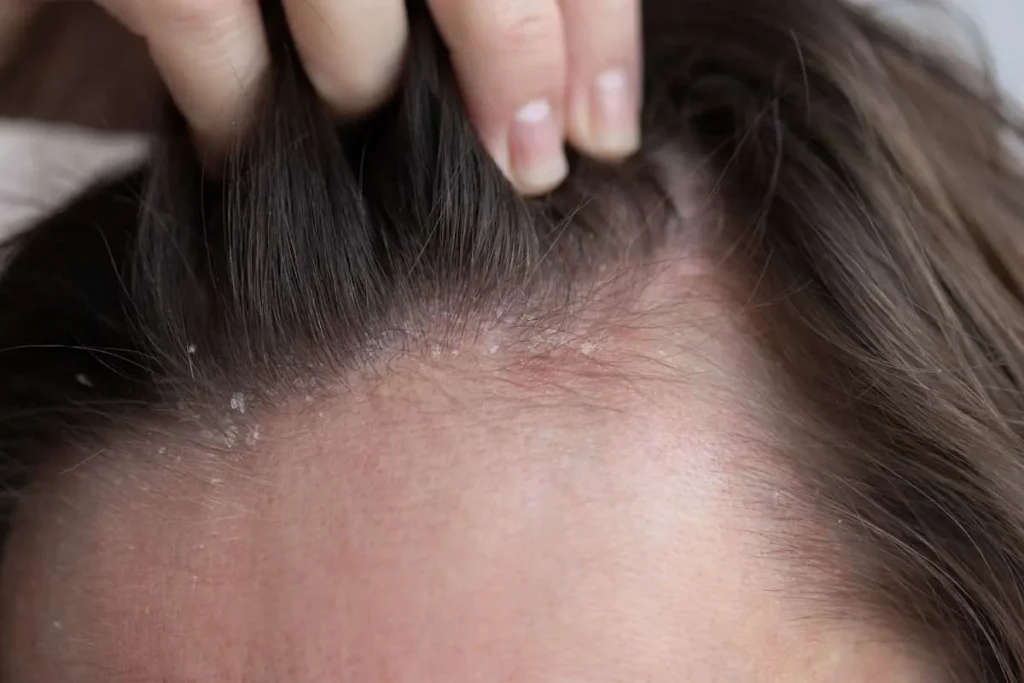
Seeing big flaky patches can be upsetting. But knowing if it’s dandruff or psoriasis is key to fixing it.
Stop flaky patches on scalp with amazing results. Use powerful, incredible secrets to end scary itching and achieve incredible scalp health.
Many mix up dandruff and psoriasis, but they need different treatments. Dandruff comes from a fungus and too much oil, making white or yellow flakes. Psoriasis, an autoimmune issue, makes thick, silvery or red spots with big flakes that can spread beyond the scalp area.
Gold City Hair focuses on you, giving the right diagnosis and care for your scalp.
Key Takeaways
Distinguishing between dandruff and psoriasis is key for the right treatment.
Dandruff is caused by a fungus and too much oil.
Psoriasis is an autoimmune issue that makes thick, silvery or red spots.
Getting the right diagnosis is vital for managing your condition.
Gold City Hair offers personalized care for scalp issues.
Understanding Flaky Patches on Scalp: Causes and Prevalence
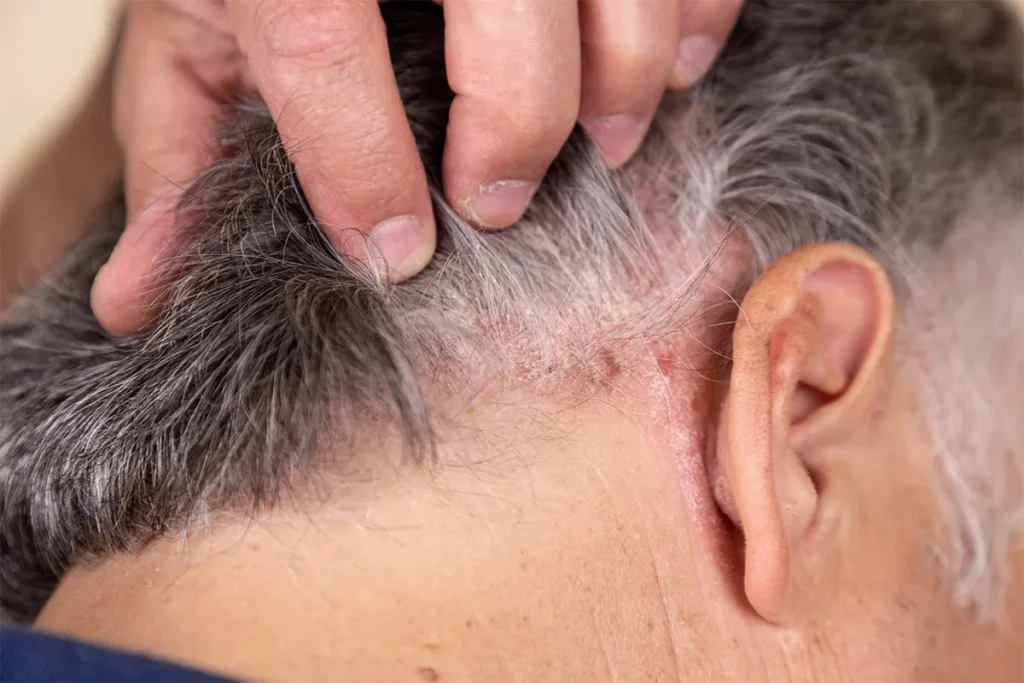
Flaky patches on the scalp can be uncomfortable and embarrassing. They often lead to confusion about their cause. Both dandruff and psoriasis are common conditions that result in flaky scalp patches. They have different causes and affect people in different ways.
Dandruff is a mild form of seborrheic dermatitis. It affects about half of the world’s population at some point. It’s caused by an overgrowth of Malassezia yeast on the scalp. Oily skin, stress, and cold weather can make dandruff worse, causing visible flakes.
Dandruff: Fungal Origins and Oil Production
Dandruff is mainly caused by too much Malassezia yeast. This yeast eats the oils from the scalp, breaking them down. This irritation makes the skin cells turn over faster, leading to flakes.
People with oily skin are more likely to get dandruff. This is because their scalps produce more sebum, which Malassezia yeast loves. Stress, not washing your hair enough, and some health issues can also cause dandruff. Some people get small flakes, while others get big dandruff flakes or large dandruff flakes, often at the front of the scalp.
Psoriasis: The Autoimmune Connection
Scalp psoriasis is an autoimmune condition. It happens when the immune system attacks healthy skin cells. This makes new skin cells grow too fast, causing thick, scaly patches on the scalp. These patches can be itchy and painful. Psoriasis affects about 2 to 3 percent of the world’s population, making it less common than dandruff.
The exact cause of psoriasis is not fully understood. It involves genetics and environmental factors. Stress, cold weather, and some medicines can trigger psoriasis. Unlike dandruff, psoriasis can cause thicker, silvery plaques that may cover more of the scalp.
It’s important to know the difference between dandruff and psoriasis to manage and treat them effectively. Both conditions cause flaky patches, but they have different causes and effects. By recognizing the signs and symptoms of each, people can find the right treatment and feel better.
Identifying Key Differences Between Conditions
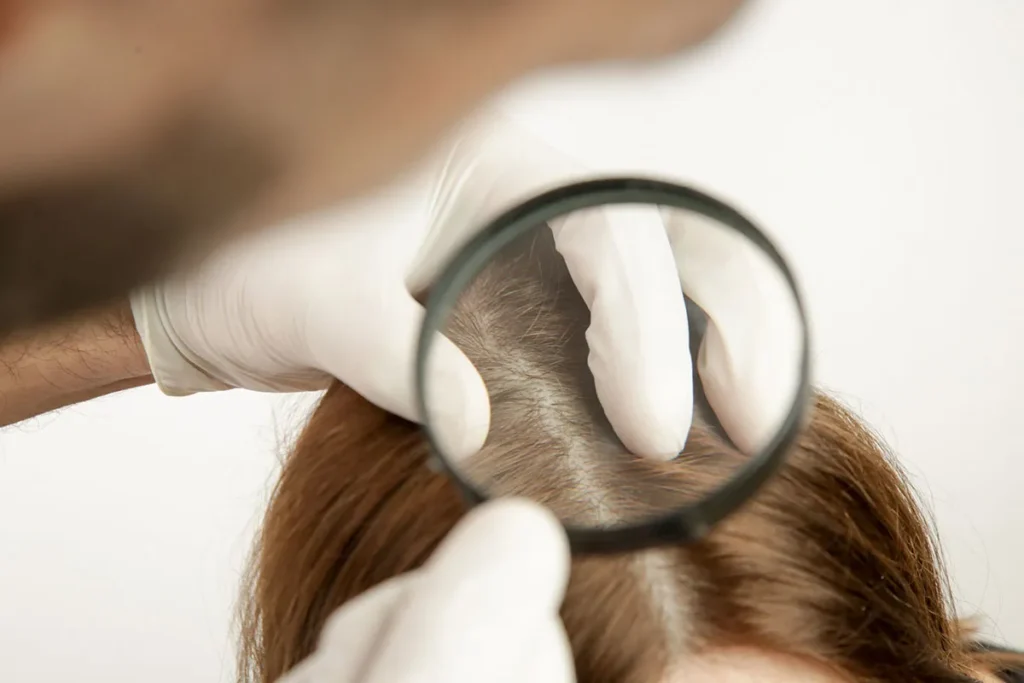
It’s important to know the difference between dandruff and psoriasis to treat them right. Both can make your scalp flaky, but they start from different reasons and show in different ways.
Dandruff Characteristics: White, Oily Flakes at Front of Scalp
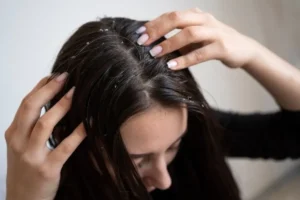
Dandruff shows up as white or yellowish flakes that are oily and mostly found at the scalp’s front. These flakes might itch a bit. The scalp might look red and inflamed, but it doesn’t usually hurt.
Psoriasis Signs: Thick, Silvery Plaques with Larger Flakes
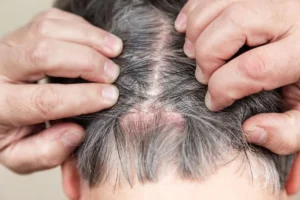
Scalp psoriasis, on the other hand, makes thick, silvery plaques with big flakes. These flakes can spread to other body parts too. The plaques can hurt and itch a lot. The skin might feel warm and can bleed if scratched.
Beyond Appearance: Itching, Pain, and Distribution Patterns
Dandruff and psoriasis differ in how they feel and where they show up. Dandruff usually itches a bit on the scalp. Psoriasis, though, can hurt and itch a lot, and its plaques can be on the scalp or other places like elbows and knees.
Dandruff mainly stays on the scalp, mostly the front and center. Psoriasis can be on the scalp but also on other parts of the body, spreading out more.
Conclusion: Treatment Options and When to Seek Professional Help
It’s important to know the difference between dandruff and scalp psoriasis to manage them well. Each condition has its own treatment options.
Dandruff can be treated with antifungal shampoos. These shampoos control fungus and reduce flaking. On the other hand, scalp psoriasis might need stronger treatments like topical steroids and systemic treatments. These help manage inflammation and scaling.
If symptoms don’t get better or get worse, it’s time to see a dermatologist. They can give a proper diagnosis and suggest a treatment plan tailored for you. This is key to improving scalp health.
To keep your scalp healthy, wash it regularly with medicated shampoos. Also, try to reduce stress and avoid harsh hair products. Knowing the right treatments and when to get professional help can help manage dandruff and scalp psoriasis. This way, you can keep your scalp in good condition.
FAQ
What does dandruff look like on the scalp?
Dandruff appears as small white or yellowish flakes on the scalp and hair, often accompanied by mild itching. The scalp may look slightly oily but usually not inflamed.
How can I tell if I have dandruff or scalp psoriasis?
Dandruff typically causes smaller, loose flakes, while scalp psoriasis produces thicker, silvery scales with more defined red patches. Psoriasis often extends beyond the hairline, unlike dandruff.
What are the characteristic symptoms of scalp psoriasis?
Scalp psoriasis causes thick, crusted plaques with silvery-white scales and redness underneath. It may also cause intense itching, burning, or temporary hair shedding from irritation.
Can I have both dandruff and scalp psoriasis at the same time?
Yes, it is possible to have both conditions simultaneously, as dandruff (seborrheic dermatitis) and psoriasis are separate scalp disorders. A dermatologist can help distinguish and manage each condition properly.
Are large dandruff flakes a sign of a more serious condition?
Large, thick flakes may indicate seborrheic dermatitis or scalp psoriasis rather than simple dandruff. Persistent scaling with redness or discomfort should be evaluated by a healthcare professional.
How do I manage dandruff and scalp psoriasis effectively?
Dandruff is often managed with medicated shampoos containing ingredients like zinc or ketoconazole, while scalp psoriasis may require prescription treatments such as topical corticosteroids. Consistent scalp care and medical guidance improve control of both conditions.
What is the difference between dandruff and scalp psoriasis in terms of distribution patterns?
Dandruff usually stays confined to the scalp and may affect oily areas like behind the ears. Scalp psoriasis often forms well-defined patches and can spread to the forehead, neck, or inside the ears.
Can stress trigger dandruff or scalp psoriasis?
Yes, stress can worsen both dandruff and scalp psoriasis by affecting the immune system and increasing inflammation. Managing stress may help reduce flare-ups.
Are there any home remedies for treating dandruff and scalp psoriasis?
For mild dandruff, tea tree oil shampoos or diluted apple cider vinegar rinses may help reduce flakes. Scalp psoriasis typically requires medical treatment, but moisturizing oils can help soften scales alongside prescribed therapy.
References
National Center for Biotechnology Information. Evidence-Based Medical Insight. Retrieved from https://pmc.ncbi.nlm.nih.gov/articles/PMC4908440/[1