The term hair follicle real may sound technical, but it simply refers to the true biological structure that produces each strand of hair on our bodies. Knowing how a hair follicle works is essential for anyone considering hair restoration, because the success of procedures like FUE or DHI depends on preserving the natural anatomy of these tiny organs. In this article we will explore the complete anatomy of a hair follicle, the stages of the hair growth cycle, and how this knowledge translates into better outcomes for hair transplant patients.
Every day, millions of people notice thinning hair, bald patches, or slow regrowth after a haircut. While cosmetic products promise quick fixes, the underlying issue often lies deeper—in the health and vitality of the hair follicle itself. Studies show that up to 70% of men experience noticeable hair loss by age 35, highlighting the importance of a solid scientific foundation when choosing a treatment.
We will break down the complex layers of the follicle, explain the role of the hair bulb and papilla, and clarify common misconceptions such as “pulling a hair out kills the follicle forever.” By the end, you’ll have a clear picture of what a real hair follicle looks like, how it regenerates, and why professional clinics like Gold City Hair place such emphasis on preserving its integrity.
1. The Structural Layers of a Real Hair Follicle
A hair follicle is far more than a simple tube in the skin; it is a sophisticated mini‑organ composed of several distinct parts, each with a specific function. Understanding these layers helps explain why certain transplant techniques are more effective than others.
Key Components
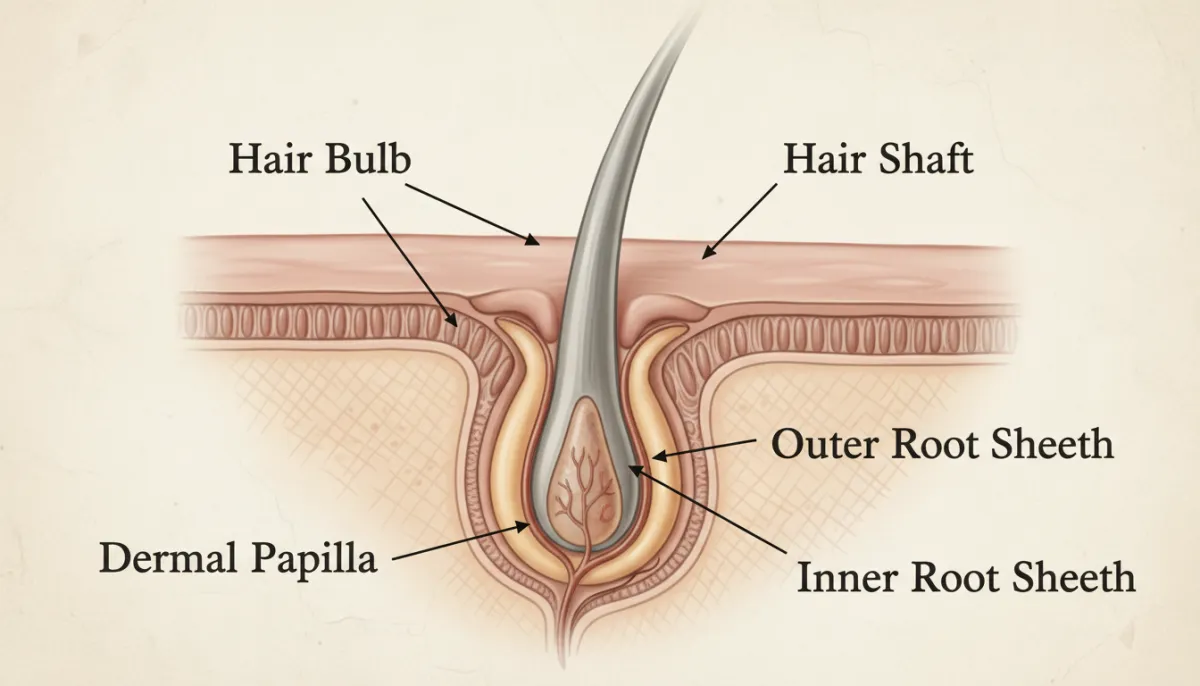
- Hair Bulb: The swollen base where cells divide rapidly to form the hair shaft.
- Hair Papilla: A cluster of blood vessels that supplies nutrients to the bulb.
- Outer Root Sheath (ORS): Protective layer that connects the follicle to the epidermis.
- Inner Root Sheath (IRS): Guides the emerging hair shaft and shapes its curvature.
- Hair Shaft: The visible part of the hair, composed of keratinized cells.
The diagram below (illustrative) shows the relationship between these parts, emphasizing the central role of the hair bulb and papilla in driving growth.
| Component | Primary Function |
|---|---|
| Hair Bulb | Cell proliferation and keratin production |
| Hair Papilla | Blood supply and growth signaling |
| Outer Root Sheath | Structural support and protection |
| Inner Root Sheath | Guides hair shaft formation |
| Hair Shaft | Visible hair strand |
When a follicle is damaged—by trauma, disease, or improper extraction—the delicate balance among these layers can be disrupted, leading to permanent loss. This is why clinics prioritize gentle handling of the hair follicle during extraction.
2. The Hair Growth Cycle: Anagen, Catagen, and Telogen
The hair growth cycle is a continuous process that determines how long a strand remains on the scalp and when it sheds. Each follicle operates independently, cycling through three main phases.
Phases Explained
- Anagen (Growth Phase): Lasts 2–7 years; the follicle actively produces the hair shaft.
- Catagen (Transition Phase): A short 2–3 week period where growth stops and the follicle shrinks.
- Telogen (Resting Phase): Lasts about 3 months; the hair is fully formed and eventually sheds.
Approximately 85% of scalp hairs are in the anagen phase at any given time, which is why a healthy anagen population is crucial for a full appearance. Factors such as genetics, hormones, and nutrition influence the length of each phase, and disruptions can cause premature entry into catagen or telogen, resulting in thinning.
Transplant surgeons aim to harvest follicles that are firmly in the anagen phase because these units have the highest regenerative potential. Selecting the right phase also minimizes the risk of extracting a follicle that is about to shed, which would reduce graft survival.
3. Common Myths About Pulling Out Hair Follicles
Many people believe that pulling a hair out destroys the follicle forever. In reality, the outcome depends on how deep the pull is and the health of the surrounding tissue. A gentle tug that removes only the hair shaft often leaves the follicle intact, allowing it to regrow.
However, forceful extraction can damage the hair papilla or rupture the outer root sheath, leading to permanent loss. This is why medical professionals discourage habits like aggressive hair pulling or tight hairstyles that create chronic tension.
Below is a quick reference that separates fact from fiction:
- Myth: “Pulling a hair out kills the follicle.” – Fact: Only deep trauma to the papilla causes irreversible loss.
- Myth: “All pulled hairs regrow instantly.” – Fact: Regrowth can take weeks to months, depending on the growth cycle stage.
- Myth: “Hair loss is always hereditary.” – Fact: Hormonal changes, stress, and nutritional deficiencies also play major roles.
Understanding these nuances helps patients make informed decisions about styling, grooming, and seeking professional treatment.
4. How Follicle Health Impacts Hair Transplant Success
Successful hair transplantation hinges on the viability of each extracted follicle. Surgeons assess several criteria before harvesting:
- Phase of the growth cycle (preferably anagen).
- Integrity of the hair papilla and surrounding sheath.
- Diameter of the hair shaft (thicker shafts often indicate stronger follicles).
- Absence of scar tissue or inflammation in the donor area.
During the FUE (Follicular Unit Extraction) or DHI (Direct Hair Implantation) procedures, each follicle is carefully dissected under magnification to preserve its natural structure. This meticulous approach maintains the real hair follicle architecture, which translates to higher graft survival rates—often above 90% in experienced hands.
Below is a comparison of two popular techniques and their impact on follicle integrity:
| Technique | Extraction Method | Follicle Integrity | Typical Survival Rate |
|---|---|---|---|
| FUE | Individual punch extraction | High, but requires skill to avoid sheath damage | 85‑92% |
| DHI | Implantation with Choi pen | Very high, minimal handling | 90‑95% |
Patients who understand the science behind the hair follicle are better equipped to ask the right questions and set realistic expectations for their transplant journey.
5. Caring for Your Follicles After a Transplant
Post‑procedure care is as vital as the extraction itself. Proper after‑care supports the healing of the donor and recipient sites and encourages the transplanted follicles to enter the anagen phase smoothly.
Essential After‑Care Steps
- Gentle cleansing with a mild, sulfate‑free shampoo starting 48 hours post‑surgery.
- Avoid direct sunlight, heat, and strenuous exercise for the first two weeks.
- Apply prescribed topical solutions that contain minoxidil or platelet‑rich plasma to stimulate the papilla.
- Maintain a balanced diet rich in protein, iron, and biotin to feed the follicles.
- Follow up with your surgeon for regular assessments of graft survival.
Research indicates that patients who adhere to a structured after‑care regimen see up to a 15% increase in graft retention compared with those who neglect these steps. Consistency is key; the follicles need a stable environment to re‑establish blood supply and resume normal growth cycles.
By treating each transplanted unit as a living organ—nourishing it, protecting it, and monitoring its progress—you maximize the chance of achieving a natural, long‑lasting result.
Why Choose Gold City Hair
Gold City Hair has been delivering personalized hair restoration solutions in Turkey since 2017. Our team combines advanced FUE and DHI techniques with a deep understanding of hair follicle anatomy, ensuring each graft is handled with precision. Transparent communication, individualized treatment plans, and a commitment to patient comfort set us apart as a trusted partner in your journey to renewed confidence.
Ready to restore your natural hair? Contact Gold City Hair today to schedule a free, no‑obligation consultation and discover how our expertise can bring your hair goals to life.
FAQ
What is a hair follicle and why is its anatomy important for transplants?
A hair follicle is a mini‑organ that produces hair, and its layered anatomy determines graft survival during transplants.
What are the three phases of the hair growth cycle?
The hair growth cycle includes anagen (growth), catagen (transition), and telogen (rest).
Why is harvesting follicles in the anagen phase preferred?
Anagen follicles have the highest regenerative potential and better graft survival rates.
Can pulling out a hair permanently damage the follicle?
Only deep trauma to the papilla or sheath can cause permanent loss; gentle pulling usually leaves the follicle intact.
What after‑care steps improve graft retention after a transplant?
Gentle cleansing, sun avoidance, prescribed topicals, proper nutrition, and follow‑up visits boost graft survival.
How do FUE and DHI techniques differ in preserving follicle integrity?
FUE uses individual punches, while DHI implants directly with a Choi pen, offering slightly higher follicle preservation.