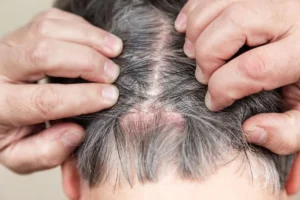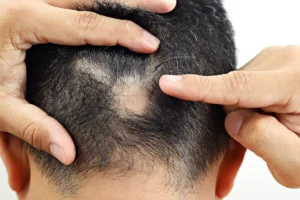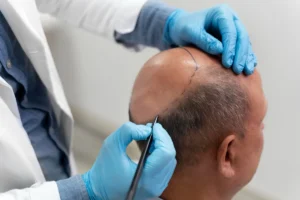
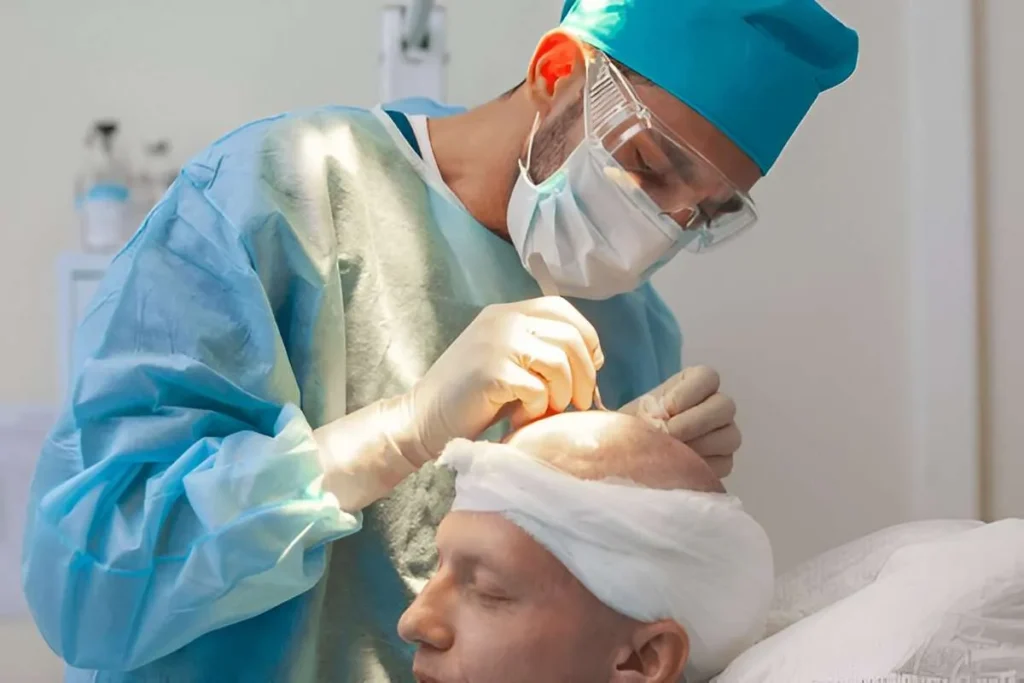
Hair loss hits about 50 million men in the U.S. alone. Male pattern baldness is the top reason. Losing hair can really hurt your self-confidence and life quality.
Today, hair replacement goes way beyond surgery. Thanks to new medicine, men have seven proven options. These are far from the old surgery days.
Looking for quick fixes, slow but sure changes, or easy ways to fix hair loss? A patient-first approach means getting help from experts. They help pick the best hair replacement for you.
Key Takeaways
Multiple alternatives to surgical hair replacement
Non-invasive and gradual improvement options available
Patient-centered approach for personalized guidance
Seven proven hair replacement solutions for men
Modern medicine advancements in hair restoration
Understanding Male Pattern Baldness
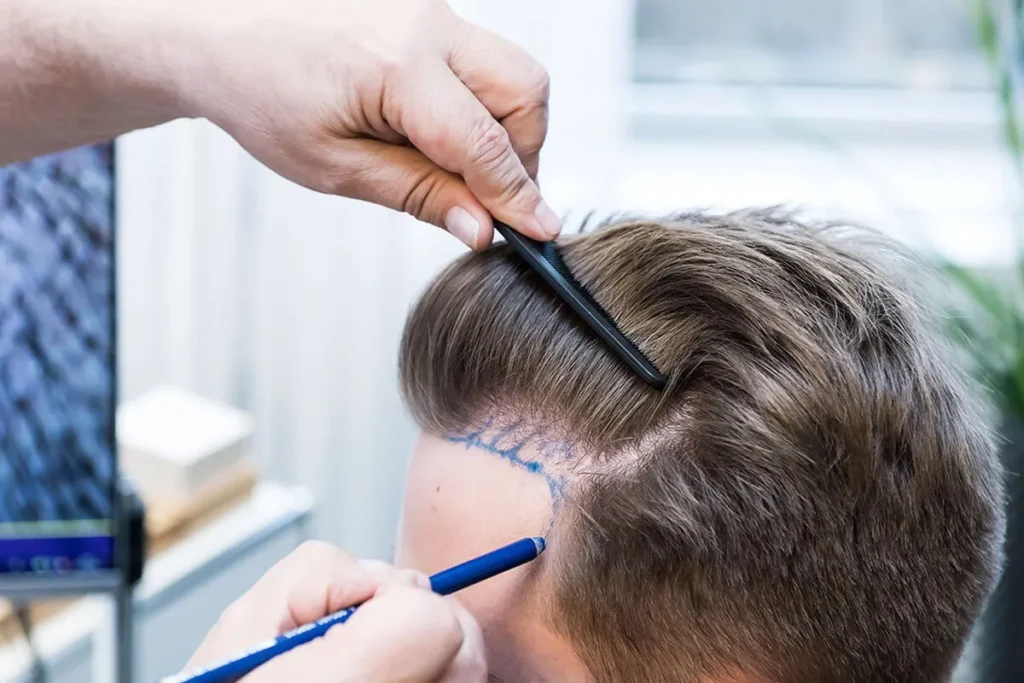
Male pattern baldness, or androgenetic alopecia, is a common issue. It’s caused by genetics and hormones. It’s the main reason for hair loss in men, leading to a search for good hair replacement solutions.
Common Causes of Hair Loss in Men
The main cause is when testosterone turns into dihydrotestosterone (DHT). Genetics play a big role, as men with balding family members are more likely to lose hair. Other factors like inflammation and oxidative stress also play a part in hair loss.
Why Men Seek Alternatives to Surgery
Many men avoid surgery for hair loss. They look for alternatives to hair transplant because surgery is invasive and risky. Non-surgical options are less risky and often cheaper. Men want natural hair replacement methods for a natural look and less downtime.
It’s important for men to understand male pattern baldness and the options beyond surgery. By looking at surgical vs non surgical male pattern alopecia treatments, men can choose the best hair replacement option for them.
Top Hair Replacement for Men: Non-Surgical Systems

Modern technology has brought about new, non-surgical hair replacement options for men. These options allow for a natural look and feel, similar to surgery, but without the need for it.
Non-surgical hair replacement systems have greatly improved. They now offer a variety of choices to meet different needs and preferences. Here are some of the best non-surgical hair replacement options:
1. Modern Hairpieces and Toupees
Today’s hairpieces and toupees are very realistic and comfortable. They use advanced materials and techniques to look like natural hair. These systems work well for men with partial or complete hair loss.
The benefits of modern hairpieces and toupees include:
Natural appearance
Comfortable to wear
Customizable to individual preferences
Non-invasive application
2. Hair Weaves and Extensions
Hair weaves and extensions are a popular choice. They add volume, length, or color to existing hair. This method is great for men with enough hair to support the weave or extension.
Key advantages of hair weaves and extensions include:
Versatility in styling
Temporary or semi-permanent application
Minimally invasive
Can be adjusted or removed as needed
3. Scalp Micropigmentation
Scalp micropigmentation is a non-surgical method. It tattoos the scalp with tiny dots to make it look like fuller hair. This is perfect for men with significant hair loss or those who like a shaved look.
The benefits of scalp micropigmentation include:
Permanent solution
No maintenance required
Can be used in conjunction with other hair replacement methods
Creates a natural-looking hairline
In conclusion, non-surgical hair replacement systems offer men many effective solutions for hair loss. By understanding the different options, individuals can choose the best hair replacement solution for their needs.
Medication and Advanced Treatment Options
There are many ways to fight male pattern baldness, not just surgery. These options are for those who don’t want or need surgery. They are less invasive and can help with hair loss.
Minoxidil (Rogaine)
Minoxidil, or Rogaine, is a scalp treatment. It helps hair grow and slows down balding. It’s easy to use and you can buy it without a prescription. But, it might make your scalp itch.
Finasteride (Propecia)
Finasteride, or Propecia, is a pill that stops DHT, a hormone that causes hair loss. Studies show it slows down hair loss and helps hair grow. But, it can lower your sex drive and cause erectile problems.
Low-Level Laser Therapy (LLLT)
LLLT uses low-level lasers or lights to help hair grow. It boosts blood flow to the scalp, making hair follicles healthier. Some studies support its use, but more research is needed.
Platelet-Rich Plasma (PRP) Therapy
PRP therapy uses your own blood’s platelet-rich plasma (PRP) injected into your scalp. It’s believed to boost hair growth and density. But, its effectiveness for hair restoration is not fully proven yet.
These treatments give men more choices than just surgery. It’s important to talk to a doctor to find the best option for you.
Minoxidil and Finasteride are often the first choices.
LLLT and PRP therapy are non-invasive alternatives.
Each treatment has its own benefits and risks.
Conclusion: Selecting the Right Hair Replacement Solution
Today, there are many hair replacement options for men. Each one meets different needs, budgets, and tastes. It’s key to think about your hair loss type, age, and budget when picking the best one.
Options range from non-surgical hairpieces and toupees to treatments like Low-Level Laser Therapy (LLLT) and Platelet-Rich Plasma (PRP) Therapy. Talking to a certified dermatologist or trichologist can help you find the right fit for you.
Knowing what’s out there and getting expert advice can lead to a good choice. This way, you can find a hair replacement solution that fits your lifestyle and preferences.
FAQ
What is Bosley Hair Replacement, and how does it work?
Bosley is a well-known U.S. hair restoration company that offers both surgical and non-surgical hair replacement solutions.
Their surgical option typically involves follicular unit transplantation (moving hair from a donor area to thinning areas). They also offer non-surgical hair systems that attach custom hair pieces to the scalp for immediate cosmetic results.
Are there any alternatives to hair transplant surgery?
Yes. Alternatives include:
-
Minoxidil
-
Finasteride
-
PRP (platelet-rich plasma) therapy
-
Low-level laser therapy
-
Non-surgical hair systems (custom hairpieces)
-
Scalp micropigmentation (tattooed hairline effect)
What are the best hair replacement options for men?
The best option depends on the severity of hair loss:
-
Early thinning → medications like minoxidil or finasteride
-
Moderate hair loss → PRP or transplant
-
Advanced baldness → hair transplant or non-surgical hair system
-
Shaved look preference → scalp micropigmentation
Is hair replacement surgery the only solution for male pattern baldness?
No. Male pattern baldness can be managed medically (especially in early stages). Surgery is typically considered when hair loss is stable and more advanced.
What is the Bosley guarantee, and what does it cover?
Bosley advertises satisfaction guarantees for certain procedures. Coverage details vary by contract and clinic location, so patients must review the specific agreement during consultation to understand what revisions or follow-ups are included.
Are there any natural hair replacement options available?
There are no true “natural replacements” that regrow hair permanently without medical or surgical treatment. However, lifestyle changes (balanced diet, stress reduction, scalp care) may help slow thinning in some individuals.
What are the benefits of non-surgical hair replacement systems?
-
Immediate results
-
No surgery or downtime
-
Suitable for people without a strong donor area
-
Fully customizable density, style, and hairline
-
Reversible and adjustable over time
Can hair replacement options be customized to individual needs?
Yes. Whether surgical or non-surgical, treatments are typically customized based on:
-
Hair loss pattern
-
Donor hair availability
-
Age and facial structure
-
Lifestyle and maintenance preference
-
Budget
A consultation with a qualified hair restoration specialist helps determine the most suitable personalized plan.
References
National Center for Biotechnology Information. Evidence-Based Medical Insight. Retrieved from https://pubmed.ncbi.nlm.nih.gov/9865198/