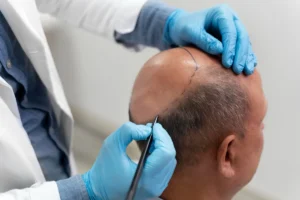
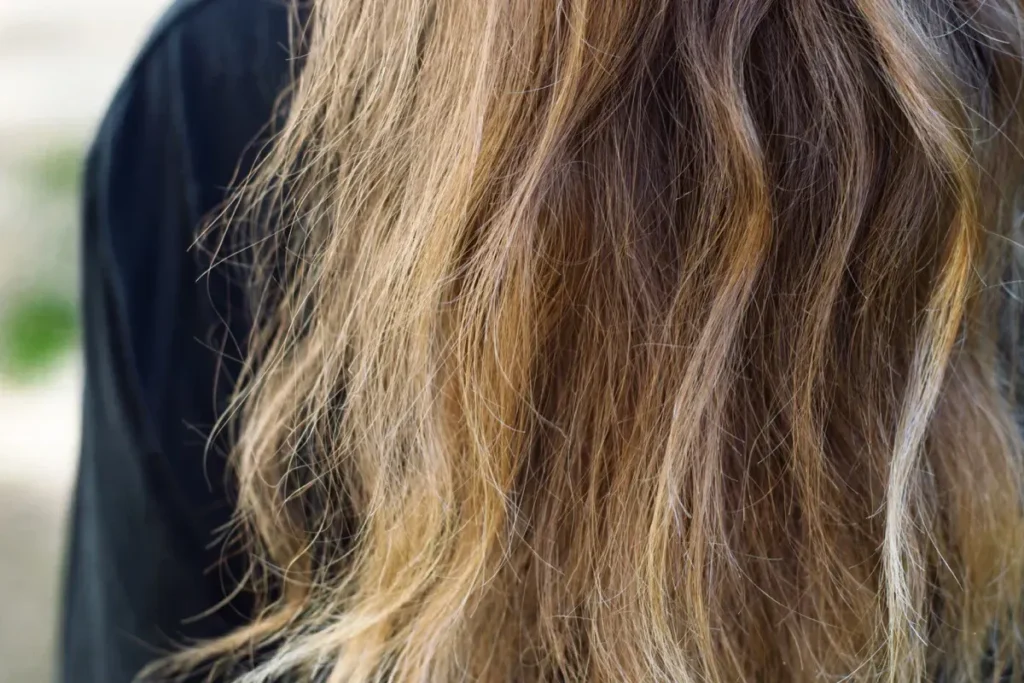
Knowing what healthy 4C hair looks like is key to spotting damage. Experts like Jaycee Naturals say that healthy 4C hair has special traits. These can get hurt by too much heat styling.
Repairing heat-damaged 4C hair needs a detailed plan. This guide will show you how to spot damage and fix it. You’ll learn how to restore your hair to its former health.
By using evidence-based hair care, you can make smart choices for your hair. This helps in getting your hair back to health.
Key Takeaways
Understanding the natural characteristics of 4C hair is essential for identifying damage.
Excessive heat styling can cause significant damage to 4C hair.
A complete guide can help individuals repair and restore their hair.
Evidence-based practices are key for effective hair repair.
Making informed decisions about hair health leads to better recovery.
Understanding 4C Hair and Heat Damage
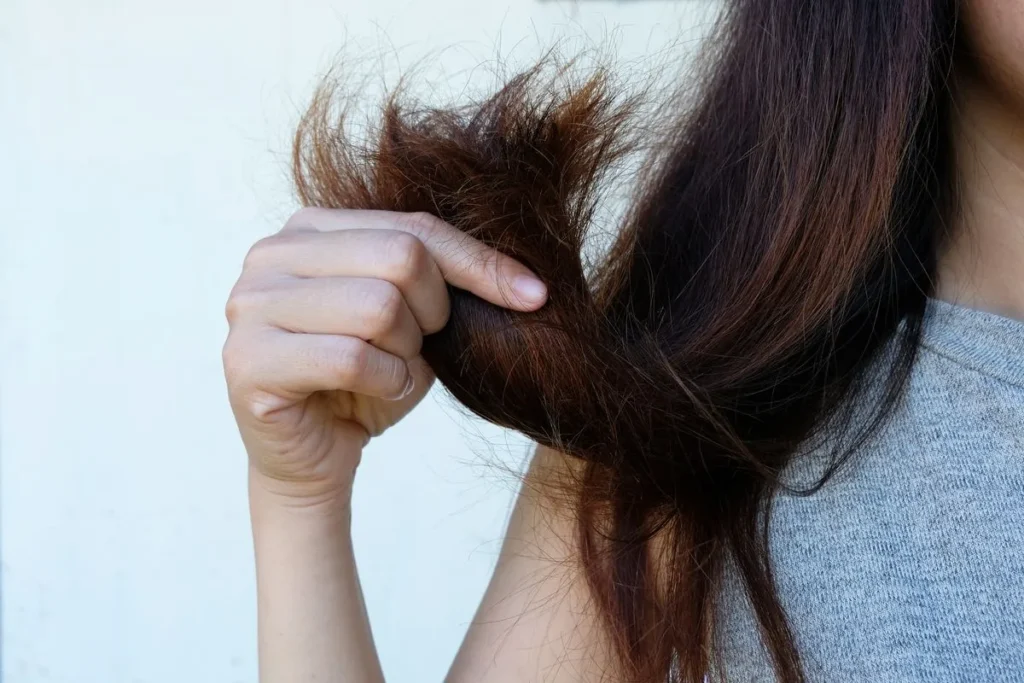
Knowing about 4C hair and heat damage is key to good hair care. 4C hair, with its tight curls, dries out and breaks easily. Its special structure makes it prone to dehydration and damage from heat tools.
Characteristics of Healthy 4C Hair
Healthy 4C hair is strong, holds moisture well, and has clear curls. It has a strong root and is well-moisturized. The cuticle layer is intact, which reduces frizz and adds shine.
Healthy 4C hair has:
Well-defined curls
Good moisture retention
Minimal breakage
A healthy scalp
Signs of Heat Damaged Hair
Heat damage changes 4C hair’s look and health. Signs include dryness, brittleness, and a loss of natural curl definition. Damaged hair looks dull and may have splits or breaks.
Signs of heat damaged 4C hair are:
Dryness and brittleness
Loss of curl definition
Increased breakage
Dull appearance
Common Causes of Heat Damage
Heat styling tools like flat irons and blow dryers cause heat damage. Their high temperatures harm the hair’s protein, leading to dryness and breakage.
A study on heat damage in curly hair shows that
Understanding these factors helps prevent heat damage and keep 4C hair healthy. Recognizing heat damage signs and using preventive measures protect hair from heat styling harm.
Effective Methods to Repair Heat Damaged Hair
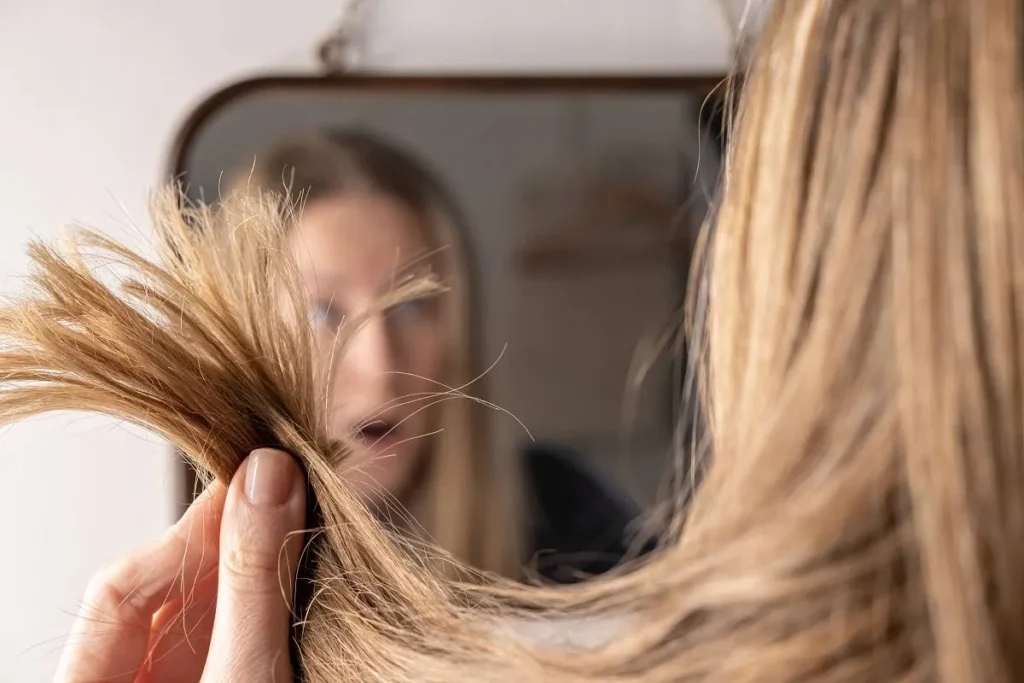
Fixing heat damaged 4C hair needs a detailed plan. It’s about adding moisture, fixing hair structure, and stopping more damage. Knowing how to fix heat damaged hair is key to getting back healthy, lively curls.
Moisture-Based Treatments
Moisture-based treatments are vital for heat damaged curls. Deep conditioning with hydrating masks and leave-in conditioners can bring back moisture. Ingredients like coconut oil, shea butter, and argan oil are great for fixing heat damage.
Bond-Building Therapies
Bond-building therapies help fix the hair’s internal structure. Treatments with keratin, protein, and other bond-repairing ingredients can greatly boost strength and elasticity of heat damaged hair.
Prevention and Long-Term Care
Stopping heat damage is vital for keeping 4C hair healthy. Use heat protectants, cut down on heat styling, and be gentle with your hair. Regular trims and steady moisturizing are also important for long-term hair health.
FAQ
What are the first signs of heat damage on 4C hair?
Loose or straightened curls, dryness, rough texture, split ends, and increased breakage.
How does heat styling affect the protein structure of 4C hair?
High heat breaks down keratin and weakens hair bonds, causing brittleness and possible permanent curl loss.
What are the best moisture-based treatments for repairing heat-damaged 4C hair?
Deep conditioners, hydrating masks (shea butter, aloe, glycerin), steam treatments, and rich leave-ins.
Can bond-building therapies repair heat-damaged 4C hair?
They strengthen weakened strands and reduce breakage but cannot fully restore permanently damaged curls.
How can I prevent heat damage when styling my 4C hair?
Use heat protectant, lower temperatures, limit heat use, deep condition regularly, and avoid frequent flat ironing.
Are there any professional treatment options for repairing heat-damaged 4C hair?
Yes. Salon protein treatments, bond-building treatments, trims, and deep conditioning therapies.
How can I maintain healthy 4C hair after repairing heat damage?
Moisturize consistently, trim regularly, minimize heat, use protective styles, and follow a balanced protein-moisture routine.
References
National Center for Biotechnology Information. Evidence-Based Medical Insight. Retrieved from https://pmc.ncbi.nlm.nih.gov/articles/PMC12308778/