Knowing your hair type is key to a good hair care routine and healthy scalp. Hair classification has grown from simple labels to detailed scientific studies.
How to figure out your hair type? Discover the amazing win and use powerful, incredible tips for amazing results and incredibly beautiful hair.
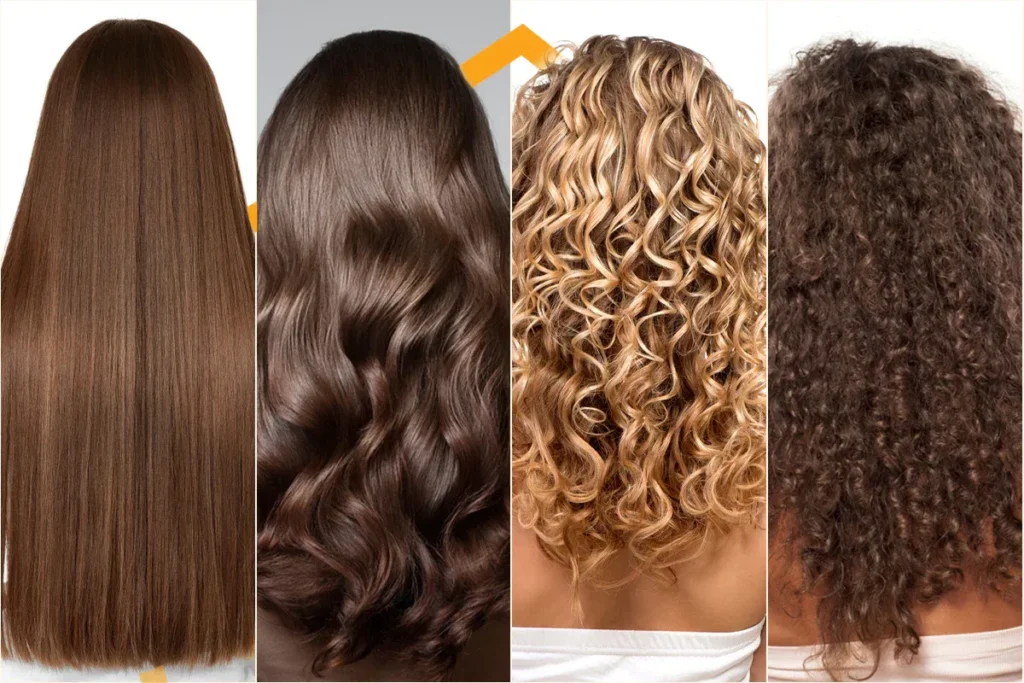
Hair type is about your hair’s curl pattern. Hair texture is how thick each strand is. There are four main hair types: straight, wavy, curly, and coily. Each needs its own care.
Many hair classification systems exist. The Andre Walker and L’Oreal systems are two examples. They use numbers for a more detailed classification.
Key Takeaways
Knowing your hair type is vital for a great hair care and styling routine.
Hair type is about curl pattern, while texture is about strand thickness.
The main hair types are straight, wavy, curly, and coily.
Many hair classification systems are out there, like Andre Walker and L’Oreal.
Recent studies show hair texture is complex. It includes curl pattern, strand thickness, density, and porosity.
Understanding Hair Classification Systems
Hair classification systems have evolved, making it easier to categorize hair types. Knowing these systems is key to finding your hair type and creating a good hair care plan.
The Andre Walker Hair Typing System
The Andre Walker Hair Typing System is well-known. It divides hair into four main types: straight, wavy, curly, and kinky. This helps people find the right hair care products for their hair.
The L’Oreal Eight-Type Classification System
The L’Oreal eight-type system is more detailed. It uses measurements of curve diameter and curl index to sort hair into eight types. This method gives a clearer view of hair texture and curl pattern.
Scientific Approaches to Hair Categorization
Science has helped us understand hair better. It looks at curl pattern, strand diameter, density, and porosity. These are key to figuring out hair type and creating effective hair care plans.
Key Characteristics That Determine Your Hair Type
To figure out your hair type, look at several factors. It’s not just about how your hair looks. It’s about knowing its natural traits.
Curl Pattern and Structure
The curl pattern is the natural shape of your hair, from straight to coily. Knowing your curl pattern helps pick the right hair care products and methods.
Hair Diameter (Fine, Medium, Coarse)
Hair diameter, or texture, can be fine, medium, or coarse. Fine hair is thin and breaks easily. Coarse hair is thick and strong.
Hair Density (Strands Per Square Inch)
Hair density is the number of hairs per square inch. Most people have between 80,000 to 120,000 hairs. Knowing your hair density helps manage it better.
Hair Porosity Levels
Hair porosity is how well your hair takes in and holds moisture. It’s key in picking the right hair care products for your type.
How to Figure Out Your Hair Type at Home
Figuring out your hair type at home is easy with the right steps. Knowing your hair type helps you care for it better and style it right.
Analyzing Your Natural Curl Pattern
First, look at your natural curl pattern. Is your hair straight, wavy, curly, or coily? Wash your hair gently and let it air-dry without any products. See how your hair dries to find out.
Simple Tests for Hair Thickness
To check your hair thickness, try a simple test. Roll a single strand between your fingers. If it feels easy, your hair is thick. If it’s hard to feel, it’s finer.
Methods to Determine Hair Density
To find your hair density, count hairs per square inch on your scalp. Or, measure your ponytail’s circumference. More hairs or a bigger ponytail means denser hair.
Checking Your Hair Porosity
To check hair porosity, drop a clean strand into water. If it sinks fast, your hair is high porosity. If it floats, it’s low porosity. Medium porosity hair will slowly sink or hover.
By following these steps, you can find out your hair type. Then, you can make your hair care routine better.
Conclusion: Tailoring Your Hair Care Routine Based on Type
Knowing your hair type is key to a good hair care routine and healthy scalp. By figuring out your hair texture, you can pick the best products and treatments. This will make your hair look better.
After finding out your hair type, you can make a hair care plan just for you. Think about your curl pattern, hair thickness, density, and how it absorbs moisture. This will help you create a routine that makes your hair and scalp healthy.
With a hair care plan made just for you, your hair will be healthy and strong. Use hair care tips that fit your hair type. Also, try out different products and treatments until you find the perfect ones for you.
FAQ
What are the best hair treatments for split ends
Trim regularly, use deep conditioning masks, protein treatments, bond-repair products, and serums to smooth and protect ends
What is the best hair serum for split ends
Popular options include Kérastase Nutritive Split Ends Serum, L’Oréal Paris EverPure Bond Repair Oil-in-Serum, Pantene Pro-V Split End Serum, K18 Molecular Repair Hair Oil, and Mise En Scene Perfect Serum
How can I prevent split ends
Trim every 6–8 weeks, avoid excessive heat, use heat protectant, brush gently when wet, and keep hair hydrated
What are the best products for treating dry ends
Look for keratin, proteins, argan oil, coconut oil, and silicones that hydrate and strengthen hair
Are there any affordable salon-quality hair treatments for split ends
Yes, drugstore serums and masks like Pantene or L’Oréal can smooth and protect ends at lower cost
What is a split end sealer, and how does it work
It temporarily bonds or coats split fibers to make hair look smoother but does not permanently repair splits
Can I use a leave-in serum for dry hair to treat split ends
Yes, leave-in serums hydrate, smooth, and protect ends throughout the day
What are the best hair remedies for split ends
Coconut or argan oil treatments, weekly deep conditioning masks, aloe vera or egg masks, regular trims, and gentle hair care
References
“Healthline. Types of Hair: How to Style and Care for Your Hair Type. Retrieved from https://www.healthline.com/health/beauty-skin-care/types-of-hair“