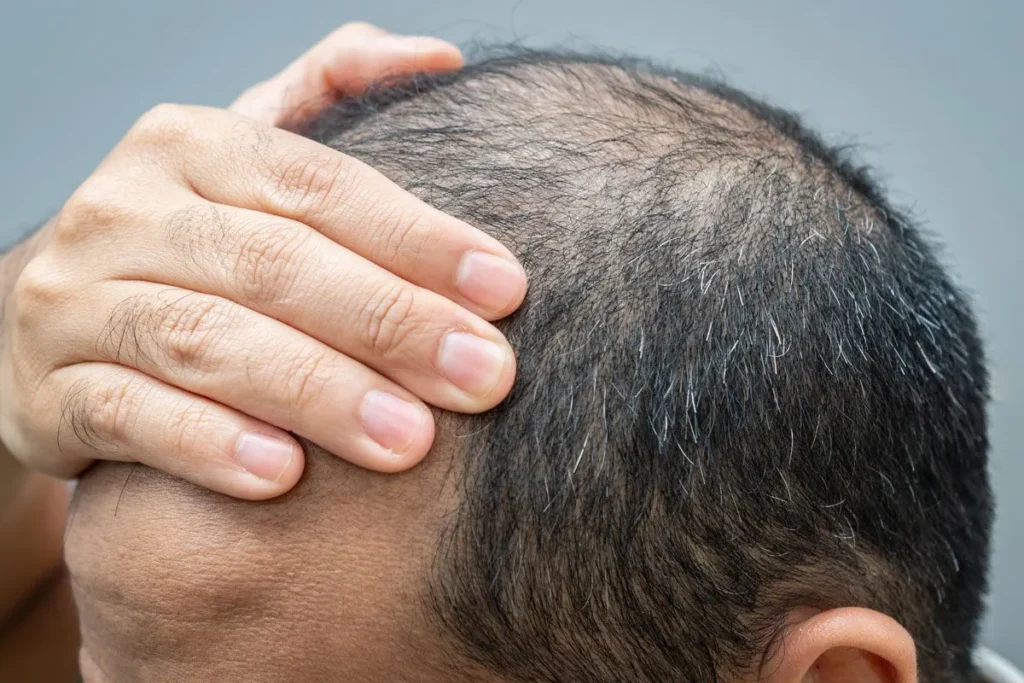
Hair loss can be upsetting, even more so if it seems to run in your family. Many wonder if baldness is inherited and how it’s passed down from parents.
Is balding genetic? Discover the scary real truth and learn amazing, powerful ways to fight your DNA for incredible, lasting hair growth.
It’s a common myth that baldness comes from just one parent. But research shows that multiple genetic factors play a role in hair loss. Medical Expert, a hair loss expert, says male pattern baldness is linked to over 250 genetic markers.
This condition isn’t just about getting one gene from a parent. It’s about how genes, hormones, and aging work together.
Key Takeaways
Hair loss is a complex condition influenced by genetics, hormones, and age.
Multiple genes from both parents contribute to the risk of baldness.
Over 250 genetic markers may be associated with male pattern baldness.
Understanding the genetic basis of hair loss can help in making informed decisions.
Baldness is not inherited from just one parent.
The Genetic Basis of Hair Loss
Hair loss is caused by many genetic and hormonal factors. It’s not just one gene. Instead, it’s a mix of different genes and outside influences.
What Makes Baldness a Complex Genetic Condition
Baldness is a complex issue, influenced by many genes. The androgen receptor gene on the X chromosome is key. It affects how hair follicles react to dihydrotestosterone (DHT), leading to smaller follicles.
Many genes are involved in baldness. Studies have found several genetic variants linked to baldness. This shows how complex the genetics of baldness are.
The Role of Hormones and Aging in Genetic Hair Loss
Hormones, like DHT, are important in baldness. DHT makes hair follicles smaller, causing hair to thin and fall out. The androgen receptor gene affects how sensitive follicles are to DHT.
Aging also plays a big part. As we get older, DHT levels and androgen receptor activity go up. This makes baldness worse.
Is Balding Genetic? Inheritance Patterns from Both Parents
Baldness isn’t just passed down from one parent. It’s a mix of genes from both. This mix of genes and hormones decides if someone will lose their hair.
The Maternal Connection: X Chromosome and Hair Loss
Men get their X chromosome from their moms. This chromosome has genes that can affect baldness risk. The androgen receptor gene, key in male baldness, is on the X chromosome.
The Role of the Androgen Receptor Gene: This gene is very important for male baldness. Changes in it can make hair follicles more sensitive to DHT, a hormone that causes hair loss. Men with certain gene changes may lose hair earlier and more severely.
The Paternal Contribution to Baldness
While the X chromosome comes from mom, other genes for baldness come from dad. Studies show many genes linked to baldness can come from either parent. Men with balding dads are more likely to lose their hair.
A study looked into baldness genetics and found some key points:
In short, baldness comes from both parents’ genes. Knowing about these genes, like the androgen receptor gene, helps understand hair loss risk.
Genetic Hair Loss in Men vs. Women
Genetics play a big role in hair loss, but it affects men and women differently. This is because of hormonal and genetic differences.
Male pattern baldness is when hair recedes and thins, leading to bald spots. It’s caused by many genetic factors.
Male Pattern Baldness: Multiple Genetic Markers
Male pattern baldness is linked to genes, including the androgen receptor gene. This gene affects how the body reacts to hormones like testosterone and DHT, which can cause hair loss.
Research has found many genetic markers for male pattern baldness. These markers help predict who might get it, so treatment can start early.
Female Pattern Hair Loss: Hormones and Heredity
Female pattern hair loss is when hair thins overall, often after menopause. Hormonal changes and genetics are thought to cause it.
Hormonal shifts, like lower estrogen after menopause, can make hair loss worse. Family history also plays a big part, as women with a family history are more likely to lose hair.
It’s important to understand how hormones and genetics work together for female hair loss. Studying these factors could lead to better treatments.
Conclusion: Understanding Your Genetic Predisposition to Hair Loss
Knowing your genetic risk for hair loss is key to fighting androgenetic alopecia. Studies show that genes greatly influence hair loss risk. By finding the genes linked to hair loss, people can start preventing baldness early.
Genetic tests can spot markers for androgenetic alopecia. This lets people make smart choices for their hair. Treatments like minoxidil and finasteride work well against hair loss. Knowing the genetic cause of hair loss helps people find the right treatments.
Genes are a big part of hair loss, but not the only one. Hormones, aging, and other things also play a role. Understanding these factors helps people create a full plan to fight hair loss.
FAQ
Is balding maternal or paternal?
Balding can come from both sides of the family, not just one parent.
Does hair loss come from the mother’s side?
Part of the genetic risk comes from the mother’s side, but father’s genes also play a role.
Is hair thinning genetic?
Yes, hair thinning and pattern baldness are often influenced by genetics.
Does the baldness gene come from the mother?
The gene for male pattern baldness is linked to the X chromosome, which is inherited from the mother, but other genes are involved too.
Is baldness hereditary from father?
Yes, genes from the father can contribute to baldness as well.
Is balding hereditary?
Yes, most pattern baldness is hereditary and influenced by multiple genes.
How to prevent hereditary baldness?
Early treatment with minoxidil, finasteride, proper hair care, and healthy lifestyle can help slow it down.
Is male baldness genetic?
Yes, male pattern baldness is largely determined by genetics.
Is baldness inherited from mother?
It can be inherited from the mother, but both parents’ genes contribute to the risk.
References
https://www.google.com/url?sa=t&source=web&rct=j&opi=89978449&url=https://pmc.ncbi.nlm.nih.gov/articles/PMC4622412/&ved=2ahUKEwiw9rL9l5KTAxUsRv4FHf5yKo8QFnoECBgQAQ&usg=AOvVaw1bSbtNshJkR5mBM4ojtcX1