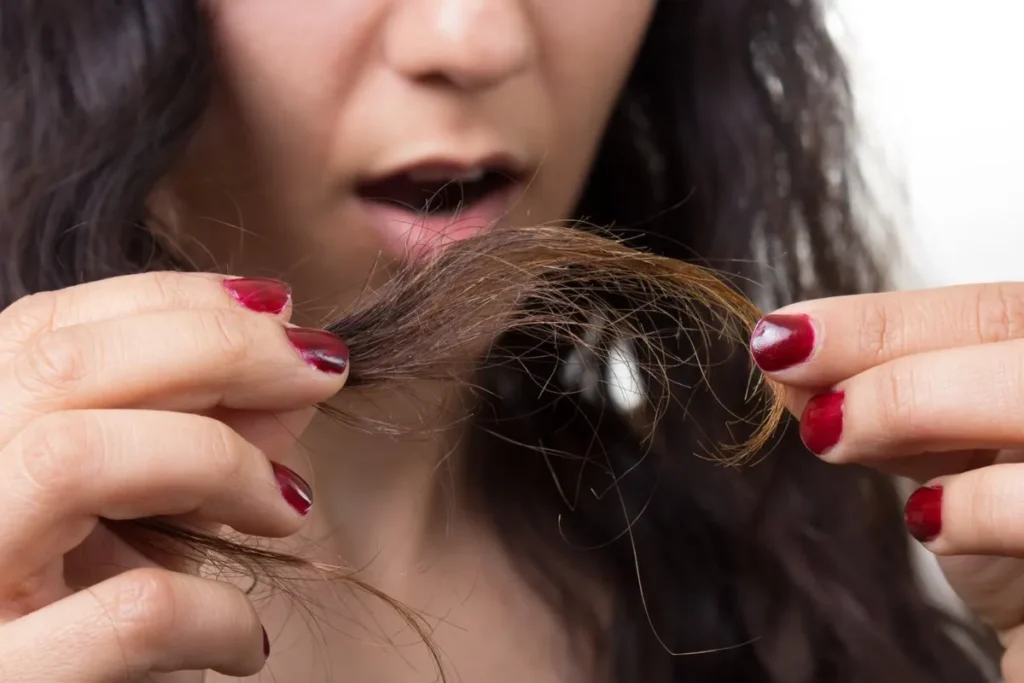
Split ends, also known as trichoptilosis, are a common hair issue. They happen when the hair shaft splits or frays. This damage comes from heat styling, chemical treatments, and mechanical stress.
Understand kinds of split ends with this scary truth and fix. Use amazing, powerful ways to stop scary breakage and achieve incredible hair.
Knowing the different types of split ends is key to treating and preventing them. By understanding the causes and signs of split ends, you can keep your hair healthy and strong.
Key Takeaways
Split ends are a common hair issue caused by damage to the hair shaft.
Understanding the different types of split ends is essential for effective prevention and treatment.
Factors such as heat styling, chemical treatments, and mechanical stress contribute to split ends.
Recognizing the causes and characteristics of split ends can help individuals maintain healthy hair.
Proactive steps can be taken to prevent and treat split ends.
Understanding Split Ends
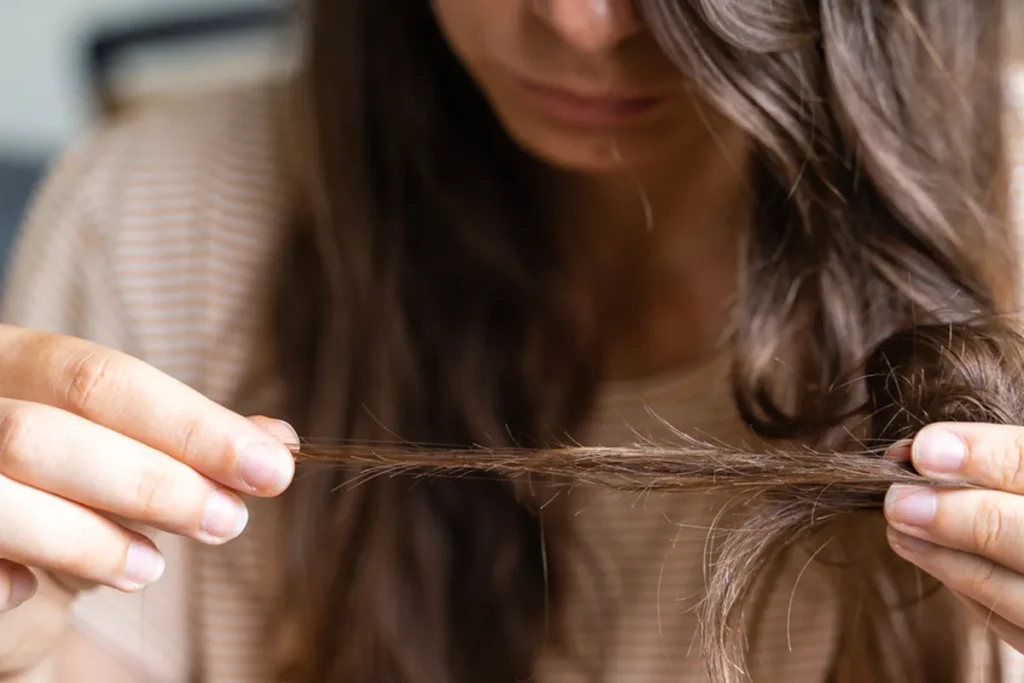
Split ends, also known as trichoptilosis, are a common problem for many hair types. They happen when hair becomes weak and starts to fray, causing a split in the hair shaft.
Definition and Meaning of Split Ends
Split ends are when the hair shaft frays or splits, usually at the end. This happens because the hair’s outer layer, the cuticle, gets damaged. When the cuticle is damaged, the inner layers of the hair are exposed, causing a split.
Trichoptilosis, the medical term for split ends, means the hair shaft splits lengthwise. This can be caused by many things, like too much heat styling, mechanical stress, and chemical treatments.
Are Split Ends Normal or Inevitable?
Split ends are quite common, more so in people with long hair. While they’re not a must, they’re common because hair naturally wears out. Things like hair length, how you style it, and the environment can make split ends more likely.
Knowing what causes split ends is key to preventing and treating them. By understanding the factors that lead to split ends, people can take better care of their hair to avoid them.
The 5 Common Kinds of Split Ends
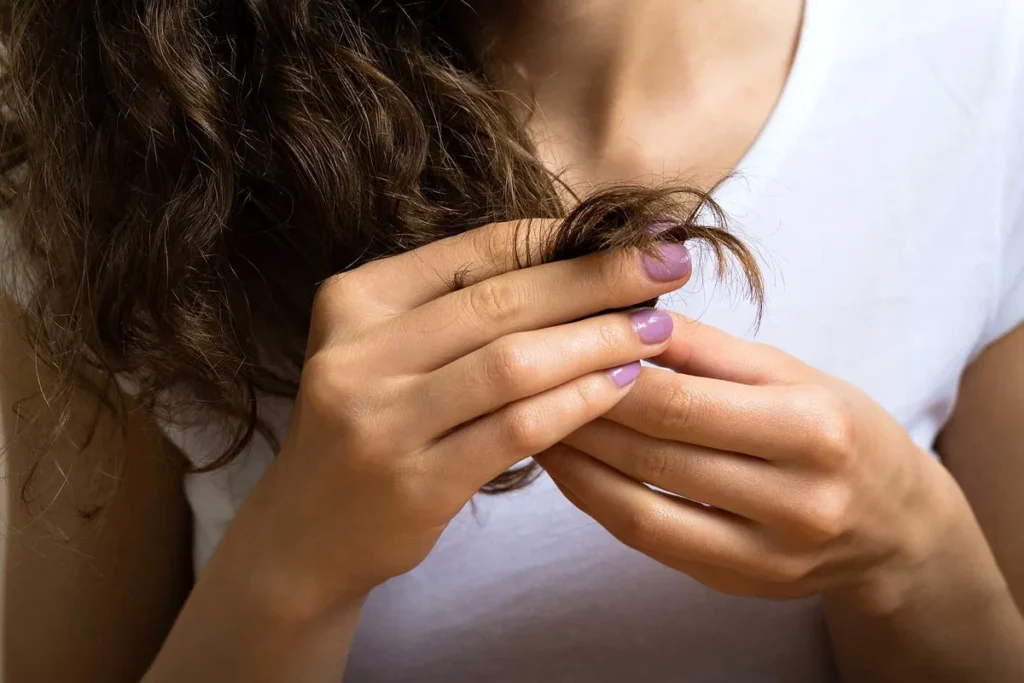
Knowing the different types of split ends is key to good hair care. Split ends are not just one problem; they come in many forms. Each needs a special fix and way to prevent them.
Basic Y-Shaped Split Ends
The Y-shaped split end is the most common. It happens when the hair splits into two parts at the end, looking like a ‘Y’. Y-shaped split ends usually come from damage like too much heat styling, mechanical stress, or chemicals.
Tree or Feathered Split Ends
Tree or feathered split ends are more serious. The hair splits into many parts, like a tree’s branches. This shows deep hair damage. Tree split ends can be from dryness, too much combing, or harsh hair products.
Knot Split Ends
Knot split ends happen when hair gets tangled and forms a knot. This can lead to hair splitting. This type is often from hair tangling because of bad brushing or the wrong comb.
Multiple Split Ends on One Strand of Hair
Some hair strands can get many split ends, called crazy split ends. This shows a lot of hair damage and needs quick action to stop it from getting worse.
Split ends come in many forms, showing how complex hair damage can be. Knowing the type of split end helps in treating and preventing it. By understanding each type’s causes and signs, people can use better hair care to fix and prevent damage.
Y-shaped split ends are the most common and result from hair damage.
Tree or feathered split ends indicate advanced hair degradation.
Knot split ends are caused by hair tangling.
Multiple split ends on one strand signify severe hair damage.
Causes and Prevention of Different Types of Split Ends
To stop split ends, knowing what causes them is key. Split ends happen due to hair care, the environment, and hair type.
Common Causes of Split Ends
Many things lead to split ends. Excessive heat styling damages hair, causing splits. Chemical treatments like dye or perms weaken hair, making it split more easily.
Mechanical stress from combing or brushing
Environmental factors like sun exposure and dry air
Using harsh hair care products
Daily Hair Care Habits to Prevent Split Ends
Good hair care habits and the right products can prevent split ends. Using a wide-tooth comb instead of regular combs or brushes helps.
Protective Styling and Maintenance Tips
Protective styling helps prevent split ends. Styles like braids or buns reduce hair breakage and splitting.
Keep your hair moisturized with a leave-in conditioner or hair serum.
Use a microfiber towel or an old t-shirt to dry your hair instead of a regular towel.
Regular trims can help prevent split ends by removing damaged hair.
By adding these habits and tips to your daily routine, you can lower split ends and keep your hair healthy.
Conclusion: Effective Treatment Options for Split Ends
Knowing the types of split ends is key to keeping your hair healthy. Split ends can’t be fixed forever, but there are good ways to treat them.
Trimming is the best way to get rid of split ends. Regular cuts stop split ends from moving up the hair shaft. This helps prevent more damage. Also, there are hair care treatments that can help manage split ends and stop them from coming back.
It’s important to know the difference between split ends and dead ends. This knowledge helps you take better care of your hair. By using the right hair care and treatments, you can keep your hair healthy and shiny.
FAQ
What are split ends?
Split ends occur when the hair shaft splits or frays at the tip due to damage or wear.
Are split ends normal?
Yes, split ends are common and a natural part of hair growth, especially in longer hair or hair exposed to heat and chemicals.
What are the different types of split ends?
Types include single splits, multiple splits, feathered splits, and bubble splits, depending on the severity and pattern of damage.
What causes split ends?
They are caused by mechanical damage, heat styling, chemical treatments, environmental stress, and lack of moisture.
How can I prevent split ends?
Prevent split ends by regular trims, using heat protectants, minimizing chemical exposure, and keeping hair moisturized.
Can split ends be treated?
Split ends cannot be fully repaired, but treatments like protein masks and deep conditioners can temporarily smooth hair and reduce breakage.
What is the difference between split ends and dead ends?
Split ends are damaged and frayed, while dead ends are simply the older, weaker tips of hair that may not yet be visibly split.
Do all hair types get split ends?
Yes, all hair types—straight, wavy, curly, or coily—can develop split ends if hair is damaged.
Can I get rid of split ends without trimming my hair?
No, the only permanent solution is trimming the damaged ends, though conditioning treatments can temporarily improve appearance.
References
National Center for Biotechnology Information. Evidence-Based Medical Insight. Retrieved from https://pubmed.ncbi.nlm.nih.gov/12196747/