Your hairline is more than just where your hair starts. It shapes your face, shows your gender and age, and affects how you feel about yourself.
Knowing what a healthy hairline looks like is important for everyone. Hairlines differ based on gender, age, and genes. Men often have hairlines that are straighter with clear recessions at the temples, forming an M or widow’s peak.
Women, on the other hand, have softer, rounded hairlines that start lower on the forehead. It’s important to know these differences. This helps us understand what a healthy hairline is and how it changes over time.
Key Takeaways
A healthy hairline varies significantly between men and women.
Genetics, age, and hormonal influences can affect hairline characteristics.
Men typically have straighter contours with M-shaped or widow’s peak patterns.
Women usually have softer, rounded hairlines that sit lower on the forehead.
Understanding hairline differences is key to effective hair care.
What Constitutes a Normal Hairline
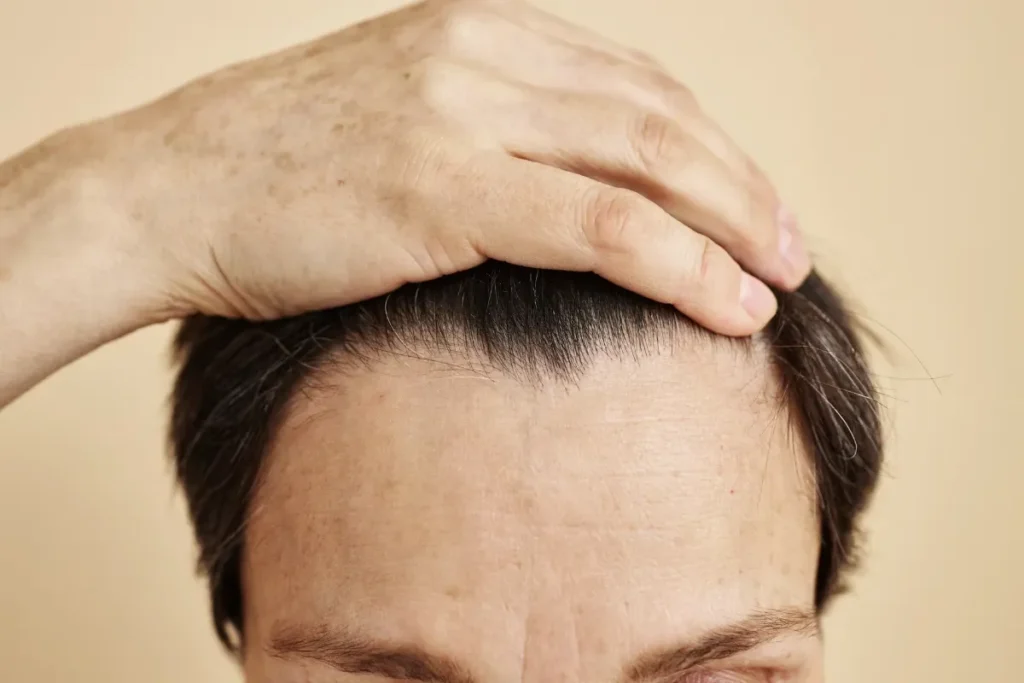
A normal hairline is more than just how it looks. It’s about how it changes over time. It’s shaped by genetics and hormones, affecting its look and growth.
Defining Hairline Characteristics
A normal hairline has a specific shape, density, and position on the forehead. Genetics and hormones play big roles in its look. Men often have an M-shaped or widow’s peak, while women have softer, rounded hairlines.
Every hairline is different, influenced by many factors. Ethnicity and genetics shape its unique look. This makes each hairline special and varied.
Hairline Maturation Through Life Stages
The hairline changes a lot during adolescence and early adulthood. It goes through big changes, eventually settling into its final shape. Men often get a more defined M-shaped or widow’s peak, while women’s hairlines stay softer and more rounded.
It’s important to understand these changes. As we age, our hairline evolves due to hormones and aging. Knowing these changes helps spot a normal hairline from signs of hair loss or other issues.
Normal Male Hairline Features
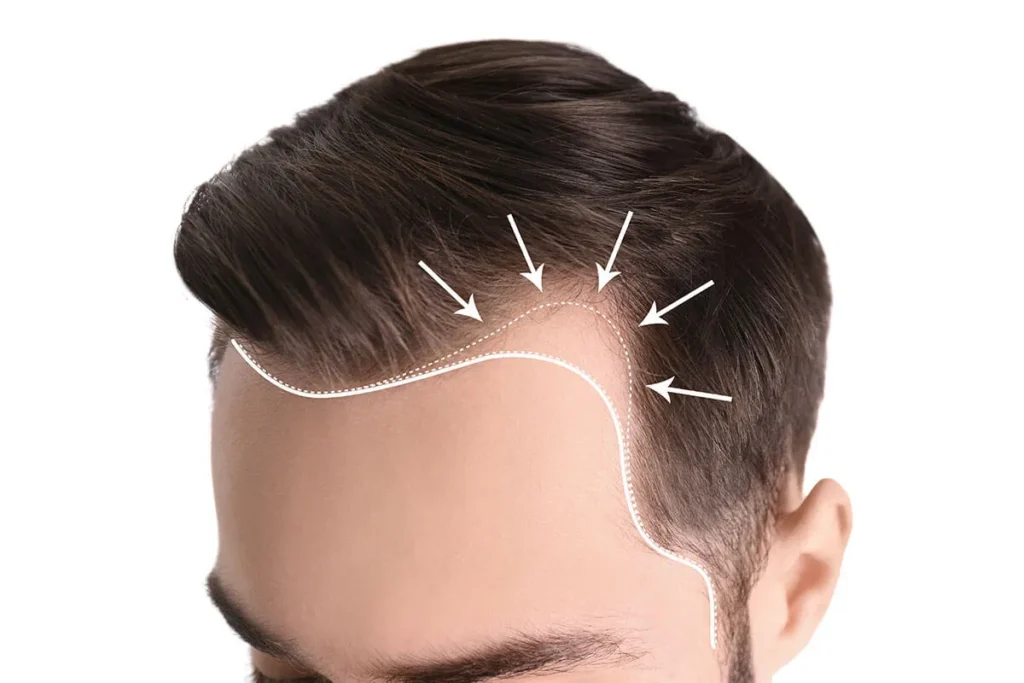
The average male hairline has clear patterns and shapes that are seen as healthy. It’s important for men to know these features, as they age.
Straight Contours and Temple Recession
A normal male hairline often has straight lines. Men may see their temples recede as they get older. This can be due to genetics and sensitivity to DHT, a hormone that affects hair.
Key characteristics of a healthy male hairline include:
A relatively straight contour across the forehead
Some degree of recession at the temples, which can vary from person to person
A density of hair that is consistent with the individual’s overall hair health
M-Shaped and Widow’s Peak Patterns
As men age, their hairline may turn into an M-shaped pattern or a widow’s peak. These are normal changes. They happen because the hairline naturally recedes, mainly at the temples.
The M-shaped hairline is characterized by a more pronounced recession at the temples, creating an ‘M’ shape. This pattern is often associated with a mature hairline and can be influenced by genetic predispositions.
DHT Sensitivity and Age-Related Changes
DHT sensitivity is key in the development and recession of the male hairline. As men age, their hair follicles become more sensitive to DHT. This leads to thinner, shorter hairs and eventual recession.
Knowing how DHT affects hairline development helps men take steps to keep their hairline healthy. This includes watching for signs of DHT sensitivity, like excessive hair shedding or thinning. Exploring treatments that can help mitigate these effects is also important.
Regaining confidence in one’s appearance is possible by understanding and addressing hairline concerns. By recognizing the characteristics of a normal male hairline and the factors that influence it, men can make informed decisions about their hair care and restoration options.
Normal Female Hairline Characteristics
A normal female hairline has rounded contours and more hair than men, thanks to hormonal protection. This is key to understanding the natural look and growth of the female hairline.
Rounded Contours and Lower Positioning
The female hairline is softer and more rounded than the male hairline. It sits lower on the forehead, making it look different. This is part of what makes the female hairline unique.
Hormones help keep the female hairline’s hair density high. This means less chance of hair loss patterns seen in men.
Higher Density and Hormonal Protection
Women have more hair at the hairline because of hormones. This is why they often don’t lose hair as early as men.
Hormones keep the female hairline healthy and full. This is why women usually don’t see the early signs of hair loss that men do.
Diffuse Changes vs. Recession Patterns
Men often see clear recession patterns, like an M-shaped hairline. Women, on the other hand, experience more general thinning across the scalp. This is because of hormones.
It’s important to know the difference between general thinning and recession patterns. Women might see hair thinning all over, not just in one spot like men.
The female hairline is characterized by rounded contours and lower positioning.
Hormonal factors contribute to higher hair density and reduced recession.
Diffuse changes across the scalp are more common in women than distinct recession patterns.
Feeling good about your hair starts with knowing what’s normal. For those dealing with hair loss, modern hair restoration techniques can help. They can make your hairline look natural and healthy again.
Conclusion
Knowing what a normal hairline is important for everyone. It looks different for men and women. This is because of genetics, hormones, and age.
For men, a normal hairline male has straight edges and receding temples. Women’s hairlines are rounded and lower. These differences change as we age.
Feeling good about yourself starts with knowing your hairline. Recognizing what a normal hairline is helps you appreciate yours. Today, with new technology, you can get a natural, full hairline.
Starting your hair journey with the right help can boost your confidence. Knowing what a normal hairline is is the first step. It’s the start to getting the hair you want.
FAQ
What is a normal hairline for men?
A normal male hairline is slightly rounded or straight across the forehead in teens and may mature into a mild “M” shape in adulthood without significant thinning.
What are the characteristics of a normal female hairline?
A normal female hairline is usually lower, rounded, and fuller with minimal recession at the temples.
How does hairline maturation occur over time?
During late teens to mid-20s, the hairline may move slightly higher (about 1–2 cm) and form a subtle M-shape. This is called a mature hairline and is not necessarily balding.
What role does DHT sensitivity play in hairline recession?
Sensitivity to Dihydrotestosterone (DHT) can shrink hair follicles in genetically prone men, leading to progressive recession and male pattern baldness.
How long does it take for a hairline to mature?
Hairline maturation typically occurs between ages 17 and 25 and stabilizes afterward.
What is the average male hairline?
The average adult male hairline sits about 7–8 cm above the eyebrows, though this varies by genetics and face shape.
What does a healthy hairline for men look like?
It appears even, with consistent density behind the front line and no patchy thinning or rapid recession.
How does hormonal influence affect the female hairline?
Hormonal changes (pregnancy, menopause, thyroid issues, PCOS) can cause temporary shedding or gradual thinning, but significant frontal recession is less common than in men.
What is a normal hairline for women?
A normal female hairline is typically rounded, stable over time, and maintains consistent thickness without deep temple recession.
References
National Center for Biotechnology Information. Evidence-Based Medical Insight. Retrieved from https://pubmed.ncbi.nlm.nih.gov/27830323/