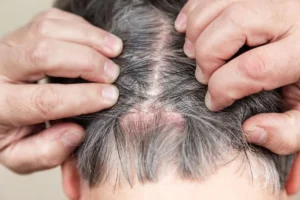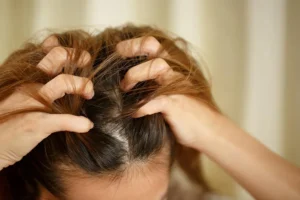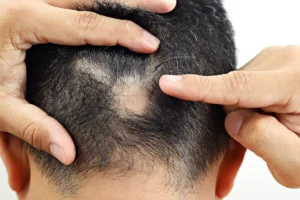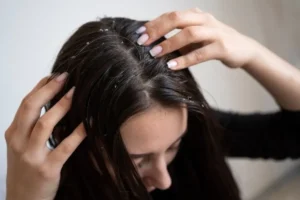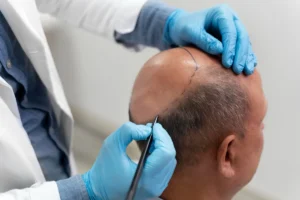
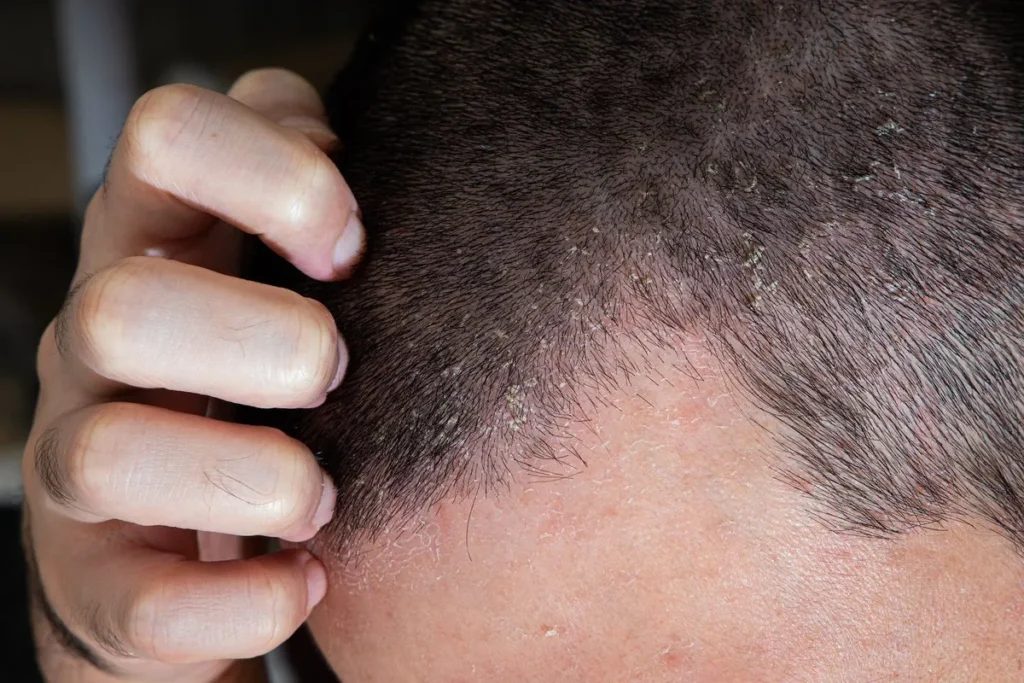
Scaly patches on the scalp are a big worry for millions around the world. They often show signs of psoriasis, a chronic autoimmune disease. This condition hits about 2 to 3 percent of people globally, with scalp issues being very common.
Heal scaly patches on scalp with amazing fixes. Use powerful, incredible secrets to stop scary itching and achieve incredibly healthy skin.
Inflammatory scalp problems can really hurt and lower your quality of life. Knowing what causes these issues and how to treat them is key to managing them well.
Key Takeaways
Scaly patches on the scalp can be a symptom of underlying conditions like psoriasis.
Psoriasis affects approximately 2 to 3 percent of the global population.
Scalp involvement is one of the most common presentations of psoriasis.
Inflammatory scalp conditions can significantly impact quality of life.
Understanding causes and treatment options is essential for effective management.
What Causes Scaly Patches on Scalp
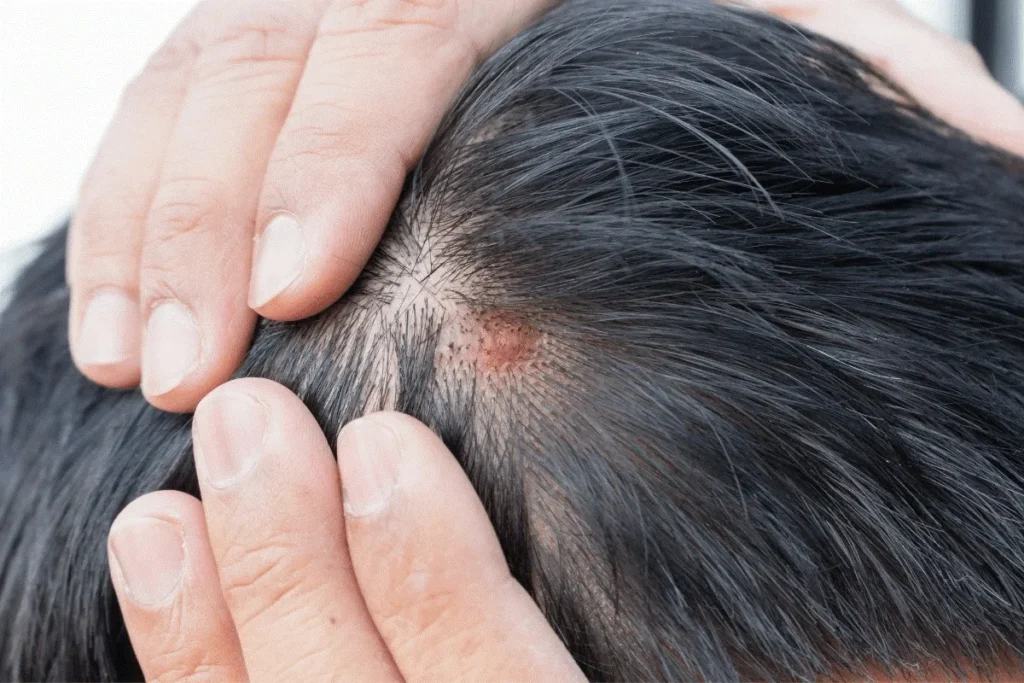
It’s important to know why scaly patches appear on the scalp. These patches can be signs of mild or severe conditions. Knowing the cause helps in treating and managing them.
Identifying Symptoms and Characteristics
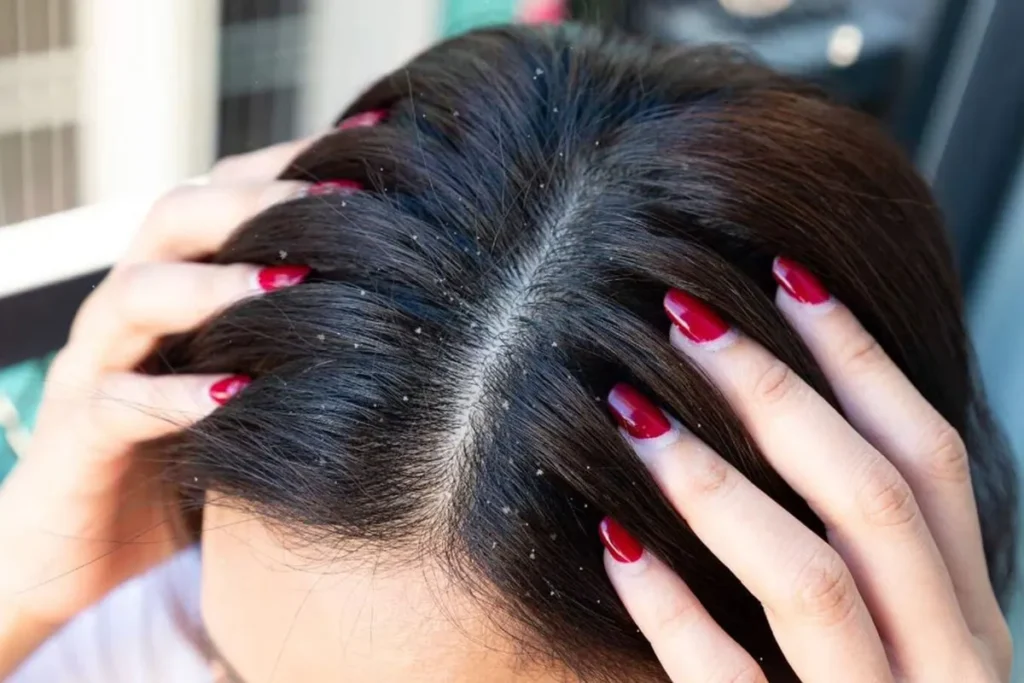
Scaly patches on the scalp can look different. They might be white scales on scalp, red, or itchy. The look of these patches can tell us what’s causing them. For example, psoriasis often has silvery scales, while seborrheic dermatitis has greasy, yellowish scales.
Flaking or scaling on the scalp
Redness and inflammation
Itching or burning sensation
Dryness or oiliness of the scalp
Psoriasis vs. Seborrheic Dermatitis
Psooriasis and seborrheic dermatitis are common causes of scalp scaly patches. Both can make the scalp scale and turn red. But they look different. Psoriasis has thick, silvery scales, while seborrheic dermatitis has greasier, yellowish scales.
It’s important to tell these conditions apart for the right treatment. Here’s a quick comparison:
Other Common Scalp Conditions
Other than psoriasis and seborrheic dermatitis, there are more scalp conditions. These include dry scalp, eczema, and dermatitis. Each has its own symptoms and signs.
A dry scalp can flake and itch. Eczema causes inflamed, itchy patches. Knowing these differences helps in managing the condition better.
Medical Treatments for Scaly Patches on Scalp
Medical treatments can help with scaly patches on the scalp. They aim to ease symptoms, reduce swelling, and help the scalp heal.
Prescription Medications and Steroids
For serious scaly patches, doctors might suggest prescription meds and steroids. Corticosteroids, for example, can lessen swelling. They come in creams, ointments, and lotions. Sometimes, biologic meds are used to tackle specific scalp issues.
Common Prescription Medications:
Corticosteroids
Antifungal medications
Salicylic acid preparations
Medicated Shampoos and Topical Solutions
Medicated shampoos and creams are key in treating scalp issues. They often have coal tar, salicylic acid, or ketoconazole. These ingredients help reduce scaling, swelling, and fight fungal infections.
When to Consult a Dermatologist
If scaly patches don’t get better or get worse, see a dermatologist. A dermatologist can figure out what’s causing the problem and suggest the right treatment.
Seeing a dermatologist is key for those with severe symptoms or who are losing hair because of scalp issues.
Home Remedies and Lifestyle Changes
Home remedies and lifestyle changes can help with scaly patches on the scalp. Using natural treatments and making smart lifestyle choices can improve scalp health a lot.
Natural Oils and Moisturizing Treatments
Natural oils like coconut oil and tea tree oil are great for the scalp. Coconut oil keeps the scalp hydrated. Tea tree oil fights off scalp infections with its antifungal and antibacterial properties.
To use these oils, massage a small amount into your scalp. Leave it on for at least an hour before washing with mild shampoo. Regular moisturizing can cut down on scaly patches.
Diet and Nutrition Impact
Your diet affects your scalp health a lot. Eating a balanced diet with vitamins and minerals helps with scalp issues. Foods rich in omega-3 fatty acids, zinc, and vitamin B are good for your scalp.
Eat foods like salmon, walnuts, and spinach.
Avoid processed foods that cause inflammation.
Drink lots of water every day.
Stress Management and Hair Care Practices
Stress can make scalp conditions like psoriasis worse. Doing stress-reducing activities like yoga or meditation helps. Also, gentle hair care practices reduce scalp irritation.
Use gentle, sulfate-free shampoos and avoid harsh chemicals. Washing your hair with mild shampoo regularly keeps the scalp clean and lowers scaly patch risk.
Conclusion
Scaly patches on the scalp can be a big problem. They are often linked to soriasis on the scalp. To treat them well, we need to tackle the root causes and symptoms.
Getting a proper diagnosis is the first step. Conditions like psoriasis and seborrheic dermatitis can cause these patches. Knowing what condition you have helps find the right treatment.
Combining medical treatments with home remedies and lifestyle changes works well. Eating right, managing stress, and taking care of your hair are key. These steps help prevent more problems and keep your scalp healthy.
Creating a treatment plan that fits you is important. Understanding scaly patches on the scalp is the first step to managing them. This way, you can find relief from this condition.
FAQ
References
National Center for Biotechnology Information. Evidence-Based Medical Insight. Retrieved from https://pmc.ncbi.nlm.nih.gov/articles/PMC8163911/