An itchy, flaky scalp can be both uncomfortable and confusing—is it dandruff or something more serious like seborrheic dermatitis? While these two conditions share similarities and overlap in symptoms, understanding the critical differences between them is essential for receiving the right treatment and relief.
Seborrheic dermatitis and dandruff are common skin conditions that affect the seborrheic areas of the body. In fact, dandruff is considered a mild form of seborrheic dermatitis, representing different points on a spectrum of the same disease.
Understanding the distinction between these conditions is key for effective management and treatment. At Gold City Hair, our patient-centered approach and commitment to innovative healthcare solutions make us your trusted partner in diagnosing and managing scalp conditions.
Key Takeaways
Seborrheic dermatitis and dandruff are related conditions affecting seborrheic areas.
Dandruff is considered a mild form of seborrheic dermatitis.
Understanding the differences between the two conditions is critical for effective treatment.
Gold City Hair offers a patient-centered approach to diagnosing and managing scalp conditions.
Innovative healthcare solutions are available for treating seborrheic dermatitis and dandruff.
Understanding the Scalp Condition Spectrum
It’s key to know the different scalp conditions to treat them right. Seborrheic dermatitis and dandruff are two common ones. They can be caused by many factors, making it important to understand the differences.
The Disease Continuum
Seborrheic dermatitis and dandruff are closely linked. Dandruff is seen as a milder form of seborrheic dermatitis. The line between them can be thin, as they share symptoms and triggers.
Medical Expert, a top dermatologist, says, “Dandruff and seborrheic dermatitis are hard to tell apart because of their similar symptoms.”
Prevalence and Demographics
Seborrheic dermatitis is common, affecting about 42% of babies, often on their face and diaper area. In teens and adults, it hits men more than women. Up to 30% of people may get some form of seborrheic dermatitis, like dandruff, at some point.
Knowing who gets these conditions helps in diagnosing and treating them better.
Seborrheic Dermatitis vs Dandruff: Key Differences
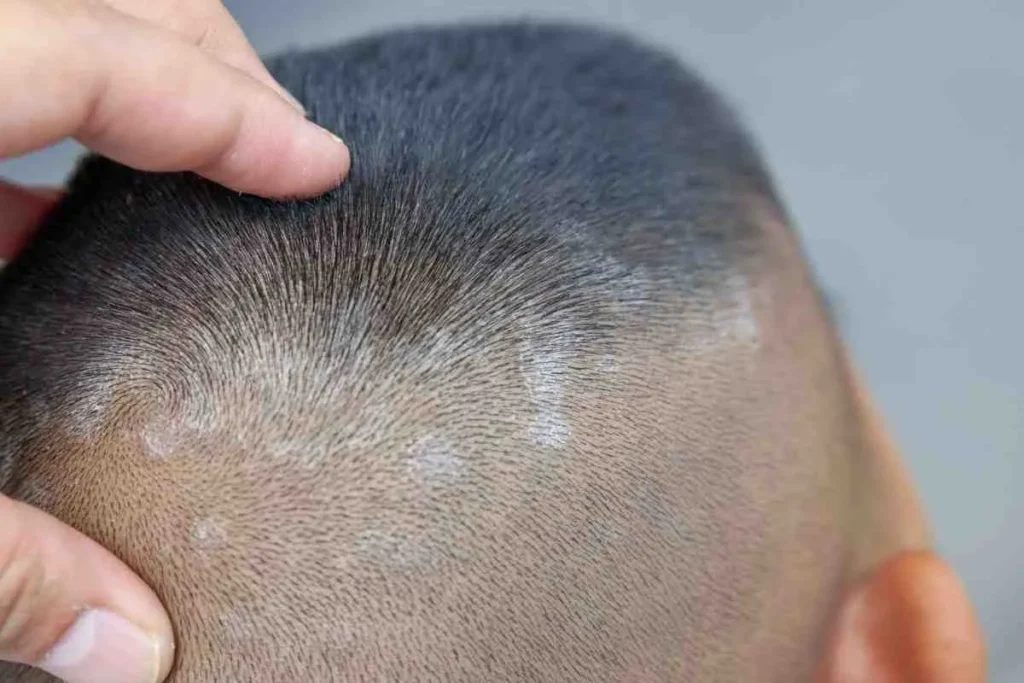
Distinguishing between seborrheic dermatitis and dandruff is key for the right treatment. Both affect the scalp but have clear differences.
Severity and Inflammation
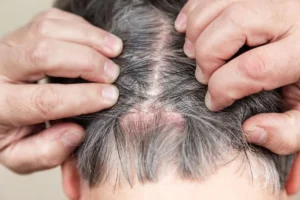
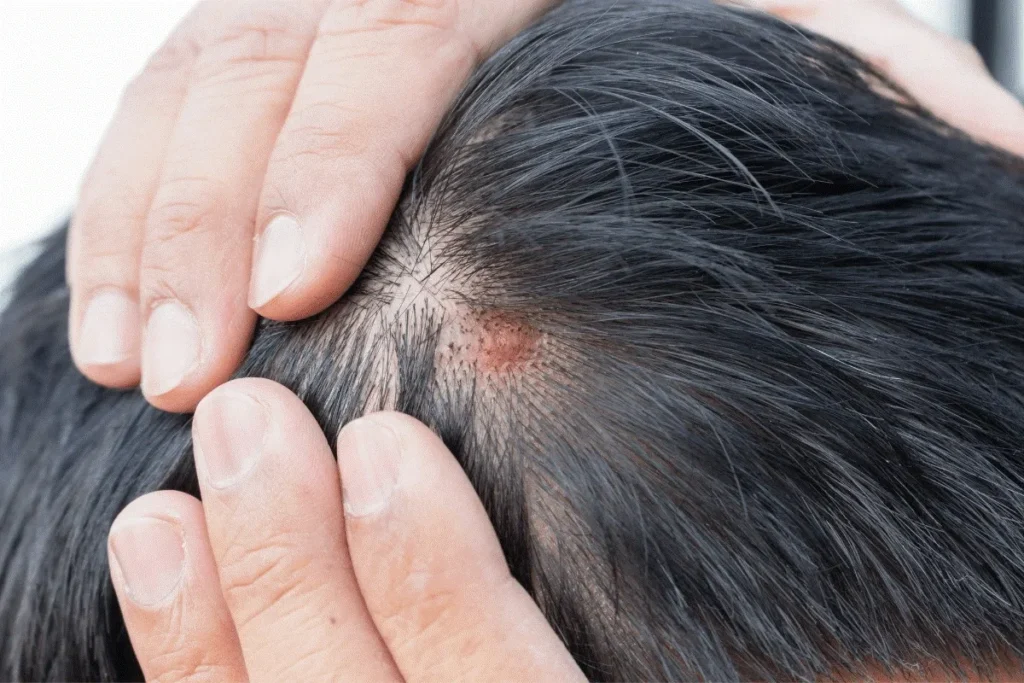
Dandruff is mild and doesn’t cause inflammation. It leads to flakes of dead skin on the scalp. Seborrheic dermatitis, though, is more severe and causes redness, irritation, and greasy scales.
Seborrheic dermatitis can cause intense itching and discomfort. It’s not just on the scalp but can also affect other body parts.
Affected Body Areas
Dandruff mainly affects the scalp. Seborrheic dermatitis, though, can hit multiple areas like:
The face, around the eyebrows and nasolabial folds
The ears and the area behind them
The chest and other oily body parts
This shows seborrheic dermatitis is more complex than dandruff.
Appearance and Symptoms
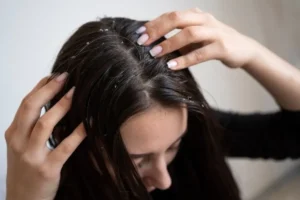
Dandruff causes white or yellow flakes on the scalp. Seborrheic dermatitis, though, leads to greasy, yellow scales with redness and irritation.
Key differences include:
Flake characteristics: Dandruff flakes are dry and white, while seborrheic dermatitis flakes are greasy and yellow.
Scalp condition: Dandruff doesn’t cause much redness or inflammation. Seborrheic dermatitis, though, leads to noticeable irritation.
Affected areas: Seborrheic dermatitis can hit multiple body areas, not just the scalp.
Knowing these differences is vital for picking the right treatment and managing symptoms well.
Common Causes and Risk Factors
Seborrheic dermatitis and dandruff have many causes. They come from a mix of sebaceous secretion, Malassezia yeast, and how our immune system reacts.
Role of Malassezia Yeast
Malassezia yeast is found on our skin, mainly in oily spots. But for people with seborrheic dermatitis and dandruff, it grows too much. Research shows that more Malassezia yeast on the skin means more chance of these conditions.
Sebaceous Gland Activity
Sebaceous glands make sebum, an oily stuff. Too much of it can lead to seborrheic dermatitis and dandruff. More oil means more Malassezia yeast, making symptoms worse.
Genetic and Environmental Triggers
Genetics play a big part in getting seborrheic dermatitis and dandruff.
Things like stress, cold weather, and some hair care products can also make symptoms worse.
Knowing what causes these conditions helps in finding good treatments. By tackling the root causes, people can manage their symptoms and live better.
Conclusion
It’s important to know the difference between seborrheic dermatitis and dandruff. Both affect the scalp but need different treatments. Understanding this helps in finding the right solution.
Dandruff can often be treated with over-the-counter shampoos. But seborrheic dermatitis might need stronger medicines. Knowing which one you have is key to the right treatment.
Don’t confuse seborrheic dermatitis with a dry scalp. A dry scalp can be a sign of either condition or something else. Getting the right diagnosis is the first step to feeling better.
By understanding each condition, you can find the right treatment. This can greatly improve your life if you’re dealing with these scalp issues.
FAQ
Seborrheic Dermatitis vs. Dandruff
Dandruff and seborrheic dermatitis are part of the same condition spectrum, but they differ in severity. Dandruff is the mildest form, characterized by simple skin flaking without significant inflammation, whereas seborrheic dermatitis is more intense, involving redness, greasy scaling, and often spreading to other areas of the body.
The Main Difference
The primary distinction lies in the level of inflammation and the condition of the skin. Dandruff presents as dry, white flakes on a scalp that otherwise looks healthy, while seborrheic dermatitis involves “erythema” (redness) and thicker, yellowish scales that often feel oily or “stuck” to the skin.
Locations Outside the Scalp
While dandruff is restricted to the scalp, seborrheic dermatitis can appear anywhere with high oil gland density. Common sites include the eyebrows, the sides of the nose (nasolabial folds), behind the ears, the center of the chest, and even the upper back or groin.
Primary Causes
Both conditions are caused by a sensitivity to a yeast-like fungus called Malassezia, which feeds on the sebum (oil) produced by your skin. When the yeast breaks down the oil, it produces oleic acid; if your skin is sensitive to this byproduct, it triggers an accelerated skin cell turnover, resulting in visible flakes.
Role of Malassezia Yeast
Malassezia is a permanent resident on almost everyone’s skin, but in those with these conditions, the body overreacts to its presence. The yeast thrives on oil, so when your glands overproduce sebum due to stress or hormones, the yeast population spikes, worsening the inflammatory response and the resulting flaking.
Contagion and Safety
Neither seborrheic dermatitis nor dandruff is contagious; you cannot catch them from sharing hats, brushes, or pillows. Because the cause is an internal reaction to a fungus that is already naturally present on your own body, it is a personal skin sensitivity rather than a transmissible infection.
Dry Scalp vs. Dermatitis
A dry scalp is often mistaken for seborrheic dermatitis, but they are actually opposites. A dry scalp is caused by a lack of oil and moisture, resulting in tiny, dusty flakes, while seborrheic dermatitis is an oily-skin condition where the flakes are larger, clumpy, and often greasy.
Eczema vs. Dandruff
Scalp eczema (atopic dermatitis) is usually intensely itchy and linked to an allergic or sensitive immune system, often appearing as dry, red patches that may weep or crust. Dandruff is less likely to be painful or “weepy” and is much more closely tied to oil production and fungal activity rather than a general skin barrier defect.
Over-the-Counter Treatment
Both conditions respond very well to over-the-counter medicated shampoos containing ketoconazole, selenium sulfide, zinc pyrithione, or salicylic acid. For dandruff, these may be used occasionally, while seborrheic dermatitis often requires a more rigorous routine of daily washing until the inflammation subsides.
References
National Center for Biotechnology Information. Evidence-Based Medical Insight. Retrieved from https://pubmed.ncbi.nlm.nih.gov/27148560/