Type 4 hair is known for its kinky Afro texture. It ranges from tight coils to Z-angled coils. It’s commonly found in individuals of African descent.
This beautifully bold hair is full of texture. It thrives with the right care and attention. Knowing your specific curl pattern is the first step. It helps develop a personalized care routine that prevents breakage and maintains healthy locks.
Whether you have type 4a, 4b, or 4c hair, understanding your hair’s unique characteristics is key. It’s essential for its care.
Key Takeaways
Understanding your curl pattern is essential for type 4 hair care.
Type 4 hair is characterized by tight coils and kinks.
Proper care and attention are vital for maintaining healthy type 4 hair.
Type 4 hair is commonly found in individuals of African descent.
A personalized care routine can help prevent breakage.
Understanding Type 4 Hair Characteristics
Type 4 hair is known for its tightly coiled texture. It has a wide range of characteristics. Knowing these is key for proper care and maintenance.
The unique features of Type 4 hair need special attention. This is to achieve healthy and vibrant hair.
Defining Features of Kinky Afro Texture
The kinky Afro texture is a defining feature of Type 4 hair. It has a tightly coiled structure. This texture can be fragile and prone to dryness if not properly cared for.
Moisturizing is key to maintaining the health and integrity of Type 4 hair. The kinky texture also contributes to the hair’s natural volume and bounce.
Managing this texture can be challenging without the right techniques and products. Using products rich in moisture and nourishing ingredients can help keep the hair healthy and resilient.
The Three Subcategories of Type 4 Hair
Type 4 hair is divided into three subcategories: 4A, 4B, and 4C. Each has its unique characteristics. Understanding these subcategories is essential for tailoring care and styling techniques to individual hair types.
Type 4A hair features well-defined, S-shaped coils that are springy and have a lot of shine. Type 4B hair has a Z-shaped pattern with less definition and can be more prone to dryness. Type 4C hair is characterized by densely packed coils with minimal visible curl pattern, making it more susceptible to dryness and breakage.
4A Hair: Well-defined S-shaped coils, springy texture.
4B Hair: Z-shaped pattern, less definition, prone to dryness.
4C Hair: Densely packed coils, minimal visible curl pattern, prone to dryness and breakage.
Each subcategory requires a tailored approach to care. This includes specific moisturizing and styling techniques. By understanding the unique characteristics of your Type 4 hair, you can better navigate the challenges associated with caring for it.
Essential Care Routines for Type 4 Hair

To keep Type 4 hair thriving, it’s essential to understand its unique needs. Caring for Type 4 hair involves gentle cleansing, consistent moisturizing, and protective styling.
Cleansing and Moisturizing Practices
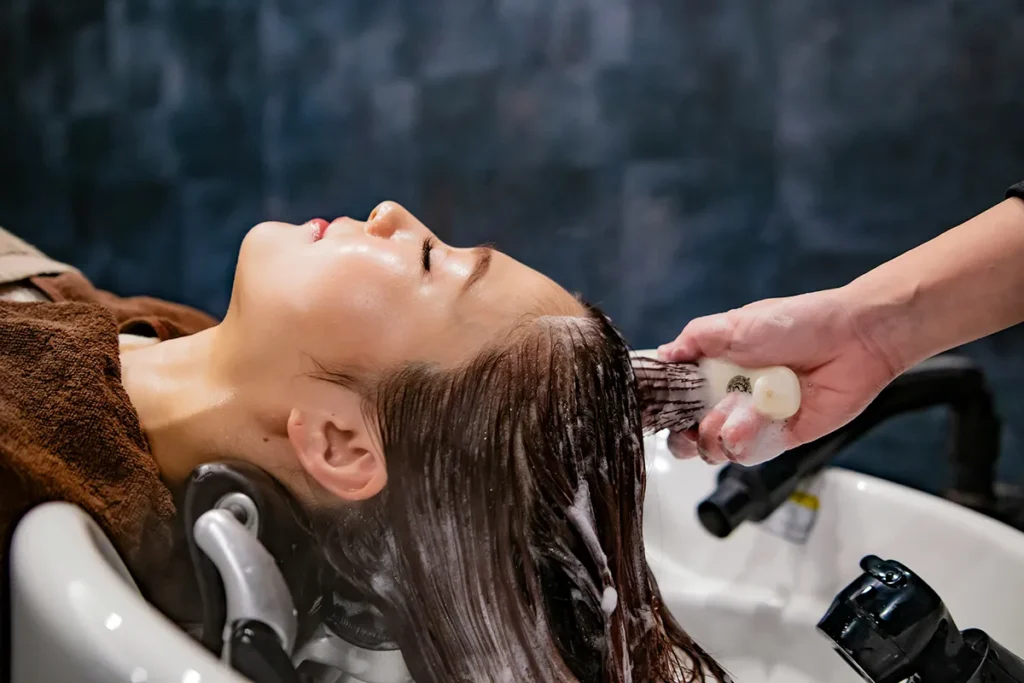
Cleansing Type 4 hair requires a gentle approach. Using sulfate-free shampoos is key to prevent stripping the hair of its natural oils. A gentle massaging motion while cleansing ensures a thorough cleanse without causing tangles or breakage.
Moisturizing is a critical step in Type 4 hair care. Leave-in conditioners and moisturizing products help keep the hair hydrated and manageable. Regular moisturizing prevents dryness and breakage, keeping the hair healthy and resilient.
Protective Styling and Maintenance
Protective styling is a vital part of Type 4 hair care. Techniques like braids, twists, and bantu knots protect the hair from daily manipulation and help retain moisture. These styles are versatile and fashionable, making them great for those who want to minimize hair handling while staying stylish.
To maintain healthy Type 4 hair, deep conditioning treatments are essential. Deep conditioning helps repair and restore the hair’s elasticity, reducing the risk of breakage and promoting overall hair health.
Use sulfate-free shampoos for cleansing.
Incorporate leave-in conditioners and moisturizing products for hydration.
Employ protective styling techniques like braids and twists.
Regularly deep condition to maintain hair elasticity and prevent breakage.
Conclusion: Embracing Your Type 4 Hair Journey
Embracing your Type 4 hair is a journey of self-acceptance and self-care. It’s about understanding your hair’s unique traits. This knowledge helps you create care routines and styling techniques that make your curls healthy and thrive.
Type 4 curls need special care, from gentle cleansings to protective styles. The right approach can greatly improve your hair’s health and look.
Remember, patience and persistence are essential on your Type 4 hair journey. With the right care and techniques, you can bring out the best in your hair. Enjoy a vibrant, healthy mane.
Knowing what Type 4 hair is and embracing its uniqueness is empowering. It lets you celebrate your natural beauty and express yourself with confidence.
FAQ
What is Type 4 hair?
Type 4 hair is coily or kinky hair with tight curls or zig-zag patterns, commonly very dense, fragile, and prone to shrinkage.
What are the challenges associated with caring for Type 4 hair?
Challenges include dryness, breakage, tangling, shrinkage, and difficulty retaining moisture due to the tight curl pattern.
How do I care for my Type 4 hair?
Care involves gentle cleansing, regular deep conditioning, moisturizing, minimal heat, and protective styling to maintain health and reduce breakage.
What is the difference between 4A, 4B, and 4C hair?
4A has tight, defined S-shaped curls, 4B has Z-shaped coils with less definition, and 4C has very tight coils with significant shrinkage and minimal curl pattern visibility.
How often should I moisturize my Type 4 hair?
Type 4 hair should be moisturized at least 2–3 times per week, or more often if the hair feels dry.
Can I use regular shampoo on my Type 4 hair?
Regular shampoos can strip moisture; it’s better to use sulfate-free or moisturizing cleansers to avoid dryness.
What are some protective styling techniques for Type 4 hair?
Protective styles include braids, twists, bantu knots, wigs, and updos, which reduce manipulation and breakage.
How can I prevent shrinkage in my Type 4 hair?
Shrinkage can be minimized by stretching techniques like twist-outs, braid-outs, banding, or blow-drying with low heat.
References
National Center for Biotechnology Information. Evidence-Based Medical Insight. Retrieved from https://pmc.ncbi.nlm.nih.gov/articles/PMC10914121/[4