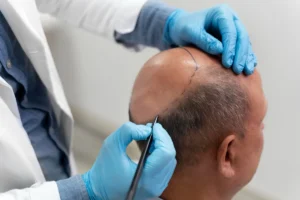
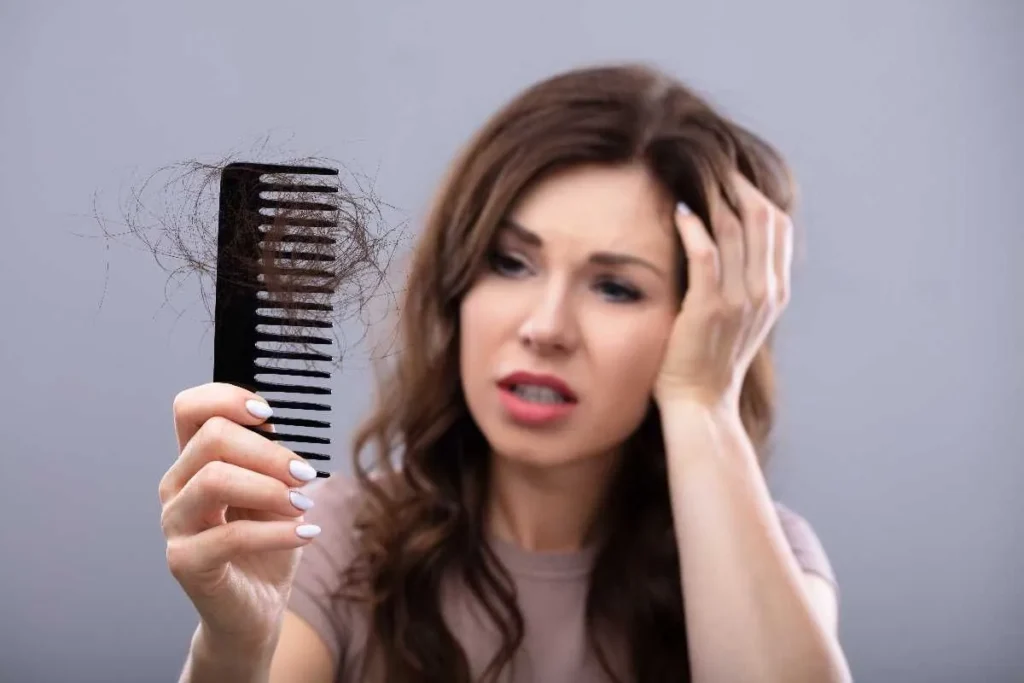
Seeing a lot of hair shedding can be scary, and it’s often tied to stress. This kind of hair loss, called telogen effluvium, happens to many after big stress or long emotional struggles.
This condition shows as sudden, diffuse shedding. It starts to show 2 to 3 months after a stressful time. You’ll notice it as thinning, mainly at the crown and top of the scalp. It’s different from genetic hair loss, which grows slowly over time. Stress hair loss is sudden, which can be shocking.
Knowing the signs and reasons for stress hair loss is key to handling it. Spotting the symptoms early can help lessen its impact. This way, people can support hair regrowth.
Key Takeaways
Stress-induced hair loss, or telogen effluvium, is a temporary condition.
It is characterized by sudden, diffuse shedding.
Symptoms become noticeable 2 to 3 months after a stressful event.
Overall thinning is mainly seen at the crown and top of the scalp.
Spotting symptoms early can help lessen its effects.
Understanding Stress-Induced Hair Loss

It’s important to know how stress can lead to hair loss. Many people face this issue due to stress. This condition happens when we go through big changes or feel very stressed.
What Is Telogen Effluvium?
Telogen effluvium is a scalp disorder that causes hair to fall out all over. It often starts after a stressful event. Hair follicles move too early from growing to resting, leading to more hair loss.
Key characteristics of telogen effluvium include:
Diffuse hair shedding across the scalp
Triggered by physiological or emotional stress
Premature transition of hair follicles to the resting phase
The Science Behind Stress and Hair Follicles
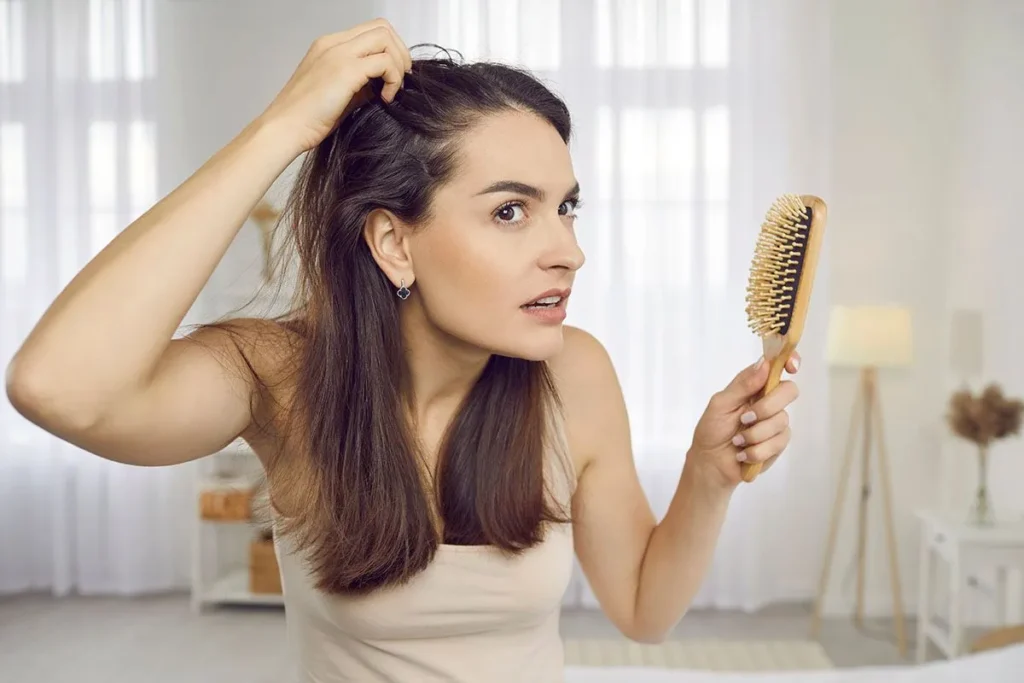
Stress hormones like cortisol affect hair follicle stem cells. When we’re stressed, cortisol levels go up. This disrupts the hair growth cycle, making more follicles rest than usual.
Medical Expert, Hair Restoration Specialist
Stress can really harm hair follicles, causing noticeable hair loss. Knowing how stress affects hair is the first step to fixing the problem.
Timeline: When Stress Hair Loss Becomes Visible
Stress hair loss usually shows up 2 to 3 months after the stressful event. This is because it takes that long for the hair in the resting phase to fall out.
Getting back to feeling good about your hair means understanding why it’s falling out. With the right steps, you can improve your hair’s health and density.
What Does Stress Hair Loss Look Like?
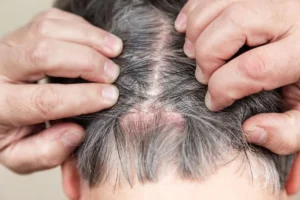
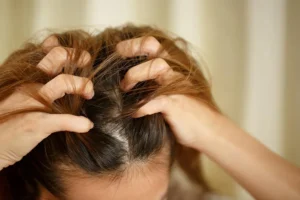
Stress hair loss, also known as telogen effluvium, shows as a thinning of hair across the scalp. It’s most noticeable at the crown and top. This condition is different from genetic hair loss or other alopecias. It’s caused by stress and can often be reversed.
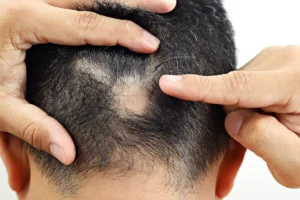
The pattern of stress hair loss is even, with thinning hair but no bald spots or receding hairline. Seeing sudden hair loss can be scary. But knowing what causes it and how it looks can help you deal with it.
Stress-induced hair loss in women can be really upsetting. But, it’s important to know that you can manage it. By tackling the stress and using stress management, you might be able to stop the hair loss. This could lead to thicker hair.
Yes, stress can make your hair thin. Stress hair loss is common in people under a lot of stress. Understanding the pattern and getting the right treatment can help you feel better and have thicker hair.
FAQ
What does stress hair loss look like?
Stress hair loss, or telogen effluvium, shows up as overall thinning of hair. It’s noticeable at the crown and top of the scalp.
How can you tell if hair loss is genetic or stress-related?
Genetic hair loss grows slowly. Stress hair loss happens suddenly and is diffuse. Stress hair loss can stop once stress is managed, but genetic loss keeps going.
How long after stress do you lose hair?
You might lose hair 2 to 3 months after a stressful event. This is when the hair growth cycle’s disruption is seen.
Can stress cause permanent hair loss?
No, stress hair loss is usually not permanent. Hair can grow back once stress is managed.
What are the symptoms of hair loss due to stress?
Symptoms include a lot of hair falling out and thinning hair across the scalp. You’ll also see thinning at the crown and top.
Can your hair thin from stress?
Yes, stress can make hair thinner. It happens when hair follicles move to the resting phase too early, due to stress.
Is stress-induced hair loss common in women?
Yes, both men and women can experience stress-induced hair loss. It’s a common issue.
How can you manage stress-related hair loss?
To manage it, tackle the stress first. Use stress management techniques. You might also need medical help to help your hair grow back.
Does hair loss from stress come back after treatment?
Yes, once you manage the stress, hair can grow back. The hair loss is usually reversible.
References
National Center for Biotechnology Information. Evidence-Based Medical Insight. Retrieved from https://www.ncbi.nlm.nih.gov/books/NBK430848/