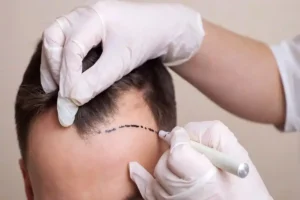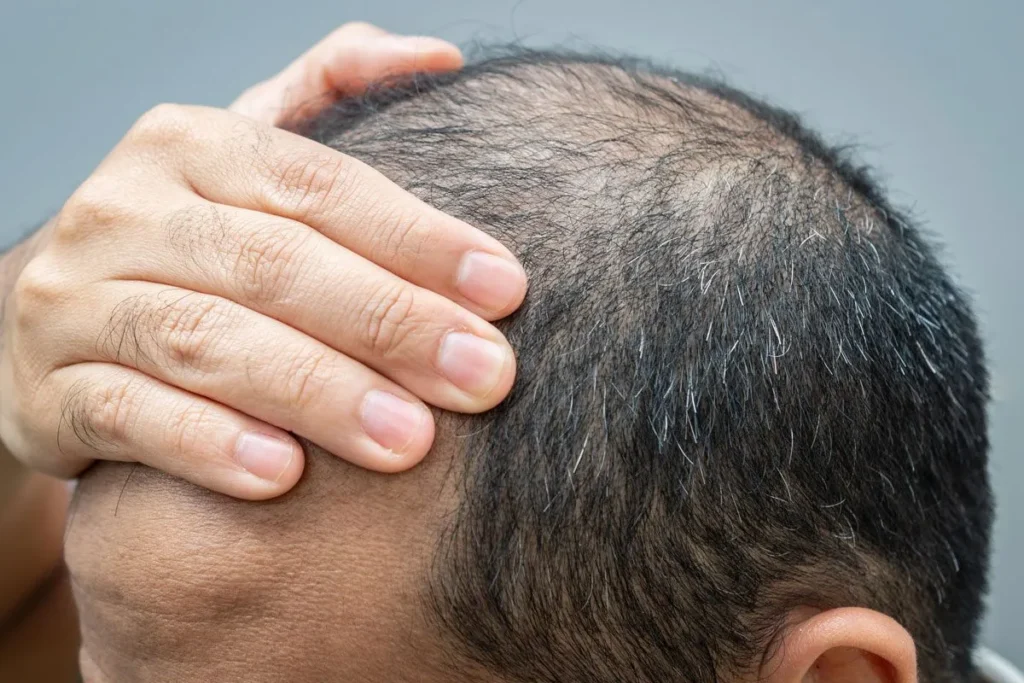
Finasteride, known as Proscar and Propecia, helps men with hair loss and BPH. It’s a 5α-reductase inhibitor and fights androgens. Knowing how it works helps us see how it boosts hair growth and eases urinary issues.
Finasteride is a man-made steroid that blocks Type II 5-alpha-reductase. This cuts down DHT levels, fixing hair loss and prostate growth. It’s safe and effective, making it a go-to for millions of men.
Key Takeaways
Finasteride is used to treat male pattern hair loss and BPH.
It works by inhibiting the conversion of testosterone to DHT.
Finasteride is a 5α-reductase inhibitor and an antiandrogen.
Its mechanism of action promotes hair growth and improves urinary symptoms.
Finasteride has a proven safety profile and is a trusted treatment option.
Finasteride Chemical Properties and Structural Composition

Understanding finasteride’s chemical structure is key to seeing how it works. It has specific properties that make it effective in treating certain conditions.
Molecular Formula and Physical Characteristics
Finasteride’s formula is C23H36N2O2, with a molecular weight of 372.55. It looks like a white crystalline powder and melts at about 250 degrees Celsius. These traits are important for how it’s made and used.
The molecular structure of finasteride is vital for its action. It blocks 5-alpha-reductase, an enzyme that turns testosterone into DHT. Knowing its molecular formula and physical traits helps us see how it works in the body.
Pharmacokinetic Profile and Bioavailability
Finasteride’s bioavailability is about 65% when taken orally. At a 1 mg/day dose, it reaches a peak of 9.2 ng/mL (25 nmol/L) in the body. This high bioavailability means it’s well absorbed and effective in blocking DHT.
The pharmacokinetic profile of finasteride is important for its effectiveness. It includes how it’s absorbed, distributed, metabolized, and excreted. Knowing these details helps doctors give the best treatment.
Mechanism of Action and Therapeutic Effects
Finasteride works by targeting the main cause of hair loss and prostate problems. It does this by blocking the enzyme 5-alpha-reductase.
5-Alpha-Reductase Inhibition Process
The 5-alpha-reductase inhibition process is key to understanding finasteride’s action. This enzyme turns testosterone into dihydrotestosterone (DHT). DHT is a strong androgen that causes hair loss and prostate growth. By blocking this enzyme, finasteride lowers DHT levels, reducing its harmful effects.
DHT Suppression and Hormonal Impact
Finasteride cuts DHT levels by about 70 percent. Within 24 hours, serum DHT drops by 65 percent. This big drop in DHT improves hormonal balance, helping hair grow and easing BPH symptoms.
Lowering DHT reduces androgenic effects like hair loss and prostate growth. So, finasteride is good for treating male pattern hair loss and BPH.
FDA Approval Timeline and Clinical Applications
The FDA first approved finasteride in 1992 for BPH at a 5 mg dose. Later, in 1997, it got approval for male pattern hair loss at a 1 mg dose. This shows finasteride’s wide use and success in treating DHT-related issues.
Many studies have shown finasteride’s effectiveness. Its therapeutic effects have made it a reliable choice for millions of men globally.
Conclusion
Finasteride is a top choice for treating male hair loss and BPH. It works by blocking 5-alpha-reductase. This makes it great for growing hair and easing urinary issues.
Men can feel more confident with finasteride. The highest dose is often used to get the best results. It’s shown to work well for hair loss caused by hormones.
Knowing how finasteride works helps people choose the right treatment. It’s also a cost-effective option for those dealing with hair loss.
Finasteride can help you regain your confidence. It’s a reliable choice for hair restoration. It offers personalized care to help men reach their hair goals.
FAQ
What is finasteride and how does it work
Finasteride is a medication that blocks the conversion of testosterone to dihydrotestosterone (DHT), reducing hair follicle shrinkage and treating hair loss and benign prostatic hyperplasia (BPH)
What is the mechanism of action of finasteride
It inhibits 5-alpha-reductase type II enzyme, lowering DHT levels, which slows hair thinning and promotes regrowth in susceptible follicles
What are the chemical properties of finasteride
Finasteride is a synthetic 4-azasteroid compound, poorly soluble in water, metabolized in the liver, with a molecular formula C23H36N2O2
How is finasteride absorbed and utilized by the body
It is well absorbed orally, reaches peak blood levels in 1–2 hours, metabolized by the liver, and excreted mainly in urine and feces
What is the maximum dose of finasteride
For hair loss, the standard dose is 1 mg/day; for BPH, doses up to 5 mg/day may be used
Is finasteride FDA-approved for hair loss and BPH
Yes, FDA-approved for male pattern hair loss at 1 mg/day and BPH at 5 mg/day
How does finasteride promote hair growth
By reducing DHT, it prevents follicle miniaturization, allowing existing hair to thicken and slowing further hair loss
What are the benefits of using finasteride for hair loss
Slows hair loss, promotes regrowth, improves hair density, and is easy to administer orally
Is finasteride a pain-free treatment option
Yes, it is taken as an oral pill and does not involve injections or surgery
Can finasteride provide lifetime results for hair loss
It requires continuous use; stopping treatment usually results in hair loss resuming within months
References
National Center for Biotechnology Information. Evidence-Based Medical Insight. Retrieved from https://pubmed.ncbi.nlm.nih.gov/9951956/