Black hair transplant has become an increasingly popular solution for individuals with dark‑colored or tightly coiled hair who are experiencing thinning or baldness. In this article, we examine the unique considerations of transplanting dark hair, the most effective techniques, cost factors, and the after‑care needed to ensure a natural‑looking outcome. According to recent surveys, over 30% of men with African‑American heritage consider hair restoration as a viable option, yet many remain uncertain about the process.
Understanding the biology of dark hair, the challenges of graft placement, and the expertise required can dramatically improve the success rate of a procedure. Whether you are looking at a male hair transplant in Turkey or exploring options closer to home, this guide will help you navigate each step with confidence.
We will cover the science behind hair texture, compare the most suitable transplant methods, discuss budgeting for a journey to Istanbul, and outline post‑procedure care tailored for black hair. By the end, you will be equipped to make an informed decision and set realistic expectations for your hair restoration journey.
Understanding Black Hair Characteristics and Transplant Challenges
Black hair, especially when it has an afro‑textured curl, differs significantly from straight or wavy hair in terms of shaft diameter, curl pattern, and scalp elasticity. These factors influence both the harvesting of grafts and the placement of follicles.
Key characteristics include:
- Thicker hair shafts that can range from 0.07 mm to 0.12 mm, requiring precise extraction to avoid damage.
- Highly curved follicle angles, making the direction of graft insertion crucial for a natural appearance.
- Increased susceptibility to transection during extraction, especially with older, scarred donor areas.
Because of these traits, surgeons must adjust their techniques to minimize follicle injury and ensure optimal graft survival. The most common challenges are:
- Maintaining the natural curl pattern during implantation.
- Preventing visible scarring in the donor zone, which can be more noticeable on darker skin tones.
- Achieving a seamless blend between transplanted and existing hair, especially around the hairline.
When evaluating clinics, look for surgeons who have specific experience with afro‑texture hair and who can demonstrate successful before‑and‑after results.
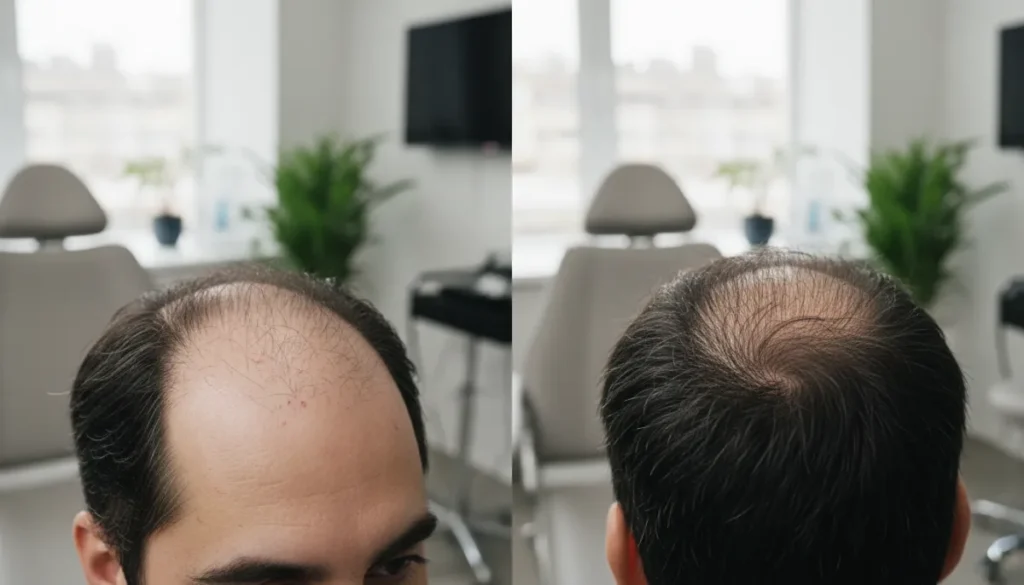
Choosing the Right Transplant Technique for Dark Hair
Two primary methods dominate the hair restoration market: Follicular Unit Extraction (FUE) and Direct Hair Implantation (DHI). Both can be adapted for black hair, but each offers distinct advantages.
FUE for Black Hair
FUE involves harvesting individual follicular units using a micro‑punch. For dark, coiled hair, a smaller punch (0.7 mm–0.9 mm) reduces the risk of transection. Surgeons often employ a motorized device with adjustable depth control to accommodate varying follicle angles.
DHI for Dark Hair
DHI utilizes a proprietary implanter pen that allows direct placement of grafts without creating pre‑made recipient sites. This method offers greater control over graft angle and depth, which is essential for preserving the natural curl of black hair.
Below is a comparison of the two techniques tailored for dark hair characteristics:
| Feature | FUE | DHI |
|---|---|---|
| Graft Extraction Precision | High with small punch; requires skilled surgeon. | Very high; implanter pen minimizes handling. |
| Control of Curl Angle | Moderate; depends on surgeon’s skill. | Excellent; pen allows precise angulation. |
| Session Duration | Longer (6‑8 hours for 3000 grafts). | Shorter (5‑7 hours for similar graft count). |
| Scarring Visibility | Minimal; micro‑punch leaves tiny dots. | None; no incisions needed for recipient sites. |
Both FUE and DHI can be performed by experienced surgeons in Turkey, where many clinics specialize in afro‑texture hair transplants. When deciding, consider your budget, the desired density, and the surgeon’s track record with black hair.
Preparing for Your Procedure in Turkey: Costs and Logistics
Turkey has emerged as a leading destination for hair restoration, offering high‑quality care at competitive prices. For black hair transplant, the average cost ranges from $1,500 to $3,500, depending on the number of grafts and the technique chosen. This is considerably lower than the $8,000‑$12,000 typical in the United States.
Key factors influencing price include:
- Number of grafts required (usually 2,500‑4,000 for full coverage).
- Technique (FUE generally costs less than DHI, though DHI may be preferred for better curl control).
- Clinic reputation and surgeon experience with afro‑texture hair.
- Included services such as accommodation, transportation, and post‑operative medication.
Travel logistics are straightforward. Most patients fly into Istanbul Airport and stay in a hotel near the clinic. Many clinics provide a “all‑inclusive” package that covers:
- Pre‑operative consultation (often via video call).
- Hotel accommodation for 2‑3 nights.
- Airport transfers and local transportation.
- Post‑operative follow‑up visits.
When budgeting, also factor in passport fees, travel insurance, and a short recovery period of 3‑5 days before returning to work. Many patients find the overall experience cost‑effective and culturally enriching.
Post‑Transplant Care and Managing Expectations for Dark Hair
After a black hair transplant, proper after‑care is crucial to protect grafts and promote healthy growth. The first week focuses on wound healing, while the next three months involve follicle shedding and new hair emergence.
Immediate Post‑Op Guidelines
- Avoid direct sunlight and wear a loose‑fitting hat for the first 7 days.
- Do not wash the scalp until instructed, typically after 48 hours.
- Use prescribed antibiotics and anti‑inflammatory medication to reduce infection risk.
Long‑Term Maintenance
Dark hair may appear denser once new growth begins, but patience is essential. Expect visible results around 6‑9 months post‑procedure. Continued use of minoxidil or platelet‑rich plasma (PRP) can enhance density and hair thickness.
Below is a timeline of typical milestones after a black hair transplant:
td>Full density and final aesthetic result.
| Time Frame | What to Expect |
|---|---|
| Days 1‑7 | Scalp healing, mild redness, possible crusting. |
| Weeks 2‑4 | Shedding of transplanted hairs (normal). |
| Months 3‑6 | Early new hair growth, often fine and light‑colored. |
| Months 6‑9 | Increased hair thickness, natural color development. |
| Months 12+ |
Adhering to these guidelines maximizes graft survival and helps achieve a seamless blend with your native hair.
Frequently Overlooked Factors: Afro‑Texture, Scalp Health, and Long‑Term Success
Beyond technique and cost, several subtle factors influence the success of a black hair transplant. Understanding these can help you and your surgeon create a tailored plan.
Scalp Moisture and Sebum Production
Individuals with afro‑texture hair often have higher sebum production, which can affect graft adherence. A gentle, sulfate‑free shampoo and regular scalp exfoliation can maintain an optimal environment for grafts.
Pre‑Existing Scalp Conditions
Conditions such as folliculitis, eczema, or psoriasis should be treated before the operation. Addressing these issues reduces the risk of post‑operative complications.
Long‑Term Maintenance
- Regular use of a moisturizing conditioner to keep hair shafts supple.
- Periodic PRP sessions to stimulate vascular health.
- Annual check‑ups with a hair restoration specialist.
By integrating these considerations into your pre‑ and post‑operative plan, you increase the likelihood of a durable, natural‑looking result.
Why Choose Gold City Hair
Gold City Hair combines cutting‑edge technology with a personalized approach to hair restoration. Since 2017, our clinic in Istanbul has specialized in FUE and DHI procedures for dark‑hair patients, delivering natural results through meticulous graft handling and individualized treatment plans. Our team of experienced surgeons prioritizes transparent communication, ensuring you understand each step of the journey—from consultation to post‑operative care. With a focus on patient comfort and long‑term satisfaction, Gold City Hair offers a trusted pathway to regain confidence through lasting hair restoration.
Ready to start your transformation? Contact Gold City Hair today to schedule a free virtual consultation and discover a customized plan for your black hair transplant.
Take the first step toward a fuller, natural‑looking hairline—your confidence awaits.
FAQ
What are the main challenges when transplanting black hair?
Black hair’s thicker shafts, curved follicle angles, and higher transection risk make extraction and placement more complex.
How does FUE differ from DHI for black hair?
FUE uses a micro‑punch to extract grafts, while DHI places them directly with an implanter pen, offering better curl control.
What is the typical cost range for a black hair transplant in Turkey?
Between $1,500 and $3,500 depending on graft number and technique.
What post‑operative care is essential for black hair transplants?
Avoid sun, wear loose hats, follow medication schedule, and use gentle sulfate‑free shampoos.
Why is scalp health especially important for afro‑texture hair after a transplant?
Higher sebum production and potential scalp conditions can affect graft adherence and survival.





