When traditional hair transplants aren’t an option, hair loss scalp injections have emerged as a minimally invasive alternative that can stimulate growth and improve density. This article explores the science behind these treatments, the most common injection types, and the practical considerations you should weigh before deciding. According to recent studies, up to 40% of patients see measurable improvement after a series of platelet‑rich plasma (PRP) sessions, making scalp injections a compelling option for many experiencing thinning hair.
We’ll walk through how the procedures are performed, compare PRP with corticosteroid options, and outline the typical timeline from consultation to results. By the end, you’ll have a clear picture of whether scalp injections fit your hair restoration goals and how to choose a reputable clinic that prioritizes safety and personalized care.
Understanding the nuances of each method helps you set realistic expectations and avoid common pitfalls. Let’s dive into the details that matter most for anyone considering this innovative approach to hair regrowth.
How Scalp Injections Work for Hair Restoration
Scalp injections deliver biologically active substances directly into the dermal papillae, the tiny structures that regulate hair follicle activity. By targeting these cells, the treatment can reactivate dormant follicles, improve blood flow, and reduce inflammation—key factors in combating hair loss.
Two primary mechanisms drive the effectiveness of injections:
- Growth factor stimulation: Substances like platelet‑derived growth factor (PDGF) and vascular endothelial growth factor (VEGF) signal follicles to enter the anagen (growth) phase.
- Immune modulation: Anti‑inflammatory agents calm autoimmune attacks that cause conditions such as alopecia areata.
Below is a comparison of the most frequently used injection categories:
| Injection Type | Active Component | Primary Goal | Typical Sessions |
|---|---|---|---|
| PRP (Platelet‑Rich Plasma) | Concentrated platelets | Stimulate follicle growth | 3‑6 sessions, 4‑6 weeks apart |
| Corticosteroid | Triamcinolone, Kenalog | Reduce inflammation | 1‑3 sessions, 4‑8 weeks apart |
| Stem‑Cell‑Enriched Plasma | Adipose‑derived stem cells | Regenerate tissue | Variable, often combined with PRP |
Each session typically lasts 30‑45 minutes, and the procedure is performed under local anesthesia to ensure comfort. While the science is still evolving, clinical evidence supports noticeable thickening of existing hair and, in some cases, the emergence of new strands.
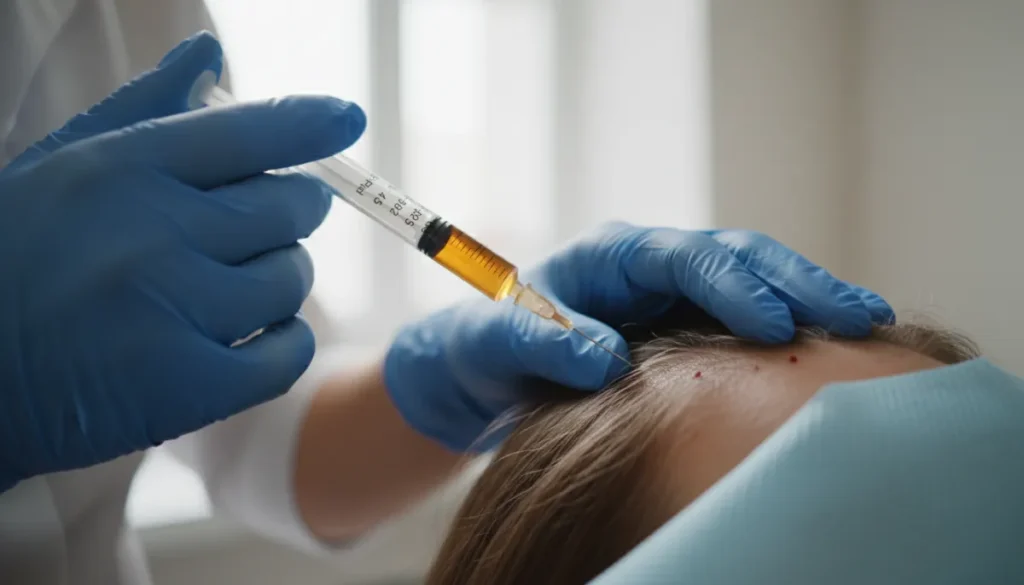
PRP Therapy: The Most Popular Hair Loss Scalp Injection
Platelet‑rich plasma, commonly abbreviated as PRP, is derived from the patient’s own blood. After centrifugation, the plasma becomes enriched with platelets that release growth factors essential for tissue repair and regeneration. Because PRP uses autologous material, the risk of allergic reaction is minimal.
Key steps in a PRP session include:
- Blood draw (approximately 20 ml).
- Centrifugation to separate platelet‑rich plasma.
- Injection of the plasma into targeted scalp zones.
Research indicates that PRP can increase hair density by 10‑30% after a full treatment cycle. The therapy is especially effective for androgenetic alopecia in its early stages, as well as for patients with diffuse thinning.
Below is a quick reference guide for PRP treatment protocols:
- Frequency: Initial series of 3‑4 injections spaced 4‑6 weeks apart.
- Maintenance: Optional booster every 6‑12 months.
- Side Effects: Mild redness, swelling, or bruising lasting 1‑2 days.
While PRP is a leading option, it’s not a universal cure. Patients with advanced scarring alopecia may see limited benefit, and results can vary based on individual platelet count and overall health.
Steroid Injections: When and Why They Are Used
Corticosteroid injections, such as triamcinolone acetonide (Kenalog), are employed primarily for inflammatory forms of hair loss, including alopecia areata. By suppressing the immune response, steroids can halt the attack on hair follicles, allowing them to recover and re‑enter the growth phase.
Typical candidates for steroid scalp injections include:
- Patients with sudden patchy hair loss.
- Individuals with confirmed autoimmune activity.
- Those who have not responded to topical treatments.
Procedure highlights:
- Dermatologist identifies active lesions.
- Fine‑gauge needle delivers a small volume of corticosteroid directly into the lesion.
- Patient is observed for immediate reactions.
While effective for many, repeated steroid use can lead to skin thinning or pigment changes. Therefore, clinicians usually limit sessions to a maximum of three per year per area.
Below is a risk‑benefit overview for steroid injections:
| Benefit | Potential Risk |
|---|---|
| Rapid reduction of inflammation | Local skin atrophy |
| Improved hair regrowth in alopecia areata | Temporary discoloration |
| Minimal systemic absorption | Possible pain at injection site |
What to Expect During a Scalp Injection Session
Understanding the patient journey helps reduce anxiety and ensures optimal results. A typical appointment follows these stages:
- Consultation: Medical history, scalp examination, and discussion of goals.
- Preparation: Cleaning the scalp, applying a topical anesthetic if needed.
- Injection: Precise delivery of the chosen solution using a micro‑needling device or syringe.
- Post‑procedure care: Instructions on washing, activity restrictions, and follow‑up scheduling.
Most patients report mild discomfort comparable to a brief pinprick. Recovery is swift; normal activities can usually resume within a few hours. To maximize benefits, clinicians often recommend avoiding harsh hair products and direct sunlight for 24‑48 hours.
Below is a checklist for post‑treatment care:
- Do not wash hair for at least 12 hours.
- Use a gentle, sulfate‑free shampoo after the initial period.
- Avoid heat styling for one week.
- Keep the scalp clean and protected from excessive UV exposure.
- Schedule the next session as advised (typically 4‑6 weeks later).
Adhering to these guidelines helps reduce inflammation and supports the regenerative process, leading to more consistent outcomes across treatment cycles.
Benefits and Limitations of Hair Loss Scalp Injections
Scalp injections offer several advantages over surgical transplants, but they also have constraints that prospective patients should weigh.
Key benefits include:
- Minimally invasive with little to no downtime.
- Can be performed on patients unsuitable for surgery.
- Utilizes the patient’s own biological material (in the case of PRP), reducing allergy risk.
- Cost‑effective compared to full‑scale hair transplant procedures.
Limitations to consider:
- Results are often modest; they may not replace a full transplant for extensive baldness.
- Multiple sessions are required to achieve noticeable improvement.
- Effectiveness varies based on individual factors such as age, hormonal status, and underlying health conditions.
- Long‑term maintenance may involve periodic booster injections.
Patients should discuss their specific pattern of hair loss with a qualified specialist to determine the most appropriate protocol. Combining scalp injections with other modalities—like low‑level laser therapy or nutritional support—can sometimes enhance overall outcomes.
Why Choose Gold City Hair for Scalp Injection Treatments
Gold City Hair combines years of expertise in hair restoration with a patient‑first philosophy. Since 2017, the clinic has offered a full suite of aesthetic solutions, including advanced hair loss scalp injections performed by board‑certified dermatologists and hair‑restoration surgeons. Our approach emphasizes personalized treatment plans, transparent communication, and state‑of‑the‑art facilities in Turkey. By choosing Gold City Hair, you benefit from clinically proven protocols, rigorous safety standards, and a supportive team dedicated to helping you regain confidence.
Ready to explore whether scalp injections are right for you? Contact Gold City Hair today to schedule a free consultation and take the first step toward fuller, healthier hair.
Our experts will assess your needs, explain the options, and create a customized roadmap to achieve lasting results.
FAQ
What are hair loss scalp injections?
They are minimally invasive treatments that deliver active substances directly into the scalp to stimulate hair growth.
How does PRP therapy work for hair loss?
PRP uses the patient’s own concentrated platelets to release growth factors that promote follicle regeneration.
When are corticosteroid scalp injections recommended?
They are used for inflammatory hair loss conditions like alopecia areata or sudden patchy loss.
What should I expect during a scalp injection appointment?
A consultation, scalp preparation, the injection itself, and brief post‑procedure care instructions.
What are the main benefits and limitations of scalp injections?
Benefits include minimal downtime and use of autologous material; limitations are modest results and need for multiple sessions.
Why should I choose Gold City Hair for scalp injection treatments?
Gold City Hair offers experienced, board‑certified specialists and personalized, evidence‑based protocols.





