Balding from one side can be a surprising and unsettling experience, especially when the rest of the scalp appears healthy. This article explains the underlying reasons, how professionals diagnose the condition, and the range of treatment options available—including advanced hair transplant techniques offered by Gold City Hair. According to recent dermatology surveys, asymmetrical hair loss affects up to 12 % of men and women who notice a sudden thinning on one area of the scalp.
We will explore the medical causes such as alopecia areata and traction injuries, differentiate them from common patterns like male pattern baldness, and outline practical steps you can take today. Whether you are considering a non‑surgical remedy or a surgical restoration, understanding the process empowers you to make an informed decision and regain confidence.
Read on to discover how to identify the root cause, what diagnostic tools are used, and which treatments provide the most natural, lasting results for one‑sided hair loss.
What Causes Balding on One Side?
The phenomenon of balding from one side often stems from a combination of genetic, mechanical, and autoimmune factors. While classic androgenetic alopecia typically presents as a symmetrical recession, several conditions target a single region of the scalp.
Key contributors include:
- Alopecia areata – an autoimmune disorder that can create round or oval patches of sudden hair loss on one side.
- Traction alopecia – chronic pulling from tight hairstyles, helmets, or sleeping positions that stress the same area.
- Localized scalp infections or inflammation that damage follicles.
- Uneven exposure to sunlight or harsh chemicals, leading to localized hair thinning.
- Underlying medical conditions such as thyroid imbalance that may manifest asymmetrically.
Below is a comparison of the most common causes:
| Cause | Typical Appearance | Onset Speed | Potential Reversibility |
|---|---|---|---|
| Alopecia Areata | Round patches, often one side | Rapid (weeks) | High with treatment |
| Traction Alopecia | Linear thinning along hairline or side | Gradual (months) | Moderate if stopped early |
| Localized Infection | Red, scaly patches with hair loss | Variable | Depends on infection control |
| Sun/chemical damage | Diffuse thinning in exposed area | Slow | Limited, focus on protection |
Understanding the specific cause is essential because it determines whether medical therapy, lifestyle changes, or surgical intervention will be most effective for your case of balding from one side.
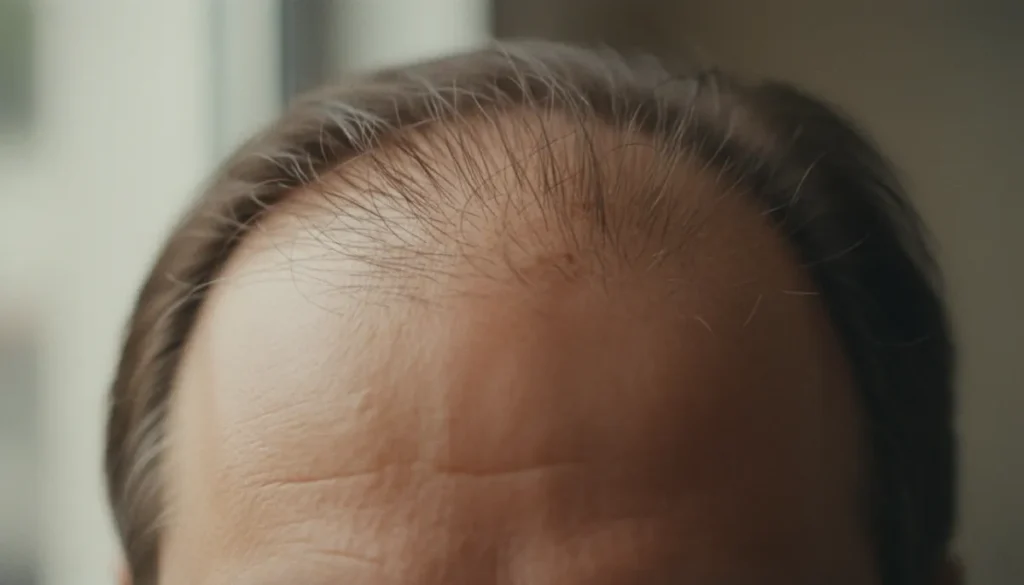
Diagnosing the Issue: When to See a Specialist
Early detection of one‑sided hair loss improves treatment outcomes. If you notice a patch that does not respond to over‑the‑counter products, it is advisable to consult a dermatologist or a hair restoration clinic such as Gold City Hair.
Diagnostic steps typically include:
- Detailed medical history – evaluating recent stress, medications, and hair‑care habits.
- Physical examination – assessing the pattern, size, and texture of the affected area.
- Trichoscopy – a dermatoscopic examination that reveals follicle health and signs of inflammation.
- Blood tests – checking for thyroid function, iron levels, and autoimmune markers.
- Scalp biopsy – rarely needed, but useful for confirming alopecia areata or scarring alopecia.
During the consultation, specialists will differentiate between receding hairline patterns and isolated thinning. They also evaluate the presence of hair thinning male pattern baldness that may be more pronounced on one side due to natural growth patterns.
Below is a quick reference guide for when to seek professional help:
| Symptom | Duration | Recommended Action |
|---|---|---|
| Patch larger than a coin | More than 4 weeks | Schedule a specialist visit |
| Rapid hair loss (weeks) | Sudden | Urgent dermatology consult |
| Associated itching or pain | Any duration | Medical evaluation needed |
| Only one side affected | Persistent | Professional diagnosis essential |
Accurate diagnosis ensures that the chosen treatment addresses the root cause rather than merely masking the symptom of balding from one side.
Treatment Options for One‑Sided Hair Loss
Once the cause of balding from one side is identified, a range of treatments can be considered. Options fall into three broad categories: medical, non‑surgical, and surgical.
Medical Therapies
- Topical minoxidil – stimulates follicle activity and is effective for mild to moderate thinning.
- Oral finasteride – reduces DHT levels, useful for androgenetic patterns.
- Corticosteroid injections – target autoimmune patches such as alopecia areata.
- Platelet‑rich plasma (PRP) – uses your own blood growth factors to encourage regrowth.
Non‑Surgical Procedures
- Low‑level laser therapy (LLLT) – promotes circulation and cellular metabolism.
- Scalp micro‑needling – enhances absorption of topical agents.
Surgical Restoration
For permanent, natural‑looking results, hair transplantation remains the gold standard. Gold City Hair specializes in:
- Follicular Unit Extraction (FUE) – individual follicles are harvested and implanted precisely where needed.
- Direct Hair Implantation (DHI) – a refined version of FUE that uses a pen‑like tool for higher graft survival.
Below is a concise comparison of the main treatment pathways:
| Method | Invasiveness | Typical Sessions | Recovery Time | Result Longevity |
|---|---|---|---|---|
| Minoxidil | Topical | Daily application | None | Temporary, requires ongoing use |
| PRP | Minimally invasive | 3–4 sessions | 1–2 days | 6–12 months, repeatable |
| FUE | Surgical | 1–2 sessions | 7–10 days | Permanent |
| DHI | Surgical | 1 session | 5–9 days | Permanent |
Choosing the right approach depends on the diagnosis, the extent of hair loss, and personal preferences regarding downtime and long‑term maintenance.
Preventive Care and Lifestyle Adjustments
Even after successful treatment, maintaining healthy hair growth requires ongoing care. Simple lifestyle modifications can reduce the risk of future one‑sided thinning.
Nutrition and Supplements
- Protein‑rich foods – hair is primarily keratin, a protein.
- Biotin, zinc, and iron – support follicle metabolism.
- Omega‑3 fatty acids – reduce inflammation that can affect scalp health.
Hair‑Care Practices
- Avoid tight hairstyles that cause traction alopecia.
- Use gentle, sulfate‑free shampoos and avoid excessive heat styling.
- Rotate sleeping positions to relieve constant pressure on one side.
Stress Management
Chronic stress elevates cortisol, which can accelerate hair shedding. Incorporate relaxation techniques such as meditation, regular exercise, or yoga to keep stress levels in check.
Below is a quick checklist for daily scalp health:
| Daily Habit | Benefit |
|---|---|
| Gentle shampooing | Prevents follicle irritation |
| Balanced diet with micronutrients | Supports keratin synthesis |
| Scalp massage (2 min) | Improves blood flow |
| Avoid tight headwear | Reduces traction forces |
Adopting these habits can complement any medical or surgical solution, helping to sustain the results of your treatment for balding from one side.
Realistic Expectations: Results and Recovery Timeline
Understanding what to expect after addressing balding from one side helps set realistic goals and reduces disappointment.
Post‑Procedure Recovery
- First week – mild redness and tiny scabs where grafts were placed; most patients resume light activities.
- Weeks 2–4 – shedding of transplanted hairs (normal telogen phase) often occurs.
- Months 3–6 – new hair growth becomes visible, gradually thickening.
- Months 9–12 – final density and natural hairline are typically achieved.
Result Longevity
Because transplanted follicles are resistant to DHT, the results are considered permanent. However, native hair may continue to thin over time, and a minor touch‑up could be recommended after several years.
Measuring Success
Success is evaluated by:
- Graft survival rate (usually >90 % with FUE/DHI).
- Patient satisfaction surveys – most report increased confidence.
- Objective measurements – hair density counts before and after treatment.
By partnering with an experienced clinic, you can achieve a balanced, natural look that blends seamlessly with surrounding hair, effectively correcting the asymmetry caused by one‑sided baldness.
Why Choose Gold City Hair
Gold City Hair combines over six years of expertise with cutting‑edge FUE and DHI techniques, delivering natural‑looking results for patients experiencing one‑sided hair loss. Our team prioritizes personalized treatment plans, transparent communication, and post‑procedure support, ensuring each client feels confident throughout the journey. Located in Turkey, we offer competitive pricing without compromising on quality, making advanced hair restoration accessible worldwide.
Ready to restore balance to your hair? Contact Gold City Hair today to schedule a confidential consultation and discover the best solution for your one‑sided baldness.
Take the first step toward a fuller, more confident look—your personalized treatment plan awaits.
FAQ
What are the most common causes of balding from one side?
Common causes include alopecia areata, traction alopecia, localized infections, sun or chemical damage, and thyroid imbalances.
When should I see a specialist for one‑sided hair loss?
If a patch larger than a coin persists for more than four weeks, or if hair loss is rapid, painful, or only on one side, consult a dermatologist.
What diagnostic tools are used to evaluate one‑sided balding?
Dermatologists use medical history, physical exam, trichoscopy, blood tests, and occasionally scalp biopsy.
What treatment options are available for one‑sided hair loss?
Options include medical therapies (minoxidil, finasteride, steroids, PRP), non‑surgical procedures (LLLT, microneedling), and surgical restoration (FUE, DHI).
How long does recovery take after a hair transplant for one‑sided balding?
Recovery typically ranges from 5 to 10 days, with full graft maturation occurring over several months.
What lifestyle changes can help prevent future one‑sided hair thinning?
Adopt a balanced diet rich in protein, biotin, zinc, and omega‑3s, avoid tight hairstyles, use gentle shampoos, and manage stress.





