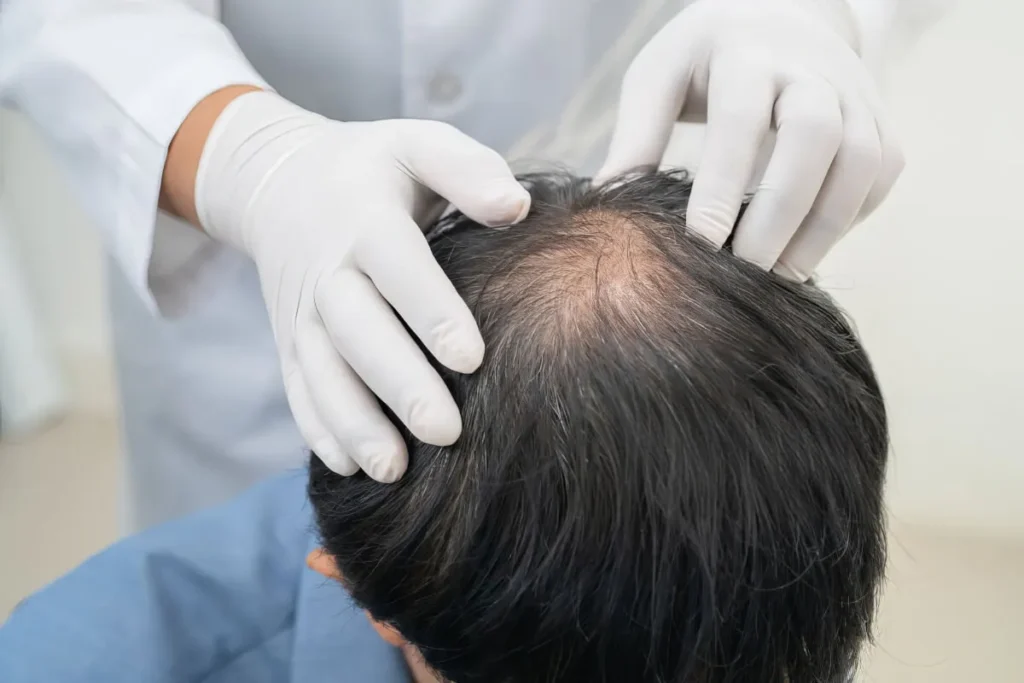
Hair loss is a big problem for millions of women around the world. It often starts when estrogen levels drop, like during menopause or after having a baby.
It’s important to know how estrogen levels and hair health are connected. This helps fight hair thinning and loss.
Studies show that estradiol, a key type of estrogen, helps hair grow stronger and fuller.
Learning about estrogen’s role in protecting hair follicles helps us understand hair loss better. It also points to possible treatments.
Önemli Çıkarımlar
Estrogen is key to keeping hair healthy.
When estrogen levels go down, hair can start to thin and fall out.
Estradiol helps hair grow fuller and healthier.
Knowing about estrogen’s role can help manage hair loss.
Hormone-based treatments might be a good solution for hair loss.
Understanding Estrogen and Hair Loss
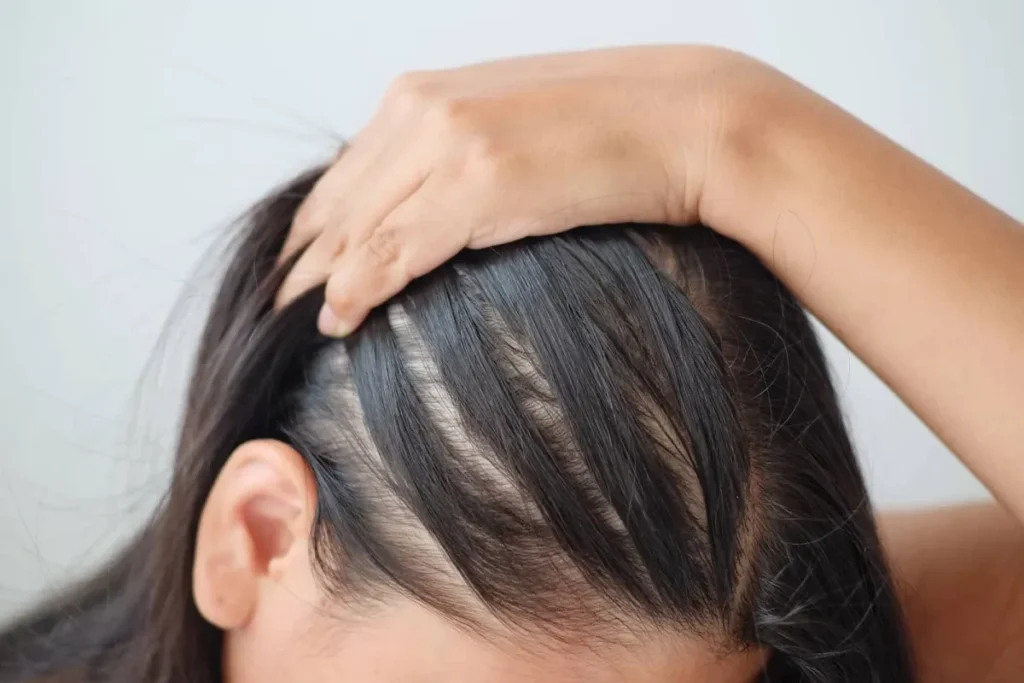
Estrogen is key to hair health. It affects hair loss by influencing the growth cycle. Estrogen receptors are found in hair follicles, helping extend the growth phase.
The Role of Estrogen in Hair Health
Estrogen keeps the growth phase longer. It also helps keep the scalp hydrated and blood flowing well. Healthy estrogen levels are essential for hair growth.
Studies show estrogen boosts hair growth. It does this by:
Extending the anagen phase for longer hair
Boosting scalp circulation for better nutrient delivery
Keeping the scalp healthy for hair growth
How Estrogen Improves Scalp Circulation
Estrogen makes blood vessels wider. This means more blood flow to hair follicles. A healthy scalp circulation is vital for robust hair growth.
Common Causes of Hormone-Related Hair Thinning
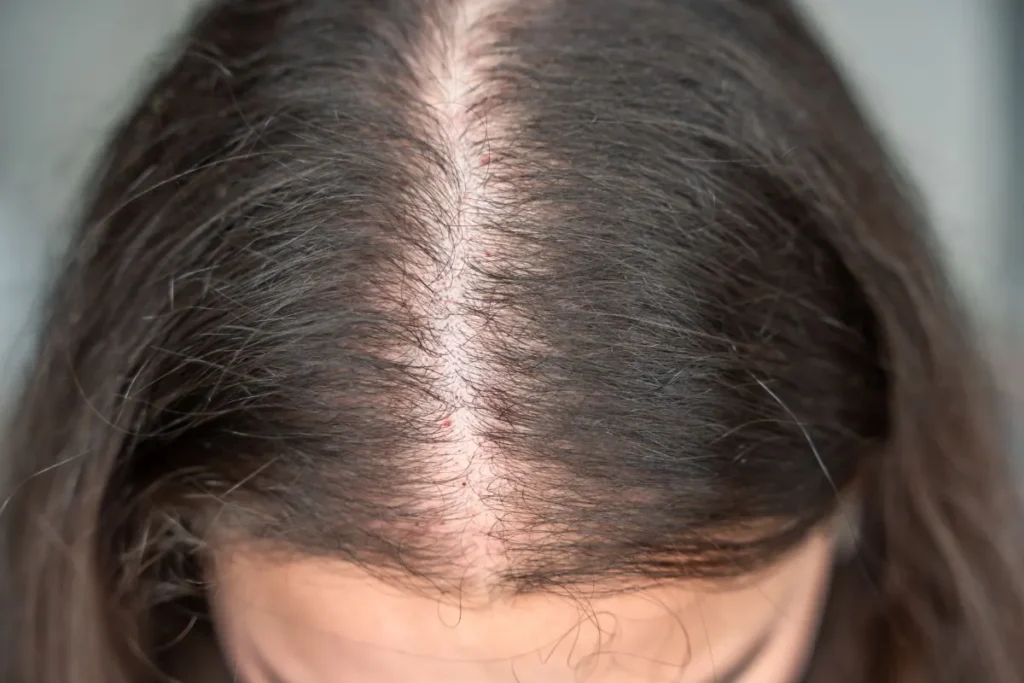
Estrogen is key to hair health. Changes in estrogen during life events like menopause and after childbirth can cause hair to thin. Knowing about these changes helps tackle hormone-related hair loss.
Menopause and Hair Changes
Menopause brings a drop in estrogen, affecting hair. This decrease can cause hair to thin, lose density, and change texture. With less estrogen, hair growth cycles are disrupted, leading to more hair falling out.
Regain your confidence by understanding the link between menopause and hair changes. Managing hormonal hair loss during this phase involves being aware of the changes in estrogen levels and their impact on hair.
Postpartum Hormonal Fluctuations
Postpartum, hormonal changes cause hair thinning. After childbirth, estrogen levels plummet, leading to telogen effluvium. This is when more hairs than usual enter the shedding phase.
This condition can be alarming, but knowing it’s due to hormonal changes helps. Dream hair is now reality with the right information and support.
Understanding hormone-related hair thinning and taking proactive steps helps manage hair loss during life events. Maximum results in hair restoration come from medical guidance and lifestyle changes.
How Estrogen Counteracts Hair Loss Mechanisms
Estrogen is key to hair health, affecting both hormones and scalp health. Knowing how estrogen fights hair loss helps us see why keeping estrogen levels healthy is vital for hair growth.
Estrogen vs. Androgens: The Hormonal Balance
Estrogen battles against androgens, which can cause hair loss. Androgens, like dihydrotestosterone (DHT), shrink hair follicles, making hair thinner and shorter. Estrogen keeps the balance between growth and shedding by talking to receptors in follicles, extending the growth phase.
The right balance between estrogen and androgens is essential for healthy hair. When estrogen is at the right level, it fights off androgens’ negative effects on hair follicles. This balance is key during times of hormonal change, like menopause or after having a baby.
Blood Flow and Nutrient Delivery to Hair Follicles
Estrogen also boosts scalp health by improving blood flow and nutrient delivery to hair follicles. Good blood flow makes sure follicles get the nutrients and oxygen they need for growth. Estrogen keeps the scalp healthy, creating a great environment for hair to grow.
Estrogen improves blood circulation to the scalp.
It enhances the delivery of nutrients to hair follicles.
Estrogen supports the overall health of the scalp.
By keeping hormones balanced and supporting scalp health, estrogen is vital in fighting hair loss. Having the right estrogen levels helps keep hair healthy and strong.
Conclusion: Managing Hair Health Through Hormonal Balance
Understanding how estrogen affects hair health can boost confidence. Estrogen is key in growing hair and preventing loss. Keeping estrogen levels balanced helps grow healthy hair and prevents baldness.
Treatment options like hormone replacement therapy can tackle hair loss. Does estrogen help hair grow? Yes, it improves scalp circulation and fights androgens, making hair follicles healthier.
By focusing on healthy estrogen levels and balancing hair and estrogen, you can see great results. With the right guidance and care, you can get dense, natural-looking hair and feel confident again.
SSS
Can estrogen help with hair loss?
Estrogen plays a significant role in maintaining the health and density of hair by keeping the follicles in their growth phase for a longer duration. When estrogen levels are optimal, they help counteract the effects of androgens, such as dihydrotestosterone (DHT), which are responsible for shrinking hair follicles and shortening the hair growth cycle. This is why many people notice thicker hair during periods of high estrogen, such as pregnancy, and conversely experience thinning when those levels begin to fluctuate or decline during menopause or postpartum.
Does estrogen cause hair growth?
Estrogen does not necessarily create new hair follicles, but it acts as a powerful promoter of the anagen, or growth, phase of the existing hair cycle. By extending this phase, estrogen allows hair to grow longer and reach a greater diameter before naturally shedding. It also helps maintain the health of the scalp’s blood vessels, ensuring that follicles receive the oxygen and nutrients required to produce strong, healthy strands. Without sufficient estrogen, the hair cycle speeds up, leading to more frequent shedding and a decrease in overall hair volume.
Will estrogen help hair growth?
Increasing or stabilizing estrogen levels can help improve hair growth if the underlying cause of the thinning is a hormonal imbalance. For individuals experiencing hair loss due to conditions like menopause or certain endocrine disorders, restoring estrogen can signal the follicles to return to a more stable growth pattern. However, it is important to note that estrogen is not a universal cure for all types of hair loss; for instance, it will not have the same effect on hair loss caused by nutritional deficiencies, extreme stress, or certain autoimmune conditions.
Can estrogen make your hair grow?
Estrogen creates an internal environment that is highly conducive to hair growth by modulating the activity of the sebaceous glands and the hair follicles themselves. It helps the scalp retain moisture and elasticity, which supports a healthy environment for the hair to emerge. While it may make hair appear to grow faster or thicker, it is usually a result of the hair staying attached to the scalp for a longer period and breaking less frequently due to improved structural integrity.
Does estrogen counteract hair loss?
Estrogen acts as a natural buffer against the miniaturization of hair follicles often caused by genetic thinning. It works by competing with androgens for receptor sites within the follicle and by potentially decreasing the overall production of androgens in the body. By lowering the androgenic impact on the scalp, estrogen helps prevent the follicles from shrinking, which is the primary mechanism of permanent hair loss in androgenetic alopecia.
What happens to hair when estrogen levels drop?
When estrogen levels drop significantly, the protective shield for the hair follicles is effectively removed. This allows androgens to become more dominant, which can lead to a condition known as telogen effluvium, where a large number of hairs enter the shedding phase simultaneously. The hair often becomes thinner, drier, and more brittle, and the scalp may become more visible, particularly along the part line or the crown of the head.
Can hormonal imbalance cause hair loss?
Hormonal imbalances are one of the leading causes of hair loss, as the hair follicles are highly sensitive to changes in the endocrine system. Beyond estrogen and testosterone, imbalances in thyroid hormones or insulin can also disrupt the hair growth cycle. For example, conditions that involve high levels of androgens and low levels of estrogen frequently result in thinning on the scalp alongside unwanted hair growth on other parts of the body.
How does estrogen affect hair follicles?
Estrogen affects hair follicles by binding to specific receptors located within the dermal papilla, which is the command center at the base of the follicle. Once bound, estrogen influences the expression of various growth factors that stimulate cell division and prolong the life of the hair strand. It also helps maintain a healthy inflammatory response in the scalp, preventing the micro-inflammation that can lead to follicle damage and permanent hair loss.
Will managing estrogen levels help with hair loss?
Managing estrogen levels through lifestyle changes, diet, or medical intervention can significantly slow or even reverse hair thinning caused by hormonal shifts. By bringing estrogen back into a healthy range relative to other hormones, you can effectively reset the hair growth cycle. This often requires a multifaceted approach, including stress management and proper nutrition, to ensure the body has the resources it needs to maintain hormonal equilibrium and support the high energy demands of hair production.
Can estrogen therapy help with hair loss?
Hormone replacement therapy or topical estrogen treatments can be effective for treating hair loss in those with specific hormonal deficiencies. These treatments work by replenishing the body’s estrogen supply, thereby restoring the protection the follicles once had. However, because hormone therapy can carry risks and side effects, it must be carefully monitored by a healthcare professional to ensure it is the right solution for your specific health profile and hair loss type.
Referanslar
Ulusal Biyoteknoloji Bilgi Merkezi. Kanıta Dayalı Tıbbi Öngörü. Erişim adresi https://pmc.ncbi.nlm.nih.gov/articles/PMC10615536/





