Many women notice unexpected hair loss or thinning during menopause. It’s natural to wonder if changing hormones are the cause.
Struggle with post menopausal hair loss? Discover amazing fixes and powerful treatments to stop scary thinning and regrow incredible hair.
About two-thirds of women going through menopause face thinning hair or bald spots. The big hormonal changes can really affect scalp health and hair growth patterns.
It’s important to understand how falling estrogen levels can lead to hair loss. This helps us tackle this common symptom of menopause.
Önemli Çıkarımlar
Menopause can cause significant changes in hair growth patterns.
Hormonal fluctuations during menopause can lead to hair thinning.
Estrogen levels play a key role in hair health during menopause.
Many women experience hair loss or thinning during menopause.
Understanding the link between menopause and hair loss is essential for finding effective solutions.
The Relationship Between Hormonal Changes and Hair Health
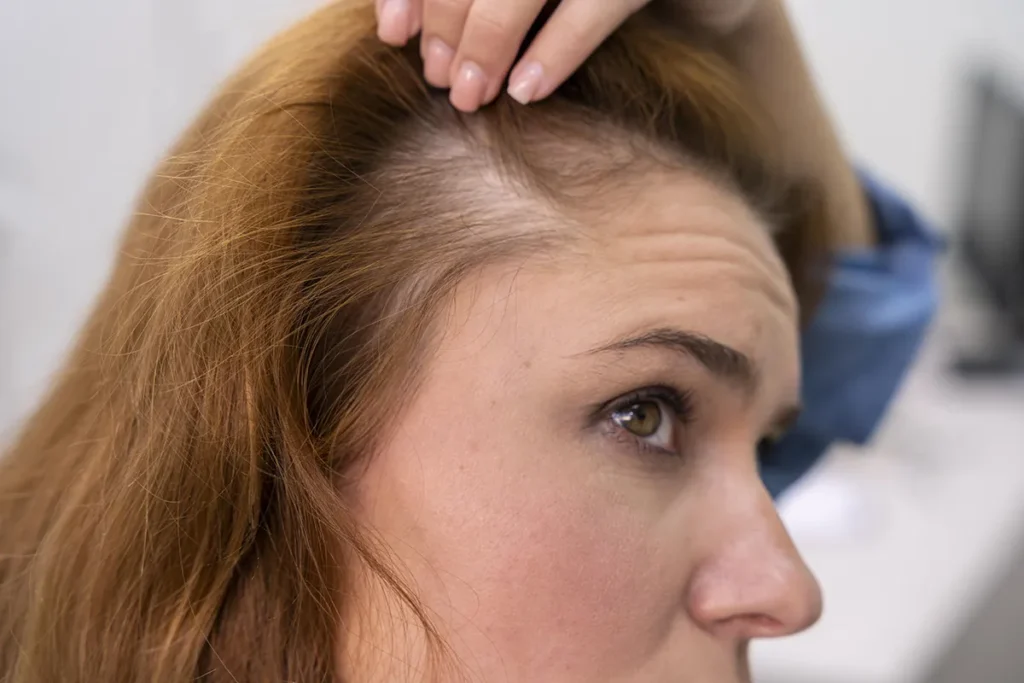
Menopause brings a drop in estrogen, which is key for hair health. This drop can cause hair growth patterns to change and affect overall hair health.
Hormonal shifts in menopause really impact hair. A study found that 52% of postmenopausal women between ages 50 and 65 experience hair thinning or loss. This shows how common hair issues are during this time.
Statistics on Menopausal Hair Loss
Menopause’s effect on hair is real and supported by data. Studies show that lower estrogen levels mean more hair loss. Here are some key findings:
The data shows more women lose hair as they get older. This shows how hair thinning gets worse during and after menopause.
How Estrogen Influences Hair Growth Cycles
Estrogen is vital for hair growth by making the anagen phase longer. When estrogen drops, the anagen phase gets shorter. This leads to thinner, shorter hair. This change is a big reason for hair thinning in postmenopausal women.
Estrogen’s effect on hair growth is complex. Knowing this helps women deal with hair issues during and after menopause.
Understanding the link between hormonal changes and hair health helps women face menopause’s hair challenges. They can then seek the right advice or treatment to help their hair.
Post Menopausal Hair Loss: Progression and Patterns
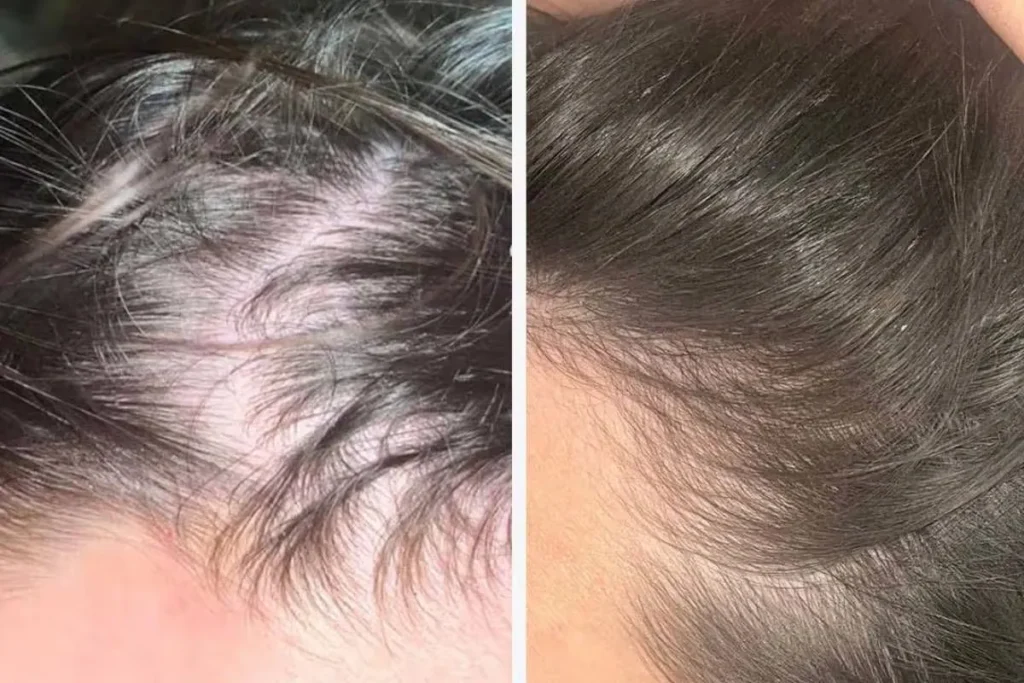
Women often notice changes in their hair as they enter menopause. These changes are due to big shifts in hormones that affect hair health.
Perimenopause: Early Signs of Hair Changes
In perimenopause, hair changes start slowly. You might see your hair thinning, losing volume, or changing texture. These changes happen because of more androgens, which make hair follicles smaller and hair thinner.
Hormonal changes are key in perimenopause. Lower estrogen and more androgens can cause hair loss and thinning.
The Mechanism of Follicle Miniaturization
Follicle miniaturization makes hair follicles smaller, leading to thinner, shorter hair. This is mainly due to hormonal shifts during menopause, like more androgens.
This miniaturization makes hair less dense. It looks thinner and less full. Knowing this helps tackle thinning hair from menopause.
Distinguishing Features of Menopausal Hair Thinning
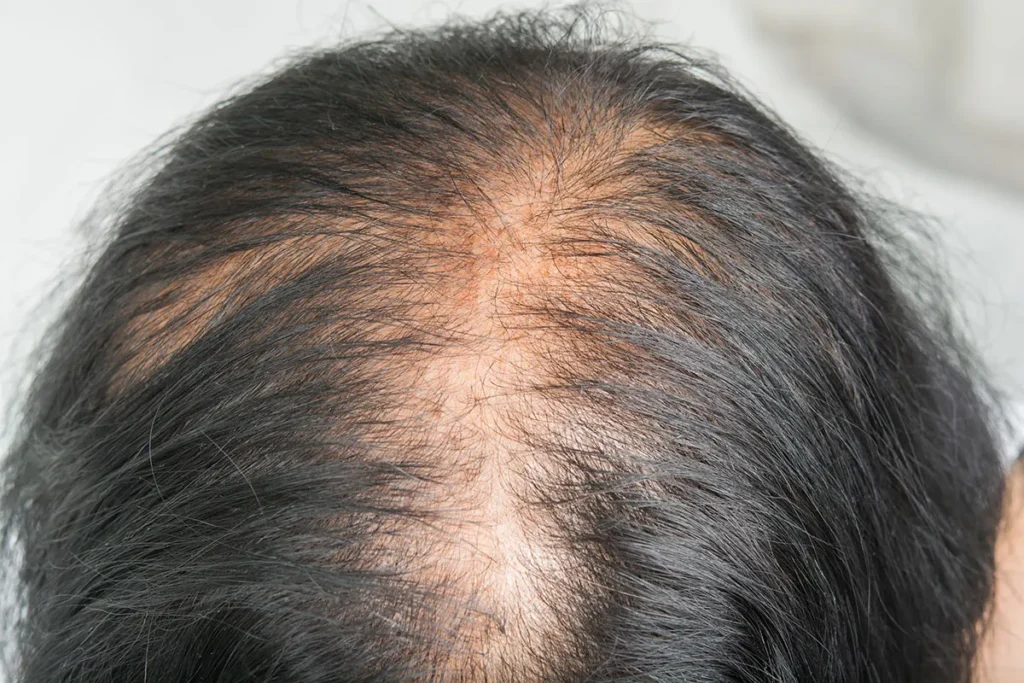
Menopausal hair thinning spreads out over the scalp, not in patches. This pattern is unique and linked to menopause’s hormonal changes.
Knowing the signs of menopausal hair thinning is key to fighting hair loss from menopause. By understanding these patterns, women can manage their hair better during this big life change.
Sonuç
Menopause brings big changes in hormones, leading to hair thinning and loss. It’s key for women to understand these changes to keep their hair healthy and full.
Studies show that hormonal shifts in menopause can disrupt hair growth. This can cause hair to thin. Treatments like minoxidil and hormone therapy can help with hair loss after menopause.
Women can find ways to deal with thinning hair during menopause. They can try different treatments or scalp care. This helps those wondering if menopause causes hair thinning.
Knowing about treatments and taking action can help women face hair thinning in menopause. It promotes better hair health and overall well-being.
SSS
Menopause and Hair Loss
Menopause is a leading cause of hair thinning in women due to the significant drop in estrogen and progesterone levels. These hormonal shifts allow androgens, or male hormones, to have a more dominant effect on hair follicles, which typically results in slower growth and increased shedding.
Estrogen and Hair Growth
Estrogen plays a vital role in hair health by keeping the follicles in the growth phase (anagen) for a longer duration. When estrogen levels are high, hair grows faster and thicker, but when they drop, the growth cycle shortens, leading to thinner strands and more frequent hair loss.
Perimenopausal Hair Changes
Early signs of hair changes during perimenopause include a noticeable loss of volume, hair that feels drier or more brittle, and a wider parting at the crown. You may also notice that your hair takes longer to grow to its usual length or that you are seeing more scalp through your hair in bright lighting.
Follicle Miniaturization
Follicle miniaturization occurs when androgens cause the hair follicles to shrink over time, producing progressively finer and shorter hairs. Eventually, the follicles may become so small that they stop producing visible hair altogether, which is the primary mechanism behind permanent thinning during and after menopause.
Hormonal Changes and Scalp Health
Hormonal fluctuations during menopause can lead to a drier, more sensitive scalp as oil production from the sebaceous glands decreases along with estrogen levels. This lack of natural moisture can cause itching, flaking, and a weakened skin barrier, which can further impact the health of the hair follicles.
Permanence of Menopausal Hair Loss
While menopausal hair loss is often a long-term change, it is not always completely permanent if caught early and managed with appropriate treatments. While you may not regain the full density of your youth, many women can successfully slow the thinning process and regrow some hair through medical and lifestyle interventions.
Features of Menopausal Thinning
The distinguishing features of menopausal hair thinning include a diffuse loss of density across the top and crown of the head while the hairline usually remains stable. Unlike sudden shedding caused by stress, this type of thinning happens gradually over several years and is often accompanied by changes in hair texture.
Estrogen Deficiency and Hair
A lack of estrogen is a direct contributor to hair loss because it removes the “protective” effect that estrogen has on the hair cycle. Without sufficient estrogen to counteract the effects of dihydrotestosterone (DHT), the follicles are more susceptible to shrinking and entering the resting phase prematurely.
Post-Menopausal Hair Treatments
Treatments for post-menopausal hair loss include topical minoxidil to stimulate regrowth and prescription medications like finasteride or spironolactone to target hormonal triggers. Additionally, hormone replacement therapy (HRT) may help stabilize the hair cycle, while low-level laser caps are often used to increase hair thickness.
Referanslar
National Center for Biotechnology Information. Evidence-Based Medical Insight. Retrieved from https://pmc.ncbi.nlm.nih.gov/articles/PMC10669803/