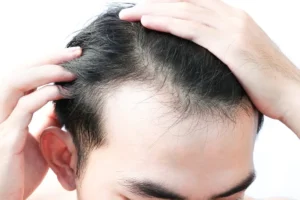
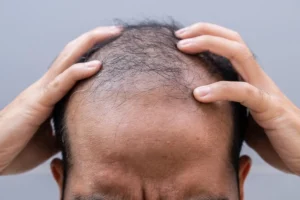
When searching for before after hair transplant photos, many prospective patients wonder how the images reflect real-world outcomes. Understanding these pictures helps you set realistic expectations and choose a clinic that aligns with your goals. In this article we break down what you should look for in authentic photo galleries, explain the techniques behind the transformations, and highlight the factors that influence the final look. A recent survey of 1,200 men and women who underwent a hair transplant reported that clear visual evidence was the top deciding factor when selecting a provider.
We will walk you through the most common types of procedures captured in photo sets, the visual cues that signal a successful graft, and how Turkish clinics, especially Gold City Hair, maintain high standards of documentation. By the end, you’ll be equipped to read before and after images with confidence and know what results are truly achievable.
Whether you are considering a hairline transplant, a full scalp restoration, or a beard graft, the visual proof offered by reputable clinics can be a powerful tool in your decision‑making process.
Understanding the Transformation: What Before & After Photos Show
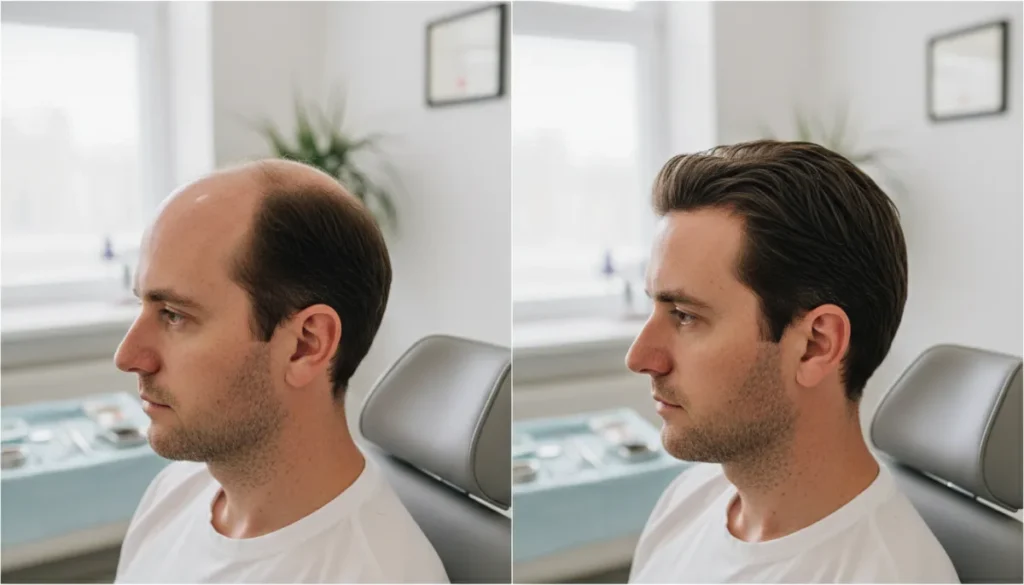
Before and after photos serve as a visual audit of the entire hair restoration journey. They typically capture three stages: the pre‑procedure scalp, the immediate post‑procedure view (often within a week), and the matured result after 9‑12 months of growth. Each stage tells a story about graft survival, density, and naturalness.
- Pre‑procedure image: Highlights the pattern of hair loss, scalp visibility, and the area targeted for grafting.
- Early post‑procedure image: Shows the transplanted grafts before they shed; this is crucial for assessing proper placement.
- Final result: Demonstrates how the new hair integrates with existing hair, providing a realistic view of density and hairline shape.
When reviewing before after hair transplant photos, pay attention to lighting consistency, angle, and scalp exposure. Inconsistent lighting can exaggerate or diminish perceived density. A side‑by‑side layout is the most reliable format because it eliminates visual bias.
| Stage | What to Observe | Why It Matters |
|---|---|---|
| Pre‑procedure | Hairline position, recession depth | Establishes baseline for improvement |
| Early post‑procedure | Graft distribution, scalp coverage | Indicates surgeon’s precision |
| Final result | Natural blend, density, hairline shape | Reflects long‑term success |
Common Types of Hair Transplant Techniques Captured in Photos
Different transplantation methods produce distinct visual signatures. Recognizing these helps you match your desired outcome with the appropriate technique.
Foliküler Ünite Ekstraksiyonu (FUE)
FUE involves harvesting individual follicular units directly from the donor area. In photos, you’ll notice tiny, dot‑like scars that are barely visible to the naked eye. The resulting density appears uniform, and the hairline can be sculpted with high precision.
Direct Hair Implantation (DHI)
DHI uses a specialized implanter pen, allowing the surgeon to place grafts at a specific angle and depth instantly. Images often showcase a very natural hairline because the angle of each graft mimics natural growth patterns.
Hairline Transplant (Hairline Restoration)
This focused approach targets the frontal hairline and temples. Before & after photos of hairline transplants typically emphasize the shape and softness of the new hairline, making it appear seamless with existing hair.
- FUE – minimal scarring, suitable for high‑density needs.
- DHI – precise angle control, ideal for delicate hairlines.
- Hairline transplant – specialized for receding foreheads.
When browsing before after hair transplant photos, verify that the clinic labels the technique used. This transparency helps you understand the expected scar visibility and graft placement accuracy.
How to Evaluate Results: Key Indicators in Before & After Images
Not all photo galleries are created equal. To assess authenticity and quality, look for these key indicators:
- Consistent angle and distance: The camera should be positioned at the same height and distance for each shot.
- Visible scalp markers: Small reference points (e.g., a ruler or a known facial feature) help gauge growth.
- Hair density measurement: Some clinics provide graft counts or density per cm² alongside images.
- Natural hairline curvature: A well‑crafted hairline follows the natural arc of the forehead.
In addition, reputable clinics often include a short caption describing the patient’s age, the number of grafts, and the technique used. This contextual data adds credibility to the visual evidence.
For those specifically interested in turkish hair transplant results, many clinics publish extensive galleries because Turkey is a leading destination for affordable, high‑quality procedures. Look for clear before and after sets that span at least 12 months of post‑operative growth.
Realistic Expectations: Factors That Influence Photo Outcomes
Even with flawless technique, several variables affect the final appearance captured in photos.
- Patient age and hair characteristics: Younger patients often have finer hair, which may appear less dense in photos.
- Donor area quality: A robust donor zone yields better graft survival, reflected in higher post‑procedure density.
- Post‑operative care: Proper medication and scalp care influence graft retention and growth speed.
- Lighting and styling: Professional photography uses neutral lighting; home‑taken pictures may misrepresent results.
Understanding these factors helps you interpret before after hair transplant photos more accurately. For instance, a patient who shaved their scalp for the pre‑procedure shot will display a stark contrast compared to a non‑shaved image, potentially exaggerating perceived improvement.
When a clinic provides a timeline of images—typically at 3, 6, and 12 months—you can see the progressive growth pattern, which is a reliable indicator of long‑term success.
Insights from Turkish Hair Transplant Galleries
Turkey has become synonymous with high‑volume, cost‑effective hair restoration. Clinics in Istanbul, such as Gold City Hair, maintain rigorous photographic standards to showcase their expertise. Common trends observed in Turkish galleries include:
| Trend | Description | Patient Benefit |
|---|---|---|
| High graft counts | Often 2,500‑4,000 grafts for full‑scalp procedures | Increased density and coverage |
| Standardized lighting | Neutral studio lighting for all stages | Accurate visual comparison |
| Transparent reporting | Age, graft number, technique listed with each set | Enhanced trust and decision‑making |
These galleries also frequently feature both male and female patients, demonstrating that hair restoration is not limited to any gender. By reviewing authentic Turkish photo sets, you can gauge the realistic outcomes of a hairline transplant or a full scalp restoration performed abroad.
Why Choose Gold City Hair
Gold City Hair has been delivering personalized hair restoration solutions in Turkey since 2017. Our clinic specializes in FUE, DHI, and eyebrow/beard transplants, ensuring each patient receives a treatment plan tailored to their unique hair loss pattern. We prioritize transparent communication, providing detailed before and after photo documentation for every case. With a focus on natural results and patient confidence, Gold City Hair combines advanced technology with experienced surgeons to achieve lasting, authentic outcomes.
Ready to see your own transformation? Contact Gold City Hair today for a personalized consultation and discover how our expert team can help you achieve the hair you’ve always wanted.
Take the first step toward renewed confidence—schedule your virtual assessment now.
SSS
How can I tell if before and after hair transplant photos are authentic?
Look for consistent lighting, identical angles, and clear timestamps or reference markers in each image.
What should I look for in the pre‑procedure, early post‑procedure, and final result images?
Pre‑procedure shows hair loss pattern, early post‑procedure reveals graft placement, and final result demonstrates natural density and hairline shape.
What are the visual differences between FUE and DHI hair transplant photos?
FUE photos often show tiny dot‑like scars and uniform density, while DHI photos emphasize precise angle control and a very natural hairline.
Why are Turkish hair transplant galleries considered reliable?
Turkish clinics usually follow standardized lighting, provide detailed patient data, and publish high‑volume graft counts, which together boost credibility.
How does patient age affect the appearance of before and after photos?
Younger patients usually have finer hair, which can look less dense in photos, while older patients may have thicker strands that appear fuller.
What information should be included with each photo set for credibility?
Patient age, graft count, technique used, and timeline of images (e.g., 3, 6, 12 months) should accompany the photos.