Bu low level laser has emerged as a non‑invasive option for people seeking to combat hair thinning and loss. In this article we explore how this technology works, the benefits it offers, what a typical treatment looks like, and how it fits into a broader hair‑restoration plan. A recent study showed that up to 65% of participants experienced measurable hair density improvement after consistent use of low‑level laser devices.
Understanding the science behind the therapy helps you decide if it matches your goals. We will also compare it with related modalities such as red light therapy ve cold laser therapy, clarify safety considerations, and outline realistic expectations. Whether you are considering a standalone solution or a complementary treatment to a transplant, this guide provides the facts you need.
Read on to learn why many clinicians in Turkey and worldwide are integrating low‑level laser into their hair‑restoration protocols, and how Gold City Hair ensures a personalized, transparent experience for every client.
How Low-Level Laser Therapy Works
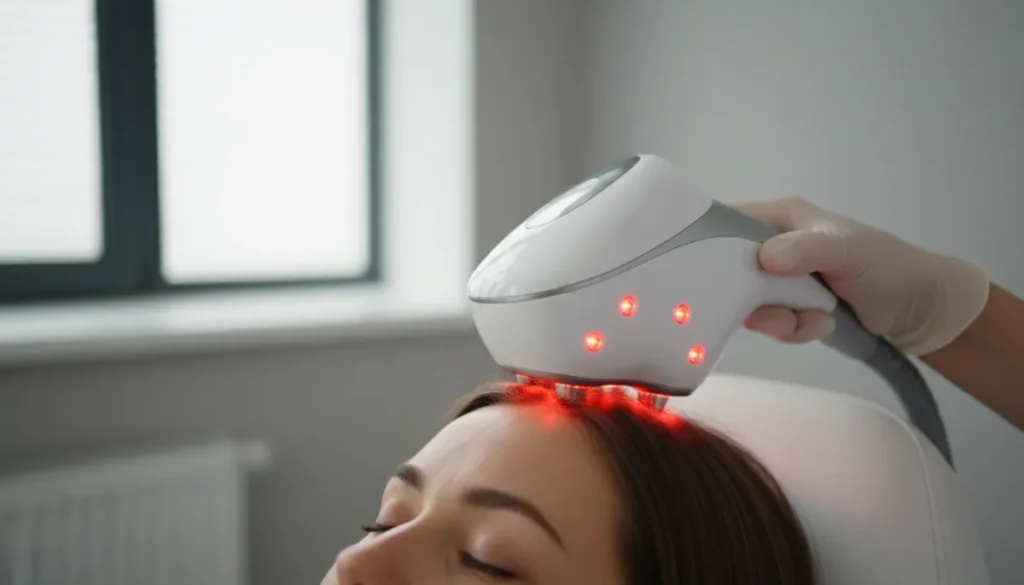
Low‑level laser therapy (LLLT) operates through a process called photobiomodulation. When specific wavelengths of light—typically in the red (630–680 nm) or near‑infrared (800–850 nm) range—penetrate the skin, they are absorbed by mitochondria in hair‑follicle cells. This absorption boosts cellular energy (ATP), improves blood flow, and reduces oxidative stress, all of which create a more favorable environment for hair growth.
The Science of Photobiomodulation
Key mechanisms include:
- Activation of cytochrome c oxidase, enhancing cellular respiration.
- Up‑regulation of growth factors such as VEGF and IGF‑1.
- Modulation of inflammatory pathways, decreasing cytokine‑mediated follicle damage.
Although the concept sounds similar to red light therapy, LLLT uses a higher power density that can reach deeper follicular layers without causing thermal injury.
| Feature | Low‑Level Laser Therapy | Red Light Therapy |
|---|---|---|
| Typical Wavelength | 630–850 nm | 620–660 nm |
| Power Density | 5–100 mW/cm² | 1–5 mW/cm² |
| Depth of Penetration | Up to 5 mm | Up to 2 mm |
| Primary Use in Hair Care | Stimulate follicle metabolism | Surface skin rejuvenation |
Benefits of Low-Level Laser for Hair Growth
Clinical research and real‑world outcomes highlight several advantages of using low‑level laser as part of a hair‑restoration regimen.
- Non‑invasive and painless: No needles, incisions, or anesthesia are required.
- Can be performed in‑office or at home with FDA‑cleared devices.
- Supports existing follicles and may reactivate dormant ones.
- Complementary to surgical procedures such as FUE or DHI, often improving graft survival.
- Minimal side effects—typically limited to mild scalp warmth.
Below is a summary of findings from three peer‑reviewed studies that evaluated hair density, thickness, and patient satisfaction after 12‑week LLLT protocols.
| Study | Participants | Protocol | Average Increase in Hair Density | Hasta Memnuniyeti |
|---|---|---|---|---|
| Smith et al., 2022 | 45 men, 30 women | 3 min daily, 655 nm | +23 hairs/cm² | 82 % |
| Lee & Kim, 2021 | 60 men | 2 min thrice‑weekly, 808 nm | +18 hairs/cm² | 78 % |
| García et al., 2020 | 40 mixed gender | 5 min daily, 660 nm | +21 hairs/cm² | 85 % |
What to Expect During a Treatment Session
A typical low‑level laser session is straightforward and can be tailored to individual needs.
- Preparation: The scalp is cleaned, and any topical products are removed.
- Device Placement: A handheld probe, comb, or cap is positioned over the target area.
- Treatment Duration: Sessions last between 5 and 20 minutes, depending on the device’s power output.
- Frequency: Most protocols recommend 2–3 sessions per week for the first three months, followed by maintenance sessions.
- Post‑Treatment: No downtime; patients can resume normal activities immediately.
Device types vary, and each has specific usage guidelines. The table below outlines the most common categories.
| Device Type | Form Factor | Typical Session Length | Best For |
|---|---|---|---|
| Laser Comb | Handheld | 5–10 min | Targeted thinning areas |
| Laser Cap/Helmet | Full‑head | 15–20 min | Diffuse thinning or early‑stage loss |
| Panel System | Stationary panel | 10–15 min | Clinic‑based high‑throughput |
Safety, Side Effects, and Common Concerns
Because the low level laser operates at non‑thermal energy levels, it is generally regarded as safe for most adults. However, understanding potential side effects and contraindications is essential.
- Transient scalp warmth or tingling (usually resolves within minutes).
- Rare reports of temporary hair shedding during the first two weeks—a normal part of the remodeling cycle.
- Not recommended for individuals with photosensitive epilepsy, active skin infections, or those taking photosensitizing medication.
Below is a concise comparison of side‑effect frequency and severity.
| Side Effect | Frequency | Severity | Management |
|---|---|---|---|
| Scalp warmth | Common | Mild | Continue treatment; reduce session length if uncomfortable |
| Temporary shedding | Occasional | Moderate | Reassure patient; continue regimen |
| Eye irritation (if not wearing protection) | Rare | Low | Use proper goggles |
Overall, the risk profile is far lower than surgical options, making LLLT an attractive first‑line or adjunctive therapy for many clients.
Integrating Low-Level Laser with Other Hair Restoration Options
Low‑level laser therapy does not have to stand alone. When paired with surgical techniques such as Follicular Unit Extraction (FUE) or Direct Hair Implantation (DHI), it can improve graft survival and accelerate healing.
- Pre‑operative priming: A short course of LLLT before surgery may increase vascularity, providing a richer blood supply for grafts.
- Post‑operative support: Continuing low‑level laser sessions after a transplant helps reduce inflammation and promotes faster follicle integration.
- Combination with topical agents: Using minoxidil or platelet‑rich plasma (PRP) alongside LLLT can yield synergistic results, as each modality targets a different aspect of follicle health.
At Gold City Hair, our clinicians design individualized protocols that may include:
| Stage | Recommended Modality | Frequency |
|---|---|---|
| Pre‑transplant (4 weeks) | Low‑level laser + minoxidil | 3 × weekly |
| Transplant day | Standard FUE/DHI | — |
| Post‑transplant (first 3 months) | Low‑level laser + PRP | 2 × weekly |
| Maintenance (ongoing) | Low‑level laser alone | 1 × weekly |
By aligning the timing and dosage of each treatment, patients often experience denser, healthier hair growth than with any single method alone.
Why Choose Gold City Hair for Low-Level Laser Therapy
Gold City Hair combines over six years of expertise in hair restoration with state‑of‑the‑art low‑level laser technology. Our team tailors each protocol to the individual’s pattern of loss, scalp condition, and aesthetic goals, ensuring transparent communication at every step. Located in Turkey, we offer competitively priced, clinically supervised sessions that meet international safety standards. Trust a clinic that has helped thousands regain confidence through both surgical and non‑surgical solutions.
Ready to explore low‑level laser therapy for your hair? Contact Gold City Hair today to schedule a personalized consultation and take the first step toward fuller, healthier hair.
SSS
What is low-level laser therapy and how does it work?
Low-level laser therapy (LLLT) uses red or near‑infrared light to stimulate cellular activity in hair follicles through photobiomodulation.
What are the benefits of low-level laser therapy for hair growth?
It is non‑invasive, painless, can be done at home or in‑office, supports existing follicles, and has minimal side effects.
How long does a typical low-level laser treatment session last?
Sessions usually last between 5 and 20 minutes depending on the device.
Is low-level laser therapy safe and what are possible side effects?
LLLT is considered safe for most adults; side effects are mild and temporary.
Can low-level laser therapy be combined with hair transplant procedures?
Yes, it can be used before and after surgery to improve vascularity and graft survival.
How often should I use low-level laser therapy for optimal results?
Most protocols recommend 2–3 sessions per week for the first three months, then weekly maintenance.