When you search for how hair implants work, you’re looking for a clear explanation of a process that can restore confidence and natural‑looking hair. Hair implants, often called hair transplants, involve moving healthy hair follicles from a donor area to a balding or thinning region. This article walks you through every stage of the procedure, explains the science behind graft survival, and outlines what you can expect before and after treatment. According to recent studies, over 70% of men and women who undergo a hair implant report a noticeable improvement in density within six months.
We’ll start with the fundamentals of the technique, explore the most popular methods such as Follicular Unit Extraction (FUE) and Direct Hair Implantation (DHI), and then dive into the biology that makes the grafts thrive. Whether you’re considering a single session or a full‑scale restoration, understanding the mechanics helps you make an informed decision and set realistic expectations.
Throughout this guide, you’ll find practical tips, a comparison table of techniques, and a step‑by‑step look at the patient journey—from the initial consultation to long‑term maintenance. Let’s begin by demystifying the core components of hair implant surgery.
The Basics of Hair Implant Procedures
At its core, a hair implant procedure relocates hair grafts from a dense donor zone (usually the back of the scalp) to areas affected by hair loss. The process can be broken down into three main phases: extraction, preparation, and implantation.
Extraction of Follicular Units
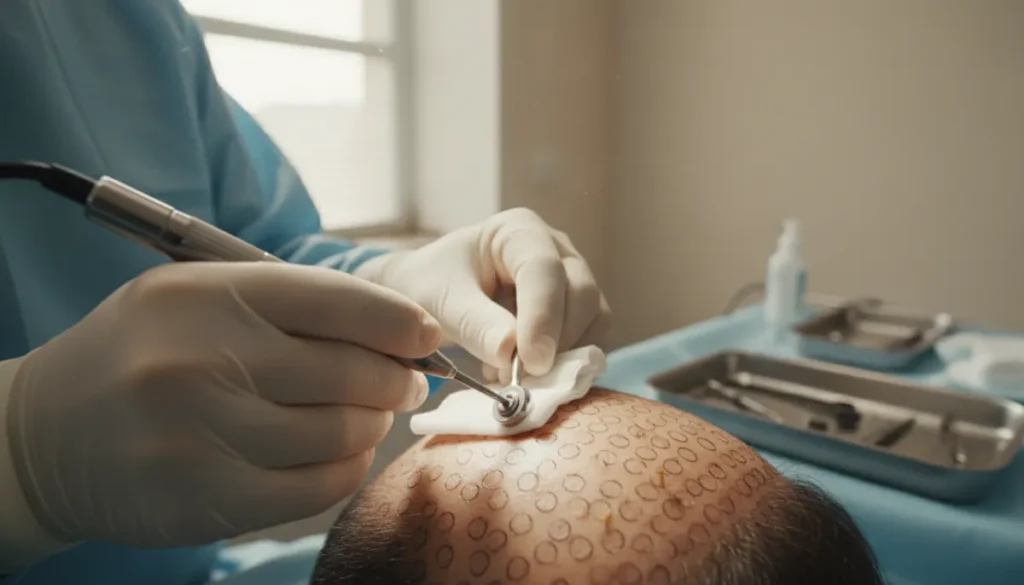
During extraction, individual follicular units—each containing 1 to 4 hairs—are harvested using a fine‑tipped punch or a specialized DHI implanter. The goal is to minimize trauma to surrounding tissue, which improves graft survival rates. Modern FUE tools can extract up to 2,500 grafts in a single session with precision.
Graft Preparation and Sorting
Once extracted, the grafts are placed in a chilled solution to preserve viability. Technicians then sort them by size and quality, ensuring that the most robust follicles are allocated to the most visible areas, such as the hairline.
Implantation into the Recipient Site
Implantation involves creating microscopic incisions in the recipient area, matching the natural angle and direction of existing hair. The grafts are carefully placed into these channels, allowing them to establish a new blood supply and begin growth.
- Step 1: Local anesthesia is administered to ensure a painless experience.
- Step 2: The surgeon extracts follicular units using FUE or DHI tools.
- Step 3: Grafts are preserved and sorted for optimal placement.
- Step 4: Tiny incisions are made in the balding zone.
- Step 5: Grafts are implanted, aligning with natural hair flow.
Understanding these steps clarifies how hair implants work on a practical level and highlights why skilled technicians and advanced equipment are essential for successful outcomes.
Key Techniques: FUE, DHI, and Traditional Methods
While the fundamental principle of moving follicles remains constant, the technique you choose influences recovery time, scarring, and overall density. The three most common approaches are Follicular Unit Extraction (FUE), Direct Hair Implantation (DHI), and the older Strip (FUT) method.
| Technique | Extraction Method | Scarring | Typical Recovery | Ideal Candidates |
|---|---|---|---|---|
| FUE | Punch‑based removal of individual units | Minimal, dot‑like scars | 7‑10 days | Patients seeking no linear scar |
| DHI | Implanter pen combines extraction and placement | Very minimal | 5‑9 days | High‑density needs, precise hairline work |
| FUT (Strip) | Linear strip removed from donor area | Linear scar | 10‑14 days | Large volume transplants, tolerant of scar |
Each method answers a different aspect of how hair implants work in practice. FUE is widely favored for its discreet scar profile, while DHI offers higher precision by eliminating the need for pre‑made recipient sites. The traditional strip technique can provide a larger graft count in a single session but leaves a visible scar that may be a concern for those who wear short hairstyles.
The Science Behind Graft Survival and Growth
Successful hair implants depend on the biology of grafts adapting to a new environment. After implantation, each follicular unit must establish a blood supply within 48‑72 hours to survive. The body’s natural healing response, combined with meticulous handling of grafts, determines the ultimate density and longevity of the result.
Factors Influencing Graft Take‑Rate
- Donor hair quality: Thick, healthy follicles from the occipital region have the highest survival odds.
- Extraction technique: Minimizing trauma during removal preserves the follicle’s root sheath.
- Implantation angle: Aligning grafts with natural hair direction reduces shock loss.
- Post‑operative care: Proper medication and scalp hygiene support healing.
Research shows that modern FUE and DHI methods achieve graft survival rates of 90‑95% when performed by experienced surgeons. This high success rate explains why many patients see visible hair growth as early as three months, with full density typically reached by 12‑18 months.
Preparing for Your Hair Implant Journey
Preparation is a crucial phase that sets the stage for a smooth procedure and optimal results. Patients are advised to follow a pre‑operative checklist to ensure their scalp is ready for surgery and to minimize the risk of complications.
- Medical evaluation: Discuss any health conditions, medications, or allergies with your surgeon.
- Stop smoking: Nicotine constricts blood vessels, reducing graft survival.
- Avoid certain supplements: Vitamin E, fish oil, and anti‑inflammatory drugs can increase bleeding.
- Hair trimming: Shortening existing hair in the donor area helps with extraction.
- Plan for recovery: Arrange time off work and a comfortable space for post‑procedure rest.
During the consultation, the surgeon will map out the donor and recipient zones, estimate the number of grafts needed, and discuss the most suitable technique—whether FUE, DHI, or a combination. Understanding how hair implants work at this stage empowers you to ask the right questions and set realistic expectations about density, coverage, and timeline.
Recovery, Results, and Long‑Term Care
After the grafts are placed, the scalp enters a healing phase that determines the final outcome. Most patients experience mild swelling and redness for a few days, followed by the shedding of transplanted hairs—known as “shock loss”—which is a normal part of the process.
Post‑Operative Timeline
- Days 1‑3: Rest, keep the scalp clean, and apply prescribed ointments.
- Weeks 1‑2: Scabs form around grafts; avoid touching or scratching.
- Weeks 3‑4: Shedding of transplanted hairs begins; new growth will start in 2‑3 months.
- Months 3‑6: Visible new hair emerges, gaining thickness each month.
- Months 12‑18: Full density and natural appearance are typically achieved.
Long‑term success hinges on maintaining a healthy scalp environment. Regular gentle shampooing, a balanced diet rich in protein and biotin, and occasional follow‑up sessions with your surgeon help preserve graft vitality. Some patients opt for additional sessions to increase density, especially in extensive balding patterns.
In summary, grasping how hair implants work equips you with the knowledge to navigate each stage confidently—from the science of graft survival to the practicalities of recovery. With the right technique and after‑care, hair restoration can deliver lasting, natural‑looking results.
Why Choose Gold City Hair
Gold City Hair has been delivering personalized hair restoration solutions in Turkey since 2017. Our clinic specializes in advanced FUE and DHI methods, ensuring high graft survival and natural density. With a focus on transparent communication, each patient receives a tailored treatment plan that addresses individual goals and scalp characteristics. Our experienced surgeons combine artistic precision with medical expertise, providing a safe, comfortable environment for every step of the hair implant journey.
Ready to restore your confidence with a proven hair implant solution? Contact Gold City Hair today to schedule your personalized consultation and take the first step toward a fuller, natural‑looking head of hair.
SSS
What is the process of a hair implant procedure?
A hair implant moves healthy follicles from a donor area to a balding zone in three steps: extraction, graft preparation, and implantation.
How do FUE and DHI techniques differ?
FUE extracts follicles with a punch and implants them later, while DHI uses an implanter pen that extracts and places grafts in one step.
What factors affect graft survival after a hair transplant?
Graft survival depends on donor hair quality, extraction trauma, implantation angle, and post‑operative care.
How should I prepare for a hair implant surgery?
Follow a pre‑operative checklist: medical evaluation, stop smoking, avoid certain supplements, trim donor hair, and plan recovery time.
What is the typical recovery timeline after a hair transplant?
Recovery spans 1‑2 weeks for swelling, 3‑4 weeks for scab formation, 2‑3 months for shedding, and 12‑18 months for full density.





