Hair loss can affect confidence, but modern regenerative therapies offer promising solutions. A prp session utilizes your own platelet‑rich plasma to stimulate dormant follicles and encourage new growth. Understanding the process, preparation, and after‑care can help you make an informed decision and maximize results. In Turkey, clinics like Gold City Hair have refined the technique, delivering personalized treatment plans that align with each patient’s unique pattern of hair loss.
Recent studies suggest that up to 70% of participants notice measurable hair density improvements after a series of PRP treatments. This article walks you through every stage of a prp session—from the science behind platelet‑rich plasma to cost considerations—so you can feel confident about embarking on this hair restoration journey.
Whether you are exploring PRP as a standalone option or as a complement to a hair transplant, the information below will clarify expectations, answer common questions, and guide you toward the best possible outcome.
What Is a PRP Session and How Does It Work?
A prp session involves drawing a small amount of your blood, processing it to concentrate platelets, and then injecting the enriched plasma into the scalp. The high concentration of growth factors in platelet‑rich plasma (PRP) promotes tissue repair, increases blood flow, and activates stem cells within the hair follicle niche.
The Science Behind Platelet‑Rich Plasma
Platelets contain alpha granules packed with growth factors such as PDGF, VEGF, and TGF‑β. When re‑introduced to the scalp, these molecules signal dormant follicles to re‑enter the anagen (growth) phase. The result is thicker, healthier hair over time.
- PDGF (Platelet‑Derived Growth Factor) stimulates cell proliferation.
- VEGF (Vascular Endothelial Growth Factor) enhances blood vessel formation.
- TGF‑β (Transforming Growth Factor‑Beta) regulates inflammation and tissue remodeling.
Below is a quick comparison of PRP with other common hair‑loss treatments.
| Treatment | Mechanism | Typical Sessions | Average Cost (USD) |
|---|---|---|---|
| PRP | Growth‑factor stimulation | 3‑6 | 1,200‑2,000 |
| Finasterid | Hormonal inhibition | Daily oral | 30‑70 per month |
| Hair Transplant (FUE) | Surgical grafting | 1‑2 | 3,000‑10,000 |
While PRP is not a miracle cure, its minimally invasive nature and low risk of adverse effects make it an attractive option for many seeking natural‑looking results.
Preparing for Your PRP Session: Pre‑Treatment Guidelines
Successful outcomes start before the needle even touches your scalp. Proper preparation ensures that the plasma is as potent as possible and reduces the risk of complications.
Medical History and Medication Review
Inform your practitioner about any recent surgeries, chronic illnesses, or medications that affect blood clotting. Anticoagulants such as aspirin, ibuprofen, and certain supplements should be paused 7‑10 days prior to the session, unless otherwise directed.
- Stop blood‑thinners (e.g., warfarin) as advised.
- Avoid excessive alcohol consumption for 48 hours.
- Maintain a balanced diet rich in vitamins A, C, and E.
Below is a checklist to help you prepare.
| Do | Don’t |
|---|---|
| Stay hydrated (2‑3 liters of water daily) | Consume nicotine or tobacco products |
| Get at least 7‑8 hours of sleep the night before | Take anti‑inflammatory medication without guidance |
| Follow a protein‑rich diet | Expose scalp to harsh chemicals or dyes |
Adhering to these guidelines maximizes platelet concentration and improves the overall efficacy of the prp session.
What to Expect During the PRP Session: Procedure Details
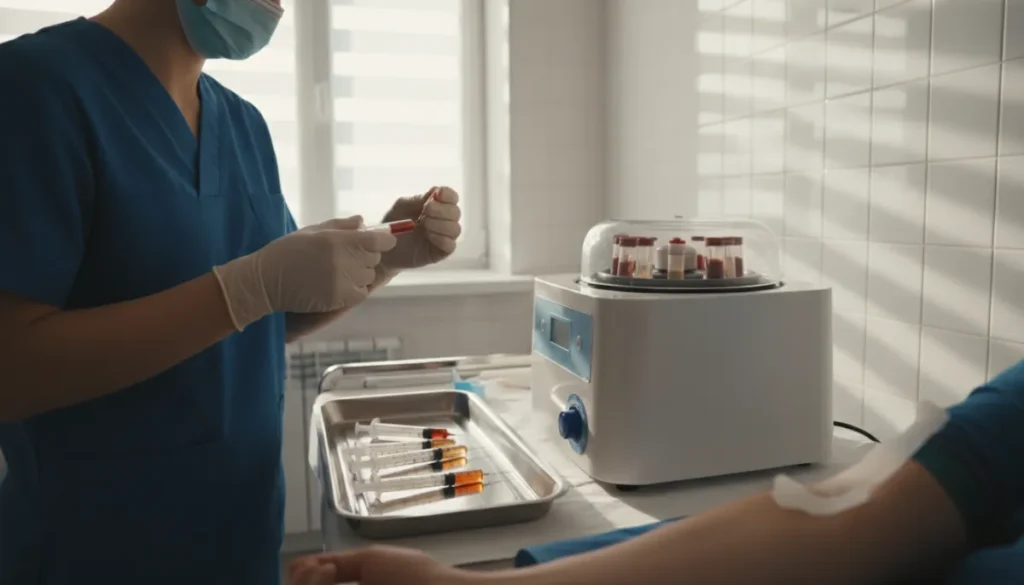
During a typical prp session, the entire process lasts between 60 and 90 minutes. The clinic’s trained staff will guide you through each step, ensuring comfort and safety.
Step‑by‑Step Walkthrough
- Blood draw: A small vial of blood (10‑20 ml) is collected from your arm.
- Centrifugation: The sample spins in a centrifuge for 10‑15 minutes, separating platelet‑rich plasma from red blood cells.
- Plasma extraction: The top layer, rich in platelets, is drawn into a sterile syringe.
- Scalp preparation: The target area is cleansed, and a topical anesthetic may be applied.
- Injection: The practitioner injects the plasma into the scalp using a fine‑gauge needle, following a grid pattern to cover the thinning zones.
- Post‑injection care: Gentle massage may be performed to distribute the plasma evenly.
Most patients report only mild discomfort during the injections, comparable to a standard vaccination. The procedure is performed in a comfortable chair, and you can resume normal activities shortly after.
The timeline below outlines a typical session schedule.
| Time (minutes) | Activity |
|---|---|
| 0‑10 | Blood draw and patient registration |
| 10‑25 | Centrifugation and plasma preparation |
| 25‑35 | Scalp cleansing and anesthetic application |
| 35‑55 | PRP injection across targeted zones |
| 55‑60 | Final massage and post‑procedure briefing |
Understanding each phase helps reduce anxiety and sets realistic expectations for the immediate post‑procedure period.
Post‑Session Care and Expected Results
After a prp session, proper after‑care is essential for optimal hair regrowth. Most patients experience mild redness or swelling that resolves within 24‑48 hours.
Immediate After‑Care
- Avoid washing the scalp for at least 12 hours.
- Refrain from intense physical activity or heavy sweating for 24 hours.
- Apply a gentle, fragrance‑free moisturizer if the scalp feels dry.
Long‑term results typically become visible after the third session, with incremental improvements noted at each follow‑up. Below is a typical growth timeline.
| Weeks After Session | Observed Changes |
|---|---|
| 1‑2 | Minor shedding as old hairs make way for new growth |
| 4‑6 | Early signs of thicker hair shafts |
| 12‑16 | Noticeable increase in density and coverage |
| 24‑36 | Full effect of the session, maintenance phase begins |
Consistency matters; most clinicians recommend a series of 3‑4 sessions spaced 4‑6 weeks apart, followed by maintenance treatments every 6‑12 months to sustain results.
Cost, Frequency, and Safety of PRP Sessions for Hair Loss
Understanding the financial and safety aspects of a prp session helps you plan realistically and avoid surprises.
How Many Sessions Are Needed?
Clinical protocols usually suggest 3‑6 sessions for noticeable improvement. The exact number depends on factors such as age, degree of hair loss, and individual response to growth factors.
- Mild thinning: 3 sessions may be sufficient.
- Moderate to severe loss: 4‑6 sessions often yield better coverage.
- Maintenance: Annual or semi‑annual boosters maintain density.
Safety is a top priority at Gold City Hair. Because the treatment uses your own blood, the risk of allergic reaction or disease transmission is virtually nil. Minor side effects—such as temporary bruising, mild swelling, or tingling—are common but resolve quickly.
Below is a cost comparison for a typical PRP course versus other hair‑loss solutions.
| Option | Cost per Session (USD) | Total Cost for Full Course | Safety Profile |
|---|---|---|---|
| PRP (Gold City Hair) | 1,500 | 4,500‑9,000 (3‑6 sessions) | Low – autologous plasma |
| Finasteride (12‑month supply) | ≈70 per month | ≈840 | Medium – systemic medication |
| FUE Hair Transplant | — | 3,500‑10,000 (single procedure) | Medium‑High – surgical |
Investing in a series of prp sessions can be cost‑effective for those seeking a non‑surgical, natural‑looking solution, especially when performed by experienced professionals.
Why Choose Gold City Hair for Your PRP Treatment
Gold City Hair combines cutting‑edge technology with a patient‑first philosophy. Since 2017, the clinic has delivered personalized PRP sessions using state‑of‑the‑art centrifuges and sterile techniques. Our team of certified specialists tailors each protocol to your specific pattern of hair loss, ensuring optimal platelet concentration and precise injection placement. Transparent communication, a comfortable environment, and a commitment to measurable results set us apart as a trusted leader in hair restoration.
Ready to revitalize your hair with a professional prp session? Contact Gold City Hair today to schedule a personalized consultation and take the first step toward a fuller, healthier scalp.
SSS
What is a PRP session and how does it work?
A PRP session draws your blood, concentrates the platelets, and injects the plasma into the scalp to stimulate hair follicles.
How should I prepare for a PRP hair restoration session?
Follow a pre‑treatment checklist: stop blood thinners, stay hydrated, get enough sleep, and maintain a protein‑rich diet.
What can I expect during the PRP procedure?
The procedure lasts 60‑90 minutes and includes blood draw, centrifugation, scalp preparation, and multiple injections.
What after‑care steps are recommended following a PRP session?
Avoid washing the scalp for 12 hours, skip intense exercise for 24 hours, and keep the area moisturized if needed.
How many PRP sessions are needed for visible results?
Most protocols recommend 3‑6 sessions spaced 4‑6 weeks apart, followed by maintenance treatments.
What are the costs and safety considerations of PRP for hair loss?
A PRP course costs $1,200‑$2,000 per session, with a total of $3,600‑$12,000; safety is high because the treatment uses your own blood.





