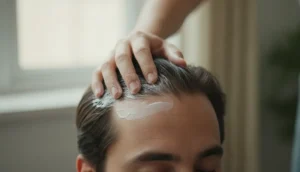
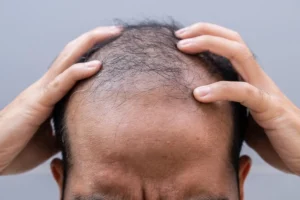
Many patients wonder, does hair grow back after chemo, and the answer is usually yes, though the process can vary widely. Understanding the factors that influence hair regrowth helps set realistic expectations and prepares you for the changes that may occur. According to oncology studies, up to 80% of individuals experience some level of hair regrowth within a year after completing treatment.
This article explains how chemotherapy affects the hair follicle, outlines the typical timeline for hair regrowth, describes the possible changes in texture or color, and offers medical and natural strategies to support healthier growth. Whether you are currently undergoing treatment or have recently finished, the information below will guide you through the journey of post‑chemo hair recovery.
We will also highlight when professional hair restoration may become an option, especially for those facing permanent loss after cancer therapy.
Understanding Chemotherapy‑Induced Hair Loss
Chemotherapy targets rapidly dividing cells, which include not only cancer cells but also the matrix cells of hair follicles. This disruption leads to the characteristic shedding known as chemotherapy hair loss. The severity depends on the drug regimen, dosage, and individual sensitivity.
How Chemo Affects Hair Follicles
When cytotoxic agents enter the bloodstream, they reach the scalp and interrupt the anagen (growth) phase of the hair cycle. As a result, follicles enter a resting state (telogen) and eventually shed. Most patients notice thinning or complete loss within 2–3 weeks after the first infusion.
- Alkylating agents (e.g., cyclophosphamide)
- Anthracyclines (e.g., doxorubicin)
- Taxanes (e.g., paclitaxel)
- Platinum compounds (e.g., cisplatin)
| Hair Loss Type | Typical Duration | Likelihood of Full Regrowth |
|---|---|---|
| Temporary (most common) | 3–6 months post‑treatment | High (70‑90%) |
| Permanent (rare, high‑dose radiation combo) | Indefinite | Low (5‑10%) |
Understanding these mechanisms clarifies why the question does hair grow back after chemo is generally answered with a hopeful “yes,” but also why individual experiences differ.
Timeline for Hair Regrowth After Chemotherapy
Hair does not sprout back instantly; the regrowth timeline follows a predictable pattern that can be influenced by age, nutrition, and the specific chemotherapy agents used.
Typical Phases of Regrowth
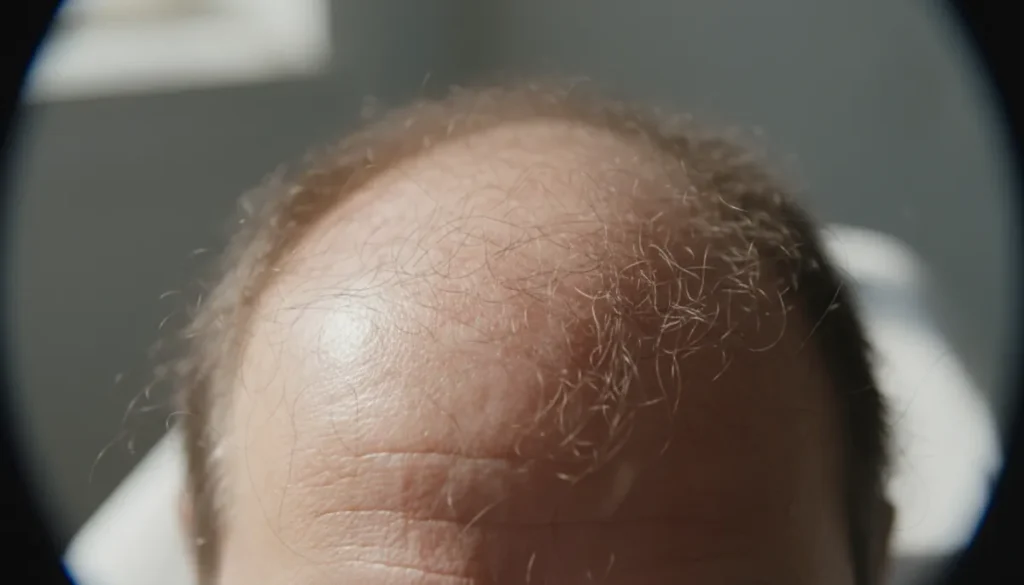
Most patients observe the first signs of new growth within 4–8 weeks after the final chemotherapy session. The new strands often appear as fine, downy hairs known as “vellus” hair before thickening into normal terminal hair.
- Weeks 1‑4: No visible growth; follicles are in telogen.
- Weeks 5‑8: Emergence of fine, soft hairs.
- Weeks 9‑12: Hair begins to thicken and darken.
- Months 3‑6: Approximate 50% of original density restored.
- Months 9‑12: Near‑full density for most patients.
| Time After Treatment | Expected Hair Condition | Key Influencing Factors |
|---|---|---|
| 0‑4 weeks | Continued shedding | Drug half‑life, scalp health |
| 4‑8 weeks | Fine vellus hair | Nutrition, hormonal balance |
| 2‑6 months | Increasing thickness | Age, genetics, supportive care |
| 6‑12 months | Approaching pre‑treatment density | Overall health, stress levels |
Answering the question “how long does it take for hair to grow back after chemo” often depends on these variables, but most patients see noticeable improvement within the first three months.
What Hair May Look Like When It Returns
Even when hair does grow back, many survivors notice changes in texture, curl pattern, or color. These variations are normal and usually temporary.
Changes in Texture, Color, and Curl
During the early regrowth phase, the new hair often feels softer and may appear lighter or even blonde, especially in individuals with darker natural hair. Curl patterns can also shift, leading to a “chemo curls” phenomenon where previously straight hair becomes wavy or curly.
- Texture: Fine, silky, and more prone to breakage.
- Color: Lighter shades due to reduced melanin production.
- Curl: Altered wave pattern; may revert over time.
| Observed Change | Typical Duration | Management Tips |
|---|---|---|
| Fine, downy texture | 1‑3 months | Gentle shampoos, avoid heat styling |
| Lighter color | 3‑6 months | Conditioning treatments, optional coloring after 6 months |
| Increased curl | 2‑4 months | Moisturizing curl creams, regular trims |
These adaptations are part of the natural healing process, and most patients report that hair eventually returns to its pre‑treatment characteristics within a year.
Supporting Hair Regrowth: Medical and Natural Options
While the body can often repair itself, certain interventions can accelerate or improve the quality of post‑chemo hair growth. Both medical treatments and lifestyle adjustments play a role.
Medical Treatments with Evidence
Topical minoxidil (5%) is the most widely studied medication for stimulating follicular activity after chemotherapy. Low‑level laser therapy (LLLT) and platelet‑rich plasma (PRP) injections have also shown promising results in small clinical trials.
- Minoxidil: Applied twice daily; may shorten the telogen phase.
- LLLT: 10‑15 minute sessions, 3‑4 times per week.
- PRP: In‑office procedure, typically three sessions spaced a month apart.
| Treatment | Mechanism | Evidence Level |
|---|---|---|
| Minoxidil | Vasodilation, follicle stimulation | High (multiple RCTs) |
| LLLT | Photobiomodulation of scalp cells | Moderate (pilot studies) |
| PRP | Growth factor delivery | Low‑moderate (case series) |
Natural Lifestyle Supports
Nutrition, stress management, and scalp care can also influence the speed and quality of regrowth.
- Protein‑rich diet (lean meats, legumes, nuts)
- Biotin and zinc supplements after consulting a physician
- Gentle scalp massage to increase blood flow
- Avoiding tight hairstyles that cause traction
Combining these approaches often yields the best outcomes for those asking, “how long does it take for hair to grow back after chemo” and “what helps hair growth after chemo”.
When to Seek Professional Help – Hair Restoration After Chemo
For the minority whose hair does not fully return, or for those experiencing permanent loss due to high‑dose radiation combined with chemotherapy, professional hair restoration can be a viable solution.
Assessing Permanent Loss
Permanent alopecia is diagnosed when no regrowth is observed after 12–18 months post‑treatment, despite optimal medical support. In such cases, a consultation with a hair restoration specialist is recommended.
- Scalp examination by a dermatologist
- Trichoscopy to evaluate follicle viability
- Discussion of transplant candidacy
| Transplant Method | Ideal Candidate | Key Benefit |
|---|---|---|
| FUE (Follicular Unit Extraction) | Stable scalp, sufficient donor area | Minimal scarring, natural look |
| DHI (Doğrudan Saç İmplantasyonu) | Desire for higher density | Precise placement, quicker recovery |
Gold City Hair specializes in these advanced techniques, offering personalized plans for cancer survivors seeking to restore confidence through a natural‑looking hairline.
Why Choose Gold City Hair
Gold City Hair has been delivering personalized hair restoration solutions since 2017. Our team combines expertise in FUE and DHI techniques with a compassionate approach, ensuring each patient receives transparent communication and a treatment plan tailored to their unique needs. For cancer survivors facing permanent hair loss, we provide a safe, supportive environment where confidence can be rebuilt.
Ready to explore your hair restoration options after chemotherapy? Contact Gold City Hair today for a confidential consultation and take the first step toward reclaiming your confidence.
SSS
Does hair grow back after chemotherapy?
Yes, most patients experience some regrowth, typically within a year after treatment.
How long does it take for hair to grow back after chemo?
Visible regrowth usually starts 4–8 weeks after the last treatment and can reach near‑full density by 9–12 months.
What factors affect post‑chemo hair regrowth?
Drug type, dosage, age, nutrition, genetics, and scalp health all influence regrowth speed and quality.
Can medical treatments like minoxidil help hair regrowth after chemotherapy?
Yes, topical minoxidil, low‑level laser therapy, and PRP have shown benefit in clinical studies.
What natural lifestyle changes support hair regrowth after chemo?
A protein‑rich diet, biotin/zinc supplements, gentle scalp massage, and stress reduction can aid recovery.
When is hair loss considered permanent after chemotherapy?
If no regrowth is observed after 12–18 months despite optimal care, the loss may be permanent.
Are hair transplants an option for cancer survivors?
Yes, modern FUE and DHI techniques can restore hair for those with stable health and sufficient donor hair.