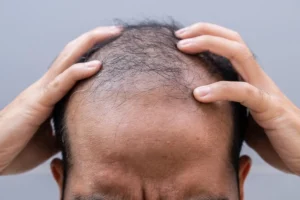
Many people wonder if hair parting balding is a real cause of hair loss or just a visual illusion. Understanding the relationship between how you style your hair and the appearance of thinning can help you make informed decisions about grooming and treatment. In fact, a recent survey found that 38% of individuals who notice a receding hairline attribute it to their daily parting style.
This article explores the science behind hair parting, distinguishes myth from fact, and outlines practical steps to prevent the appearance of balding. Whether you’re dealing with alopecia, male pattern baldness, or simple hair thinning, the information here will guide you toward a healthier scalp and a more confident look.
We’ll cover the anatomy of hair follicles, the impact of styling habits, and the most effective medical and cosmetic solutions—including advanced transplant techniques offered by Gold City Hair. By the end, you’ll know how to style your hair without compromising density and when professional treatment may be the right choice.
Understanding Hair Parting and Its Visual Effects
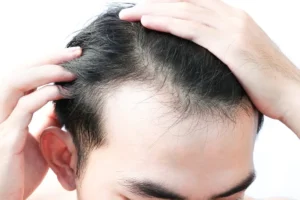
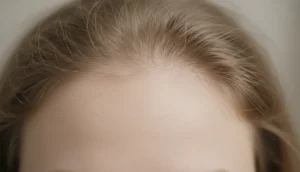
Hair parting creates a line that can make existing thinning more noticeable, especially on the crown or along the temples. When the part is consistently placed in the same spot, the hair on one side may appear denser while the opposite side looks sparse, giving the impression of a bald spot.
Key factors influencing this visual effect include:
- Hair density and thickness – finer hair shows the part more clearly.
- Scalp contrast – a light scalp can make the part appear darker or lighter, affecting perception.
- Direction of growth – hair that grows at an angle can accentuate the part line.
It’s important to note that the act of parting does not cause follicles to die; rather, it can highlight pre‑existing hair thinning. For individuals with androgenetic alopecia or telogen effluvium, the part may simply expose the underlying condition.

To reduce the visual impact, consider varying the part location, using styling products to add volume, or opting for a slightly off‑center part. These simple adjustments can mask the illusion of balding without any medical intervention.
When Hair Parting Signals an Underlying Condition
While a part alone does not cause hair loss, it can be an early indicator of conditions such as alopecia areata or traksiyon alopesi. In alopecia areata, the immune system attacks hair follicles, leading to round patches of hair loss that may become more noticeable when parting the hair.
Traction alopecia, on the other hand, results from chronic pulling forces—tight ponytails, braids, or repeated parting in the same area. Over time, this can damage follicles and lead to permanent thinning.
| Condition | Typical Signs | Relation to Parting |
|---|---|---|
| Alopesi Areata | Round bald patches, sudden onset | Part may highlight patches |
| Traction Alopecia | Hair loss along hairline or part | Repeated stress from parting |
| Androgenetik Alopesi | Gradual thinning, receding hairline | Part accentuates existing thinning |
If you notice persistent thinning along your part, it’s wise to consult a dermatologist or a hair restoration specialist. Early diagnosis can prevent further progression and expand treatment options.
Effective Strategies to Minimize the Appearance of Balding
For those who want to keep their preferred part while reducing the look of balding, several non‑surgical strategies can be effective.
Styling Techniques
- Change the part regularly – switch sides every few weeks to distribute visual weight.
- Use volumizing shampoos and conditioners to add body.
- Apply lightweight mousse or spray to lift hair at the roots.
Topical Treatments
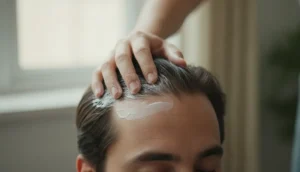
Minoxidil (Rogaine) is FDA‑approved for both men and women and can increase follicle size, making hair appear thicker along the part. Consistent use for at least 4 months is recommended for visible results.
Nutrition and Lifestyle
Ensuring adequate intake of biotin, iron, and omega‑3 fatty acids supports hair health. Reducing stress through regular exercise and adequate sleep also helps mitigate telogen shedding.
Professional Cosmetic Options
Micropigmentation and low‑level laser therapy (LLLT) can camouflage thinning areas, creating the illusion of density without surgery.
While these methods can improve the visual impression, they do not address severe follicular loss. For advanced cases, surgical restoration may be the most reliable solution.
When Surgical Restoration Is the Best Option
If hair parting merely reveals a deeper problem such as male pattern baldness or extensive alopecia, surgical hair transplantation offers a permanent solution. Gold City Hair specializes in modern techniques like Follicular Unit Extraction (FUE) and Direct Hair Implantation (DHI), which provide natural‑looking results with minimal downtime.
FUE vs. DHI
Both methods involve harvesting healthy follicles from a donor area—typically the back of the scalp—and implanting them into thinning zones. FUE extracts individual follicular units, while DHI uses a specialized implanter pen for more precise placement, often yielding higher graft survival rates.
What to Expect
- Initial consultation to assess donor density and design the graft distribution.
- Procedure performed under local anesthesia, lasting 4‑8 hours depending on graft count.
- Post‑operative care includes gentle washing, medication, and follow‑up visits.
Results typically become visible after three months, with full density achieved by 12‑18 months. Patients report increased confidence and a natural appearance that blends seamlessly with existing hair.
Why Choose Gold City Hair
Gold City Hair has been delivering personalized hair restoration solutions since 2017. Our team combines expertise in FUE, DHI, and eyebrow/beard transplants with a commitment to transparent communication and patient comfort. Located in Turkey, we offer world‑class care at competitive prices, ensuring you receive a natural, lasting result that restores confidence.
Ready to stop worrying about your hair part and reclaim a fuller look? Contact Gold City Hair today to schedule a free, no‑obligation consultation and discover the best plan for your unique needs.
SSS
Does parting my hair cause baldness?
No, parting the hair does not damage follicles or cause hair loss.
How can I hide thinning hair caused by a visible part?
Vary the part location, add volume with products, and use styling techniques.
What conditions can be indicated by a thinning hair part?
A thinning part may signal alopecia areata, traction alopecia, or androgenetic alopecia.
Are there non‑surgical treatments to improve the appearance of a part that looks thin?
Yes, topical minoxidil, nutrition, laser therapy, and cosmetic options like micropigmentation can help.
When should I consider surgical hair transplantation for a part‑related thinning?
If the thinning is severe, progressive, and not responding to non‑surgical methods.
What is the difference between FUE and DHI hair transplant methods?
FUE extracts individual follicles; DHI uses a pen for direct implantation, often yielding higher graft survival.
How often should I change my hair part to avoid visual thinning?
Every 2–4 weeks is a practical interval for most people.