Bu hair loss line is a common concern for both men and women, often signaling the early stages of thinning or balding. Recognizing its pattern early can guide effective interventions and preserve confidence. Worldwide, over 40% of adults experience some form of hair thinning, with a noticeable recession of the hairline being a key indicator. This article explores how to identify a hair loss line, the underlying causes, how it relates to the Norwood Scale, and the range of treatments—from medication to state‑of‑the‑art transplants—available at Gold City Hair.
We’ll start by describing the visual cues that differentiate a normal hairline from a receding one, then dive into the biological and lifestyle factors that accelerate hair loss. Understanding these elements empowers you to choose the right strategy, whether it’s a non‑surgical regimen or a surgical solution like FUE or DHI. By the end, you’ll have a clear roadmap for managing and restoring your hairline.
Let’s begin the journey toward a healthier scalp and a more confident you.
Identifying the Hair Loss Line: What It Looks Like
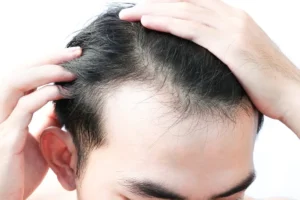
Spotting a hair loss line early can make a significant difference in treatment outcomes. Typically, the line appears as a gradual recession at the temples or a thinning band across the crown. Key visual markers include:
- Sharp, V‑shaped notch at the temples, often called a “receding hairline.”
- Widening of the parting area, especially in the frontal region.
- Increased visibility of scalp pigmentation or redness.
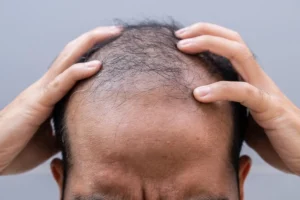
- Patchy thinning that may progress to bald spots.
For men, the pattern often follows the classic “M” shape, while women may notice a diffuse thinning along the part. A quick self‑assessment can be done by pulling a ponytail and observing the amount of hair that slides out; a higher than usual shedding rate may indicate an active hair loss line.
Understanding the pattern also helps clinicians map the condition using scales such as the Norwood Scale for men or the Ludwig Scale for women. These tools provide a standardized way to track progression and plan interventions.

Common Causes Behind a Receding Hair Loss Line
Several factors contribute to the development of a hair loss line, each requiring a tailored approach. The most prevalent cause is androgenetic alopecia, often referred to as male or female pattern baldness. Hormonal influences, particularly dihydrotestosterone (DHT), shrink hair follicles over time, leading to a thinning band at the front.
Other notable contributors include:
| Cause | Typical Effect on Hairline |
|---|---|
| Telogen effluvium | Diffuse shedding, may accentuate existing line |
| Traction alopecia | Frontal recession from tight hairstyles |
| Alopecia areata | Patchy loss that can involve the hairline |
| Stress and nutritional deficiencies | Accelerated thinning and shedding |
Genetics play a central role, but environmental factors such as harsh chemicals, excessive heat styling, and chronic inflammation can exacerbate the problem. Understanding the root cause is essential for selecting the most effective treatment—whether it’s a topical minoxidil regimen, oral finasteride, or addressing underlying health issues.
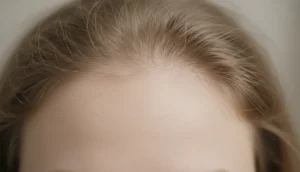
Women often experience a “diffuse” thinning pattern rather than a sharp line, yet the underlying mechanisms—hormonal shifts, especially during menopause—can still produce a noticeable hair loss line.
How the Norwood Scale Maps the Hair Loss Line in Men
Bu Norwood Scale remains the gold standard for classifying male pattern baldness and its impact on the hair loss line. It ranges from Type I (minimal recession) to Type VII (extensive baldness). By aligning a patient’s visual presentation with this scale, clinicians can predict progression and recommend appropriate interventions.
Key stages include:
- Type I: Slight recession at the temples, barely noticeable.
- Type II: Deepening of the temples, forming a subtle “M” shape.
- Type III: Significant frontal recession, the earliest stage where surgical options become viable.
- Type IV–VII: Progressive loss of the crown and frontal area, often requiring extensive grafting.
For each stage, treatment options differ. Early stages (I‑II) may respond well to medication and lifestyle changes, while later stages (III‑VII) often benefit from follicular unit extraction (FUE) or direct hair implantation (DHI) techniques. Accurate staging also helps set realistic expectations for graft survival and density.
Women do not use the Norwood Scale; instead, the Ludwig Scale or the Savin Scale is employed, focusing on overall density rather than a distinct line.
Treatment Options: From Medications to Transplant Techniques
Addressing a hair loss line begins with a thorough diagnosis, after which a range of treatments can be considered. Non‑surgical options include:
- Minoxidil (topical solution) – stimulates follicular activity and can slow recession.
- Finasterid (oral medication) – reduces DHT levels, effective for androgenetic alopecia.
- Platelet‑rich plasma (PRP) – uses growth factors to improve scalp health.
- Low‑level laser therapy (LLLT) – promotes circulation and cellular metabolism.
When these measures are insufficient, surgical restoration offers permanent results. Gold City Hair specializes in:
- Foliküler Ünite Ekstraksiyonu (FUE) – individual follicles are harvested and implanted with minimal scarring.
- Direct Hair Implantation (DHI) – a refined version of FUE using a patented implanter pen for higher graft survival.
- Eyebrow and Beard Transplants – precise placement for facial hair restoration, often requested alongside scalp work.
Success rates for FUE and DHI exceed 90% when performed by experienced surgeons, with natural‑looking density achievable in a single session for many patients. Post‑procedure care, including gentle washing and avoiding direct sun exposure, is crucial for optimal graft retention.
Choosing the right approach depends on the stage of the hair loss line, donor hair availability, and personal preferences regarding downtime and cost.
Maintaining a Healthy Hairline After Restoration
After correcting a hair loss line, long‑term maintenance is essential to preserve results. Key practices include:
- Gentle hair care: Use sulfate‑free shampoos, avoid excessive heat styling, and limit tight hairstyles that cause traction.
- Balanced nutrition: Ensure adequate intake of iron, zinc, biotin, and omega‑3 fatty acids to support follicle health.
- Regular scalp stimulation: Periodic PRP sessions or low‑level laser treatments can sustain graft vitality.
- Stress management: Incorporate relaxation techniques such as meditation, as chronic stress can trigger telogen effluvium.
Follow‑up appointments with a hair restoration specialist allow for early detection of any new thinning and timely adjustments to the care plan. Many patients benefit from a maintenance regimen that combines topical minoxidil with occasional PRP to keep the transplanted area robust.
By adhering to these guidelines, the restored hairline can remain dense and natural‑looking for years, reinforcing the confidence gained from the initial transformation.
Why Choose Gold City Hair for Your Hair Loss Line Treatment
Gold City Hair has been delivering personalized hair restoration solutions in Turkey since 2017. Our clinic combines cutting‑edge FUE and DHI technologies with a transparent, patient‑focused approach. Each treatment plan is customized to the individual’s pattern of hair loss, donor availability, and aesthetic goals. Our experienced surgeons prioritize graft survival and natural density, ensuring results that blend seamlessly with existing hair. With a commitment to safety, comfort, and lasting outcomes, Gold City Hair stands as a trusted partner in reclaiming your confidence.
Ready to redefine your hairline? Contact Gold City Hair today to schedule a personalized consultation and discover the most effective solution for your hair loss line.
SSS
What is a hair loss line and how can I identify it?
A hair loss line is a visible recession or thinning at the front or crown of the scalp that signals early balding.
Which factors most commonly cause a receding hair loss line?
The main causes are androgenetic alopecia, hormonal changes, stress, nutrition deficits, and mechanical traction.
How does the Norwood Scale help in planning hair restoration?
It classifies male pattern baldness from Type I to VII, guiding treatment choice and expected outcomes.
What non‑surgical treatments are effective for a hair loss line?
Minoxidil, finasteride, PRP therapy, and low‑level laser therapy are the primary non‑surgical options.
What are the advantages of FUE and DHI hair transplant techniques?
Both provide permanent, natural‑looking results with minimal scarring; DHI offers higher graft survival using an implanter pen.