Many wonder if an autoimmune disease can cause hair loss, and the answer lies in understanding the immune system’s impact on hair follicles. When the body mistakenly attacks its own tissues, the hair growth cycle can be disrupted, leading to thinning, patchy baldness, or even complete loss. This article explores the link between immune disorders and hair loss, explains the underlying mechanisms, and outlines practical steps for diagnosis and treatment.
Hair loss affects up to 50 % of men and women at some point in their lives, but when it stems from an autoimmune condition, the underlying cause is often hidden. Recognizing the signs early can prevent further follicle damage and open the door to targeted therapies.
We will review the most common autoimmune conditions associated with hair loss, describe how the immune response interferes with hair growth, and provide guidance on medical and surgical options—including advanced hair restoration techniques offered by Gold City Hair.
Understanding Autoimmune Diseases and Hair Follicle Health
Autoimmune diseases arise when the immune system fails to distinguish between foreign invaders and the body’s own cells. In the scalp, this misdirected attack can target the hair follicle, the tiny organ responsible for producing hair shafts. The follicle cycles through growth (anagen), regression (catagen), and rest (telogen) phases. Disruption of this cycle—especially premature entry into telogen—results in noticeable shedding.
Key mechanisms include:
- Inflammatory cytokines that damage follicular cells.
- Auto‑antibodies that bind to hair‑specific antigens.
- Altered blood flow reducing nutrient delivery to the scalp.
These processes can manifest as different patterns of hair loss, from diffuse thinning to well‑defined bald patches. Understanding the biology helps clinicians choose the most appropriate therapy.
Common Autoimmune Conditions Linked to Hair Loss
Several autoimmune disorders are directly associated with hair loss. While each condition has unique systemic effects, they share the common thread of immune‑mediated follicular damage.
| Condition | Typical Hair Loss Pattern | Additional Symptoms |
|---|---|---|
| Alopesi Areata | Round or oval bald patches | Often painless, may affect eyebrows |
| Lupus (Systemic Lupus Erythematosus) | Diffuse thinning, sometimes scarring | Joint pain, facial rash, fatigue |
| Hashimoto’s Thyroiditis | Generalized thinning, especially at the crown | Weight gain, cold intolerance, sluggish metabolism |
| Sedef Hastalığı | Scaly plaques with hair loss in affected areas | Red, itchy skin lesions on elbows, knees |
| Vitiligo | Hair depigmentation and loss in white patches | Loss of skin pigment, autoimmune link |
Among these, alopecia areata is the most recognized form of autoimmune‑related hair loss, affecting roughly 2 % of the population at some point. Lupus and thyroid disorders are also frequent culprits, especially when hair loss appears alongside systemic symptoms.
How the Immune System Triggers Different Types of Alopecia
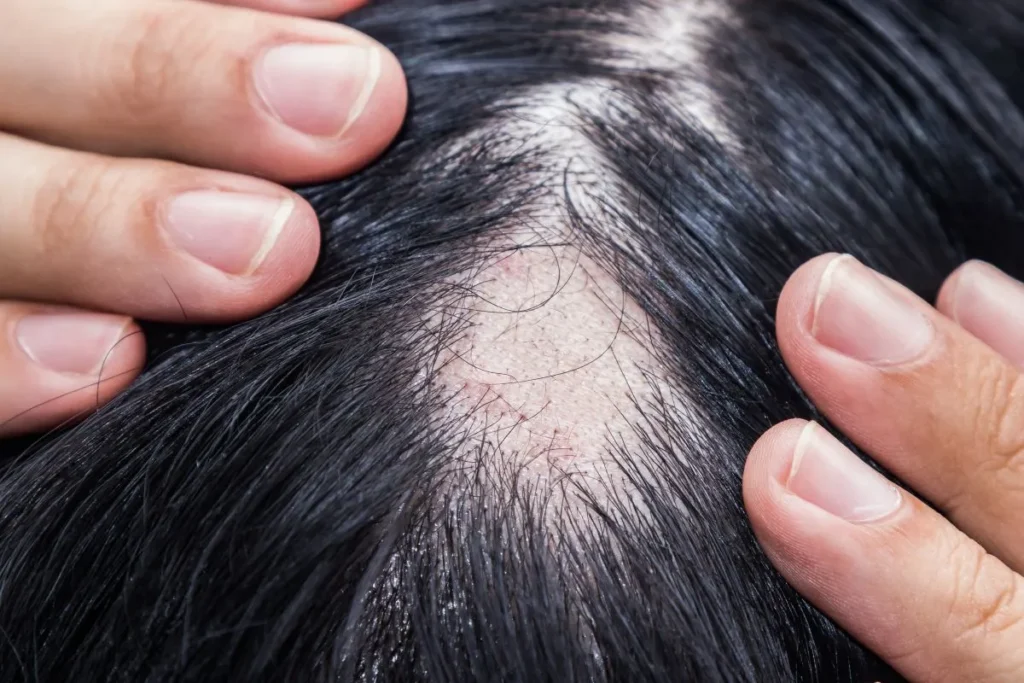
Autoimmune attacks can produce several distinct forms of alopecia, each with its own clinical course.
Alopecia Areata vs. Alopecia Totalis vs. Alopecia Universalis
Alopecia areata typically starts with one or a few small, smooth bald spots. When the condition progresses to involve the entire scalp, it is termed alopecia totalis. If the loss extends to the entire body, including eyebrows, eyelashes, and body hair, it becomes alopecia universalis. The progression reflects the intensity and breadth of the immune response.
Pattern Baldness with Autoimmune Influence
While androgenetic (pattern) baldness is primarily hormonal, autoimmune inflammation can accelerate follicular miniaturization, leading to earlier or more severe thinning. This overlap explains why some patients with thyroid disease also report a pattern‑type recession.
- Key signs of autoimmune‑driven alopecia: sudden onset, patchy distribution, and associated systemic symptoms.
- Diagnostic clues: presence of auto‑antibodies, elevated inflammatory markers, and family history of autoimmune disease.
Understanding these subtypes helps clinicians tailor treatment—whether focusing on immune modulation for alopecia areata or combining hormonal therapy with anti‑inflammatory agents for mixed‑type loss.
Diagnosing Autoimmune‑Related Hair Loss: Tests and Signs
Accurate diagnosis begins with a thorough medical history and physical examination. Dermatologists look for characteristic patterns, such as smooth, round bald patches or diffuse thinning, and assess for accompanying signs of systemic disease.
Key diagnostic tools include:
- Blood tests: Thyroid panel, antinuclear antibody (ANA) test, rheumatoid factor, and specific auto‑antibodies (e.g., anti‑thyroid peroxidase).
- Scalp biopsy: Histological analysis can reveal lymphocytic infiltrates around the hair bulb, confirming an autoimmune process.
- Trichoscopy: Dermatoscopic examination of the scalp shows exclamation‑mark hairs and yellow dots typical of alopecia areata.
Early detection is crucial because prompt treatment can halt follicle destruction and improve the likelihood of regrowth. Patients reporting sudden hair shedding, especially with a known autoimmune condition, should seek evaluation promptly.
Treatment Options: From Medical Therapy to Hair Restoration
Managing hair loss caused by an autoimmune disease involves two complementary strategies: controlling the immune response and restoring hair density.
Medical Approaches
First‑line therapies aim to suppress the aberrant immune activity:
- Topical corticosteroids – Reduce local inflammation and promote regrowth in mild cases.
- Intralesional steroid injections – Direct delivery to affected patches for faster results.
- Systemic immunosuppressants (e.g., methotrexate, azathioprine) – Used for extensive or refractory alopecia.
- JAK inhibitors – Emerging oral agents (e.g., tofacitinib, ruxolitinib) showing promising results in alopecia areata trials.
Addressing Underlying Autoimmune Conditions
Treating the root disease—such as achieving euthyroid status in Hashimoto’s thyroiditis or controlling lupus activity—often leads to partial or complete hair regrowth without additional dermatologic therapy.
Surgical Restoration
When medical treatment stabilizes the condition but residual bald areas remain, hair transplantation offers a permanent solution. Techniques such as Follicular Unit Extraction (FUE) and Direct Hair Implantation (DHI) provide natural‑looking results with minimal scarring. Gold City Hair specializes in these advanced methods, ensuring personalized planning and post‑procedure care.
Combining immune modulation with surgical restoration can deliver the best aesthetic outcome, especially for patients who have achieved disease remission but still experience permanent follicular loss.
Why Choose Gold City Hair
Gold City Hair has been delivering personalized hair restoration solutions in Turkey since 2017. Our clinic combines state‑of‑the‑art FUE and DHI techniques with a compassionate, transparent approach. Every patient receives a thorough medical assessment, ensuring that any underlying autoimmune condition is managed before transplantation. Our experienced team prioritizes safety, natural results, and long‑term confidence for individuals seeking to reclaim their hair.
Ready to take the next step toward a fuller, healthier head of hair? Contact Gold City Hair today for a personalized consultation and discover how our expert team can help you overcome autoimmune‑related hair loss.
SSS
Can an autoimmune disease cause hair loss?
Yes, autoimmune diseases can attack hair follicles and disrupt the growth cycle, leading to various patterns of hair loss.
What are the most common autoimmune conditions associated with hair loss?
Alopecia areata, lupus, Hashimoto’s thyroiditis, psoriasis, and vitiligo are the most frequently reported.
How is autoimmune‑related hair loss diagnosed?
Through a combination of medical history, physical exam, blood tests, scalp biopsy, and trichoscopy.
What medical treatments are effective for autoimmune hair loss?
Topical steroids, intralesional injections, systemic immunosuppressants, and JAK inhibitors are commonly used.
When is hair transplantation appropriate for autoimmune‑related hair loss?
After the autoimmune condition is stabilized and any active inflammation is controlled.





