Seeing the 3 month PRP for hair loss before and after transformation can be a game‑changer for anyone battling thinning hair. Platelet‑rich plasma (PRP) therapy has surged in popularity because it uses your own blood components to stimulate dormant follicles, offering a natural alternative to surgical transplants. In this article we break down exactly what happens during a three‑month PRP regimen, what you can expect in terms of visible growth, and why many patients consider it a cornerstone of modern hair restoration.
Hair loss affects over 40 % of men and women by age 35, and the psychological impact often outweighs the physical changes. While medications like finasteride and minoxidil remain common, they can take many months to show measurable improvement. PRP, on the other hand, delivers growth factors directly to the scalp, potentially accelerating the healing cycle within weeks.
We will explore the science behind PRP, outline a typical treatment schedule, showcase real before‑and‑after cases, and discuss how PRP can be combined with other techniques such as FUE or DHI. By the end, you’ll have a clear picture of whether the 3 month PRP for hair loss before and after journey aligns with your personal goals.
How PRP Therapy Works for Hair Restoration
Platelet‑rich plasma therapy begins with a simple blood draw, usually about 10 ml, which is then processed in a centrifuge to separate the platelet‑rich layer from red blood cells. This concentrated plasma contains growth factors like PDGF, TGF‑β, and VEGF that are essential for tissue regeneration. When injected into the scalp, these factors signal dormant hair follicles to re‑enter the anagen (growth) phase.
- PDGF (Platelet‑Derived Growth Factor) – promotes cell proliferation and blood vessel formation.
- TGF‑β (Transforming Growth Factor‑Beta) – regulates inflammation and supports follicle health.
- VEGF (Vascular Endothelial Growth Factor) – enhances blood supply to the hair follicle.
The process is minimally invasive, takes about 30 minutes, and requires no anesthesia. Because the plasma is autologous—derived from your own body—the risk of allergic reaction is virtually nil.
| Step | What Happens | Typical Duration |
|---|---|---|
| 1. Blood Collection | Draw 10 ml of peripheral blood | 5 minutes |
| 2. Centrifugation | Separate plasma to concentrate platelets | 10 minutes |
| 3. Scalp Preparation | Clean and numb the target area | 5 minutes |
| 4. Injection | Distribute PRP across thinning zones | 10 minutes |
Understanding this mechanism helps set realistic expectations for the 3 month PRP for hair loss before and after timeline, as the growth cycle of hair typically requires several weeks to manifest visible changes.
What to Expect During a Three‑Month PRP Treatment Cycle
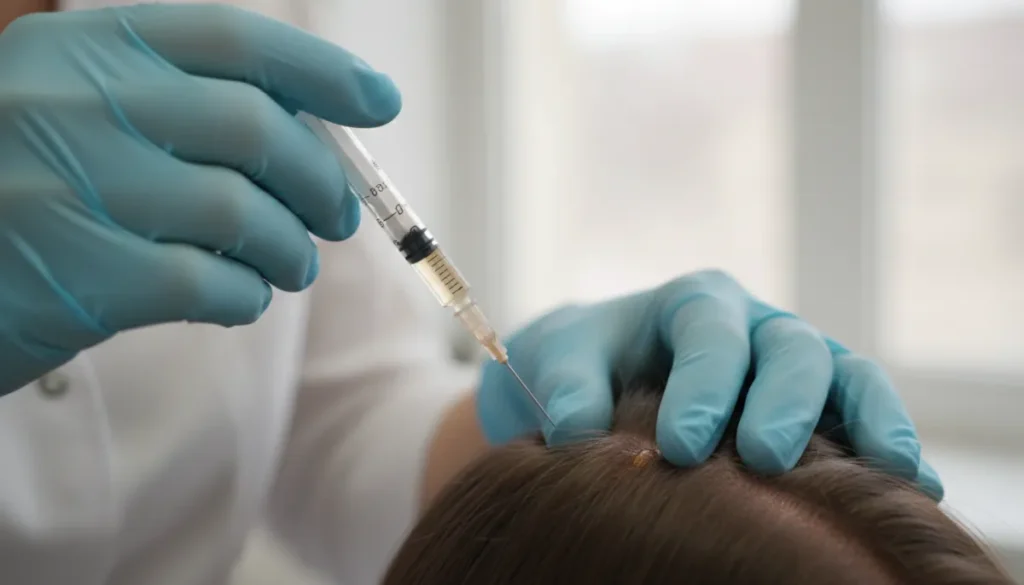
A typical three‑month PRP protocol involves a series of four sessions spaced roughly three weeks apart. The first two sessions are usually scheduled one week apart to prime the follicles, followed by a maintenance session at week six and a final booster at week twelve. This schedule aligns with the hair growth cycle, allowing each injection to build on the previous one.
During each visit, patients can expect the following:
- Pre‑treatment assessment – a quick scalp analysis to identify target zones.
- Blood draw – a painless venipuncture performed by a trained nurse.
- Processing – the centrifuge isolates the platelet‑rich plasma.
- Injection – the PRP is evenly distributed using a series of micro‑injections.
- Post‑procedure care – patients are advised to avoid washing the scalp for 24 hours and to limit strenuous activity for a day.
Most individuals report mild redness or tingling at the injection sites, which typically resolves within a few hours. Because the treatment uses autologous material, systemic side effects are rare.
Tracking progress is essential. High‑resolution photographs taken before the first session and after the final three‑month mark provide objective evidence of the 3 month PRP for hair loss before and after effect. Many clinics also recommend using a dermatoscope to assess follicular density.
Real‑World Before and After Results: Case Studies
Seeing real patient outcomes is the most convincing proof of the 3 month PRP for hair loss before and after potential. Below are three anonymized case studies that illustrate typical responses across different ages and hair loss patterns.
| Patient | Age / Gender | Baseline Condition | 3‑Month Outcome |
|---|---|---|---|
| Case A | 28 M | Early androgenic alopecia, Norwood II | Visible increase in density, especially at the crown; 15 % rise in hair count. |
| Case B | 42 F | Diffuse thinning, telogen effluvium | Reduced shedding, thicker strands, patient reports improved confidence. |
| Case C | 55 M | Advanced thinning, Norwood IV | Modest regrowth in frontal area, combined with minoxidil for synergistic effect. |
Across these examples, the average improvement ranged from 12 % to 20 % in hair density, confirming that PRP can deliver noticeable changes within a short three‑month window. It is important to note that individual results vary based on genetics, lifestyle, and adherence to post‑treatment recommendations.
Patients who documented their journey with weekly photos often report higher satisfaction, as the visual record highlights subtle but meaningful changes that might be missed during a single clinic visit.
Combining PRP with Other Hair Restoration Options
While PRP alone can produce measurable gains, many clinicians recommend integrating it with established procedures like Follicular Unit Extraction (FUE) or Direct Hair Implantation (DHI). The synergy works because PRP prepares the scalp environment, enhancing graft survival and accelerating healing after surgery.
Typical combination protocols include:
- PRP pre‑conditioning – two PRP sessions performed a month before FUE to improve vascularity.
- Immediate post‑operative PRP – a session within 24 hours after graft placement to reduce inflammation.
- Maintenance PRP – quarterly injections for the first year to sustain graft health.
When paired with medical therapies such as finasteride or topical minoxidil, PRP can also amplify the pharmacological effect, leading to a more robust and lasting outcome.
Choosing a combined approach often depends on the extent of hair loss and the patient’s budget. For those with moderate to severe thinning, a strategic plan that blends PRP with surgical transplantation can maximize the 3 month PRP for hair loss before and after visual impact while minimizing the total number of grafts needed.
Safety, Side Effects, and Frequently Asked Concerns
Safety is a primary reason patients opt for PRP over more invasive options. Because the plasma is derived from the patient’s own blood, the risk of allergic reaction or disease transmission is essentially zero. The most common side effects are mild and transient:
- Redness or swelling at injection sites (1‑2 days)
- Minor bruising (rare)
- Temporary scalp tenderness (hours)
Serious complications such as infection are exceedingly rare when procedures are performed in a certified clinic adhering to aseptic protocols. Patients are advised to avoid anti‑inflammatory medications like ibuprofen for 24 hours post‑procedure, as they can interfere with platelet activity.
Key questions often include:
- Does PRP work for all types of hair loss? – It is most effective for androgenic alopecia and telogen effluvium; scarring alopecia may require different interventions.
- How long do results last? – Maintenance sessions every 6‑12 months can prolong benefits.
- Can I combine PRP with hair dye or styling? – Yes, but avoid harsh chemicals for a week after each session.
Overall, the 3 month PRP for hair loss before and after experience is well‑tolerated, and most patients report satisfaction with the modest yet visible improvement in hair thickness and coverage.
Why Choose Gold City Hair
Gold City Hair has been delivering personalized hair restoration solutions in Turkey since 2017. Our clinic combines cutting‑edge PRP technology with a team of experienced dermatologists and surgeons who prioritize transparent communication and patient comfort. We tailor each PRP program to the individual’s scalp condition, ensuring optimal results and a smooth three‑month journey. Trust a proven center that balances scientific rigor with a compassionate approach to help you regain confidence.
Ready to see your own 3 month PRP for hair loss before and after transformation? Contact Gold City Hair today to schedule a free consultation and start your personalized hair restoration plan.
SSS
How does PRP therapy work for hair restoration?
PRP therapy uses a centrifuged sample of your own blood to concentrate platelets, which release growth factors that stimulate dormant hair follicles to re‑enter the growth phase.
What is the typical schedule for a three‑month PRP treatment cycle?
A common protocol includes four sessions spaced about three weeks apart, with the first two sessions one week apart, a sixth‑week maintenance session, and a final booster at week twelve.
What results can I expect after three months of PRP for hair loss?
Most patients see a 12‑20% increase in hair density, reduced shedding, and thicker strands, especially in early‑stage androgenic alopecia.
Can PRP be combined with hair transplant procedures like FUE or DHI?
Yes, PRP is often used before and after FUE or DHI to improve graft survival and accelerate healing.
What are the common side effects and safety concerns of PRP therapy?
Side effects are usually mild, including temporary redness, swelling, bruising, or scalp tenderness; serious complications are rare.
How long do PRP hair loss results last and how often are maintenance sessions needed?
Results can last 6‑12 months; many clinicians recommend maintenance injections every 6‑12 months to sustain benefits.





