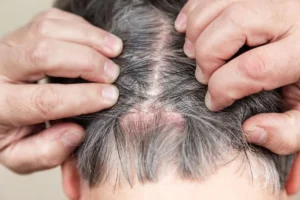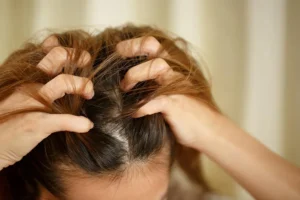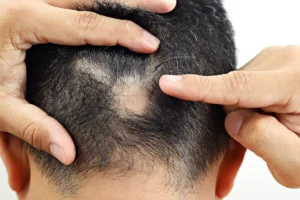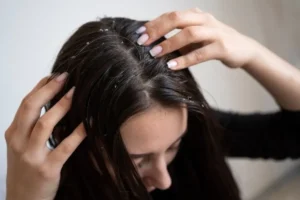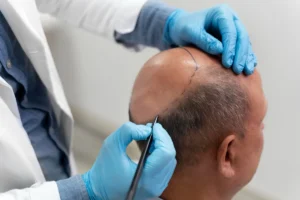
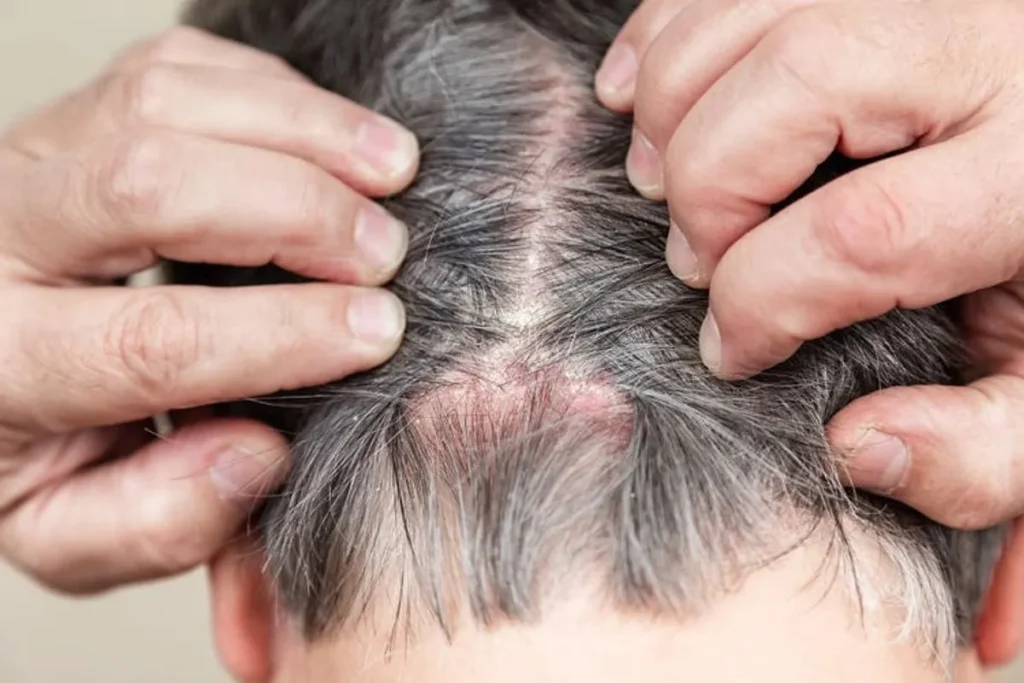
Scalp psoriasis is a chronic autoimmune condition. It shows up as raised, discolored plaques and thick silvery-white scales on the scalp. It also causes persistent itching and burning sensations.
Fix sore patches on scalp with this scary truth and fix. Use amazing, powerful remedies to end scary pain and achieve incredible scalp health.
It happens when the immune system sends out wrong signals. This makes skin cells grow too fast, leading to patches with white or silvery scales. At least half of those with psoriasis have it on their scalp. Knowing what it looks like is key to catching it early and managing it.
Key Takeaways
Scalp psoriasis is a chronic autoimmune condition.
It is characterized by silvery-white scales and itching sensations.
Faulty immune signals cause skin cells to grow too quickly.
Early detection is key for effective management.
Seeing a dermatologist is a good idea for ongoing symptoms.
Understanding Scalp Psoriasis: Appearance and Characteristics
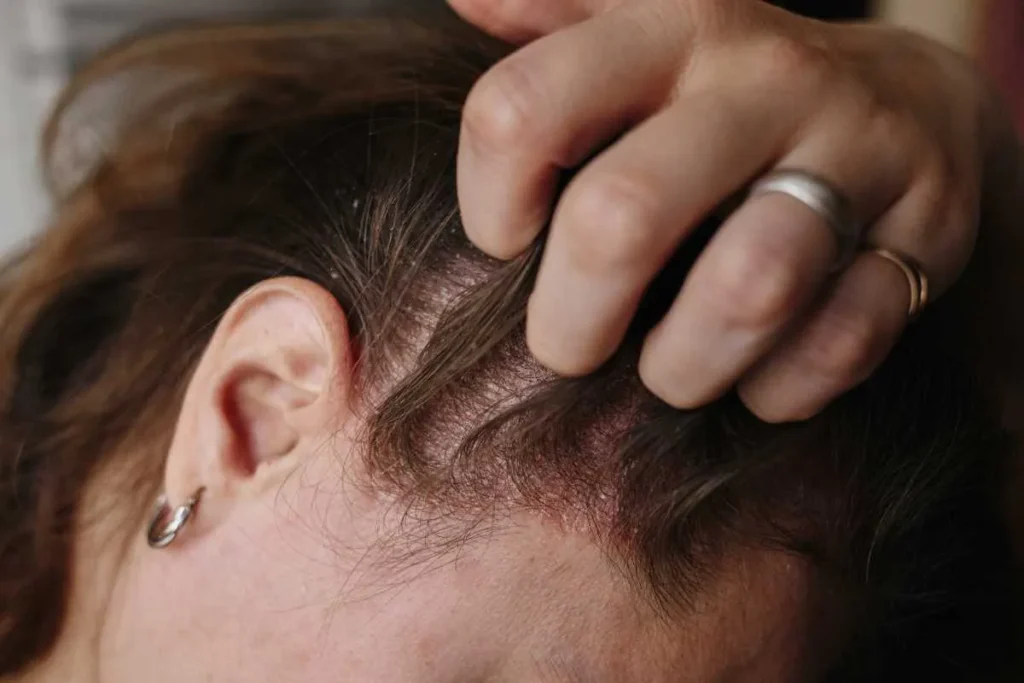
Scalp psoriasis looks different for everyone. It’s a chronic condition that shows up in various ways. Knowing its key features is important.
What Is Scalp Psoriasis?
Scalp psoriasis is a type of psoriasis that affects the scalp. It causes red, scaly patches. It happens when the immune system acts too much, leading to too many skin cells.
This results in thick, silvery scales and dry, red patches. These patches can itch and sometimes hurt.
The condition can be mild or severe. It might also show up on other parts of the body. Early signs include well-defined red or pink patches covered with silvery scales, persistent itching or burning, and stubborn flaking that may crack or bleed when scratched.
Visual Characteristics of Psoriatic Plaques
Psoriatic plaques on the scalp can be small, localized patches or cover large areas. They are usually red or pink with a silvery scale on top. The scales can be hard to remove because they stick well.
The appearance can change based on skin tone. For darker skin tones, the patches might look more purple or dark brown. These plaques can cause discomfort, including itching and soreness.
How Scalp Psoriasis Differs from Dandruff
Scalp psoriasis is often mistaken for dandruff. But they are different. Scalp psoriasis flakes are thicker and stickier. It also causes redness and inflammation, unlike dandruff.
Knowing the differences is key for the right diagnosis and treatment. If you think you have scalp psoriasis, see a healthcare professional for help.
Identifying Sore Patches on Scalp and Early Warning Signs
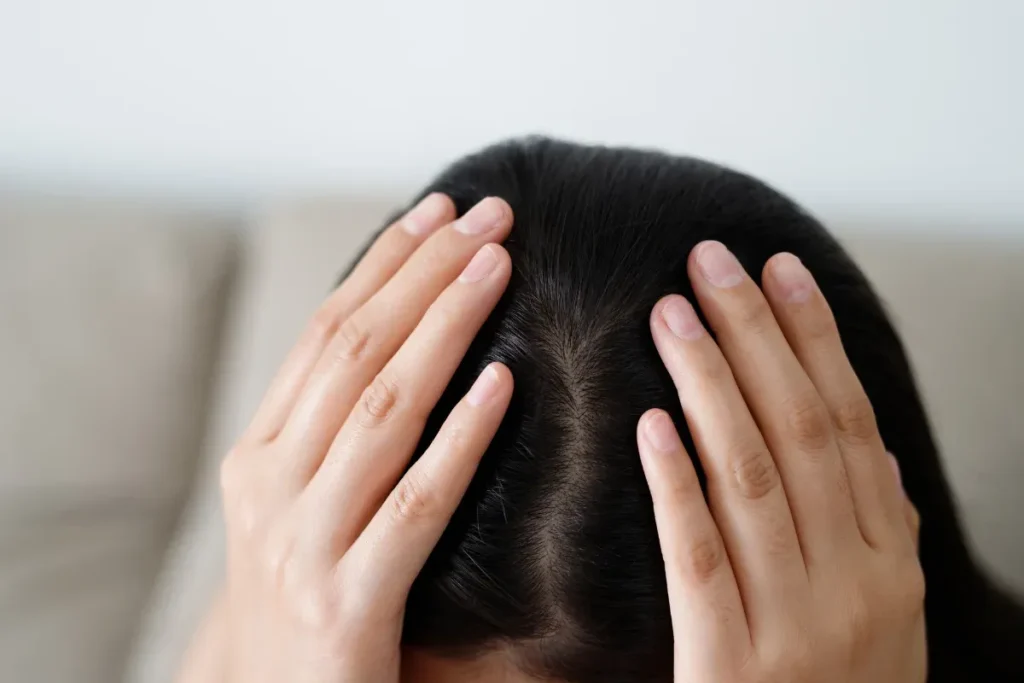
Scalp psoriasis is a chronic condition that causes scaly, itchy patches on the scalp. It’s important to catch it early to manage symptoms. The condition can flare up for weeks or months, then calm down for a while.
Knowing the early signs helps people get medical help before it gets worse.
First Signs of Scalp Psoriasis Development
The first signs of scalp psoriasis look like small, itchy patches. They can be mistaken for dandruff. But as it gets worse, these patches grow thicker and more inflamed.
In mild cases, the symptoms might be small and thin, like dandruff. But in more severe cases, the patches can cover the whole scalp, hairline, and more.
It’s key to remember that dry skin can make psoriasis symptoms worse. People with dry skin psoriasis might itch and flake more. The link between psoriasis and dry skin is complex, with dry skin possibly making psoriasis symptoms worse.
Common Locations for Initial Outbreaks
Scalp psoriasis can start anywhere on the scalp. But it often begins where the scalp meets other parts of the head. This includes the hairline, behind the ears, or at the back of the neck.
These initial outbreaks can be red, itchy, and burn. Some people wonder, is it normal for psoriasis to burn? Yes, it’s common for psoriasis to cause a burning feeling, which can be uncomfortable.
What Does Psoriasis Look Like When It Starts?
When scalp psoriasis starts, it looks like small, pink or red patches with silvery scales. These patches can itch and bleed if scratched. As it gets worse, the patches can grow bigger and cover more of the scalp.
Experts say the look of psoriasis can vary a lot from person to person. This makes it sometimes hard to diagnose.
In conclusion, spotting the early signs of scalp psoriasis is key to managing it. By recognizing the first symptoms and knowing where outbreaks often happen, people can get help early. This can help reduce how bad the condition gets.
Symptoms Beyond Appearance: Discomfort and Sensations
Scalp psoriasis is more than just a skin issue. It brings uncomfortable feelings that can be as hard to deal with as the visible signs. These symptoms can really get in the way of daily life.
Itching, Burning, and Soreness
People with scalp psoriasis often feel intense itching. This itch can be hard to ignore and disrupt sleep and daily tasks. Some feel a burning sensation, which is very uncomfortable. Soreness also makes everyday activities a challenge.
It’s important not to scratch the affected areas. Scratching can break the skin, leading to bleeding and infection risks. Those with psoriatic symptoms need to know the dangers of scratching and how to manage their symptoms.
Flaking, Cracking, and Bleeding
Flaking is a common symptom of scalp psoriasis, causing embarrassment due to visible scales. Skin cracking, often due to dryness, can be painful. In severe cases, this can lead to bleeding, raising questions about whether psoriasis can bleed.
Psoriasis and dry skin are closely linked. Dry skin can make psoriasis symptoms worse, creating a cycle of discomfort and visible signs. While psoriasis on chest is different, managing dry skin and discomfort is key across affected areas.
Psoriasis and Dry Skin Connection
Dry skin is a big problem for those with scalp psoriasis. It can make symptoms worse, leading to more discomfort. It’s essential to manage dry skin to control scalp psoriasis symptoms.
Conclusion: When to Seek Help and Managing Scalp Psoriasis
Understanding scalp psoriasis is key to managing it and finding relief. If you think you have it, see a healthcare provider for a proper diagnosis.
Get medical help if your psoriasis gets worse, hurts a lot, or doesn’t get better with treatment. Knowing the signs of psoriasis, like skin rashes and early signs on hands, helps you know when to seek help.
Managing scalp psoriasis needs both medical treatment and self-care. Knowing the symptoms and the severity of psoriasis helps guide your treatment.
By working with your healthcare provider and using effective management strategies, you can lessen the impact of scalp psoriasis. This improves your daily life and overall well-being.
FAQ
What are the common symptoms of scalp psoriasis?
Common symptoms include red, inflamed patches on the scalp, thick silvery scales, itching, flaking, and sometimes soreness or bleeding.
How does scalp psoriasis differ from dandruff?
Psoriasis causes thicker, well-defined, silvery plaques and persistent inflammation, whereas dandruff typically produces fine, white flakes without significant redness or irritation.
What does psoriasis look like when it starts?
Early psoriasis may appear as small red bumps or patches that gradually develop silvery scales and spread across the scalp.
Is it normal for psoriasis to burn?
Yes, scalp psoriasis can cause a burning or stinging sensation due to inflammation and irritation of the skin.
Can psoriasis cause dry skin?
Yes, the affected areas often become dry, cracked, and prone to flaking.
How can I manage scalp psoriasis symptoms?
Use medicated shampoos, topical corticosteroids, moisturizers, and avoid scratching; light therapy and prescription treatments may be recommended for severe cases.
When should I seek medical help for scalp psoriasis?
See a doctor if symptoms are severe, spreading, painful, bleeding, or not improving with over-the-counter treatments.
Can scalp psoriasis be treated?
Yes, while there is no permanent cure, symptoms can be effectively managed with topical treatments, medicated shampoos, phototherapy, and prescription medications.
References
National Center for Biotechnology Information. Evidence-Based Medical Insight. Retrieved from https://pubmed.ncbi.nlm.nih.gov/24123183/