

Folliculitis Decalvans is a chronic scalp condition that can cause scarring and permanent hair loss. It’s important to catch it early to manage it effectively. Treat folliculitis decalvans with the best healing steps. Learn how to manage this scary condition and protect your hair from permanent loss.
At Gold City Hair, our dermatology team knows how tough this condition is. We offer detailed, patient-focused care. This includes the latest diagnostic tools and treatment plans to help you regain your confidence and get healthy, natural hair.
Thanks to medical research, there’s hope for Folliculitis Decalvans sufferers. Our guide shares the newest medical breakthroughs and treatments. This helps you make smart choices for your hair care.
Önemli Çıkarımlar
Understanding Folliculitis Decalvans and its symptoms is key to effective treatment.
Early diagnosis is vital for treatment success.
Custom care plans meet each patient’s unique needs.
Modern diagnostic tools lead to better treatment results.
Restoring your confidence through hair restoration is our main goal.
Understanding Folliculitis Decalvans
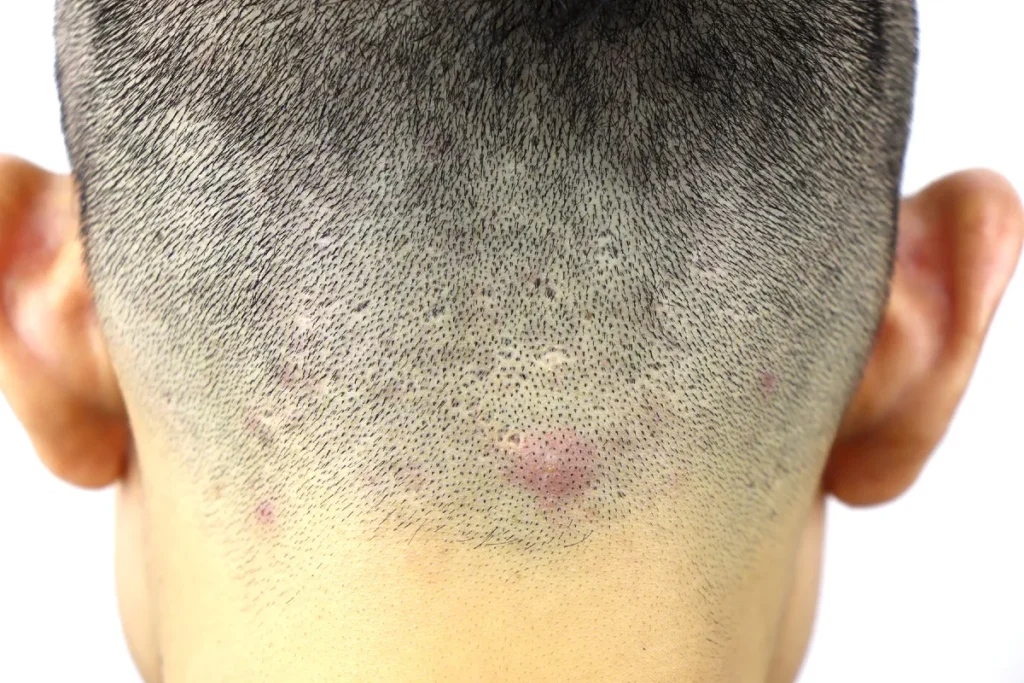
It’s important to understand folliculitis decalvans to manage and treat it well. This condition causes long-term inflammation of hair follicles. It leads to scarring and permanent hair loss.
What Causes This Condition
The exact cause of folliculitis decalvans is not known. But Staphylococcus aureus is thought to be involved. It starts with inflammation on the scalp, showing as a red bump.
More bumps can join, forming pustules or scabs. These damage hair follicles. This damage causes scarring and permanent hair loss.
Recognizing the Symptoms
Spotting the symptoms of scalp folliculitis decalvans early is key. Look out for red bumps, round patches, and scalp inflammation.
As it gets worse, it can cause a lot of scarring and hair loss. Knowing these signs helps find medical help quickly.
Tufted Hair Folliculitis: A Distinctive Presentation
Tufted hair folliculitis is a special form of folliculitis decalvans. It shows when many hair strands come out of one big follicle opening.
This tufted look is a key sign of the condition. Knowing this helps doctors diagnose and treat tufted folliculitis decalvans correctly.
Diagnosing Folliculitis Decalvans
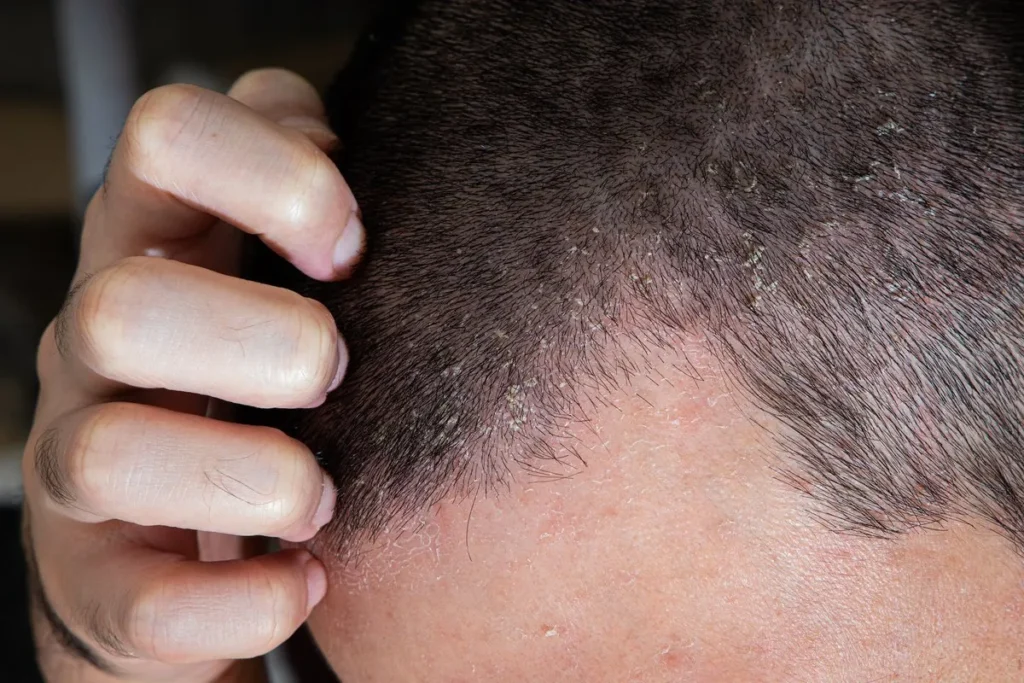
Getting a correct diagnosis of folliculitis decalvans is key to feeling better. It involves a detailed check-up and tests to understand the condition fully.
Clinical Evaluation Process
A dermatologist looks closely at the scalp for signs like redness and hair loss. This first step is important to spot the symptoms of folliculitis decalvans.
Key observations during the clinical evaluation include:
Redness and inflammation around the hair follicles
Pustules or pus-filled bumps on the scalp
Patterns of hair loss, including scarring
Diagnostic Tests and Procedures
More tests might be needed to confirm the diagnosis. These include scalp biopsies and tests for bacteria. They help find signs of inflammation and scarring, and check for infections like Staphylococcus aureus.
Dermoscopy is used to look at the scalp closely. It helps doctors see details they can’t see with the naked eye. This helps in making a correct diagnosis and planning the right treatment.
By using both clinical checks and tests, doctors can accurately diagnose folliculitis decalvans. They can then create a treatment plan that works for each person. This approach helps improve results and lowers the chance of problems.
Treatment Approaches for Folliculitis Decalvans
Treating folliculitis decalvans needs a mix of strategies to manage symptoms and promote hair growth. Each person’s treatment plan is unique, based on their specific needs.
First-Line Treatments
The first step in treating folliculitis decalvans often includes antibiotics and anti-inflammatory medications. These help fight bacterial infections and reduce swelling. Both are key to managing the condition.
Oral antibiotics like doxycycline or minocycline target bacterial infections.
Topical treatments with corticosteroids and antibiotics fight local inflammation and infection.
Advanced Treatment Options
For severe or resistant cases, advanced treatment options are considered. These include:
Isotretinoin, a strong oral medication for severe cases that don’t respond to other treatments.
Laser therapy, which helps reduce swelling and promote a healthier scalp.
These treatments are used when first-line options fail. They help when the condition greatly affects a person’s life.
Managing Symptoms and Preventing Flares
It’s important to manage symptoms and prevent flares in folliculitis decalvans. This involves:
With a complete treatment plan, people with folliculitis decalvans can see big improvements. They can manage symptoms better and improve their hair health.
Sonuç
Understanding folliculitis decalvans and its treatments is key to feeling confident and getting the hair you want. This condition, marked by tufted hair and scalp inflammation, can be tough to handle. But, thanks to new medical breakthroughs, there’s hope for those facing folliculitis decalvans.
By knowing the causes and symptoms of folliculitis decalvans, you can get medical help early. Our team of expert dermatologists is here to offer personalized care and advice. We aim to help you get healthy, natural-looking hair.
With the latest technology and custom solutions, you can get full coverage and natural-looking results. We focus on pain-free treatments, a clear process, and step-by-step guidance. Together, we can make folliculitis decalvans a manageable condition, improving your life.
SSS
What is Folliculitis Decalvans?
Folliculitis Decalvans is a rare chronic inflammatory scalp condition that destroys hair follicles and leads to permanent scarring hair loss. It is considered a type of neutrophilic cicatricial (scarring) alopecia.
What are the symptoms of Folliculitis Decalvans?
Common symptoms include scalp redness, painful or itchy bumps, pustules, crusting, burning sensation, and patchy hair loss. Over time, permanent bald patches with scarring may develop.
How is Folliculitis Decalvans diagnosed?
Diagnosis is based on clinical examination, scalp dermoscopy, and often a scalp biopsy to confirm inflammation and follicle destruction. Bacterial cultures may also be done.
What are the treatment options for Folliculitis Decalvans?
Treatment focuses on controlling inflammation and infection. Options include oral and topical antibiotics, corticosteroids, isotretinoin, dapsone, and anti-inflammatory medications. Early treatment helps slow progression.
Can Folliculitis Decalvans be cured?
There is no permanent cure, but the condition can be controlled with proper medical treatment. The goal is to reduce inflammation and prevent further scarring.
What is tufted hair folliculitis?
Tufted hair folliculitis refers to multiple hair strands emerging from a single follicular opening, creating a “tufted” appearance. It is a characteristic feature often seen in Folliculitis Decalvans.
How can I prevent Folliculitis Decalvans flares?
Maintain good scalp hygiene, follow prescribed treatments consistently, avoid scratching or harsh hair products, and attend regular dermatology follow-ups.
Is Folliculitis Decalvans contagious?
No, it is not contagious. Although bacteria like Staphylococcus may be involved, the condition itself does not spread from person to person.
Can I undergo hair transplantation with Folliculitis Decalvans?
Hair transplantation may be possible only if the disease has been inactive (stable) for an extended period, usually at least 1–2 years. Active disease must be fully controlled before considering surgery.
Referanslar
Ulusal Biyoteknoloji Bilgi Merkezi. Kanıta Dayalı Tıbbi Öngörü. Erişim adresi https://pmc.ncbi.nlm.nih.gov/articles/PMC6363910/





