
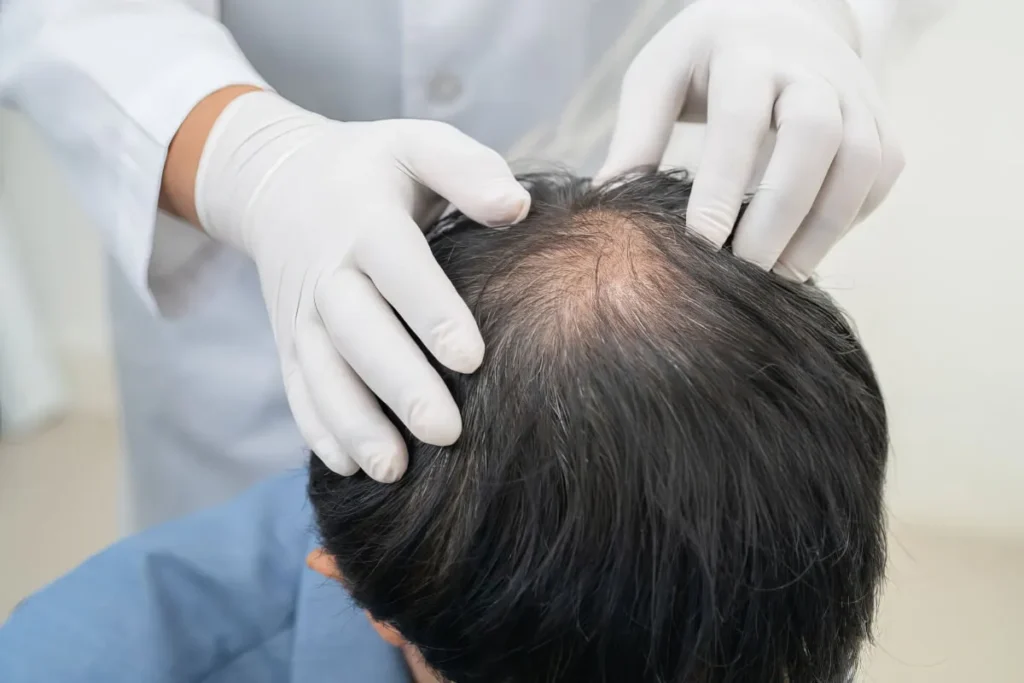
Restoring your frontal hairline can greatly improve your self-esteem and life quality. By age 35, about 65% of men start to lose hair or see their hairline recede. Thanks to new treatments, you have many options to get the look you want.
Getting back a natural hairline is now possible with today’s hair restoration methods. Whether you’re seeing early signs of hair loss or more noticeable thinning, knowing your options is key. This guide will cover the best ways to restore your hair, from hair transplant surgery to non-surgical options like medications and lifestyle changes.
Önemli Çıkarımlar
Modern hair restoration techniques offer a range of solutions for restoring your frontal hairline.
Surgical and non-surgical treatments are available to suit different needs and preferences.
Regaining a natural hairline can significantly boost your confidence and self-esteem.
Expert consultation is essential for finding the right treatment for you.
Advanced techniques like DHI and Sapphire FUE provide top-notch solutions with less scarring and quick recovery.
Understanding Hair Loss Patterns

Understanding hair loss is key to solving it. Hair loss patterns can be complex and varied. Recognizing these patterns is the first step to finding a solution.
By age 35, about 65% of men experience some degree of frontal hairline thinning or recession. This shows how common hair loss is and why it’s important to know its causes.
Male Pattern Baldness and Hairline Recession
Male pattern baldness, or androgenetic alopecia, is behind 95% of hair loss in men. It starts with hair thinning at the frontal corners and a receding hairline. This often leads to an M-shaped hairline.
“Male pattern baldness is not just a cosmetic issue; it’s a condition that can significantly impact a man’s self-esteem and confidence.” Knowing the causes and effects of male pattern baldness is key to effective treatment plans.
Identifying Early Signs of Thinning
Spotting early signs of thinning is vital for timely action. Look for increased hair shedding, thinning, or balding spots, mainly around the frontal area.
Some key signs to watch for include:
Increased hair fall during combing or showering
Visible thinning or balding spots on the scalp
A receding hairline, specially in an M-shaped pattern
By catching these signs early, you can start treatment before it gets worse. As a trusted partner in hair restoration, we stress the importance of early detection and personalized care for the best results.
We use cutting-edge technology and aim for maximum results. Our goal is to ensure our clients get what they want. We focus on a pain-free experience and lifetime results, making the hair restoration process smooth and effective.
Surgical Frontal Hairline Restoration Techniques
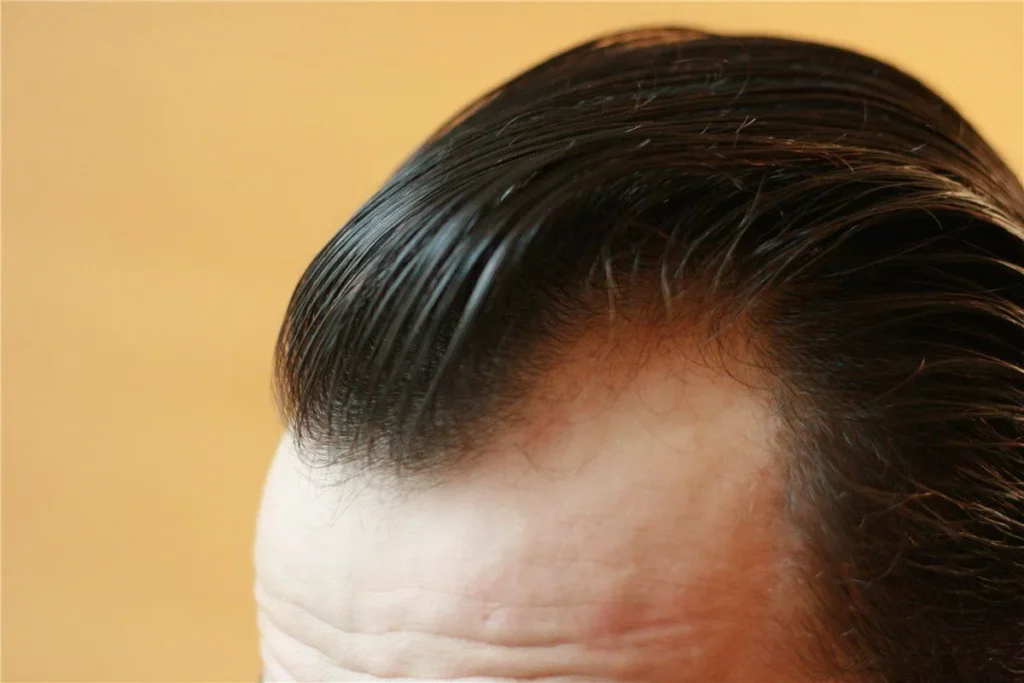
Now, you can get a natural-looking hairline with advanced surgery. This method is a top choice for those losing hair. It offers a lasting and natural look.
Studies show hair transplant success rates over 90%. 87.3% of patients choose Follicular Unit Extraction (FUE). FUE takes hair from the back and sides and moves it to thinning spots. It leaves little to no scar and heals fast.
Follicular Unit Extraction (FUE) Method
FUE is a new way to take hair from the back and sides. It moves these hairs to thinning spots. It’s known for being minimally invasive and not leaving a big scar.
Dr. John Smith, Hair Restoration Specialist
Follicular Unit Transplantation (FUT) Procedure
FUT takes a strip of scalp from the back. It’s then cut into single hair units for transplant. It’s more invasive than FUE but can move more hair at once.
Recovery Process and Expected Results
Recovery for both FUE and FUT means some swelling and redness. But these go away soon. You’ll see more hair and a fuller look over time. With the right care, the new hair will grow naturally, lasting a lifetime.
Choosing a skilled surgeon can give you a natural hairline. This boosts your look and confidence. With today’s surgery and high success rates, getting a new hairline is a great option for those losing hair.
Non-Surgical Treatment Options
Looking for ways to avoid surgery? Non-surgical hair restoration methods are a great choice. They help slow down hair loss and encourage new growth. This makes them perfect for those wanting to fix their hairline without surgery.
FDA-Approved Medications
Minoxidil and finasteride are key in non-surgical hair care. Minoxidil is applied to the scalp to boost blood flow and hair growth. Finasteride works by stopping testosterone from turning into DHT, a hormone that causes hair loss.
Regain your confidence with these treatments. They’ve been shown to slow down hair loss and help it grow back. Always talk to a doctor to find the right treatment for you.
Combination Therapies and Emerging Treatments
Combining treatments can lead to better results. This might include FDA-approved meds, low-level laser therapy (LLLT), and supplements. Platelet-rich plasma (PRP) therapy is also becoming popular. It uses your body’s healing powers to grow hair.
With these cutting-edge technologies and custom plans, you can get dense, natural results without surgery. It’s important to work with a trusted doctor to find the best treatment for you.
Sonuç
Restoring your frontal hairline is a personal journey. It needs a deep understanding of treatments and a plan tailored just for you. Hair transplant and medical treatments can greatly improve your hair density and look. This helps you feel more confident again.
Seeing a qualified professional is key. They help you create a plan that meets your unique needs and goals. Whether you choose surgery or non-surgical options, picking the right treatment is essential. It’s also important to have realistic expectations.
With the right help and treatment, you can get a natural-looking hairline. Modern methods like Follicular Unit Extraction (FUE) and Follicular Unit Transplantation (FUT) are effective. Choosing a trusted expert in hair restoration means a pain-free process and lasting results.
SSS
What is frontal hairline restoration?
Frontal hairline restoration is a procedure designed to rebuild or lower the hairline at the front of the scalp, restoring a natural-looking shape and improving overall hair density in that area.
What causes hair loss in the frontal area?
Hair loss in the frontal area is often caused by androgenetic alopecia (pattern baldness), hormonal changes, aging, stress, and sometimes scarring conditions or trauma.
What are the available surgical treatments for frontal hairline restoration?
Surgical options include FUE (Follicular Unit Extraction) and FUT (Follicular Unit Transplantation) hair transplants, where healthy hair follicles are moved from donor areas to the frontal region.
How does FUE differ from FUT?
FUE removes individual hair follicles directly from the donor area, leaving minimal scarring, while FUT removes a strip of scalp, which is then dissected into grafts. FUT may leave a linear scar but allows transplanting more grafts at once.
What are the benefits of using FDA-approved medications for hair loss?
FDA-approved medications like minoxidil and finasteride can slow hair loss, strengthen existing hair, and complement surgical treatments, improving overall outcomes.
Can combination therapies be effective for hair loss treatment?
Yes, combining surgical procedures, topical treatments, oral medications, and PRP therapy often yields better results than using a single approach alone.
What is platelet-rich plasma (PRP) therapy, and how does it work?
PRP therapy uses concentrated platelets from your blood, which are injected into the scalp to stimulate hair follicles, improve circulation, and promote growth.
How long does it take to see results from hair restoration treatments?
Noticeable improvements usually appear in 3–6 months, with full results often taking up to 12 months, as hair grows gradually.
What is the importance of consulting a qualified professional for hair restoration?
A qualified professional ensures accurate diagnosis, proper treatment planning, safe surgical technique, and realistic expectations for natural-looking results.
Are hair restoration results permanent?
Results can be long-lasting, but ongoing maintenance with medications or follow-up treatments may be necessary, especially if hair loss continues in untreated areas.
Can I achieve a natural-looking hairline with hair restoration treatments?
Yes, with skilled planning, precise graft placement, and proper post-treatment care, a natural hairline can be achieved that blends seamlessly with existing hai
Reference
Ulusal Biyoteknoloji Bilgi Merkezi. Kanıta Dayalı Tıbbi Öngörü. Erişim adresi https://pubmed.ncbi.nlm.nih.gov/27830323/





