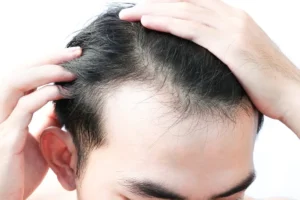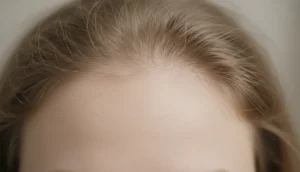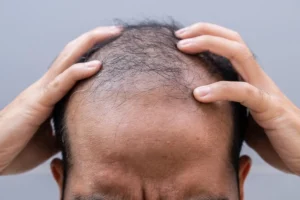
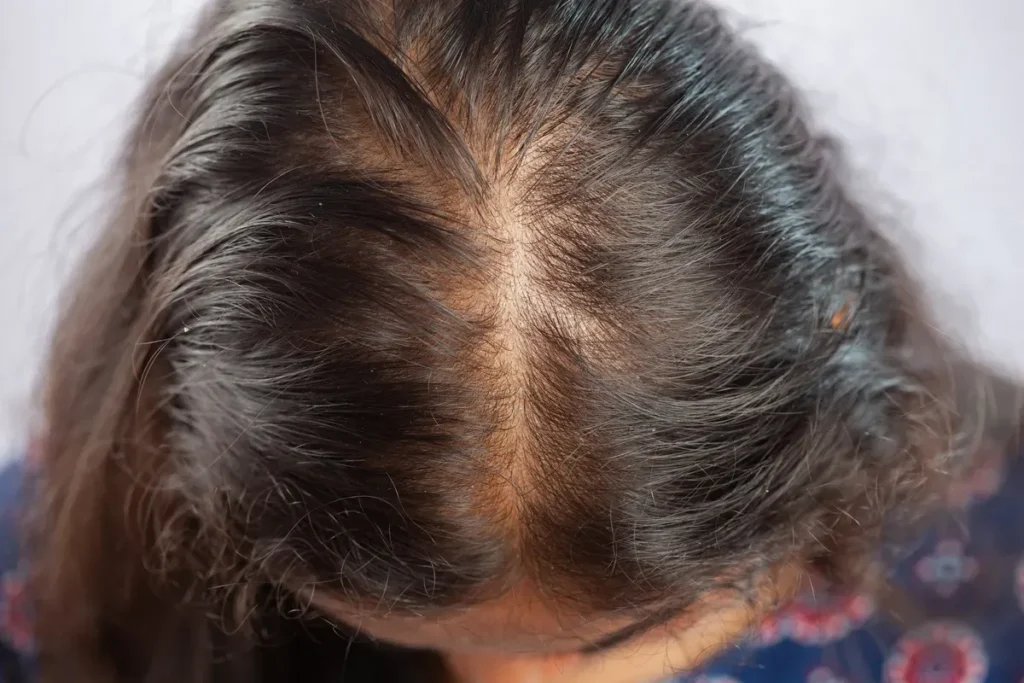
Women over 40 might notice their hair thinning or their center part getting wider. This is more common than you might think. Almost half of all women by age 50 deal with female pattern hair loss.
At gold city hair, dermatology experts know how much hair loss affects confidence. They provide patient-focused, evidence-based care. By recognizing the signs of female pattern hair loss after 40, women can find the right treatment and feel better.
Key Takeaways
Female pattern hair loss affects nearly half of all women by age 50.
Hair thinning in women over 40 is characterized by decreased hair density over the top and crown of the scalp.
Early detection is key for effective treatment.
Dermatology specialists offer personalized, evidence-based solutions.
Regaining confidence through the right treatment is possible.
Understanding FPHL Hair Loss in Women Over 40
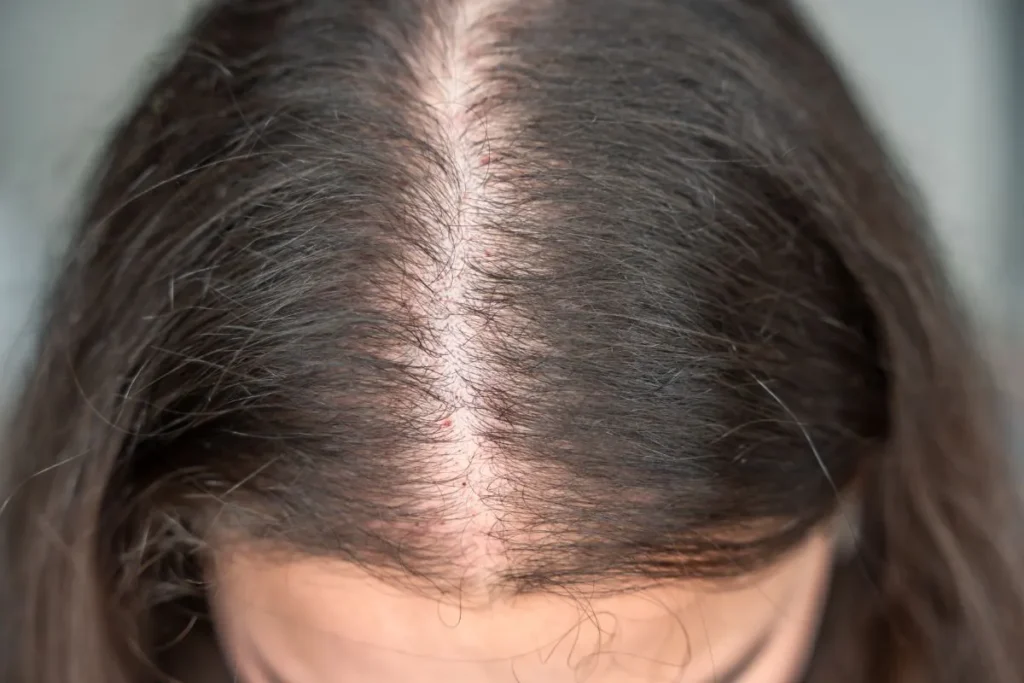
Women over 40 may start to lose hair due to female pattern hair loss (FPHL). This condition makes hair thin, mainly on the crown and top of the scalp. It’s caused by genetics, hormones, and the environment.
Prevalence Statistics: Why 40+ is a Critical Age
Studies show FPHL becomes more common with age. By 49, about 25% of women notice it. This number grows to 41% by 69 and over 50% by 79. This makes the 40+ age range very important for FPHL.
How Late-Onset FPHL Differs from Early-Onset Cases
Late-onset FPHL happens after 40 and is different from early-onset. Early-onset is often more aggressive and linked to genetics. Late-onset is slower and less aggressive.
Key differences between late-onset and early-onset FPHL include:
Rate of progression: Late-onset FPHL tends to progress more slowly.
Genetic factors: Early-onset FPHL is often associated with stronger genetic predisposition.
Response to treatment: Late-onset FPHL may respond well to treatments focusing on hormonal regulation and hair growth stimulation.
Many women with FPHL are finding ways to regain their confidence. Thanks to cutting-edge technology and personalized care, they can get dense, natural results and lifelong growth.
The 5 Key Signs of FPHL Hair Loss to Watch For
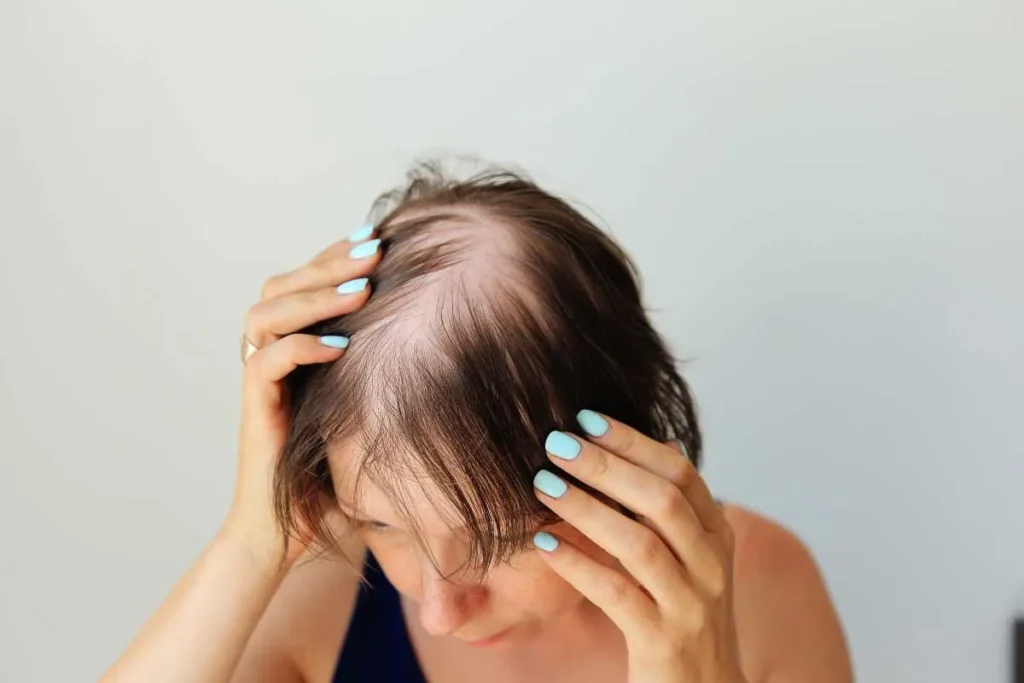
Hair loss in women over 40 can be upsetting. It’s important to spot the early signs of FPHL to act fast. Women in their 40s might see more hair falling out than usual or notice their hairline moving back. Knowing these changes can help spot hair loss problems early.
1. Widening of the Hair Part Line
One of the first signs of FPHL is a wider hair part line. This happens because hair is thinning, mainly on the top and crown. Women might see more scalp when they part their hair, or notice the part line getting wider.
2. Decreased Hair Density Over Crown and Top
Another sign is less hair density on the crown and top. This makes the scalp more visible. Looking in a mirror at the top of your head can show this.
3. Reduced Ponytail Volume and Circumference
Women with FPHL often see their ponytail has less volume and is smaller. This is because hair is thinning, mainly on the crown and top. Measuring your ponytail’s size over time can track hair density changes.
4. Increased Scalp Visibility When Hair is Arranged
Another sign is seeing more scalp when hair is styled or pulled back. This is more obvious when hair is wet or pulled back. Noticing how much scalp shows in different hairstyles can signal hair loss.
Spotting these signs early can help women manage their hair loss. By knowing the signs of FPHL, they can get help and find treatments. This can help them feel more confident and achieve their hair goals.
Widening of the hair part line
Decreased hair density over the crown and top
Reduced ponytail volume and circumference
Increased scalp visibility when hair is arranged
Conclusion: When to Seek Professional Help
Genetic predisposition is a big factor in female pattern hair loss (FPHL). About 85 percent of FPHL patients have a family history of androgenetic alopecia. Women losing hair at 40 or older should watch for signs like a wider hair part line and less hair density.
If you see these changes, it’s time to see a hair loss specialist. They can help figure out why you’re losing hair. They’ll create a treatment plan that fits your needs, whether it’s for hair loss at 40 or older.
Getting professional help can make you feel confident again. You can get a fuller head of hair. With the right treatment, you can achieve your dream hair.
FAQ
What is Female Pattern Hair Loss (FPHL)?
FPHL is a type of hair thinning in women caused by genetics and hormones, leading to gradual hair loss, mainly on the crown and top of the scalp.
What are the signs of FPHL in women over 40?
Signs include diffuse thinning on the crown, widening of the parting, reduced hair volume, and slower hair growth.
How common is FPHL in women over 40?
It is quite common, affecting up to 40–50% of women in this age group.
What is the difference between late-onset and early-onset FPHL?
Early-onset occurs before age 40 and often progresses slowly, while late-onset appears after 40 and may be linked to hormonal changes or menopause.
Can genetic predisposition affect FPHL?
Yes, a family history of hair loss increases the likelihood of developing FPHL.
What should I do if I’m experiencing signs of FPHL?
Consult a dermatologist or trichologist for diagnosis and to discuss treatment options to slow progression and promote regrowth.
Are there effective treatments for FPHL?
Yes, treatments include topical minoxidil, low-level laser therapy, oral anti-androgens like spironolactone, and in some cases hair transplant surgery.
How can I identify if my hair loss is due to FPHL?
FPHL usually causes gradual, diffuse thinning on the top of the scalp with a preserved frontal hairline, and diagnosis may involve scalp examination and medical history.
References
National Center for Biotechnology Information. Evidence-Based Medical Insight. Retrieved from https://pubmed.ncbi.nlm.nih.gov/11511831/