
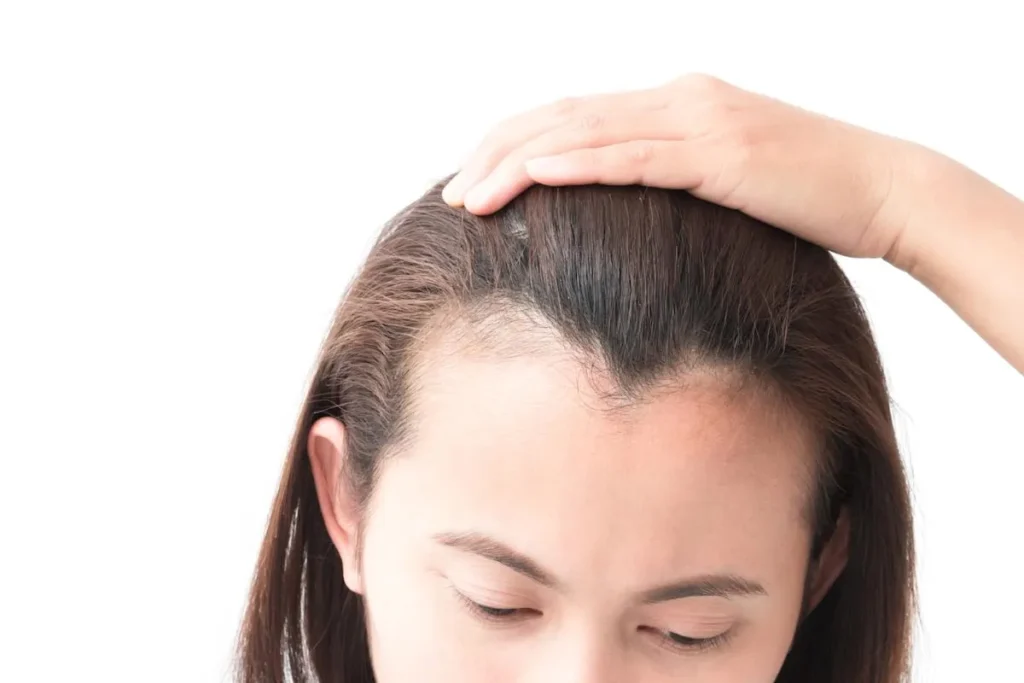
A receding hairline is often seen as a male issue, but it affects millions of women worldwide. Female hairline recession not only changes how we look but also how we feel about ourselves.
Studies show that over 40 percent of women face hairline recession. This can happen due to hormonal shifts, genetics, and how we style our hair. It’s a big deal, affecting our confidence and happiness.
But there’s hope. With new treatments and tailored care, women can fight receding hairline issues. It’s all about getting your confidence back.
Key Takeaways
Over 40% of women experience hairline recession.
Hormonal changes, genetics, and styling habits are common causes.
Advanced treatments offer effective solutions.
Personalized care is key for tackling individual concerns.
Regaining confidence through hair restoration is possible.
Understanding Female Hairline Recession
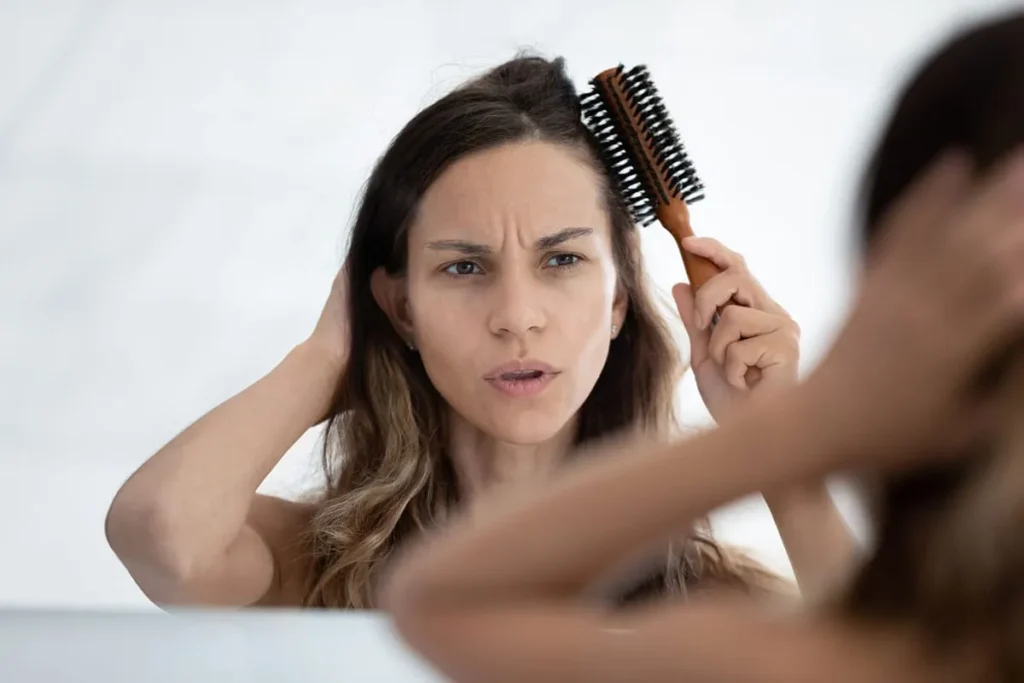
As women age, they might see their hairline recede. This can be fixed with the right treatment. Female hairline recession makes the forehead wider and the temples thinner.
What Defines a Receding Hairline in Women
A receding hairline in women means thinning hair at the temples and a widening part. Unlike men, women’s hairlines don’t move all the way back. Instead, hair loss spreads out.
Many things can cause this, like genes, hormone changes, and tight hairstyles.
How Female Hair Loss Differs from Male Pattern Baldness
Female hair loss is different from male baldness. Men often get an M-shaped hairline recession. Women’s hair loss is more diffuse and doesn’t usually lead to full baldness.
Knowing these differences helps create better treatments for women’s hair loss.
Common Signs and When to Seek Help
Signs of a receding hairline in women include thinning at the temples, a widening part, and hair loss. If you notice these, get help early to stop more hair loss.
A doctor or dermatologist can suggest treatments. This might include medicine, lifestyle changes, or hair restoration.
Understanding and addressing female hairline recession helps women regain confidence. They can get healthier, fuller hair.
Causes of Receding Hairline in Females
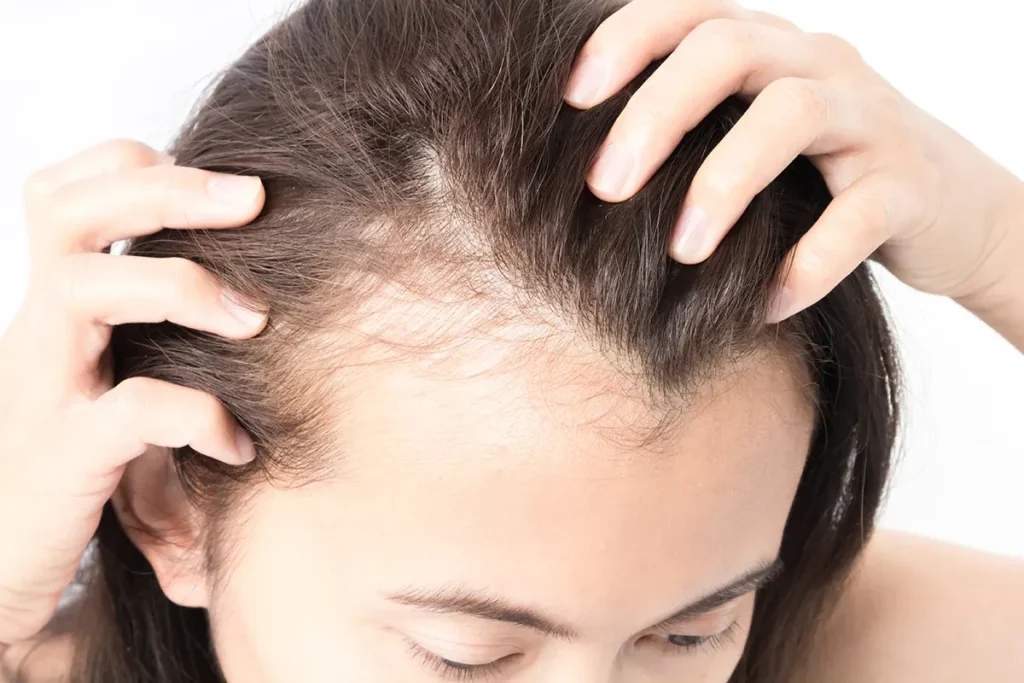
A receding hairline in women can be upsetting. It comes from different causes. Knowing these causes is the first step to fixing the problem.
Androgenetic Alopecia (Female Pattern Hair Loss)
Androgenetic alopecia, or female pattern hair loss, is a common reason for hairline recession in women. It makes hair thin on the scalp because of androgen hormones. It’s a hereditary condition that can get worse with hormonal changes.
Hormonal Fluctuations and Menopause
Hormonal changes, like during menopause, are big factors in hair loss for women. Lower estrogen levels mean more dihydrotestosterone (DHT). This hormonal imbalance can cause a receding hairline.
Genetic Factors
Genetics also play a big role in receding hairlines in females. If your family has hair loss, you might too. Genetic factors can make hair follicles more sensitive to androgens, causing thinning and loss.
Nutritional Deficiencies
Lack of nutrients like iron, zinc, and biotin can also cause hair loss. Eating a balanced diet with these nutrients is key for healthy hair.
In conclusion, receding hairlines in females come from many causes. These include genetics, hormones, and nutrition. Understanding these can help women find the right treatments for their hair loss.
Androgenetic Alopecia: Hereditary condition influenced by androgen hormones.
Hormonal Fluctuations: Changes in hormone levels, specially during menopause.
Genetic Factors: Family history of hair loss.
Nutritional Deficiencies: Lack of essential nutrients like iron, zinc, and biotin.
Effective Treatments for Female Receding Hairlines
Women can regain their natural hairline through various treatments. These range from medical to professional procedures. The success of these treatments depends on understanding the cause of hair loss and choosing the right one.
Medical Interventions
Medical treatments are often the first step against female hairline recession. Minoxidil is a well-known, FDA-approved topical treatment. It helps stimulate hair growth and slow down hair loss.
Finasteride is mainly used for male baldness but can be prescribed for women postmenopause. This is done under strict medical supervision.
These medications tackle hormonal imbalances that lead to hair loss. It’s important to talk to a healthcare professional. They can help find the best treatment for your health and hair loss.
Professional Procedures
For more severe hairline recession, professional procedures are effective. Platelet-rich Plasma (PRP) therapy involves injecting platelet-rich plasma into the scalp. This stimulates hair growth and improves density.
Hair transplant surgery is another option. It moves hair follicles from the back and sides to balding areas. This requires a skilled surgeon for natural-looking results.
At-Home Treatments
At-home practices can also support hair health. Dietary adjustments are key, with a balanced diet rich in vitamins and minerals. These include iron, zinc, and biotin, which promote hair growth.
Stress management is also important, as stress can cause hair loss. Practices like meditation, yoga, and exercise help manage stress. They promote overall well-being, including hair health.
By combining medical treatments, professional procedures, and at-home practices, women can address receding hairlines. This helps regain confidence and achieve a fuller head of hair.
Conclusion
Women with a receding hairline often feel sad and worried about their looks. This can hurt their self-esteem and confidence. Finding out why it happens and looking into treatments can help them feel better.
There are many reasons for a receding hairline in women, like androgenetic alopecia and hormonal changes. There are also genetic and nutritional factors. Luckily, there are many ways to treat it, from medical treatments to home remedies.
Women can find a treatment that fits their needs by getting professional advice. With the right treatment, they can get back their natural hairline and feel confident again. Modern technology and personalized care make it easier than ever to achieve dream hair.
Choosing the right treatment and getting help from experts can help women beat a receding hairline. With the right support, they can look forward to a future where hair loss doesn’t bother them.
References
National Center for Biotechnology Information. Evidence-Based Medical Insight. Retrieved from https://pubmed.ncbi.nlm.nih.gov/11298522/





