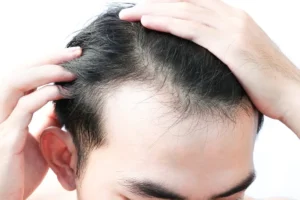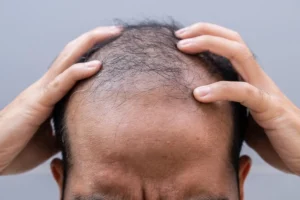
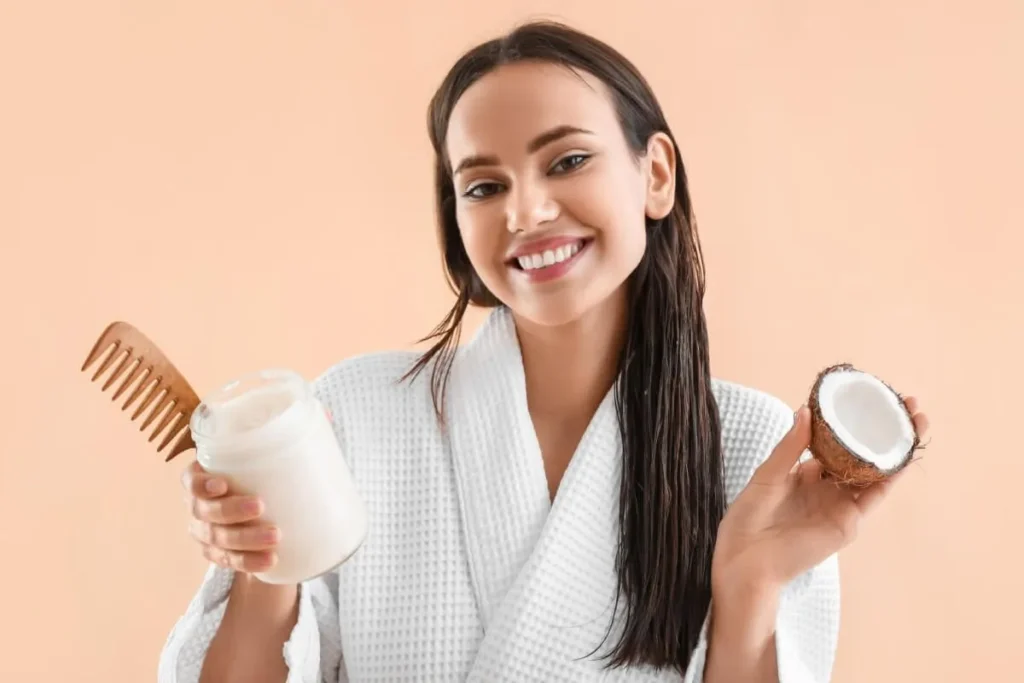
Many wonder if coconut oil can make hair grow faster and thicker. It doesn’t directly make hair grow like some medicines do. But, research shows it can make hair stronger and keep the scalp healthy.
Coconut oil has lauric acid, which helps keep hair from breaking. Studies say it protects hair better than other oils.
Knowing how coconut oil works with the scalp and hair helps people use it wisely. This can lead to hair that’s healthier and thicker.
Key Takeaways
Coconut oil strengthens existing hair and reduces breakage.
Lauric acid in coconut oil helps minimize protein loss.
Coconut oil provides greater protection for hair compared to other oils.
Using coconut oil can lead to healthier and thicker hair.
Coconut oil supports scalp health through its antimicrobial properties.
The Science Behind Does Coconut Oil Grow Hair
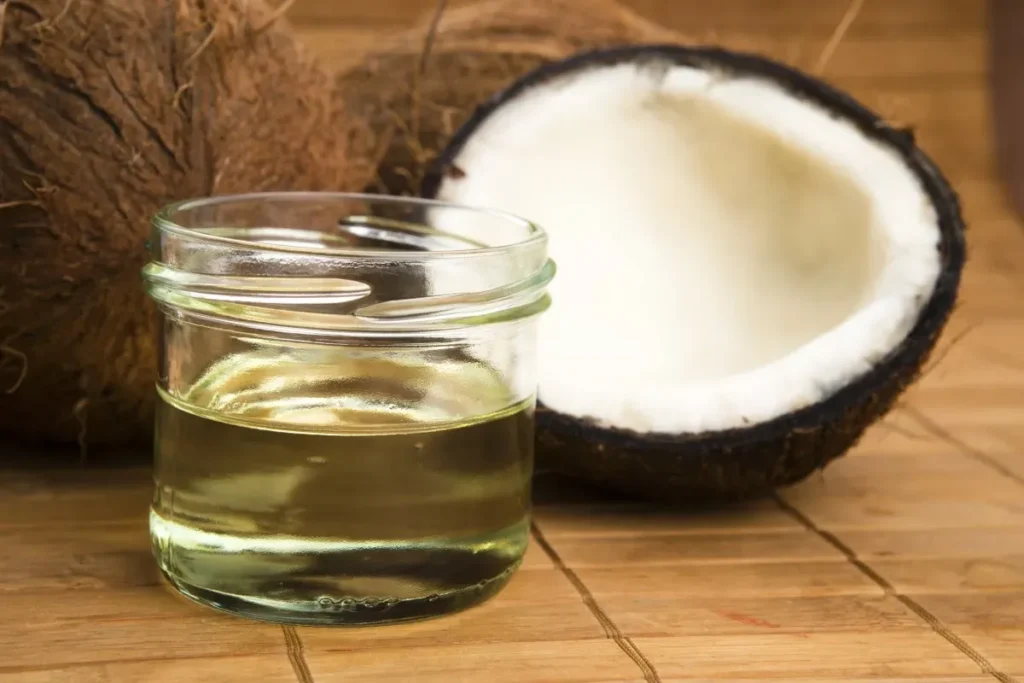
Coconut oil’s impact on hair growth is rooted in science. It’s known for its nourishing properties. Recent studies have shown how it helps hair grow healthier.
How Coconut Oil Penetrates the Hair Shaft
Coconut oil’s ability to penetrate the hair shaft is key. Its unique composition, like lauric acid, allows it to get absorbed. This reduces moisture loss and strengthens the hair follicle.
Its penetration into the hair shaft is vital for nourishment and protection. It helps reduce breakage and makes hair appear thicker and healthier. Studies confirm its effectiveness in strengthening hair.
Research on Protein Loss Prevention
Coconut oil is great for preventing protein loss in hair. Hair is mostly protein, and damage can lead to protein loss. This weakens hair and makes it break more easily.
A study showed coconut oil reduced protein loss by 41.8% in hair. This strengthens hair and reduces breakage.
Lauric acid in coconut oil binds to hair’s protein, reducing damage and loss.
Coconut oil’s role in preventing protein loss is key to promoting healthier hair growth.
By preventing protein loss and nourishing the hair follicle, coconut oil boosts hair health. It’s a valuable addition to hair care routines for growth and damage reduction.
Benefits of Coconut Oil for Hair Health
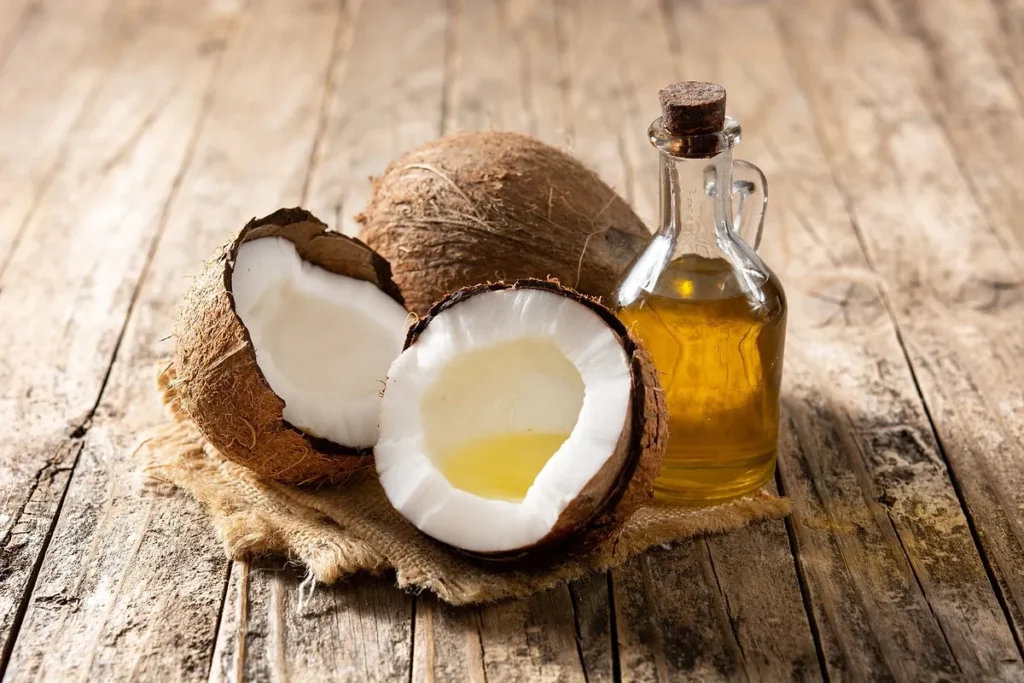
Coconut oil is a miracle for hair health, bringing many benefits to your hair care. It deeply nourishes hair from the inside out.
Moisture Retention and Split End Prevention
Coconut oil is great for keeping hair moist. It works like a natural conditioner, locking in moisture. This prevents dryness and breakage.
Using coconut oil regularly can make your hair look healthier. It’s perfect for dry or damaged hair, helping restore moisture balance.
Antimicrobial Properties for Scalp Health
Coconut oil has antimicrobial properties that are good for the scalp. Its lauric acid fights fungi and dandruff.
Applying coconut oil to your scalp can reduce dandruff and irritations. This leads to a healthier scalp and hair.
Coconut Oil for Receding Hairlines and Alopecia
Coconut oil may help with hair loss, including receding hairlines and alopecia. It strengthens hair follicles and promotes a healthy scalp.
Studies show coconut oil can reduce protein loss in hair. Massaging it into your scalp may stimulate blood flow and prevent more hair loss.
In summary, coconut oil offers many benefits for hair, from moisture retention to scalp health. It’s a valuable addition to your hair care routine, helping achieve healthier, vibrant hair.
Conclusion
Coconut oil is great for keeping your hair healthy and strong. It helps prevent breakage and nourishes your scalp. This makes your hair fuller and easier to manage.
Coconut oil doesn’t directly make your hair grow faster. But it makes your hair and scalp healthier. This helps your hair look better overall.
Using coconut oil can make your hair healthier and more vibrant. It keeps moisture in and reduces protein loss. This makes your hair look better.
Coconut oil also helps prevent split ends and scalp problems. Its antimicrobial properties are key to this.
Coconut oil can make your hair more manageable and your scalp healthier. Knowing how to use coconut oil can improve your hair care routine. This might lead to hair that’s more luscious and resilient.
FAQ
Does coconut oil really help grow hair?
Coconut oil does not have the clinical ability to “trigger” new hair growth from the follicle like medical treatments. However, it is one of the few oils proven to penetrate the hair shaft deeply, which prevents breakage and split ends. By protecting existing hair, it allows your hair to reach longer lengths without snapping, which often gives the appearance of faster growth.
How does coconut oil affect hair growth?
The oil improves the environment for hair growth rather than the biological signal itself. It creates a protective barrier on the scalp and hair shaft. By reducing inflammation and maintaining a healthy scalp microbiome, it ensures that follicles are not obstructed by irritation or excessive dryness, providing an optimal foundation for hair to emerge.
Can coconut oil help with hair loss or alopecia?
Coconut oil is not an effective treatment for androgenetic alopecia (pattern baldness) or autoimmune conditions. It cannot block the hormones, such as DHT, that cause hair to fall out. While it can improve the texture of the remaining hair and soothe an inflamed scalp, it should not be used as a replacement for medical hair loss interventions.
Is coconut oil good for a receding hairline?
It will not regrow a receding hairline, as that is primarily a genetic and hormonal issue. However, applying it to the hairline can help keep the delicate “baby hairs” in that area moisturized and strong, preventing them from breaking off prematurely due to tight hairstyles or environmental stress.
How does coconut oil prevent protein loss in hair?
Coconut oil is rich in lauric acid, which has a low molecular weight and a straight linear chain. This structure allows it to enter the hair shaft and bind to the internal proteins (keratin). Research shows that applying it before or after washing significantly reduces protein loss during the cleaning and grooming process.
Can coconut oil help retain moisture in hair?
Yes, but it works as an occlusive, meaning it seals moisture in. If you apply it to bone-dry hair, you may be sealing the dryness out. For best results, apply it to slightly damp hair to trap water inside the hair shaft, which keeps the strands supple and elastic.
Does coconut oil have antimicrobial properties beneficial for scalp health?
It does. The lauric and capric acid in coconut oil possess antifungal and antibacterial properties. This is particularly helpful for individuals dealing with minor scalp irritation or dandruff caused by yeast overgrowth, as it helps rebalance the scalp’s natural flora.
Will coconut oil make my hair grow faster?
There is no scientific evidence that coconut oil increases the biological speed of hair production. Most hair grows at a standard rate of about 1.25 cm per month. Coconut oil simply helps you retain that length by preventing the ends from fraying and breaking.
Is coconut oil suitable for all hair types?
Not necessarily. While it is excellent for high-porosity or very curly hair, people with fine hair or low-porosity hair may find it too heavy. In these cases, the oil can sit on the surface, making hair look greasy and potentially causing “protein buildup,” which can make strands feel stiff.
Can I use coconut oil as a leave-in conditioner or hair mask?
Absolutely. As a mask, you can apply it 30 minutes before washing to protect hair from the stripping effects of surfactants in shampoo. As a leave-in, use a tiny, pea-sized amount only on the very ends of the hair to add shine and prevent split ends.
References
National Center for Biotechnology Information. Evidence-Based Medical Insight. Retrieved from https://pubmed.ncbi.nlm.nih.gov/12715094/[7